Whether healthy or destructive, habits shape our cognitive wiring. Once they are established, it takes a hefty effort to overwrite those neural connections.
The effects of wives' involvement in their husbands' performance of treadmill exercise testing 3 weeks after clinically uncomplicated acute myocardial infarction was compared in 10 wives who did not observe the test, 10 who observed the test, and 10 who observed and participated in the test themselves. In a counseling session after the treadmill test, couples were fully informed about the patient's capacity to perform various physical activities. Wives' final ratings of confidence (perceived efficacy) in their husbands' physical and cardiac capability were significantly (p less than 0.05) higher in those who also performed the test than in the other 2 groups. Only wives who walked on the treadmill increased their ratings of their husbands' physical and cardiac efficacy to a level equivalent to those of their husbands. Spouses' and patients' perceptions of patients' cardiac capability after treadmill testing and counseling at 3 weeks were significantly correlated with peak treadmill heart rate and workload at 11 and 26 weeks. Efficacy ratings at 3 weeks were slightly better than peak 3-week treadmill heart rate and workload as predictors of treadmill performance at 11 and 26 weeks. Participation in treadmill testing early after acute myocardial infarction is an effective means for reassuring spouses about the capacity of their partners to resume their customary physical activities with safety.
The effects of exercise testing 3 weeks after clinically uncomplicated myocardial infarction (MI) on subsequent physical activity were evaluated in 40 consecutive men with a mean age of 52 ± 9 years. Patients' confidence in their ability to perform various physical activities was evaluated with self-efficacy scales which patients completed before and after a symptom-limited treadmill exercise test. Increases in confidence (self-efficacy) for activities similar to treadmill exercise (walking, stair climbing, and running) were greatest after treadmill exercise, whereas increases for dissimilar activities (sexual intercourse and lifting) were greatest after test results were explained by a physician and nurse. The intensity and duration of subsequent physical activity at home were more highly correlated with self-efficacy after treadmill exercise than with peak treadmill heart rate. Of the 8 patients whose treadmill tests were limited by angina pectoris, 7 had self-efficacy scores which remained low after treadmill testing or which decreased from initially high values after treadmill testing. These patients had lower peak heart rates and work loads than patients whose self-efficacy increased or remained high after treadmill testing. After MI, patients' perception of their capacity for physical activity and their actual patterns of subsequent physical activity are influenced by early treadmill testing in a manner which is congruent with these patients' treadmill performance.
Behavioral effects of self-monitoring in the laboratory may not prove significant when individuals self-record for extended periods in their normal environments. A series of three experiments examined the extent to which a behavior's desirability or “valence” may cause it to change when self-monitored for several days in natural settings. Subjects' time awareness, the dependent variable, was measured before and after exposure to favorable, unfavorable, or neutral evaluations of time concern; half of the subjects were also told that a specific time-awareness level or goal (performance standard)was desirable. Results disclosed limitations of previous laboratory data. Valences determined only the initial direction and magnitude of behavior change; their effect after the first posttreatment day was not uniform. A valence alone maintained significant behavior change only if the change was in a direction supported by the subject's environment. A performance standard maintained change in the face of an unfavorable environment providing the subject found the standard credible. A watchbox device permitted surreptitious reliability checks: Self-monitoring proved slightly more reliable than previous research had indicated.
 Robert F. DeBusk合作论文数Department of Medicine, School of Medicine, Stanford University;Stanford Cardiovascular Institute, School of Medicine, Stanford University3
 C. Barr Taylor合作论文数Department of Psychiatry and Behavioral Sciences, School of Medicine, Stanford University;Cardiovascular Institute, School of Medicine, Stanford University3
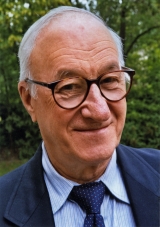 Albert Bandura合作论文数Department of Psychology, School of Humanities and Sciences, Stanford University2
 Carl E Thoresen合作论文数2Nh Miller合作论文数1
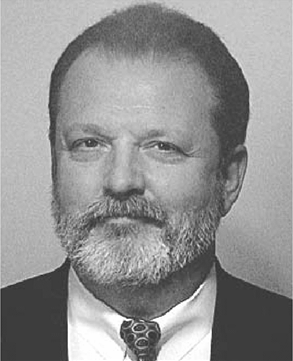 SL Grimes合作论文数1Robert Moke合作论文数1Jg Nickerson合作论文数1
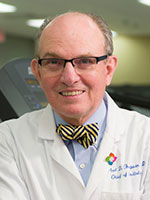 Paul D. Thompson合作论文数Hartford Hospital;University of Connecticut1
 Richard H Hunter合作论文数1Carl E. Thoresen合作论文数1Deborah Rohm-Young合作论文数1
 Judith T. Matthews合作论文数School of Nursing, University of Pittsburgh1Thomas A. Biffar合作论文数1
 Mark P Denbeaux合作论文数1Mary E. Mccoy合作论文数1David L. Petersen合作论文数1Charles A. Dominick合作论文数1Geoffrey Hamilton合作论文数1Carole L. Andrews合作论文数1Jeffrey M. Rohay合作论文数1Patricia A. Daniel合作论文数1Edwin W. Peterson合作论文数1Peter C. Davis合作论文数1Stephen W. Downing合作论文数1John Barrington合作论文数1John W. Harrison合作论文数1Dorinda M. Hale合作论文数1Mark C. Fulcomer合作论文数1
 Ruth Pritchard Dawson合作论文数1Richard A. Norris合作论文数1Cheryl L. Mitchell合作论文数1Donald F. Collins合作论文数1
 Susan M. Sereika合作论文数School of Nursing, University of Pittsburgh;Department of Biostatistics, School of Public Health, University of Pittsburgh;Clinical and Translational Science Institute, University of Pittsburgh1Lora E. Burke合作论文数1Thomas C. Patton合作论文数1
 Jacqueline Dunbar-Jacob合作论文数Department of Health & Community Systems, School of Nursing, University of Pittsburgh;Fudan University;Clinical and Translational Science Institute, College of Arts and Sciences, University of Pittsburgh;School of Health and Rehabilitation Sciences, University of Pittsburgh;Center for Research on Health Care, University of Pittsburgh;Graduate School of Public Health, University of Pittsburgh;Pittsburgh Cancer Institute, University of Pittsburgh1




