Abstract. Iron (Fe) availability modulates phytoplankton blooms in High-Nutrient Low-Chlorophyll (HNLC) regions, i.e., ocean areas characterized by an abundance of major nutrients but low marine productivity. Fe can be delivered to the oceans through atmospheric dust deposition, making ice cores unique archives for reconstructing past changes in aeolian Fe deposition. However, while it is known that during dustier periods atmospheric Fe depositions increased, uncertainties remain regarding the fraction of Fe actually available to phytoplankton. Here, we present evidence from the EGRIP ice core (Greenland), which allows insights into atmospheric aerosol deposition over the Fe-limited North Pacific Ocean, during the Pleistocene-Holocene transition (10.3–13.0 ka). Results show that, in contrast to the 17-fold enhancement in total Fe concentration, dissolved Fe increased only modestly (+29 %) during the Younger Dryas compared to the Early Holocene, likely due to prevailing alkaline aerosol conditions reducing its solubility. This finding supports the hypothesis that factors other than atmospheric Fe deposition (e.g., stronger water stratification, sea-ice extent, volcanic eruptions, iron remobilization from sediments), play a more relevant role in regulating marine net primary productivity in the HNLC North Pacific Ocean over the last glacial transition.
Paleo-records such as marine sediments and ice cores are commonly used to extend our knowledge about past sea-ice cover during the period prior to instrumental observations. Several studies (Spolaor et al., 2016, Saiz Lopez and Von Glasow, 2012) have identified bromine in ice cores as a potential proxy for past sea ice conditions. During polar springtime, in fact, the photochemical recycling of bromine is extremely efficient over first year sea ice (FYSI), resulting in enhanced concentrations of inorganic gas phase bromine (e.g. BrO) compared to the ocean surface, multi-year sea ice or snow-covered land. This process is known as “bromine explosion” and is detected by satellite sensors and in-situ observations from early Marchto late May. After emission, the BrO plume is frequently carried for several days by high-latitude cyclones in the lower troposphere until it reaches land and falls in the form of bromine enriched snow compared to seawater Br/Na ratio. Here, we present the first statistical validation of this proxy using satellite sea ice observations. By combining bromine enrichment (relative to seawater, Brenr) records from three Greenlandic ice cores with satellite sea ice imagery over a span of three decades, we demonstrate its efficacy. During the satellite era (1984–2016), Brenr values in the ice cores show significant correlations with first-year sea ice formed in the Baffin Bay and Labrador Sea, confirming that gas-phase bromine enrichment processes, which predominantly occur over sea ice surfaces, are the primary drivers of the Brenr signal in ice cores. Furthermore, to evaluate Brenr’s ability to capture historical sea ice variability, we compare 20th-century Arctic sea ice historical records and proxy data with reconstructions derived from an autoregressive–moving-average (ARMA) model. The results show overall strong agreement. While further improvements are needed—such as site-specific calibrations and detailed studies on bromine transport dynamics—this study introduces a novel quantitative method for reconstructing past seasonal sea ice variability using bromine enrichment in ice cores
Estimation of crossed random effects models commonly incurs computational costs that grow faster than linearly in the sample size $ N $, often as fast as $ \Omega(N<^>{3/2}) $, making them unsuitable for large datasets. For non-Gaussian responses, integrating out the random effects to obtain a marginal likelihood poses significant challenges, especially for high-dimensional integrals for which the Laplace approximation may not be accurate. In this article we develop a composite likelihood approach to probit models that replaces the crossed random effects model with some hierarchical models that require only one-dimensional integrals. We show how to consistently estimate the crossed effects model parameters from the hierarchical model fits. We find that the computation scales linearly in the sample size. The method is illustrated by applying it to approximately five million observations from Stitch Fix, where the crossed effects formulation would require an integral of dimension larger than $ 700\,000 $.
Paired comparison models, such as Bradley-Terry and Thurstone-Mosteller, are commonly used to estimate relative strengths of pairwise compared items in tournament-style data. We discuss estimation of paired comparison models with a ridge penalty. A new approach is derived which combines empirical Bayes and composite likelihoods without any need to re-fit the model, as a convenient alternative to cross-validation of the ridge tuning parameter. Simulation studies demonstrate much better predictive accuracy of the new approach relative to ordinary maximum likelihood. A widely used alternative, the application of a standard bias-reducing penalty, is also found to improve appreciably the performance of maximum likelihood; but the ridge penalty, with tuning as developed here, yields greater accuracy still. The methodology is illustrated through application to 28 seasons of English Premier League football.
Bromine in ice cores has been proposed as a qualitative sea ice proxy to produce sea ice reconstructions for the polar regions. Here we report the first statistical validation of this proxy with satellite sea ice observations by combining bromine enrichment (with respect to seawater, Brenr) records from three Greenlandic ice cores (SIGMA-A, NU and RECAP) with satellite sea ice imagery, over three decades. We find that during the 1984-2016 satellite-era, ice core Brenr values are significantly correlated with first-year sea ice formed in the Baffin Bay and Labrador Sea supporting that the gas-phase bromine enrichment processes, preferentially occurring over the sea ice surface, are the main driver for the Brenr signal in ice cores. Moreover, in assessing Brenr's capability to record historical sea ice variability, we compare 20th-century Arctic Sea ice historical and proxy records with our reconstructions, based on an autoregressive-moving-average (ARMA) model, finding overall good agreement. While further enhancements are warranted, including site-specific calibrations and a comprehensive investigation into bromine transport-related concerns, this study presents a new method to quantitatively reconstruct past seasonal sea ice variability through bromine enrichment in ice cores.
This article presents an approach to forecasting count time series with a form of exponential smoothing built from observation‐driven models. The proposed method is easy to implement and simple to interpret. A variant of the approach is also proposed to handle the impact of outliers on the forecast. The performance of the methodology is studied with simulations and illustrated with an analysis of the number of monthly cases of dengue fever observed in Italy for the years 2008–2021. An R package is made available to enable the reader to reproduce the results discussed in the article.
Sea ice decline in the North Atlantic and Nordic Seas has been proposed to contribute to the repeated abrupt atmospheric warmings recorded in Greenland ice cores during the last glacial period, known as Dansgaard-Oeschger (D-O) events. However, the understanding of how sea ice changes were coupled with abrupt climate changes during D-O events has remained incomplete due to a lack of suitable high-resolution sea ice proxy records from northwestern North Atlantic regions. Here, we present a subdecadal-scale bromine enrichment (Brenr) record from the NEEM ice core (Northwest Greenland) and sediment core biomarker records to reconstruct the variability of seasonal sea ice in the Baffin Bay and Labrador Sea over a suite of D-O events between 34 and 42 ka. Our results reveal repeated shifts between stable, multiyear sea ice (MYSI) conditions during cold stadials and unstable, seasonal sea ice conditions during warmer interstadials. The shift from stadial to interstadial sea ice conditions occurred rapidly and synchronously with the atmospheric warming over Greenland, while the amplitude of high-frequency sea ice fluctuations increased through interstadials. Our findings suggest that the rapid replacement of widespread MYSI with seasonal sea ice amplified the abrupt climate warming over the course of D-O events and highlight the role of feedbacks associated with late-interstadial seasonal sea ice expansion in driving the North Atlantic ocean-climate system back to stadial conditions.
Black carbon (BC) is a significant forcing agent in the Arctic, but substantial uncertainty remains to quantify its climate effects due to the complexity of the different mechanisms involved, in particular related to processes in the snowpack after deposition. In this study, we provide detailed and unique information on the evolution and variability in BC content in the upper surface snow layer during the spring period in Svalbard (Ny-Ålesund). A total of two different snow-sampling strategies were adopted during spring 2014 (from 1 April to 24 June) and during a specific period in 2015 (28 April to 1 May), providing the refractory BC (rBC) mass concentration variability on a seasonal variability with a daily resolution (hereafter seasonal/daily) and daily variability with an hourly sampling resolution (hereafter daily/hourly) timescales. The present work aims to identify which atmospheric variables could interact with and modify the mass concentration of BC in the upper snowpack, which is the snow layer where BC particles affects the snow albedo. Atmospheric, meteorological and snow-related physico-chemical parameters were considered in a multiple linear regression model to identify the factors that could explain the variations in BC mass concentrations during the observation period. Precipitation events were the main drivers of the BC variability during the seasonal experiment; however, in the high-resolution sampling, a negative association has been found. Snow metamorphism and the activation of local sources (Ny-Ålesund was a coal mine settlement) during the snowmelt periods appeared to play a non-negligible role. The statistical analysis suggests that the BC content in the snow is not directly associated to the atmospheric BC load.
Abstract. Black Carbon (BC) is a major forcing agent in the Arctic but substantial uncertainty remains to quantify its climate effects due to the complexity of mechanisms involved. In this study, we provide unique information on processes driving the variability of BC mass concentration in surface snow in the Arctic. Two different snow-sampling strategies were adopted during spring 2014 and 2015, focusing on the refractory BC (rBC) mass Ny-Alesund concentration daily/hourly variability on a seasonal/daily time scale (referred to as 80-days and 3-days experiments). Despite the low rBC mass concentrations (never exceeding 22 ng g−1), a daily variability of up to 4.5 ng g−1 was observed. Atmospheric, meteorological and snow-related physico-chemical parameters were considered in multiple statistical models to understand the factors behind the observed variation of rBC mass concentrations. Results indicate that the main drivers of the variation of rBC are the precipitations events, snow metamorphism (melting-refreezing cycles, surface hoar formation and sublimation) and the activation of local sources (wind resuspension) during the snow melting periods. The rBC in the snow seems de-coupled with the atmospheric BC load. Our results highlighted a common association of snow rBC with coarse mode particles number concentration and with snow precipitation events.
Nearly all ice core archives from the Arctic and middle latitudes (such as the Alps), apart from some very high elevation sites in Greenland and the North Pacific, are strongly influenced by melting processes. The increases in the average Arctic temperature has enhanced surface snow melting even of higher elevation ice caps, especially on the Svalbard Archipelago. The increase of the frequency and altitude of winter "rain on snow" events as well as the increase of the length of the melting season have had a direct impact on the chemical composition of the seasonal and permanent snow layers due to different migration processes of water-soluble species, such as inorganic ions. This re-allocation along the snowpack of ionic species could significantly modify the original chemical signal present in the annual snow. This paper aims to give a picture of the evolution of the seasonal snow strata with a daily time resolution to better understand: a) the processes that can influence deposition b) the distribution of ions in annual snow c) the impact of the presence of liquid water on chemical re-distribution within the annual snow pack. Specifically, the chemical composition of the first 100 cm of seasonal snow on the Austre Broggerbreen Glacier (Spitsbergen, Svalbard Islands, Norway) was monitored daily from the 27th of March to the 31st of May 2015. The experimental period covered almost the entire Arctic spring until the melting season. This unique dataset gives us a daily picture of the snow pack composition, and helps us to understand the behaviour of cations (K+, Ca2+, Na+, Mg2+) and anions (Br-, I-, SO42-, NO3-, Cl-, MSA) in the Svalbard snow pack. We demonstrate that biologically related depositions occur only at the end of the snow season and that rain and melting events have different impacts on the snowpack chemistry. (C) 2020 Elsevier B.V. All rights reserved.
Latent autoregressive models are useful time series models for the analysis of infectious disease data. Evaluation of the likelihood function of latent autoregressive models is intractable and its approximation through simulation-based methods appears as a standard practice. Although simulation methods may make the inferential problem feasible, they are often computationally intensive and the quality of the numerical approximation may be difficult to assess. We consider instead a weighted pairwise likelihood approach and explore several computational and methodological aspects including estimation of robust standard errors and the role of numerical integration. The suggested approach is illustrated using monthly data on invasive meningococcal disease infection in Greece and Italy.
Abstract. The Arctic and middle latitude (such as the Alps) ice core archives, except for the Greenland summit, are strongly influenced by melting processes, able to modify the original chemical signal of the annual snowfall. In the last decades, the increase of the average Arctic temperature has caused and enhanced surface snow melting in the higher ice cap, especially in the Svalbard Archipelago. The increase of the frequency and altitude of winter “rain on snow” events as well as the increase of the length of the melting season has a direct impact on the chemical composition of the seasonal and permanent snow layers due to different migration processes of water-soluble compounds, such as ionic species. The re-allocation along the snowpack of ionic species could significantly modify the original chemical signal present in the annual snow, making comprehensive interpretation of climate records difficult. The chemical composition of the first 100 cm of the seasonal snow at Austre Brøggerbreen Glacier (Spitsbergen, Svalbard Islands, Norway) was monitored daily from the 27th of March until to the 31st of May 2015. The experiment period covers almost the entire Arctic spring until the melting season. During the experiment, a rain event occurred on the 16th to 17th of April while from the 15th of May the snowpack reached an isothermal profile. The presented dataset is unique and helps to better understand the behaviour of cations (K+, Ca2+, Na+, Mg2+), anions (Br−, I−, SO42−, NO3−, Cl−, MSA) and two carboxylic acids (C2-glycolic and C5-glutaric acids) in the snowpack during this melting period. The results obtained from the experiment give us an overview of how the chemicals are remobilized in the snowpack during a rain event or due to the melting at the end of the spring season. The aim of this paper is to give a picture of the evolution of the seasonal snow strata with the aim to better understand the processes that can influence the chemical distribution in the annual snow. The results of the present work are unique and helpful for future analyses and interpretation of ice core paleoclimatic archives.
 Spolaor Andrea合作论文数Institute of Polar Science, ISP-CNR/Department of Environmental Sciences, Informatics and Statistics, Ca’ Foscari University of Venice18
 Cattelan Manuela合作论文数15
 Carlo Barbante合作论文数Dipartimento di Scienze Ambientali, Informatica e Statistica, Università Ca' Foscari Venezia13
 Xanthi Pedeli合作论文数Department of Hygiene and Epidemiology, University of Athens Medical School12
 David Firth合作论文数University of Warwick10
 Barbaro Elena合作论文数Department of Environmental Sciences, Informatics and Statistics, University of Venice9
 Paul Vallelonga合作论文数Niels Bohr Inst, Univ Copenhagen9
 Nancy Reid合作论文数Department of Statistical Sciences, Faculty of Arts & Science, University of Toronto7
 Jean-Charles Gallet合作论文数Norsk Polarinstitutt, Norsk Polarinstitutt6
 Annamaria Guolo合作论文数Istituto Oncologico Veneto (IOV) Surgical Pathology, University of Padua School of Medicine6
 Grace Yi合作论文数6
 Andrea Gambaro合作论文数Institute for the Dynamics of Environmental Processes, C.N.R.5Paolo Vidoni合作论文数Department of Statistics;University of Udine;Department of Statistics, University of Udine5
 Natalie M. Kehrwald合作论文数US Geol Survey, Geosci & Environm Change Sci Ctr5Federico Scoto合作论文数4Niccolo Maffezzoli合作论文数Department of Environmental Sciences, Informatics and Statistics, Foscari University of Venice4
 David Michele Cappelletti合作论文数Department of Chemistry, Biology and Biotechnology, Università di Perugia;Istituto di Ricerca per la Protezione Idrogeologica IRPI-CNR4
 Clara Turetta合作论文数Dipartimento di Scienze Ambientali, Universita Ca'Foscari di Venezia4Fabio Giardi合作论文数3Giuseppe Pellegrino合作论文数3
 Jean-Marc Christille合作论文数3
 Michele Berto合作论文数Lab Atmospher Chem, Paul Scherrer Inst PSI3Anna Rozwadowska合作论文数3Poto Luisa合作论文数3
 John Gabrieli合作论文数Athinoula A. Martinos Imaging Center, McGovern Institute for Brain Research, Massachusetts Institute of Technology;Department of Brain and Cognitive Sciences, Massachusetts Institute of Technology3
 Piero Zennaro合作论文数3Kirchgeorg Torben合作论文数3
 Paolo Laj合作论文数Laboratoire de Glaciologie et G3Stefano Crocchianti合作论文数3
 Mats P. Björkman合作论文数Department of Plant and Environmental Sciences, Göteborg University3Guido Masarotto合作论文数3Dario Battistel合作论文数3
 A. Bernagozzi合作论文数3
 Alfonso Saiz-Lopez合作论文数Department of Atmospheric Chemistry and Climate, Institute of Physical Chemistry Rocasolano, Consejo Superior de Investigaciones Científicas;Instituto de Química Física Blas Cabrera, Consejo Superior de Investigaciones Científicas;National Center for Atmospheric Research3
 Krzysztof Markowicz合作论文数Institute of Geophysics, Department of Atmospheric Physics, University of Warsaw3
 Mauro Mazzola合作论文数Institute of Atmospheric Sciences and Climate (ISAC) of the Italian National Research Council (CNR), Via Gobetti 101, 40129 Bologna, Italy3
 François Burgay合作论文数Ca Foscari Univ Venice, Dept Environm Sci Informat & Stat, Venice, Italy2Cuevas Carlos A合作论文数Institute of Physical Chemistry Rocasolano, CSIC2
 Helle Astrid Kjær合作论文数Niels Bohr Institute, University of Copenhagen2Zangrando Roberta合作论文数2
 John Plane合作论文数School of Chemistry, Faculty of Engineering and Physical Sciences, University of Leeds2
 Claudia Czado合作论文数Department of Mathematics, School of Computation, Information and Technology, Technical University of Munich2
 Paolo Lupi合作论文数Department of Economics and Related Studies, The University of York2
 Ruggero Bellio合作论文数Department of Statistics, University of Udine2
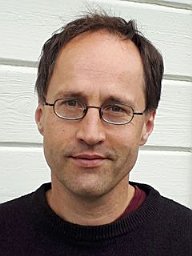 Øivind Skare合作论文数Norwegian Institute of Public Health, University of Bergen2
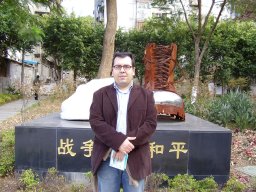 Antonio Sciala合作论文数Dipartimento di Diritto dell’Economia e Analisi Economica delle Istituzioni, Università Roma Tre2
 Ioannis Kosmidis合作论文数Department of Statistics, Faculty of Science, Engineering and Medicine, The University of Warwick2
 Warren Raymond Lee Cairns合作论文数Department of Environmental Sciences, University of Plymouth Plymouth2Gudmund Høst合作论文数The Research Council of Norway2




