This chapter provides a qualitative and quantitative analysis which is primarily based on three characteristics of the rendering performance— the frame rate stability, transient response and adaptive tracking capability. One of the key qualitative metric considered in this research which is important in real-time 3D rendering is frame rate stability. A stable frame rate does not only bring about steady visual display that allows positive user experience, it also carries the benefit of optimised resource usage. This can lead to more effective utilisation of the computer’s processor cycles compared to a “best-effort” technique that does not guarantee a stable frame rate. The transient response of a 3D rendering application refers to the quality of its transition as the frame rate changes from one steady-state level to another typically due to changing performance objective. This quality is particularly important at low frame rate …
Provenance has become an increasingly important part of documenting, verifying, and reproducing scientific research, but as users seek to extend or share results, it may be impractical to start from the exact original steps due to system configuration differences, library updates, or new algorithms. Although there have been several approaches for capturing workflow provenance, the problem of managing upgrades of the underlying tools and libraries orchestrated by workflows has been largely overlooked. In this paper we consider the problem of maintaining and re-using the provenance of workflow upgrades. We propose different kinds of upgrades that can be applied, including automatic mechanisms, developer-specified, and user-defined. We show how to capture provenance from such upgrades and suggest how this provenance might be used to influence future upgrades. We also describe our implementation of these upgrade techniques.
VisTrails is a new system that enables interactive multiple-view visualizations by simplifying the creation and maintenance of visualization pipelines, and by optimizing their execution. It provides a general infrastructure that can be combined with existing visualization systems and libraries. A key component of VisTrails is the visualization trail (vistrail), a formal specification of a pipeline. Unlike existing dataflow-based systems, in VisTrails there is a clear separation between the specification of a pipeline and its execution instances. This separation enables powerful scripting capabilities and provides a scalable mechanism for generating a large number of visualizations. VisTrails also leverages the vistrail specification to identify and avoid redundant operations. This optimization is especially useful while exploring multiple visualizations. When variations of the same pipeline need to be executed, substantial speedups can be obtained by caching the results of overlapping subsequences of the pipelines. In this paper, we describe the design and implementation of VisTrails, and show its effectiveness in different application scenarios.
We introduce a robust moving least-squares technique for reconstructing a piecewise smooth surface from a potentially noisy point cloud. We use techniques from robust statistics to guide the creation of the neighborhoods used by the moving least squares (MLS) computation. This leads to a conceptually simple approach that provides a unified framework for not only dealing with noise, but also for enabling the modeling of surfaces with sharp features.Our technique is based on a new robust statistics method for outlier detection: the forward-search paradigm. Using this powerful technique, we locally classify regions of a point-set to multiple outlier-free smooth regions. This classification allows us to project points on a locally smooth region rather than a surface that is smooth everywhere, thus defining a piecewise smooth surface and increasing the numerical stability of the projection operator. Furthermore, by treating the points across the discontinuities as outliers, we are able to define sharp features. One of the nice features of our approach is that it automatically disregards outliers during the surface-fitting phase.
Tetrahedral meshes are widely used in scientific computing for representing three-dimensional scalar, vector, and tensor fields. The size and complexity of some of these meshes can limit the performance of many visualization algorithms, making it hard to achieve interactive visualization. The use of simplified models is one way to enable the real-time exploration of these datasets. In this paper, we propose a novel technique for simplifying large unstructured meshes. Most current techniques simplify the geometry of the mesh using edge collapses. Our technique simplifies an underlying scalar field directly by segmenting the original scalar field into two pieces: the boundary of the original domain and the interior samples of the scalar field. We then simplify each piece separately, taking into account proper error bounds. Finally, we combine the simplified domain boundary and scalar field into a complete, simplified mesh that can be visualized with standard unstructured-data visualization tools. Our technique is much faster than edge-collapse-based simplification approaches. Furthermore, it is particularly suitable for aggressive simplification. Experiments show that isosurfaces and volume renderings of meshes produced by our technique have few noticeable visual artifacts.
We present the application of hardware accelerated volume rendering algorithms to the simulation of radiographs as an aid to scientists designing experiments, validating simulation codes, and understanding experimental data. The techniques presented take advantage of 32-bit floating point texture capabilities to obtain solutions to the radiative transport equation for X-rays. The hardware accelerated solutions are accurate enough to enable scientists to explore the experimental design space with greater efficiency than the methods currently in use. An unsorted hexahedron projection algorithm is presented for curvilinear hexahedral meshes that produces simulated radiographs in the absorption-only regime. A sorted tetrahedral projection algorithm is presented that simulates radiographs of emissive materials. We apply the tetrahedral projection algorithm to the simulation of experimental diagnostics for inertial confinement fusion experiments on a laser at the University of Rochester.
In this paper we propose a novel visibility-culling technique for optimizing the computation and rendering of opaque isosurfaces. Given a continuous scalar field f(x) over a domain D and an iso-value w, our technique exploits the continuity of f to determine conservative visibility bounds implicitly, i.e., without the need for actually computing the isosurface f/sup 1/(w). We generate implicit occluders based on the change in sign of f*(x) = f(x)-w, from positive to negative (or vice versa) in the neighborhood of the isosurface. Consider, for example, the sign of f* along a ray r cast from the current viewpoint. The first change in sign of f* within D must contain an intersection of r with the isosurface. Any additional intersection of the isosurface with r is not visible. Implicit Occluders constitute a general concept that can be exploited algorithmically in different ways depending on the framework adopted for visibility computations. In this paper, we propose a simple from-point approach that exploits well-known hardware occlusion queries.
We present a new visibility-based prefetching algorithm for interactive out-of-core rendering of large models on an inexpensive PC. Using an approximate visibility technique, we can very accurately and efficiently determine which geometry will be visible in the near future and prefetch that geometry from disk before it must be rendered. Our prefetching algorithm is a key part of a visualization system capable of rendering a 13-million triangle model with 99% accuracy at interactive frame rates. Our prefetching algorithm is the first of its kind to be based on a from-point visibility technique, and enables interactive rendering on a commodity PC, as opposed to expensive high-end graphics workstations or parallel machines.
We present a sort-first parallel system for out-of-core rendering of large models on cluster-based tiled displays. The system renders high-resolution images of large models at interactive frame rates using off-the-shelf PCs with small memory. Given a model, we use an out-of-core preprocessing algorithm to build an on-disk hierarchical representation for the model. At run time, each PC renders the image for a display tile, using an out-of-core rendering approach that employs multiple threads to overlap rendering, visibility computation, and disk operations. The system can operate in approximate mode for real-time rendering, or in conservative mode for rendering with guaranteed accuracy. Running our system in approximate mode on a cluster of 16 PCs each with 512 MB of main memory, we are able to render 12-megapixel images of a 13-million-triangle model with 99.3% of accuracy at 10.8 frames per second. Rendering such a large model at high resolutions and interactive frame rates would typically require expensive high-end graphics hardware. Our results show that a cluster of inexpensive PCs is an attractive alternative to those high-end systems.
The authors propose three simple, but significant improvements to the OoCS (Out-of-Core Simplification) algorithm of P. Lindstrom (2000) which increase the quality of approximations and extend the applicability of the algorithm to an even larger class of compute systems. The original OoCS algorithm has memory complexity that depends on the size of the output mesh, but no dependency on the size of the input mesh. That is, it can be used to simplify meshes of arbitrarily large size, but the complexity of the output mesh is limited by the amount of memory available. Our first contribution is a version of OoCS that removes the dependency of having enough memory to hold (even) the simplified mesh. With our new algorithm, the whole process is made essentially independent of the available memory on the host computer. Our new technique uses disk instead of main memory, but it is carefully designed to avoid costly random accesses. Our two other contributions improve the quality of the approximations generated by OoCS. We propose a scheme for preserving surface boundaries which does not use connectivity information, and a scheme for constraining the position of the "representative vertex" of a grid cell to an optimal position inside the cell.
We present a unified infrastructure for parallel out-of-core isosurface extraction and volume rendering of large unstructured grids on distributed-memory parallel machines. We parallelize the out-of-core isosurface extraction algorithm of Chiang et al. (1998) and the out-of-core ZSweep technique (Farias and Silva, 2001) for direct volume rendering, using the meta-cell technique as a unified underlying building block. Our one-time preprocessing first partitions the dataset into meta-cells that are stored in disk. From the meta-cells, we build a BBIO tree in disk, which can be used to speed up isosurface extraction, and a bounding-box file in disk, which is used for direct volume rendering. At run-time, we use a simple self-scheduling scheme to achieve load balancing among the processors. We perform several experiments on a sixteen-node cluster of PCs connected by a gigabit Ethernet, using datasets as large as 6.6 million cells. For the larger datasets, we have found that both our isosurface extraction and direct volume rendering approaches are perfectly scalable up to sixteen nodes.
 Juliana Freire合作论文数Department of Computer Science and Engineering, Tandon School of Engineering, New York University6
 Carlos E. Scheidegger合作论文数University of Utah5
 HT Vo合作论文数4Yj Chiang合作论文数3shahar fleishman合作论文数3
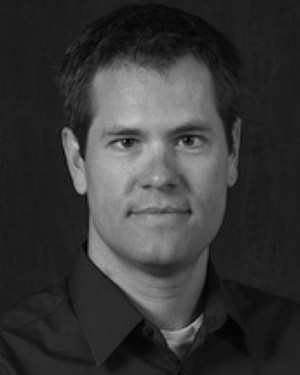 David Koop合作论文数University of Utah3
 Wagner T Correa合作论文数[wtcorrea@glab4 tests]$ g++ -v --save-temps foo.cpp3A. E. Kaufman合作论文数Department of Computer Science
Stony Brook University
3J. T. Klosowski合作论文数Visualization Systems;IBM T. J. Watson Research Center3
Wagner T Correa合作论文数[wtcorrea@glab4 tests]$ g++ -v --save-temps foo.cpp3A. E. Kaufman合作论文数Department of Computer Science
Stony Brook University
3J. T. Klosowski合作论文数Visualization Systems;IBM T. J. Watson Research Center3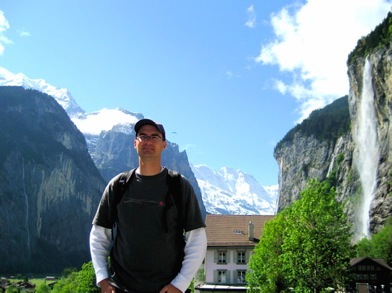 Steven P. Callahan合作论文数Software Engineering at VisTrails, Inc, a startup company spun out from the University of Utah.3
 Peter G. Lindstrom合作论文数Center for Applied Scientific Computing, Lawrence Livermore National Laboratory2
 Valerio Pascucci合作论文数Kahlert School of Computing, University of Utah;Center for Extreme Data Management Analysis and Visualization, University of Utah;Scientific Computing and Imaging Institute, School of Computing, University of Utah;National Science Data Fabric;Pacific Northwest National Laboratory2
 Daniel Cohen-Or合作论文数School of Computer Science, Tel Aviv University2
 Louis Bavoil合作论文数NVIDIA Corporation2R Frank合作论文数1WJ Schroeder合作论文数1S Langer合作论文数1A Sanna合作论文数1C Pavlakos合作论文数1
 Hans-Ulrich Demuth合作论文数1De Rumelhart合作论文数1Jsb Mitchell合作论文数1
 Fabrizio Lamberti合作论文数1Sn Spitz合作论文数1jr jang合作论文数1WS Chan合作论文数1Y-C Lin合作论文数1N Shiraga合作论文数1E Bouvier合作论文数1Liping Shu合作论文数1w k pitts合作论文数1
 Mark L. Claypool合作论文数Department of Computer Science, Worcester Polytechnic Institute1Uesu, D.合作论文数1
 Björn Wittenmark合作论文数Department of Automatic Control, Lunds Universitet1Hanazawa, T.合作论文数1Rachel Craddock合作论文数1
 Thomas A. Badgwell合作论文数Collaborative Systems Integration1Xiong Chao-Peng合作论文数1
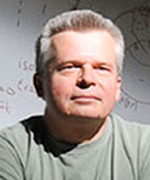 Jarek Rossignac合作论文数Institute for People and Technologyr, College of Computing, Georgia Institute of Technology;GVU Center, College of Computing, Georgia Institute of Technology;School of Interactive Computing, College of Computing, Georgia Institute of Technology;Machine Learning, College of Computing, Georgia Institute of Technology1
 David Luebke合作论文数NVIDIA Corporation1
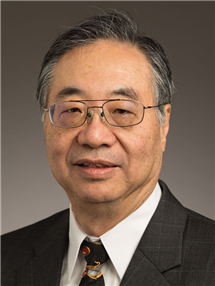 Lui Sha合作论文数Department of Computer Science, The Grainger College of Engineering, University of Illinois Urbana-Champaign;Cyber Physical Systems Integration Laboratory, University of Illinois Urbana-Champaign1
 Sherif Abdelwahed合作论文数Vanderbilt University1
 James A. Ferwerda合作论文数Chester F. Carlson Center for Imaging Science, Rochester Institute of Technology1
 Kiyohiro Shikano合作论文数Graduate School of Information Science, Nara Institute of Science and Technology;NTT Laboratories1
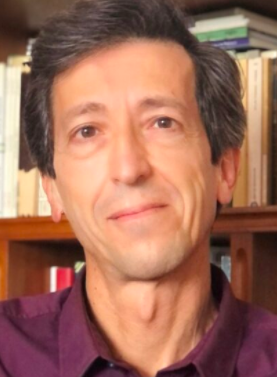 Paolo Cignoni合作论文数Istituto di Scienza e Tecnologie dell'Informazione, Consiglio Nazionale delle Ricerche1
 Enrico Gobbetti合作论文数CRS41H. Stone合作论文数1
 Fabio Pellacini合作论文数Dipartimento di Scienze Fisiche, Informatiche e Matematiche, Università degli Studi di Modena e Reggio Emilia1D. Laney合作论文数1




