Abstract There is a deeply entrenched view in philosophy and physics, the closed systems view, according to which isolated systems are conceived of as fundamental. On this view, when a system is evolving under the influence of its environment, this is always described in terms of a coupling between it and a separate system which taken together are isolated. In this chapter, we introduce the theoretical framework that we call standard quantum theory (ST), formulated in accordance with the closed systems view, and we consider approaches to interpreting the formalism of ST that take it to be complete in some sense. Broadly speaking, these can be grouped into two families. The first includes (neo-)Bohrian and related approaches, the second (neo-)Everettian. We argue, from the point of view of each, that although ST is formulated in accordance with the closed systems view, it is nevertheless ontologically committed to open systems in a way that other, for instance, classical, theoretical frameworks are not. We close with the suggestion that philosophical and foundational progress may be made through the adoption of an alternative theoretical framework, which might in principle involve a change in corresponding view, within which one can make sense of open systems dynamics in fundamental terms.
The concepts of computation and information are becoming increasingly important, both in everyday life and in the sciences [...]
I distinguish two senses in which one can take a given physical theory to be `complete'. On the first, a complete physical theory is one that, in principle, completely describes physical reality. On the second, a complete physical theory is one that provides all of the conceptual resources one needs to describe any (in general probabilistic) physical phenomenon to any level of detail one likes, in principle. I argue that while the (neo-)Everettian approach to interpreting quantum mechanics aims to show that it is complete in the first sense, the (neo-)Bohrian approach begins from an understanding of quantum mechanics as being complete in the second sense. I then discuss some of the essential differences between how classical and quantum theory describe phenomena, and the way in which the quantum description can be thought of as a “natural generalisation” (to use Bohr's phrase) of the classical description. Finally, I elaborate upon the two visions of physics from which one can motivate the first and the second sense of completeness, respectively: metaphysical realism, on the one hand, and what I will call methodological realism, on the other – and discuss what one can say about the significance of the differences between quantum and classical description from each of these points of view. I suggest that there is a sense in which the views of (neo-)Everett and the views of (neo-)Bohr can be understood to be mutually supporting positions, from their respective perspectives, even though they are diametrically opposed.
There is a deeply entrenched view in philosophy and physics, the closed systems view, according to which isolated systems are conceived of as fundamental. On this view, when a system is under the influence of its environment this is described in terms of a coupling between it and a separate system which taken together are isolated. We argue against this view, and in favor of the alternative open systems view, for which systems interacting with their environment are conceived of as fundamental, and the environment's influence is represented via the dynamical equations that govern the system's evolution. Taking quantum theories of closed and open systems as our case study, and considering three alternative notions of fundamentality: (i) ontic fundamentality, (ii) epistemic fundamentality, and (iii) explanatory fundamentality, we argue that the open systems view is fundamental, and that this has important implications for the philosophy of physics, the philosophy of science, and for metaphysics.
I flesh out the sense in which the informational approach to interpreting quantum mechanics, as defended by Pitowsky and Bub and lately by a number of other authors, is (neo-)Bohrian. I argue that on this approach, quantum mechanics represents what Bohr called a “natural generalisation of the ordinary causal description” in the sense that the idea (which philosophers of science like Stein have argued for on the grounds of practical and epistemic necessity) that understanding a theory as a theory of physics requires that one be able to “schematise the observer” within it is elevated in quantum mechanics to the level of a postulate in the sense that interpreting the outcome of a measurement interaction, as providing us with information about the world, requires as a matter of principle, the specification of a schematic representation of an observer in the form of a ‘Boolean frame’—the Boolean algebra representing the yes-or-no questions associated with a given observable representative of a given experimental context. I argue that the approach’s central concern is with the methodological question of how to assign physical properties to what one takes to be a system in a given experimental context, rather than the metaphysical question of what a given state vector represents independently of any context, and I show how the quantum generalisation of the concept of an open system may be used to assuage Einstein’s complaint that the orthodox approach to quantum mechanics runs afoul of the supposedly fundamental methodological requirement to the effect that one must always be able, according to Einstein, to treat spatially separated systems as isolated from one another.
It is argued that those who defend the Everett, or ‘many-worlds’, interpretation of quantum mechanics should embrace what we call the general quantum theory of open systems (GT) as the proper framework in which to conduct foundational and philosophical investigations in quantum physics. GT is a wider dynamical framework than its alternative, standard quantum theory (ST). This is true even though GT makes no modifications to the quantum formalism. GT rather takes a different view, what we call the open systems view, of the formalism; i.e., in GT, the dynamics of systems whose physical states are fundamentally represented by density operators are represented as fundamentally open as specified by an in general non-unitary dynamical map. This includes, in principle, the dynamics of the universe as a whole. We argue that the more general dynamics describable in GT can be physically motivated, that there is as much prima facie empirical support for GT as there is for ST, and that GT could be fully in the spirit of the Everett interpretation—that there might, in short, be little reason for an Everettian not to embrace the more general theoretical landscape that GT allows one to explore.
Review of Slobodan Perović's From Data to Quanta – Niels Bohr's Vision of Physics - Slobodan Perovi ć, From Data to Quanta – Niels Bohr's Vision of Physics. Chicago, IL: The University of Chicago Press (2021), 280 pp., $45 (cloth).
This book offers a thorough technical elaboration and philosophical defense of an objectivist information-theoretic interpretation of quantum mechanics.
From the philosopher's perspective, the interest in quantum computation stems primarily from the way that it combines fundamental concepts from two distinct sciences: physics (especially quantum mechanics) and computer science, each long a subject of philosophical speculation and analysis in its own right. Quantum computing combines both of these more traditional areas of inquiry into one wholly new (if not quite independent) science. There are philosophical questions that arise from this merger, and philosophical lessons to be learned. Over the course of this chapter we discuss what I take to be some of the most important.
This chapterHermann, Grete is about Grete Hermann, a philosopher-mathematician who productively and mutually beneficially interacted with the founders of quantum mechanics in the early period of that theory’s elaboration. HermannHermann, Grete was a neo-Kantian philosopher. At the heartKant, Immanuel of Immanuel Kant’s critical philosophy lay the question of the conditions under which we can be said to know something objectively, a question HermannHermann, Grete found to be particularly pressing in quantum mechanics. Hermann’sHermann, Grete own approach to neo-KantianismFries, Jakob Friedrich was neo-Friesian. Jakob Friedrich Fries, likeKant, Immanuel Kant, had understood critical philosophy to be an essentially epistemic project. FriesFries, Jakob Friedrich departed from KantKant, Immanuel in his account of the elements involved in our cognition. In this chapter it is discussed how, beginning from a neo-Friesian understanding of critical philosophy, HermannHermann, Grete is led to conclude that quantum mechanics shows us that physical knowledge is fundamentally split: that the objects of quantum mechanics are only objects from a particular perspective and in the context of a particular physical interaction. It will be seen how Hermann’sHermann, Grete solution to the problem of objectivity in quantum mechanics is a natural one from a neo-Friesian point of view, even though it disagrees with those offered by more orthodox versions of Kantian doctrine.
Quantum correlations for pairs of particles with higher spin in the singlet state • Designing raffles to simulate these quantum correlations • Classical polyhedra with more and more vertices and facets and getting closer and closer to the elliptope.
Raffles and correlation arrays for experiments to test the CHSH inequality • Deriving the CHSH inequality and the Tsirelson bound for this setup.
This is an extended essay review of Tanya and Jeffrey Bub’s Totally Random: Why Nobody Understands Quantum Mechanics: A serious comic on entanglement. We review the philosophical aspects of the book, provide suggestions for instructors on how to use the book in a class setting, and evaluate the authors’ artistic choices in the context of comics theory. Although Totally Random does not defend any particular interpretation of quantum mechanics, we find that, in its mode of presentation, Totally Random is a beautiful expression and illustration of the information-theoretic interpretation and its value.
Detailed summary of Chapters 2–5 • The interplay between principle-theoretic and constructive approaches to physics • The new kinematics of quantum theory • Examples of problems solved by the new kinematics • Measurement
Peeling and tasting quantum bananas in the Mermin-style setup • Trying to simulate the quantum correlations with classical raffles • Nested classes of correlations: non-signaling cube, quantum elliptope, classical tetrahedron.
FAIR data requires unique and persistent identifiers.Persistent Uniform Resource Locators (PURLs) are one common solution, introducing a mapping layer from the permanent identifier to a target URL that can change over time.Maintaining a PURL system requires long-term commitment and resources, and this can present a challenge for open projects that rely heavily on volunteers and donated resources.When the PURL system used by the Open Biological and Biomedical Ontologies (OBO) community suffered major technical problems in 2015, OBO developers had to migrate quickly to a new system.We describe that migration, the new OBO PURL system that we built, and the key factors behind our design.The OBO PURL system is low-cost and low-maintenance, built on well-established open source software, customized to the needs of the OBO community, and shows how key FAIR principles can be supported on a tight budget.
 Michael Janas合作论文数8
 Michel Janssen合作论文数School of Physics and Astronomy, University of Minnesota7
 Stephan Hartmann合作论文数Munich Center for Mathematical Philosophy, Faculty of Philosophy, Philosophy of Science and Religious Studies, Ludwig-Maximilians-Universitat Munchen4Mckenzie Alexander合作论文数1Phillipa M. Kyle合作论文数1Andrew J. Jason合作论文数1
 Rose-Mary Sargent合作论文数Department of Philosophy, Merrimack College1Derek Turner合作论文数1Emerson P. Doyle合作论文数1Ufuk I. Tasdan合作论文数1michael borgida合作论文数1
 Stephanie Ruphy合作论文数1
 Geoffrey Hellman合作论文数Department of Philosophy, University of Minnesota1Laura M Ruetsche合作论文数1
 John Dupré合作论文数Department of Sociology and Philosophy, University of Exeter1
 Charlie Kurth合作论文数Dept Philosophy, Washington Univ1
 Alan Richardson合作论文数Sch Sport & Hlth Sci, Univ Brighton1
 Manuela Fernandez Pinto合作论文数Universidad de los Andes1
 Aja Watkins合作论文数Dept Philosophy, Boston Univ1
 Hannah Rubin合作论文数University of Notre Dame1Samuel C. Fletcher合作论文数University of Minnesota1Julie Zahle合作论文数University of Bergen1
 Chris Smeenk合作论文数Rotman Inst Philosophy, Univ Western Ontario1Doreen Fraser合作论文数1Robert Northcott合作论文数1
 Paul Teller合作论文数Dept Philosophy, Univ Calif Davis1
 Roberta L. Millstein合作论文数Department of Philosophy, University of California, Davis1
 Mark Sprevak合作论文数Philosophy, School of Philosophy, Psychology and Language Sciences, The University of Edinburgh1
 Michela Massimi合作论文数School of Philosophy, Psychology and Language Sciences, The University of Edinburgh1Mazviita Chirimuuta合作论文数Philosophy, School of Philosophy, Psychology and Language Sciences, The University of Edinburgh1
 Katherine A. Brading合作论文数Department of Philosophy, Trinity College of Arts & Sciences, Duke University1
 Heather Douglas合作论文数Melbourne Law School, The University of Melbourne1
 Gordon Belot合作论文数Department of Philosophy, College of Literature, Science, and the Arts, University of Michigan1
 David Papineau合作论文数Department of Philosophy, Faculty of Arts & Humanities, King’s College London1
 Chris Mungall合作论文数Biosystems Data Science Department, Environmental Genomics and Systems Biology Division, Lawrence Berkeley National Laboratory;Berkeley Institute for Data Science1
 Ryan Muldoon合作论文数1
 James F. Woodward合作论文数Department of History and Philosophy of Science, University of Pittsburgh1
 Stegenga Jacob合作论文数Department of History and Philosophy of Science, University of Cambridge1Weber Marcel合作论文数1
 Edouard Machery合作论文数Department of History and Philosophy of Science, University of Pittsburgh1
 Marta Halina合作论文数Department of History and Philosophy of Science, University of Cambridge1
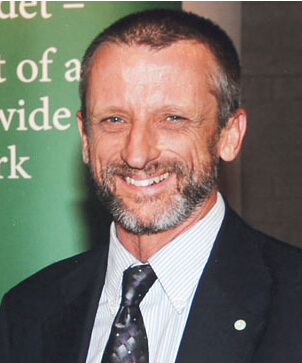 Colin Allen合作论文数Department of Philosophy, University of California, Santa Barbara1
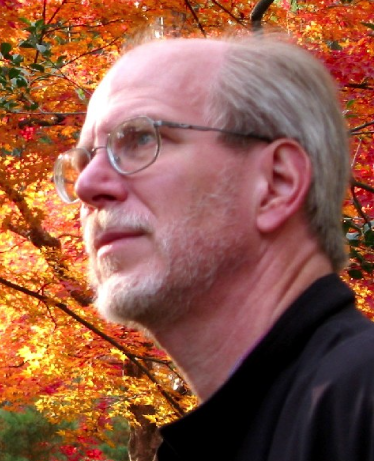 William Bechtel合作论文数Department of Philosophy, University of California, San Diego;Center for Circadian Biology, University of California, San Diego1
 Anna Alexandrova合作论文数Centre for Research in Arts, Social Sciences and Humanities, University of Cambridge;Department of Politics and International Studies, University of Cambridge;Department of History and Philosophy of Science, University of Cambridge1
 Brian Skyrms合作论文数Department of Philosophy, Stanford University;University of California, Irvine1
 Stephen Downes合作论文数1
 Miriam Solomon合作论文数Philosophy Department, Temple University1
 James Owen Weatherall合作论文数Department of Logic and Philosophy of Science, University of California, Irvine;School of Social Sciences, University of California, Irvine1
 Wendy S. Parker合作论文数Department of Philosophy, Ohio University1




