Soft robotic actuators and their inherent compliance can simplify the design of controllers when operating in contact-rich environments. With such structures we can accomplish high-impact, dynamic, and contact-rich tasks that would be difficult using conventional rigid robots which might either break the robot or the object without careful modeling and design of high bandwidth controllers. In order to explore the benefits of structural passive compliance and exploit them effectively, we present a prototype robotic torso named Baloo, designed with a hybrid rigid-soft methodology, incorporating both adaptability from soft components and strength from rigid components. Baloo consists of two meter-long, pneumatically-driven soft robot arms mounted on a rigid torso and driven vertically by a linear actuator. We explore some challenges inherent in controlling this type of robot and build on previous work with rigid robots to develop a joint-level neural-network adaptive controller to enable high performance tracking of highly nonlinear, time-varying soft robot dynamics. We also demonstrate a promising use case for the platform with several hardware experiments performing whole-body manipulation with large, heavy, and unwieldy objects. A video of our results can be viewed at https://youtu.be/eTUvBEVGKXY.
In this paper, we present a modular pressure control system called PneuDrive that can be used for large-scale, pneumatically-actuated soft robots. The design is particularly suited for situations which require distributed pressure control and high flow rates. Up to four embedded pressure control modules can be daisy-chained together as peripherals on a robust RS-485 bus, enabling closed-loop control of up to 16 valves with pressures ranging from 0-100 psig (0-689 kPa) over distances of more than 10 meters. The system is configured as a C++ ROS node by default. However, independent of ROS, we provide a Python interface with a scripting API for added flexibility. We demonstrate our implementation of PneuDrive through various trajectory tracking experiments for a three-joint, continuum soft robot with 12 different pressure inputs. Finally, we present a modeling toolkit with implementations of three dynamic actuation models, all suitable for real-time simulation and control. We demonstrate the use of this toolkit in customizing each model with real-world data and evaluating the performance of each model. The results serve as a reference guide for choosing between several actuation models in a principled manner. A video summarizing our results can be found here: https://bit.ly/3QkrEqO.
Soft robots offer more flexibility, compliance, and adaptability than traditional rigid robots. They are also typically lighter and cheaper to manufacture. However, their use in real-world applications is limited due to modeling challenges and difficulties in integrating effective proprioceptive sensors. Large-scale soft robots (≈ two meters in length) have greater modeling complexity due to increased inertia and related effects of gravity. Common efforts to ease these modeling difficulties such as assuming simple kinematic and dynamics models also limit the general capabilities of soft robots and are not applicable in tasks requiring fast, dynamic motion like throwing and hammering. To overcome these challenges, we propose a data-efficient Bayesian optimization-based approach for learning control policies for dynamic tasks on a large-scale soft robot. Our approach optimizes the task objective function directly from commanded pressures, without requiring approximate kinematics or dynamics as an intermediate step. We demonstrate the effectiveness of our approach through both simulated and real-world experiments.
Legged robots have the potential to cover terrain not accessible to wheel-based robots and vehicles. This makes them better suited to perform tasks such as search and rescue in real-world unstructured environments. In addition, pneumatically-actuated, compliant robots may be more suited than their rigid counterparts to real-world unstructured environments with humans where unintentional contact or impact may occur. In this work, we define design metrics for legged robots that evaluate their ability to traverse unstructured terrain, carry payloads, find stable footholds, and move in desired directions. These metrics are demonstrated and validated in a multi-objective design optimization of 10 variables for a 16 degree of freedom, pneumatically actuated, continuum joint quadruped. We also present and validate approximations to preserve numerical tractability for any similar high degree of freedom optimization problem. Finally, we show that the design trends uncovered by our optimization hold in two hardware experiments using robot legs with continuum joints that are built based on the optimization results.
Because of the complex nature of soft robots, formulating dynamic models that are simple, efficient, and sufficiently accurate for simulation or control is a difficult task. This paper introduces an algorithm based on a recursive Newton-Euler (RNE) approach that enables an accurate and tractable lumped parameter dynamic model. This model scales linearly in computational complexity with the number of discrete segments. We validate this model by comparing it to actual hardware data from a three-joint continuum soft robot (with six degrees of freedom represented in a constant curvature kinematic model). The results show that this RNE-based model can be computed faster than real-time. We also show that with minimal system identification, a simulation performed using the dynamic model matches the real robot data with a median error of 3.15 degrees.
Model-based optimal control of soft robots may enable compliant, underdamped platforms to operate in a repeatable fashion and effectively accomplish tasks that are otherwise impossible for soft robots. Unfortunately, developing accurate analytical dynamic models for soft robots is time-consuming, difficult, and error-prone. Deep learning presents an alternative modeling approach that only requires a time history of system inputs and system states, which can be easily measured or estimated. However, fully relying on empirical or learned models involves collecting large amounts of representative data from a soft robot in order to model the complex state space–a task which may not be feasible in many situations. Furthermore, the exclusive use of empirical models for model-based control can be dangerous if the model does not generalize well. To address these challenges, we propose a hybrid modeling approach that combines machine learning methods with an existing first-principles model in order to improve overall performance for a sampling-based non-linear model predictive controller. We validate this approach on a soft robot platform and demonstrate that performance improves by 52% on average when employing the combined model.
Past work has shown model predictive control (MPC) to be an effective strategy for controlling continuum joint soft robots using basic lumped-parameter models. However, the inaccuracies of these models often mean that an integral control scheme must be combined with MPC. In this paper we present a novel dynamic model formulation for continuum joint soft robots that is more accurate than previous models yet remains tractable for fast MPC. This model is based on a piecewise constant curvature (PCC) assumption and a relatively new kinematic representation that allows for computationally efficient state prediction. However, due to the difficulty in determining model parameters (e.g., inertias, damping, and spring effects) as well as effects common in continuum joint soft robots (hysteresis, complex pressure dynamics, etc.), we submit that regardless of the model selected, most model-based controllers of continuum joint soft robots would benefit from online model adaptation. Therefore, in this paper we also present a form of adaptive model predictive control based on model reference adaptive control (MRAC). We show that like MRAC, model reference predictive adaptive control (MRPAC) is able to compensate for “parameter mismatch" such as unknown inertia values. Our experiments also show that like MPC, MRPAC is robust to “structure mismatch” such as unmodeled disturbance forces not represented in the form of the adaptive regressor model. Experiments in simulation and hardware show that MRPAC outperforms individual MPC and MRAC.
In 1995, over 600 members of the Society have made contributions to the AMS Programs in Support of Science and Education, for a total of over $120,000.These contributions will enable AMS to promote activities in areas that contribute to the understanding and well-
Results are reported for work performed during the first phase of the conceptual design study for a teleoperator visual system. This phase consists of four tasks: General requirements, concept development, subsystem requirements and analysis, and concept evaluation.
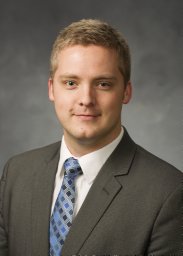 Marc Killpack合作论文数Healthcare Robotics Lab, Georgia Institute of Technology7
 Yicheng Lu合作论文数1Daniel Cheney合作论文数1Albert Kaehn合作论文数1Aymeric Spiga合作论文数1Roger A. Pielke合作论文数1M. P. Panning合作论文数1Vallan Sherrod合作论文数1C. POLHEMUS合作论文数1R. MEIRICK合作论文数1George S. Benton合作论文数1Kenneth Hurst合作论文数1
 Paul Thompson合作论文数1Spencer W. Jensen合作论文数1Sicelukwanda Zwane合作论文数1L. Pou合作论文数1Martin van Driel合作论文数Institute of Geophysics, ETH Zürich1
 Phillip Hyatt合作论文数Brigham Young University1Savas Ceylan合作论文数Inst Geophys, Swiss Fed Inst Technol1
 Constantinos Charalambous合作论文数Imperial Coll London, Dept Elect & Elect Engn, London, England1
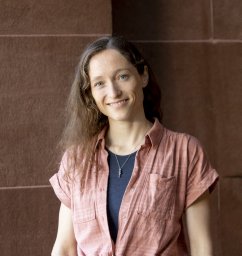 Anna Mittelholz合作论文数Dept Earth Sci, Swiss Fed Inst Technol1
 John-Robert Scholz合作论文数Max Planck Institute for Solar System Research, 37077 Göttingen, Germany.1
 Robert H Carnahan合作论文数Vanderbilt Vaccine Center, and Department of Pediatrics, Vanderbilt University Medical Center1
 Domenico Giardini合作论文数Institut für Geophysik, Eidgenossische Technische Hochschule Zurich;Department of Earth Sciences, Eidgenossische Technische Hochschule Zurich1
 Taylor Sorensen合作论文数University of Washington1
 Simon C. Stähler合作论文数Eidgenössische Technische Hochschule Zürich1
 Francis Nimmo合作论文数Physical and Biological Sciences Division, Earth and Planetary Sciences Department, University of California, Santa Cruz1
 Asok Ray合作论文数Department of Mechanical Engineering, College of Engineering, Pennsylvania State University;Center for Acoustics and Vibration, College of Engineering, Pennsylvania State University1
 David Wingate合作论文数The College of physical and Mathematical Sciences, Brigham Young University1
 Rudolf Widmer-Schnidrig合作论文数Institute of Geophysics;University of Stuttgart;Institute of Geophysics, University of Stuttgart1Eugene W. Bierly合作论文数1L. Kikushima合作论文数1
 Don Banfield合作论文数Department of Astronomy, The College of Arts&Sciences, Cornell University;Cornell Center for Astrophysics & Planetary Science, Cornell University;NASA Ames Research Center1
 Yasemin Bekiroglu合作论文数royal institute of technology1William D. Bonner合作论文数1
 Mark Lemmon合作论文数Space Science Institute1
 Stephen W. James合作论文数Centre for Engineering Photonics, Cranfied University1
 Marc Deisenroth合作论文数The Alan Turing Institute, University College London1John F. Clinton合作论文数Department of Civil Engineering;California Institute of Technology;Department of Civil Engineering, California Institute of Technology1
 Matthew P Golombek合作论文数1
 Philippe Lognonné合作论文数Institut de Physique du Globe de Paris, Université Paris Cité1
 W. Bruce Banerdt合作论文数1
 Ralph Lorenz合作论文数Applied Physics Laboratory, Johns Hopkins University;Space Department, Johns Hopkins University1Ira W. Geer合作论文数1
 A. Craig Lynch合作论文数Department of Surgery Private Bag 4710, Christchurch Hospital Colorectal Unit1




