We stabilize a chosen radio frequency beat note between two optical fields derived from the same mode-locked laser pulse train in order to coherently manipulate quantum information. This scheme does not require access or active stabilization of the laser repetition rate. We implement and characterize this external lock, in the context of two-photon stimulated Raman transitions between the hyperfine ground states of trapped 171Yb(+) quantum bits.
We report entanglement of a single atom's hyperfine spin state with its motional state in a time scale of less than 3 ns. We engineer a short train of intense laser pulses to impart a spin-dependent momentum transfer of ± 2 ħk. Using pairs of momentum kicks, we create an atomic interferometer and demonstrate collapse and revival of spin coherence as the motional wave packet is split and recombined. The revival after a pair of kicks occurs only when the second kick is delayed by an integer multiple of the harmonic trap period, a signature of entanglement and disentanglement of the spin with the motion. Such quantum control opens a new regime of ultrafast entanglement in atomic qubits.
We present an experimental study of the dynamics of a two-level system driven by strong nonresonant electromagnetic pulses as a function of pulse intensity and detuning. We have explored the qualitative and quantitative behavior of the transition probability as a function of pulse area for five different temporal profiles: Lorentzian, Lorentzian squared, hyperbolic secant, hyperbolic secant squared, and Gaussian. The two-level system consists of a fine-structure doublet in sodium Rydberg states coupled by Raman transitions driven through far-off-resonance intermediate states. The pulses are in the microwave regime and have high fidelity and uniform intensity. Experiments show that, despite the similarity in the pulse shapes, the behavior of the population transfer versus intensity depends dramatically on the temporal shape and that the spectral properties and area of the pulse do not adequately describe the response.
Author(s): Campbell, WC; Conover, C; Hayes, D; Hucul, D; Matsukevich, DN; Maunz, P; Mizrahi, J; Olmschenk, S; Quraishi, Q; Senko, C; Monroe, C | Editor(s): Ertmer, W; Scholz, R | Abstract: Single- and multi-qubit operations for trapped ion hyperfine or Zeeman qubits are typically implemented by continuous-wave lasers driving stimulated Raman transitions. Here we report two distinct regimes for driving these transitions with mode-locked pulsed lasers instead of cw systems. In the resolved-sideband regime, multiple pulses from a mode-locked laser constructively accumulate transition amplitude to drive the gate. In the regime where the pulse train is shorter than the oscillation period of motional modes, the mode spectrum is unresolvable and all allowed sidebands are driven simultaneously. We demonstrate a single qubit gate in about 50 ps in this regime, and discuss extensions to multi-qubit gates.
Submitted for the DAMOP11 Meeting of The American Physical Society Injection locking of 767 nm laser diodes with RF modulation CHARLES CONOVER, Colby College — We have explored RF modulation of 767 nm injection-locked diode lasers as a way to generate the two colors, separated by approximately 462 MHz, necessary for magneto-optical trapping of K-39. We discuss the differences in behavior between standard Fabry-Perot lasers and antireflectioncoated diodes, and the behavior of the lasers with changes in temperature, DC bias current, RF power, injected laser intensity, and modulation frequency. Using modest (<10 mW) RF power, we are able to stably generate optical power in the first-order sidebands of greater than 25% of the carrier power, with significant asymmetry between the upper and lower sidebands affected by appropriate choice of parameters. Charles Conover Colby College Date submitted: 04 Feb 2011 Electronic form version 1.4
A liquid-crystal-based, laser-pulse shaper has been used in combination with an adaptive genetic feedback algorithm to investigate closed-loop control of intense laser fragmentation of S-8 molecules. We observe that the yield ratios S-N(+):S-M(+), for the production of specific charged fragments S-N(+) and S-M(+), can be enhanced by > 300% relative to those observed using transform-limited 150-fs laser pulses. We have explored the effectiveness of time- and frequency-domain pulse parametrizations while shaping either (i) only the spectral-phase distribution or (ii) the spectral-phase and amplitude distributions of the light. We find that pulse complexity, requiring control beyond simple manipulation of the peak pulse intensity and duration, is critical for optimizing the yield ratios for most species. The "optimum" pulse shapes obtained using different pulse parametrizations show significant differences while yielding similar signal enhancements. In some cases, comparison of the different optimum pulse shapes appears to be a useful method for identifying pulse traits that are, or are not, important for manipulating a particular yield ratio. The importance of specific traits in the optimum pulse shapes is also explored numerically using principal control analysis. We conclude that closed-loop control can be effective for optimizing highly nonlinear strong-field processes. However, in general, intensity variations in a focused laser beam severely limit one's ability to associate the optimization results with specific dynamical mechanisms that bear primary responsibility for the control.
 M. C. Doogue合作论文数7y a yang合作论文数5L. Bloomfield合作论文数5julia h rentz合作论文数4
 Wes Campbell合作论文数Department of Physics and Astronomy, University of California, Los Angeles3
 Christopher Monroe合作论文数Department of Physics, University of Maryland3Jonathan Mizrahi合作论文数Joint Quantum Institute;Department of Physics;University of Maryland3
 Tom Gallagher合作论文数Department of Physics, University of Virginia3Eddie N. Wells合作论文数3
 Philip H. Bucksbaum合作论文数Department of Physics, Stanford University;Department of Applied Physics, Stanford University;Stanford Synchrotron Radiation Laboratory, Stanford University;SLAC National Accelerator Laboratory, Stanford University3J. M. Caraher合作论文数2c senko合作论文数2Jared K. Wahlstrand合作论文数College Pk, Univ Maryland2
 Dzmitry Matsukevich合作论文数Department of Physics, Faculty of Science, National University of Singapore2
 Kale Johnson合作论文数Department of Physics and National Institute of Standards and Technology, University of Maryland2
 Roy Clarke合作论文数Department of Physics, College of Literature, Science, and the Arts, University of Michigan;Endectra, LLC2
 Rosie Jones合作论文数Spotify2
 David Hucul合作论文数FOCUS Center and Department of Physics, University of Michigan2
 Matthew Decamp合作论文数2
 Roberto Merlin合作论文数Department of Electrical Engineering and Computer Science, University of Michigan2
 David Reis合作论文数Department of Applied Physics, Stanford University;Center for Nanosciences and Engineering, Stanford University;National Accelerator Laboratory2Qudsia Quraishi合作论文数2
 Vladimir Alexandru Stoica合作论文数Department of Materials Science and Engineering, College of Earth and Mineral Sciences, The Pennsylvania State University2E.E. Edwards合作论文数1K. J. Betsch合作论文数1C. H. Cheng合作论文数1
 Shantanu Debnath合作论文数1Stephen Louria合作论文数1Carlvin Sanon合作论文数1Max Eberhart合作论文数1Pamela DuPre合作论文数1
 Huan Q. Bui合作论文数1Ai Phuong Tong合作论文数1taeyoung choi合作论文数1
 Kenny Lee合作论文数Google Res, Mountain View, CA 94043 USA1
 Eric Dufresne合作论文数Department of Materials Science & Engineering, Cornell Engineering, Cornell University;Department of Physics, Cornell University;Laboratory of Soft and Living Materials, Cornell University1
 I Volkan Inlek合作论文数1Manning, T.A.合作论文数1Aaron Lee合作论文数Department of Physics, and National Institute of Standards and Technology, University of Maryland1
 Islam Rajibul合作论文数Department of Physics, Harvard University1Crystal Senko合作论文数Department of Physics and National Institute of Standards and Technology, University of Maryland1Fields B合作论文数1
 Robert Jones Jr.合作论文数Department of Physics, University of Virginia;College and Graduate School of Arts & Sciences, University of Virginia1A. J. Hundhausen合作论文数1
 David L. Hayes合作论文数BIOTRONIK1
 Steven Olmschenk合作论文数Joint Quantum Institute;University of Maryland;Department of Physics;National Institute of Standards and Technology;National Institute of Standards and Technology, University of Maryland1
 Simcha Korenblit合作论文数Irkutsk State University1
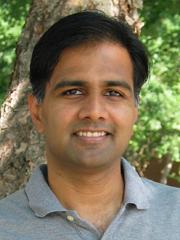 Chandra Raman合作论文数School of Physics, College of Sciences, Georgia Institute of Technology1
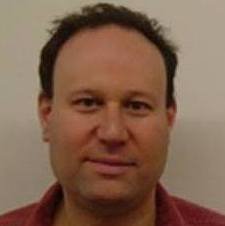 Charles I. Sukenik合作论文数Department of Physics, Old Dominion University1




