Inequality is a defining challenge of societies across history, and psychology research can support understanding of its persistence and impacts. In this Perspective, we advance scholarship by understanding inequality in terms of psychology’s function in producing structures of domination or promoting resistance to those structures, rather than situating inequality as caused by deficits in individual behaviour and psychology. We review scholarship on domination and resistance that highlights the utility of this functional lens, as well as its potential to advance understanding of inequality. We then provide four steps that researchers can take to study inequality from a functional lens: questioning causal assumptions of existing psychological models that focus on deficit-based mental states; studying impacts of inequality rather than intentions of actors in unequal settings; embracing immersive methods and practices that engage with the complexity of structural inequality; and applying research that uses cross-level analytic techniques to examine relationships between individual psychology and societal structures. Deficit-based models assume that inequality arises because of deficiencies among low-status individuals. In this Perspective, Kraus et al. propose a functional approach to inequality wherein psychological processes that arise from structural context promote actions that either support or dismantle structures of inequality.
Objectivity norms can act as a source of mistrust of marginalized voices within organizations. In this paper, we study White evaluators' perceptions of Black applicants' objectivity and hireability in a field where objectivity is considered imperative: journalism. We predicted that Black journalists will be viewed as less objective and as having more ingroup bias regarding racial issues coverage compared to White journalists. Importantly, we expected these patterns to emerge in opposition to hiring judgments that would, overall, favor Black journalists over White journalists for roles reporting on racial issues due to perceptions of their racial expertise. Meta-analyses of three samples (N = 1725) found that White perceivers rated Black journalists as less objective and more biased, yet more racially expert and hireable, than White journalists. In follow up correlational analysis we found consistent evidence that perceptions of racial expertise positively impact hiring judgments for Black journalists even as perceptions of objectivity suppress hiring preferences. Overall, these studies illuminate the costs of racial marginalization in primarily-White workplaces, even when there are apparent hiring advantages, and demonstrate potential barriers to inclusion and accurate racial issues coverage.
Scholars of color remain underrepresented in US institutions in academia. In this paper, we will examine one factor that contributes to their continued marginalization in psychology and management: the scientific method's commitment to traditional notions of objectivity. We argue that objectivity-defined as practices and policies rooted in the heightened value placed on a research process that is ostensibly free from bias-is central to the prominence of primarily White scholarship in psychology and management research and remains central to knowledge production. To investigate this, we employ a mixed-methods approach, integrating qualitative and quantitative data to codify how scholars of color experience objectivity interrogations, or written and verbal questioning in academic contexts that implicates their scientific rigor. We also identify how scholars of color engage in objectivity armoring, or self-presentational strategies (toning down and stepping up) to contend with these interrogations. Finally, we reveal these toning down processes in language use within publications on racial scholarship. Overall, these studies reveal the unique challenges scholars of color face to legitimize and validate their work on race and racism within predominantly White institutions and disciplines.
Management scholars have long examined gender disparities in leaders' communication and followers' reactions. There is, however, a paucity of research that takes an intersectional perspective. This article takes that step, using an intersectional lens to examine women leaders' use of dominant language and how others receive it. Leveraging advances in natural-language processing, I analyzed the stereotype content of more than 250,000 Congressional remarks (Study 1) and almost one million tweets (Study 2) by leaders. Women leaders referenced dominance more than men did (using more words like "powerful"), violating stereotypes that depict women as submissive. However, as theory on racialized gender stereotypes suggests, this effect was unique to White leaders. Two additional studies revealed backlash to women leaders' use of dominant language. Analyzing almost 18,000 editorials revealed the more that women leaders referenced dominance, the more they were portrayed as dominant but also cold. Effects were strongest for Black and Latina women (Study 3). Finally, an experiment using simulated social media profiles found the more that Black women (but not men) leaders referenced dominance, the more voters rated them as less likeable, a result that was unique to Black leaders (Study 4). The article demonstrates the critical importance of intersectionality for understanding gender inequality in leaders' communication and its reception by the media and the public.
How can social psychologists ensure their scholarship does not maintain racial inequality-or better, is anti-racist? This article serves as a reference for scholars by briefly reviewing the state of racial inequality in psychological science before providing concise yet comprehensive recommendations. Challenges include (a) the field's historic role in inequality-maintenance (especially by reinforcing harmful stereotypes), (b) pervasive objectivity norms that reify Whiteness as the status quo, and (c) the inequitable allocation of resources to White scholars and White-centered scholarship. Recommendations center on (a) methodological practices during the research process (from idea generation to manuscript preparation), (b) empirical transparency from scholars during the publication process, and (c) institutional, resource-focused support from gatekeepers (e.g., editors, senior faculty) to incentivize the diversification of our science.
When confronting acts of prejudice in the workplace, advantaged group confronters may solicit input—or voice—from employees who belong to disadvantaged groups, thereby involving them (potentially against their will) in the confrontation. Across three pre-registered studies (N=1448) —using multiple prejudice confrontation and voice solicitation situations and different disadvantaged groups (i.e., women and racially marginalized individuals)—we find that doing so has negative affective consequences for the disadvantaged group member and negative evaluative consequences for the ally. Specifically, members of disadvantaged groups whose voices are directly solicited by an ally during a prejudice confrontation experience greater emotional burden; in turn, they view the ally as less deserving of status and seek to minimize their future exposure to the ally. We also demonstrate that this effect is contingent on two factors: whether the perpetrator of prejudice is present (or absent) when the confronter solicits voice, and how directly they solicit voice from the disadvantaged group member. Together, our findings highlight the theoretical value and practical importance of examining prejudice confrontations from the disadvantaged group member’s perspective.
The year 2020 was an awakening into the racial disparities that exist across the United States and within health care. Global protests after the murder of George Floyd were a poignant recognition of the disproportionate—and often deadly—burden for those who identify as Black, Indigenous, and People of Color (BIPOC). Systemic inequalities within our health system are well documented. From birth to death, BIPOC Americans experience poorer health outcomes than White Americans. For example, Black women have lower screening mammography rates than White women [1], which contributes to higher mortality rates due to higher-grade malignancies and later-stage diagnoses.
In their analysis in a previous issue of Perspectives on Psychological Science, Roberts and colleagues argued that the editors, authors, and participants throughout subfields of psychological science are overwhelmingly White. In this commentary, we consider some of the drivers and consequences of this racial inequality. Drawing on race scholarship from within and outside the field, we highlight three phenomena that create and maintain racial inequality in psychology: (a) racial ignorance, (b) threats to belonging, and (c) racial-progress narratives. We close by exploring steps that journals and authors can take to reduce racial inequality in our field, ending with an appeal to consider the experience of scholars of color in race scholarship and in psychological science more broadly.
In this symposium, we demonstrate the importance of an intersectional lens in understanding inequity in organizations. How people experience and navigate organizations is unlikely to be singularly determined by one aspect of their identity. Rather, people are multifaceted, belonging to a number of identity groups, and more nuanced theory in diversity, equity, and inclusion aids in better understanding organizational behavior in light of this reality. Across four presentations highlighting the intersections of ethnicity, gender, and status, we demonstrate how inequity persists in organizations and the need for more intersectional theories in management scholarship. The Importance of Intersectionality for Understanding the Use and Reception of Dominant Language Presenter: Cydney Dupree; Yale School of Management Growing Apart: Hair-based Stigma and Racial Segregation in America’s Institutions Presenter: Tosen Nwadei; Emory U., Goizueta Business School White liberals downshift warmth to high (vs. low) status Black partners Presenter: Arielle Lewis; Emory U. Intersectional Stereotypes as a Function of Intergroup Contrast: Implications for Hiring Decisions Presenter: Christopher Petsko; Kenan-Flagler Business School, U. of North Carolina at Chapel Hill
Race is fraught with meaning, but unequal status is central. Race-status associations (RSAs) link White Americans with high status and Black Americans with low status. RSAs could occur via observation of racially distributed jobs, perceived status-related stereotypic attributes, or simple ranking. Nine samples (N = 3,933) validate three novel measures of White=high status/Black=low status RSAs—based on jobs, rank, and attributes. First, RSA measures showed clear factor structure, internal validity, and test-retest reliability. Second, these measures differentially corresponded to White Americans’ hierarchy-maintaining attitudes, beliefs, and preferences. Potentially based on observation, the more spontaneous Job-based RSAs predicted interracial bias, social dominance orientation, meritocracy beliefs, and hierarchy-maintaining hiring or policy preferences. Preference effects held after controlling for bias and support for the status quo. In contrast, the more deliberate Rank- and Attribute-based RSAs negatively predicted hierarchy-maintaining beliefs and policy preferences; direct inferences of racial inequality linked to preferences for undoing it. Third, Black=low status, rather than White=high status, associations largely drove these effects. Finally, Black Americans also held RSAs; Rank- or Attribute-based RSAs predicted increased perceived discrimination, reduced social dominance, and reduced meritocracy beliefs. Although individuals’ RSAs vary, only White Americans’ Job- based stratifying associations help maintain racial status hierarchies. Theory-guided evidence of race-status associations introduces powerful new assessment tools.
Prior work suggests that high-status group members are favored for hierarchy-maintaining roles, while lowstatus group members are favored for hierarchy-attenuating ones-but the mechanisms driving this phenomenon are largely unknown. The current work examines this phenomenon in the domain of race, testing three potential mechanisms: role status, representativeness, and hierarchy profiling. According to a role status account, hierarchy-maintaining roles are seen as higher-status than hierarchy-attenuating ones, driving effects. A representativeness account suggests that hierarchy-maintaining roles are seen as including more White (or fewer minority) job-holders than hierarchy-attenuating ones, driving effects. Finally, a hierarchy profiling account suggests that evaluators see the typical hire for hierarchy-maintaining roles as more conservative (or less liberal), driving effects. In three studies, White evaluators rated a White male applicant a better fit for a hierarchymaintaining role (e.g., CEO of a hedge fund) than a hierarchy-attenuating one (e.g., CEO of a nonprofit). There was, however, no impact of a role's perceived impact on inequality on ratings of Black male or Latino applicant fit (Studies 1-3). This effect persisted regardless of role status (Study 2), negating a role status account. However, a final study supported representativeness and hierarchy profiling accounts. White evaluators rated the typical hire for a hierarchy-maintaining role as more White and conservative, mediating ratings of White applicant fit (Study 3). Three supplemental studies replicated all results. Findings reveal the mechanisms that can hold social hierarchy in place, keeping high-status group members in hierarchy-maintaining roles and low-status group members in hierarchy-attenuating ones.
Research on hierarchy within organizations tends to focus on hierarchies of individuals within a group (intragroup hierarchy) or on hierarchies composed of groups, such a race- and gender-based hierarchies (intergroup hierarchy). Although both types of hierarchies impact individuals in organizations, the literatures on intra- and intergroup hierarchy run largely separately without significant cross-fertilization. This is likely to the detriment of both literatures: many ideas fundamental to hierarchy at one level of analysis are virtually or totally underexplored on the other level of analysis, undoubtedly leading to problematic gaps in our theorizing. This panel symposium will engage a group of expert panelists in a formal, moderated discussion of how intra- and intergroup hierarchy research can be integrated. We expect that more integrative theorizing will be a boon to the literature on hierarchy and that it will bolster organizational researchers’ ability to provide actionable recommendations to frontline managers around the globe.
Recent events in the United States have sparked a renewed interest in inequality, discrimination, and social injustice. Yet engaging in behaviors that enact social change is often a complex decision, for both members of marginalized and majority groups. Given the complex challenges people from different groups face when working toward greater social equity, it is imperative to understand the specific behaviors people engage in to enact social change, the decision-making process underlying these behaviors, and their downstream consequences. To this end, the proposed symposium considers how and why employees tackle concerns with inequality and push for social change within and beyond their organization, with a focus on the ways in which individuals leverage their unique social identities and/or account for the unique benefits and constraints associated with their identities. The papers in this symposium draw on both qualitative and quantitative research across organizational contexts (e.g., in Congress, among boards of directors) and multiple theoretical foundations (e.g., boundary and identity management, intersectionality, social role theories) to contribute to important ongoing conversations about diversity, inequality, identities, and social change. You Can’t Be What You Can’t See: Unpacking Role Models of Marginalized Group Members Presenter: Karren Kimberly Knowlton; Tuck School of Business at Dartmouth How Minorities Leverage Racial Identity to Minimize Stigma and Achieve Social Change Presenter: Keana Richards; U. of Pennyslvania Presenter: Rachel Arnett; The Wharton School, U. of Pennsylvania Presenter: Patricia Faison Hewlin; McGill U. When and How Corporate Board Directors Leverage Their Demographic Identities to Advance Justice Presenter: Stephanie J. Creary; The Wharton School, U. of Pennsylvania Words of a Leader: An Intersectional Analysis of Gender Differences in Leaders’ Speech Presenter: Cydney Dupree; Yale School of Management
How do people understand racial equality in the United States? Do different understanding of equality stall progress? In the target article, Lewis (this issue) explores these questions. He challeng...
In an ideal world, academia serves society; it provides quality education to future leaders and informs public policy—and it does so by including a diverse array of scholars. However, research and recent protest movements show that academia is subject to race-based inequities that hamper the recruitment and retention of scholars of color, reducing scientific impact. This article provides critical systemic context for racism in academia before reviewing research on psychological, interpersonal, and structural challenges to reducing racial inequality. Policy challenges include (a) the cultivation of harmful stereotypes, (b) the education of racially ignorant future leaders, and (c) the dedication of resources to science that informs only a few, rather than many. Finally, recommendations specify critical features of hiring, retention, transparency, and incentives that can diversify academia, create a more welcoming environment to scholars of color, and maximize the potential for innovative and impactful science.
Racial minorities vary in their sociopolitical views, as figures such as Barack Obama and Ted Cruz often demonstrate. Here, I examine the implications for interracial behaviour, proposing that Black and Latinx conservatives-specifically, those who are more supportive of hierarchy-upshift competence relative to liberals in mostly white settings, distancing themselves from stereotypes. Analysing 250,000 Congressional remarks and 1 million tweets revealed that Black and Latinx conservatives (determined by voting behaviour) referenced high power and ability more than liberals. No such pattern emerged for white politicians. A meta-analysis of four experiments further revealed that Black conservatives (determined by social dominance orientation) referenced high status more than liberals when responding to a white (but not Black) partner. This was robust to controls and unique to hierarchy-based conservatism. Finally, analysing 18,000 editorials suggested the following implications: the more minority conservatives referenced power in Congress, the more journalists referenced power in editorials about them. The findings highlight the diverse ideology of racial minorities, as well as the behavioural implications. The political views of racial minorities vary. By analysing political speech, tweets and written introductions, Dupree finds that, in mostly white settings, Black and Latinx conservatives referenced high competence more than liberals, reversing stereotypes.
Americans remain unaware of the magnitude of economic inequality in the nation and the degree to which it is patterned by race. We exposed a community sample of respondents to one of three interventions designed to promote a more realistic understanding of the Black-White wealth gap. The interventions conformed to recommendations in messaging about racial inequality drawn from the social sciences yet differed in how they highlighted data-based trends in Black-White wealth inequality, a single personal narrative, or both. Data interventions were more effective than the narrative in both shifting how people talk about racial wealth inequality-eliciting less speech about personal achievement-and, critically, lowering estimates of Black-White wealth equality for at least 18 mo following baseline, which aligned more with federal estimates of the Black-White wealth gap. Findings from this study highlight how data, along with current recommendations in the social sciences, can be leveraged to promote more accurate understandings of the magnitude of racial inequality in society, laying the necessary groundwork for messaging about equity-enhancing policy.
In their analysis, Roberts and colleagues (2020) argue that the editors, authors, and participants throughout subfields of psychological science are overwhelmingly White. In this comment, we consider some of the drivers and consequences of this racial inequality. Drawing on race scholarship from in and outside the field, we highlight three phenomena that create and maintain racial inequality in psychology: (1) racial ignorance, (2) threats to belonging, and (3) racial progress narratives. We close by exploring steps that journals and authors can take to reduce racial inequality in our field, ending with an appeal to consider the experience of scholars of color in race scholarship and in psychological science more broadly.
 Susan Fiske合作论文数Department of Psychology, Princeton University;School of Public and International Affairs, Princeton University12
 Brittany Torrez合作论文数Sch Management, Yale Univ8
 Molly Magill合作论文数Department of Behavioral and Social Sciences,School of Public Health, Brown University/Center for Alcohol and Addiction Studies,School of Public Health, Brown University6
 Timothy Apodaca合作论文数Children's Mercy Hospital, University of Missouri-Kansas City School of Medicine6
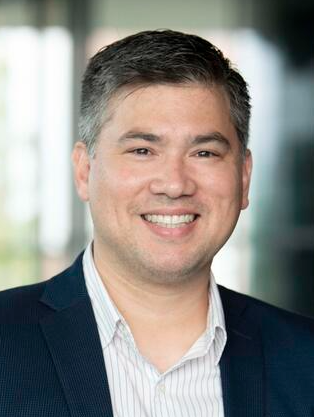 Michael W. Kraus合作论文数School of Management, Yale University5
 Swencionis Jillian K合作论文数Princeton University4
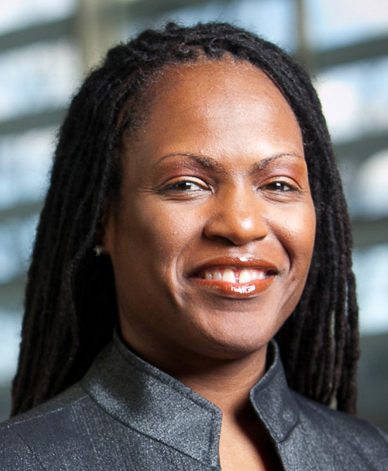 Ashleigh Shelby Rosette合作论文数Management and Organization, Fuqua School of Business, Duke University2
 Stephanie Creary合作论文数Management Department, The Wharton School, University of Pennsylvania2
 Eric M. Anicich合作论文数Management Department, Columbia Business School2Walthers Justin合作论文数2
 Obianuju A Obioha合作论文数aPsychology Department, Princeton University;Behavioral Pediatrics, Steven &Alexandra Cohen Children's Medical Center of New York2
 Jacques Gaume合作论文数2Danqiao Cheng合作论文数1Tosen Nwadei合作论文数1Kristin Bain合作论文数Rochester Inst Technol1Marc Rotenberg合作论文数1Melissa A Davis合作论文数1Arielle Lewis合作论文数1Merrick R. Osborne合作论文数1
 Sa-kiera Tiarra Jolynn Hudson合作论文数1Leilah Harouni合作论文数1
 Nathan L. Meikle合作论文数Management & Org, Univ Notre Dame1
 Kaylene McClanahan合作论文数University of California, Los Angeles1
 Karren Kimberly Knowlton合作论文数Dartmouth College1
 Serenity Sai-Lai Lee合作论文数1
 Christopher Petsko合作论文数Fuqua Sch Business, Duke Univ1
 Jennifer Dannals合作论文数Dept Strategy & Management, Dartmouth Coll1
 Karsten Muller合作论文数Dept Econ, Princeton Univ1Rebecca Ponce de Leon合作论文数1Joyce C. He合作论文数1Sarah P. Doyle合作论文数Management & Org, Univ Arizona1
 Steven L. Blader合作论文数Department of Management and Organizations, Leonard N. Stern School of Business, New York University1
 Miguel Unzueta合作论文数Department of Psychology, College of Life Sciences, University of California, Los Angeles1
 Patricia Faison Hewlin合作论文数Desautels Faculty of Management, McGill University1
 Morela Hernandez合作论文数Gerald R.Ford School of Public Policy, University of Michigan-Ann Arbor1
 Lindred Greer合作论文数Stephen M. Ross School of Business, University of Michigan-Ann Arbor1
 Jennifer Richeson合作论文数Social Perception & Communication Laboratory, Department of Psychology, Yale University;Institution for Social and Policy Studies, Yale University;Stone Center on Socioeconomic Inequality, City University of New York;Diversity Science Summer Institute, Center for Advanced Study in the Behavioral Sciences, Stanford University1
 Rachel Arnett合作论文数Management Department, The Wharton School, University of Pennsylvania1
 Daniel R. Ames合作论文数Management Division, Columbia Business School, Columbia University1
 Eden King合作论文数Department of Psychological Sciences, School of Social Sciences, Rice University1
 Chou Eileen Y合作论文数1
 Rosalind M. Chow合作论文数Organizational Behavior and Theory Faculty, Tepper School of Business, Carnegie Mellon University/Social and Decision Sciences, Dietrich College of Humanities and Social Sciences, Carnegie Mellon University1
 Hall Erika V合作论文数Emory University1Meltzer Carolyn C合作论文数1
 Deborah Son Holoien合作论文数Princeton University1
 Bennett Callaghan合作论文数Department of Psychology, University of Illinois1Phillips L Taylor合作论文数1
 Gandalf Nicolas合作论文数Department of Psychology, Pontificia Universidad Católica Madre y Maestra1Constantine Vanessa S合作论文数1




