As the agency focuses on lunar missions, it is important to revisit the human factors and behavioral performance (HFBP) challenges for long duration exploration missions. We outline the important factors from the Apollo program, the long duration experience gained onboard International Space Station (ISS), and HFBP research applicable to exploration-class missions.
Human-in-the loop (HITL) simulations cannot collect enough data from human operators to validate estimates of error probabilities for task components. Error rates for tasks have been estimated by using laboratory data for error rates depending on variables such as the cognitive complexity of the task. The limited channel capacity of human operators compels error rates to be strongly related to the time available for the task, the speed-accuracy trade-off. HITL simulations can provide valuable data on the time available for the operator's tasks. We propose that the response times be used in conjunction with measured speed-accuracy curves to estimate the operator error rates contributing to mission failure. Such analyses should be especially important in the estimation of error rates in off-nominal situations.
A human factors team was tasked with assessing best practices for developing a crewed space vehicle that is both reliable and robust. The team identified two broad dimensions of human factors relevant to reliability and robustness, namely, the attributes of the product, and the processes used to develop the product. The “product” includes hardware, software, documentation, training systems, and procedures throughout all phases of the system life, including construction, testing, operation and maintenance. Three key attributes of the product are the extent to which task demands are within human capabilities, the capacity of the system to cope with human error, and the ability of the system to make use of unique human capabilities during non-routine situations. The “process” dimension of human factors relates to the human systems engineering program that starts in the early stages of design, and continues throughout the life of the system. There are, of course, no guarantees that a formal consideration of human factors throughout the design process will identify all the relevant human issues. However, in the absence of such a consideration, problems are virtually assured.
There is a need for incident data relevant to the operation of civilian unmanned aircraft systems (UAS) in the National Air Space (NAS). Currently, very limited incident and accident data are available from military sources, and the tightly-restricted civilian UAS industry has produced very few incident reports that could shed light on design issues relevant to human factors. An exploratory study is being conducted to examine the feasibility of collecting voluntary critical incident reports from UAS pilots, and using the information to identify areas where human factors guidelines will be of assistance. Experienced UAS pilots are participating in small focus groups in which they are prompted to describe critical incidents that either reveal a system flaw, or highlight a case where the human operator contributed to system resilience or mission success. The de-identified incidents are being analyzed to identify contributing factors, with a focus on design issues that either hindered or assisted the pilot in dealing with the incident. Preliminary findings will be described.
What was unthinkable as little as five years ago now seems to be on the brink of becoming a reality in the foreseeable future – a world in which commercial space travel is as commonplace as commercial aviation travel is today. The scientific research community will play a vital role in achieving this reality while supporting the safety of both passengers and crews. This will require the application of sound human factors theories, principles, and practices to develop effective training programs and countermeasures as well as to design viable habitats on board commercial space vehicles for these new space travelers. Accordingly, the objective of this multidisciplinary discussion panel will be to identify and discuss the human factors issues that warrant investigation to support the safe and efficient advance of commercial human space operations.
In June 2004, the June Space Flight Leadership Council (SFLC) assigned an action to the NASA Engineering and Safety Center (NESC) and External Tank (ET) project jointly to characterize the available dataset [of defect sizes from dissections of foam], identify resultant limitations to statistical treatment of ET as-built foam as part of the overall thermal protection system (TPS) certification, and report to the Program Requirements Change Board (PRCB) and SFLC in September 2004. The NESC statistics team was formed to assist the ET statistics group in August 2004. The NESC's conclusions are presented in this report.
Severe thunderstorms with associated hail and high winds struck the STS-117 stack on February 26, 2007. Peak winds were recorded at 62 knots with hail sizes ranging from 0.3 inch to 0.8 inch in diameter. As a result of the storm, the North Carolina Foam Institute (NCFI) type 24-124 Thermal Protection System (TPS) foam on the liquid oxygen (LO2) ogive acreage incurred significant impact damage. The NCFI on the ET intertank and the liquid hydrogen (LH2) acreage sustained hail damage. The Polymer Development Laboratory (PDL)-1034 foam of the LO2 ice frost ramps (IFRs) and the Super-Lightweight Ablator (SLA) of the LO2 cable tray also suffered minor damage. NASA Engineering and Safety Center (NESC) was asked to assess the technical feasibility of repairing the ET TPS, the reasonableness of conducting those repairs with the vehicle in a vertical, integrated configuration at the Kennedy Space Center (KSC) Vehicle Assemble Building (VAB), and to address attendant human factors considerations including worker fatigue and the potential for error. The outcome of the assessment is recorded in this document.
While human-system interaction occurs in all phases of system development and operation, this chapter on Human Factors in the DDT&E for Reliable Spacecraft Systems is restricted to the elements that involve direct contact with spacecraft systems. Such interactions will encompass all phases of human activity during the design, fabrication, testing, operation, and maintenance phases of the spacecraft lifespan. This section will therefore consider practices that would accommodate and promote effective, safe, reliable, and robust human interaction with spacecraft systems. By restricting this chapter to what the team terms direct contact with the spacecraft, remote factors not directly involved in the development and operation of the vehicle, such as management and organizational issues, have been purposely excluded. However, the design of vehicle elements that enable and promote ground control activities such as monitoring, feedback, correction and reversal (override) of on-board human and automation process are considered as per NPR8705.2A, Section 3.3.
NASA now has a focused mission for space exploration. We will continue to use ground based analogs and simulators, the Space Shuttle and the International Space Station as research and development platforms, but the challenges of time, distance and very hostile environments raise the challenges to human factors engineering designers to an even greater level. We will have a new generation of vehicles, equipment, habitats and space suits; operations and activity management will present novel scheduling, training and task allocation opportunities. The safety stakes will also be higher and the cold euphemisms of risk management will require some humanization, both for the crew and the public. Space vehicle launch, docking, navigation and landing will require complex interactions between automation and human operators. Commanders and pilots will require considerable simulator training and will be expected to perform flawlessly despite the debilitating exposure to extended time in space. Physical tasks on planetary surfaces will require protective suits that allow explorers to function effectively without the risk of excessive fatigue. Deviations from our familiar 24 hour day night cycle will demand innovative countermeasures if crew members are not to succumb to performance decrements due to cumulative sleep deprivation. Operation of complex life support, transportation, emergency response and scientific systems will require the development of effective and efficient job aids and procedures. Planetary surface habitats will be designed with the life support systems and home comforts necessary for long duration tenure. Finally, the safety of the human crew will be paramount and will require robust hybrid human-robotic systems, activity schedules and operations management. The NASA space human factors community is addressing these challenges by observing the performance of crew members in analogs, simulators and real missions and supporting this activity by basic and applied research in NASA laboratories and in collaboration with external scientists. The presentations in this panel will describe some of the current efforts to support this focused NASA exploration mission.
Four groups of student hallmates provided similarity ratings of each other, and they rated each other on various characteristics. Group-level multidimensional scaling analyses suggested that there was no consensual social structure in any of the four groups. In contrast, individual-level analyses found that individuals had coherent perceptions of the social structures of their groups, although no 2 members of any group perceived the social structure of their group similarly. Nevertheless, there was considerable similarity among people in the dimensions underlying their perceived structures. Conventionality, friendliness, influence, and interpersonal openness served as organizing dimensions for the majority of participants, and sense of humor, how hard it was to get along with people, introversion. interesting, and academic orientation were important bases for about a third of the participants.
Managing several tasks concurrently is an everyday part of cockpit operations. For the most part, crews handle concurrent task demands efficiently, yet crew preoccupation with one task to the detriment of performing other tasks is one of the more common forms of error in the cockpit. Most pilots are familiar with the December 1972 L1011 crash that occurred when the crew became preoccupied with a landing gear light malfunction and failed to notice that someone had inadvertently bumped off the autopilot. More recently a DC-9 landed gear-up in Houston when the crew, preoccupied with an stabilized approach, failed to recognize that the gear was not down because they had not switched the hydraulic pumps to high. We have recently started a research project to study why crews are vulnerable to these sorts of errors. As part of that project we reviewed NTSB reports of accidents attributed to crew error; we concluded that nearly half of these accidents involved lapses of attention associated with interruptions, distractions, or preoccupation with one task to the exclusion of another task. We have also analyzed 107 ASRS reports involving competing tasks; we present here some of our conclusions from those ASRS reports. These 107 reports involved 21 different types of routine tasks crews neglected at a critical moment while attending to another task. Sixty-nine percent of the neglected tasks involved either failure to monitor the current status or position of the aircraft or failure to monitor the actions of the pilot flying or taxiing. Thirty-four different types of competing activities distracted or preoccupied the pilots. Ninety percent of these competing activities fell into one of four broad categories: communication (e.g., discussion among crew or radio communication), heads-down work (e.g., programming the FMS or reviewing approach plates), responding to abnormals, or searching for VMC traffic. We will discuss examples of each of these four categories and suggest things crews can do to reduce their vulnerability to these and similar situations.
Current Flight Management Systems (FMS) do a good job of constructing and flying an optimal trajectory for a single aircraft. Unfortunately, flight crews are often unable to fly these FMS routes during arrivals at busy airports. The Center TRACON Automation System (CTAS) has been designed to aid Center and TRACON controllers in assigning runways, sequencing and vectoring all classes of aircraft. CTAS bases its advisories on trajectory predictions for arriving aircraft using algorithms very similar to those in airborne FMS systems. This paper presents near and far term operational concepts for how an ATM automation system like CTAS could work more effectively with the airborne automation in FMS equipped aircraft. The concepts for a more compatible air-ground system include: 1) common route databases for both CTAS and FMS; 2) datalink to downlink information on aircraft state, weight, final approach speed and trajectory intent and to uplink wind information; 3) new FMS functions to allow flight crews to easily update their FMS trajectory to match the trajectory suggested by the ground automation with voice clearances; and, 4) datalink to downlink user preferred trajectories and to uplink trajectory clearances. This paper discusses some of the human factors issues that may result in allowing aircraft to fly FMS trajectories during en route descents and in the terminal area. A series of linked human-in-the-loop flight deck and air traffic control simulations are being conducted at NASA's Ames and Langley Research Centers to address these issues and to evaluate the operational feasibility of these approaches to more efficient flight and increased airport throughput.
 Leland S. Stone合作论文数8
 Mary K Kaiser合作论文数Human Systems Integration Division, NASA Ames Research Center7
 Everett Palmer合作论文数7
 Beutter Brent R合作论文数6Albert J. Ahumada合作论文数Ames Research Center, Human Systems Integration Division, National Aeronautics and Space Administration5Nancy Smith合作论文数5Jeffrey B. Mulligan合作论文数NASA Ames Research Center5
 Bettina Beard合作论文数4stephen a minute合作论文数3
 Alan Hobbs合作论文数San Jose State University3
 Peter Polson合作论文数Indiana University3Forrest W. Young合作论文数3
 Andrew B. Watson合作论文数Apple Inc.3Albert J Ahumada合作论文数3charles e harris合作论文数2john moses合作论文数2eugene k ungar合作论文数2stephen romahn合作论文数2hank a rotter合作论文数2
 Ivatury S. Raju合作论文数NASA Engineering & Safety Center, NASA Langley Research Center2
 Bernard D. Adelstein合作论文数2Robert S. Piascik合作论文数2Lance Sherry合作论文数George Mason University2James P. Jenkins合作论文数2Stephen R. Ellis合作论文数NASA Ames Research Center2Thomas Prevot合作论文数2Robert J. Beil合作论文数1u j bucher合作论文数1S. V. Chukova合作论文数1jeannie davison合作论文数1Ann Marie Rohaly合作论文数1Lynne Martin合作论文数1brian m menges合作论文数1
 Jessica J. Marquez合作论文数1robert l sumwalt合作论文数1julie a kramerwhite合作论文数1Colleen Cardoza合作论文数1
 Brian Peacock合作论文数Dept. of Ind. & Syst. Eng., Nat. Univ. of Singapore;c;Dept. of Ind. & Syst. Eng., Nat. Univ. of Singapore1
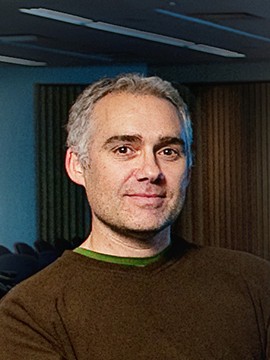 Alan Kingstone合作论文数Brain, Attention and Reality Lab, Department of Psychology, Faculty of Arts, The University of British Columbia1
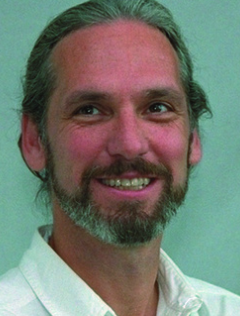 George Furnas合作论文数School of Information, University of Michigan;College of Engineering, University of Michigan;College of Literature, Science and the Arts, University of Michigan1
 Dennis R. Proffitt合作论文数Department of Psychology, University of Virginia1
 James Johnson合作论文数1James N. Butcher合作论文数1
 David E. Rumelhart合作论文数Stanford University1Frances E. Mount合作论文数1Sudhakar Rajulu合作论文数1Timmy R. Wilson合作论文数1Josie A. Welsh合作论文数1
 Jean Lorenceau合作论文数Inserm UMR_S 975, UPMC Univ Paris 061




