Out of Town Meeting of the Ulster Paediatric Society, Friday 8th and Saturday 9th May 2009. Shandon Hotel, Dunfanaghy, Ireland PROGRAMME: Friday 8 May 6.30pm Welcome – President: Dr Denis Carson 6.35pm 7.00pm Presented Abstract 1 7.00pm 8.00pm Guest speaker: Recent advances in the diagnosis and management of hyperinsulaemic, hypoglycaemia. Dr K Hussain, Institute of Child Health, University College Hospital, London. 8.30pm Dinner Saturday 9 May 9.30am 10.00am Annual General Meeting 10.00am 11.15am Presented Abstracts 2-6 11.15am 11.30am Tea -Coffee 11.30am 13.00pm Guest Lecturers: Assessment and treatment of breathing disorders during sleep. Prof. M Shields, Mr K Trimble
Aims To examine incidence and trends of Type 1 diabetes worldwide for the period 1990-1999.Methods The incidence of Type 1 diabetes (per 100 000/year) was analysed in children aged <= 14 years from 114 populations in 112 centres in 57 countries. Trends in the incidence of Type 1 diabetes were analysed by fitting Poisson regression models to the dataset.Results A total of 43 013 cases were diagnosed in the study populations of 84 million children. The age-adjusted incidence of Type 1 diabetes among 112 centres (114 populations) varied from 0.1 per 100 000/year in China and Venezuela to 40.9 per 100 000/year in Finland. The average annual increase in incidence calculated from 103 centres was 2.8% (95% CI 2.4-3.2%). During the years 1990-1994, this increase was 2.4% (95% CI 1.3-3.4%) and during the second study period of 1995-1999 it was slightly higher at 3.4% (95% CI 2.7-4.3%). The trends estimated for continents showed statistically significant increases all over the world (4.0% in Asia, 3.2% in Europe and 5.3% in North America), except in Central America and the West Indies where the trend was a decrease of 3.6%. Only among the European populations did the trend in incidence diminish with age.Conclusions The rising incidence of Type 1 diabetes globally suggests the need for continuous monitoring of incidence by using standardized methods in order to plan or assess prevention strategies.
Background To study the epidemiology of childhood-onset type 1 insulin-dependent diabetes in Europe, the EURODIAB collaborative group established in 1988 prospective geographically-defined registers of new cases diagnosed under 15 years of age. This report is based on 16 362 cases registered during the period 1989-94 by 44 centres representing most European countries and Israel and covering a population of about 28 million children.Methods Multiple sources of ascertainment were used in most centres to Validate the completeness of registration by the capture-recapture method. Trends in incidence during the period were analysed by Poisson regression, the data from centres within each country being pooled.Findings The standardised average annual incidence rate during the period 1989-94 ranged from 3.2 cases per 100 000 per year in the Former Yugoslav Republic of Macedonia to 40.2 cases per 100 000 per year in two regions of Finland. By pooling over all centres, the annual rate of increase in incidence was 3.4% (95% CI 2.5-4.4%), but in some central European countries it was more rapid than this. Pooled over centres and sexes, the rates of increase were 6.3% (4.1-8.5%) for children aged 0-4 years, 3.1% (1.5-4.8%) for 5-9 years, and 2.4% (1.0-3.8%) for 10-14 years.Interpretation The results confirm a very wide range of incidence rates within Europe and show that the increase in incidence during the period varied from country to country. The rapid rate of increase in children aged under 5 years is of particular concern.
Phenylketonuria (PKU) is an inborn error of metabolism of autosomal recessive inheritance which affects approximately 1 in 4000 births in Northern Ireland. It is due to a deficiency of phenylalanine hydroxylase leading to hyperphenylalaninaemia, relative tyrosine deficiency and phenylketones in the urine'g. Following national neonatal screening programmes and the availability of complex diets, severe mental handicap from this disease has almost been eliminated. Nevertheless, the offspring of women with this disease remain at high risk of fetal damage if exposed to high phenylalanine levels in uter0~9~. The exact level at which phenylalanine should be maintained is unknown, but studies in the United Kingdom have shown that head circumference at birth falls 0 5 cm for every 200 pmo1L rise in phenylalanine wncentration above normal at conception5. In addition preconceptual and gestational control of phenylalanine concentrations of 120-360 pmol/L during pregnancy generally result in offspring with an intelligence quotient (IQ) and developmental quotients within the normal range6. Developmental scores fall if control is not achieved by 10 weeks of gestation7. Much of the information about the effects of maternal phenylketonuria have come fiom multicentre studies in North America and the United Kingd~m~,~~* . The aim of the present study was to assess the outcome of pregnancies in one centre from 1987 to 1993.
Recent data provided by the EURODIAB ACE study group have confirmed wide variation in the incidence of insulin-dependent diabetes mellitus (IDDM) across Europe. The aim of this report is to compare age-specific incidence and seasonality at clinical onset of IDDM between study regions. Using a uniform methodology, the EURODIAB ACE framework ascertained 3,168 newly-diagnosed cases of IDDM in children under the age of 15 years during 1989-1990. Eighteen percent of the cases were age 0-4 years at diagnosis, 34 % were age 5-9 years and 48 % were age 10-14 years. Poisson regression analysis suggested that there were highly significant statistical differences in incidence between the three age groups and between the 24 regions. Although incidence rates in the 0-4 year and 5-9 year age groups varied from region to region in a similar fashion, the pattern of variation in the older age group was different. Seasonality of diagnosis conformed to a sinusoidal model with a peak occurring in winter, a feature which was consistently observed in both sexes and in all age groups. However, a statistically significant heterogeneity in the seasonal distribution was present among regions, those in Scandinavia showing the smallest relative amplitude. The first insulin injection was given the same day or the day after diagnosis in 93 % of the cases for whom data were available.
Four infants with spina bifida, who had not undergone surgical closure of a lumbar myelomeningocele, were assessed and investigated for hypothyroidism. From birth, all were treated once daily with an iodine-containing ointment (Betadine) as a local antiseptic applied to the spina defect. All infants showed excess urinary iodine concentration. Two infants, without clinical evidence of hypothyroidism or goitre, showed low serum free thyroxine and high thyroid stimulating hormone concentrations at a mean age of four weeks and were started on thyroxine replacement treatment. Betadine ointment and thyroxine were stopped simultaneously at a mean age of nine months, following which all infants remained euthyroid. Thyroid function tests should be monitored routinely if iodine is applied as a topical antiseptic to infants.
A Pakistani boy had chronic ulceration of the cheeks, generalized nail dystrophy, ulceration and hypergranulation of the nail beds, conjunctiva, and vocal cords, and dental enamel hypoplasia. These features are consistent with laryngo-onycho-cutaneous (LOCS) syndrome or Laryngeal and Ocular Granulation tissue in children from the Indian subContinent (LOGIC) syndrome. Both he and his elder brother had elevated levels of serum calcium consistent with familial benign hypercalcemia. Laryngo-onycho-cutaneous syndrome is a newly recognized condition and its association with familial benign hypercalcemia has not been previously reported.
Four patients with Carney's complex, one sporadic and three familial, are described. The sporadic case was a young male with centrofacial lentigines, who developed cyclical Cushing's syndrome secondary to bilateral pigmented nodular adrenocortical disease, two separate left atrial myxomas, and buccal mucosal myxomas. The three familial cases, who all had varying degrees of centrofacial/mucosal lentigines and cutaneous myxoid tumours, were a woman with myxoid mammary fibroadenomatosis and a left atrial myxoma, her daughter who developed a prolactin-secreting pituitary adenoma, and her son who had bilateral large-cell calcified Sertoli cell testicular tumours, and an axillary psammomatous melanotic schwannoma.
 D. R. Hadden合作论文数6Laurence Kennedy合作论文数4M. Mancuso合作论文数3J. A. O’Hare合作论文数3O Gordon合作论文数3N Visalli合作论文数3Sl Campbell合作论文数3P. Bingley合作论文数3C Krzisnik合作论文数3Z Szybiński合作论文数3Carine de Beaufort合作论文数Ctr Hosp Luxembourg, DECCP, Luxembourg, Luxembourg3Gyula Soltesz合作论文数3
 Francesco Purrello合作论文数Department of Clinical and Experimental Medicine, University of Catania3
 Anders Svendsen合作论文数3Giuseppe Chiumello合作论文数3Paul Czernichow合作论文数3Edith Schober合作论文数3Paolo Pozzilli合作论文数3B. Sheridan合作论文数3
 Chris Patterson合作论文数Centre for Public Health, Queen's University Belfast3
 Zvi Laron合作论文数Sackler Faculty of Medicine, Tel Aviv University3
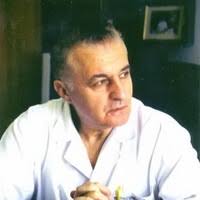 Constantin Ionescu-Tîrgovişte合作论文数3
 Robin Beacom合作论文数3
 Christos Spyros Bartsocas合作论文数Department of Radiology, Massachusetts General Hospital and Harvard Medical School3A. M. Hetherton合作论文数3Magnus Arpi合作论文数3H. Leslie合作论文数3
 Cristiano Menezes合作论文数Laboratório de Abelhas, Universidade de São Paulo3
 Geir Joner合作论文数3
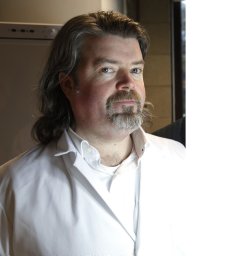 Michael T. Walsh合作论文数and the Materials and Surface Science Institute, University of Limerick3C. Levy-Marchal合作论文数3Peter P. A. Smyth合作论文数3Julian M Handley合作论文数3
 Marco Songini合作论文数3
 Tadej Battelino合作论文数Faculty of Medicine, University of Ljubljana;Department of Pediatric Endocrinology, Diabetes and Metabolism, University Children’s Hospital3M. Coeckelberghs合作论文数2S. K. Cunningham合作论文数2F. Abuaisha合作论文数2O. L. Beatty合作论文数2T. M. Fiad合作论文数2V Christov合作论文数2B Urbonaite合作论文数2J Doutreix合作论文数2G Marietti合作论文数2
 Caoimhe Cronin合作论文数2L Sebastiani合作论文数2Ea Pina合作论文数2Jb Ferriss合作论文数2Da Heath合作论文数2




