When combined with high index contrast slabs in which light can be effectively guided, microfabricated two-dimensional photonic Crystals provide lis with the geometries needed to confine and concentrate light into extremely small volumes and to obtain,er,v high field intensities, Fabrication of optical structures has now evolved tu a precision which us to control light within such etched nanostructures. Sub-wavelength nano-optic cavities can be designed for efficient and flexible control over both emission wavelength and frequency and nanofabricated optical waveguides can be used for efficient coupling of light between devices. The substantial reduction of the size of optical components leads to their integration in large numbers and the possibility to combine different functionalities on a single chip. much in the same way as electronic components have been integrated for improved multi-functionality of microchips. Here we describe the use of microfabricated periodic structures, photonic crystals. to define functional nano-optic cavities for efficient confinement and emission of light, which leads to the desire for miniaturization of optical devices.
Summary form only given. By creating different types of defects in the photonic crystal lattice, various nanophotonics components, such as cavities and waveguides, can be realized. The quest for a compact and efficient nano-cavity, with high quality factor (Q) and small mode volume (V/sub mode/), has been a central part of research in integrated optics. Recently, we have proposed a systematic method to design optical nano-cavities that satisfy both of these requirements. The cavity consists of a defect hole that is smaller than surrounding holes arranged in the triangular lattice photonic crystal. In order to test our design we have fabricated high-Q cavities in the InGaAsP material system.
We have fabricated and characterized donor-mode nanocavities formed by a single defect cavity defined within a two-dimensional photonic crystal slab. Quantum dots emitting in the 1.1–1.3 micron range were used as luminescence sources, and a design using fractional edge dislocations was used to demonstrate well-confined dipole modes with high quality factors. By applying the fractional dislocation geometry, the measured quality factor could be increased to values as high as 2800. This compares with typical quality factors of around 1500 measured from more conventional shallow donor mode cavities with larger mode volumes.
We have fabricated and characterized two-dimensional photonic crystal with defect cavities containing self-organized indium arsenide quantum dots as active material. Single defect donor modes were found to have well localized close to the single defect.
We have characterized the modes within two-dimensional photonic crystal nanocavities with self-organized indium arsenide quantum dots as an active material. Highly localized donor mode resonances with 3 to 5 nm linewidth were observed when spatially selective optical pumping the cavities. These modes could be lithographically tuned from 1100 to 1300 nm. Other, more extended modes, were also characterized and exhibited narrower resonance linewidths ranging from 0.6 to 2 nm.
A low power GaAs-based monolithically integrated phototransceiver, consisting of a high gain phototransistor and a microcavity light-emitting diode, is demonstrated. The input and output wavelengths are 0.85 and 0.98 μm, respectively. The phototransceiver exhibits an optical gain of 7 dB and power dissipation of 400 μW for an input power of 1.5 μW. The small signal modulation bandwidth is 80 MHz.
A bias-dependent dual focus Fresnel lens-modulator, based on the quantum confined Stark effect in a GaAs/Al0.3Ga0.7As multiquantum well pin diode, is demonstrated. A focused intensity modulation of a factor of 7, primarily due to the electroabsorption effect, is obtained with a bias change of 12 V.
An einem Krankengut von 678 operativ behandelten Fällen mit lumbalem Bandscheibenvorfall wurden diejenigen Faktoren statistisch analysiert, die möglicherweise Einfluß auf die postoperative Behandlungszeit im Krankenhaus hatten.
We present dynamically reconfigurable photonic crystal nanobeam cavities, operating at ~1550 nm, that can be continuously and reversibly tuned over a 9.5 nm wavelength range. The devices are formed by two coupled nanobeam cavities, and the tuning is achieved by varying the lateral gap between the nanobeams. An electrostatic force, obtained by applying bias voltages directly to the nanobeams, is used to control the spacing between the nanobeams, which in turn results in tuning of the cavity resonance. The observed tuning trends were confirmed through simulations that modeled the electrostatic actuation as well as the optical resonances in our reconfigurable geometries. High quality factor photonic crystal nanobeam cavities, " Appl. " Quantum nature of a strongly coupled single quantum dot-cavity system, Digital resonance tuning of high-Q/Vm silicon photonic crystal nanocavities by atomic layer deposition, " Appl. tuning of photonic crystal cavities using chalcogenide glasses, " Appl. Aligning microcavity resonances in silicon photonic-crystal slabs using laser-pumped thermal tuning, " Appl. Optically tunable microcavity in a planar photonic crystal silicon waveguide buried in oxide, " Opt. Emission spectrum of electromagnetic energy stored in a dynamically perturbed optical microcavity, " Opt. Scanning a photonic crystal slab nanocavity by condensation of xenon, " Appl.crystal electric tuning of a photonic crystal laser, " Appl. Design of a silicon nitride photonic crystal nanocavity with a Quality factor of one million for coupling to a diamond nanocrystal, " Opt. Rue, " Ultra high quality factor one dimensional photonic crystal/photonic wire micro-cavities in silicon-on-insulator (SOI), " Opt. A picogram-and nanometre-scale photonic-crystal optomechanical cavity, Coupling-induced resonance frequency shifts in coupled dielectric multi-cavity filters, " Opt. Tunable coupling regimes of silicon microdisk resonators using MEMS actuators, " Opt. Resonant scattering and second-harmonic spectroscopy of planar photonic crystal microcavities, " Appl. Polarization control and sensing with two-dimensional coupled photonic crystal microcavity arrays, " Opt. Light scattering and fano resonances in high-q photonic crystal nanocavities, " Appl.
 Axel Scherer合作论文数Division of Engineering and Applied Science, California Institute of Technology;The Division of Physics, Mathematics and Astronomy, California Institute of Technology6
 Tomoyuki Yoshie合作论文数Department of Electrical Engineering, Kyoto University6
 Diana L. Huffaker合作论文数Electrical and Computer Engineering Department, School of Engineering, University of California, Los Angeles4
 Jelena Vuckovic合作论文数Department of Electrical Engineering, Stanford University4
 Homer H. Chen (陳宏銘)合作论文数Department of Electrical Engineering, College of Electrical Engineering and Computer Science, National Taiwan University;Multimedia Processing and Communications Lab, Graduate Institute of Communication Engineering, National Taiwan University3
 Marko Lončar合作论文数Laboratory for Nanoscale Optics, John A. Paulson School of Engineering and Applied Sciences, Harvard University2
 Omar Qasaimeh合作论文数Department of Electrical Engineering, Jordan University of Science and Technology2
 T. Baehr-Jones合作论文数1
 Koichi Okamoto合作论文数1p lyan合作论文数1L. Scaccabarozzi合作论文数1t charvolin合作论文数1Hans Peter Herzig合作论文数1emanuel hadji合作论文数1Bhattacharya, P.合作论文数1
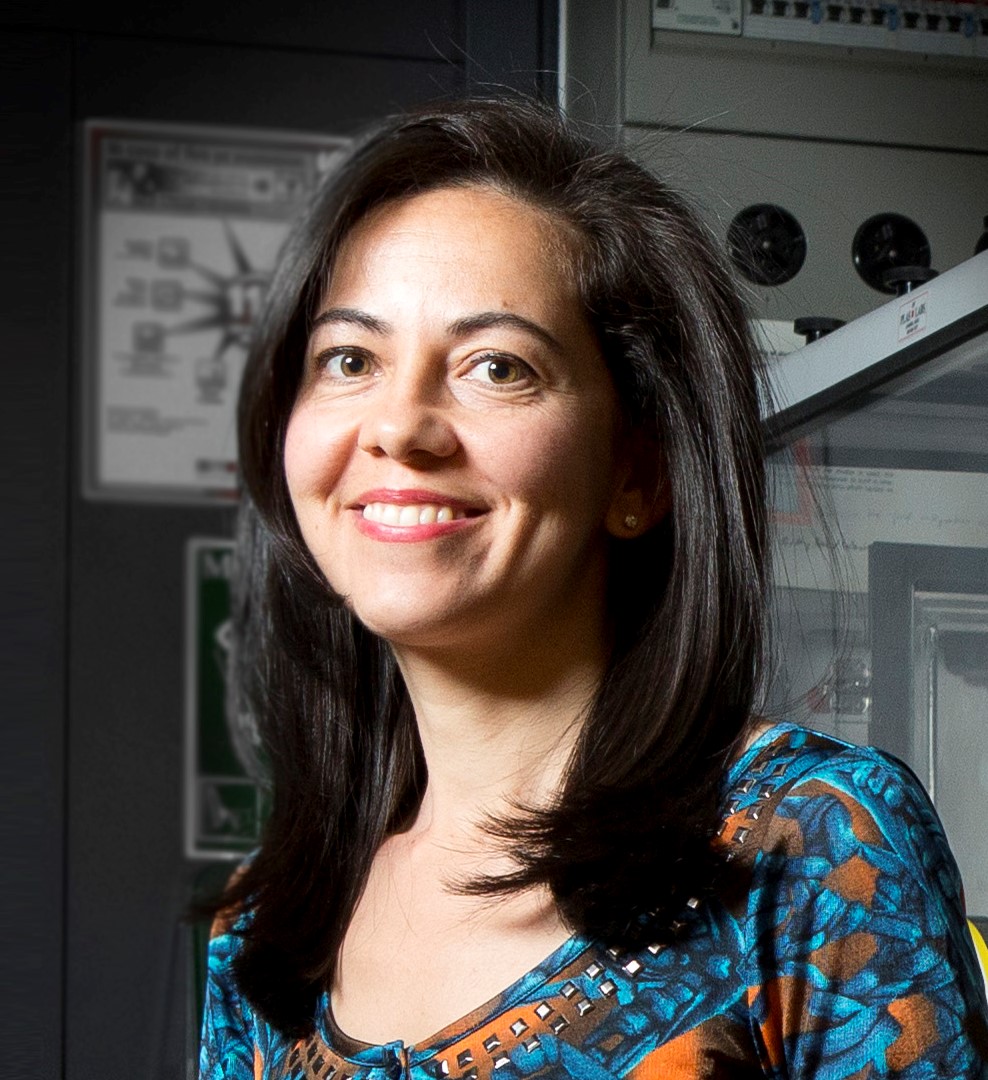 Hatice Altug合作论文数Institute of Bioengineering, Ecole Polytechnique Federal de Lausanne1Dan Dalacu合作论文数Natl Res Council Canada1
 Emmanuel Picard合作论文数1Hao Chen合作论文数1Martin Guy Salt合作论文数1Iwan Märki合作论文数1Maune, B.合作论文数1
 Dirk Englund合作论文数Department of Electrical Engineering and Computer Science, Schwarzman College of Computing, Massachusetts Institute of Technology;LightMatter Computing Inc;Dust Identity Inc1
 Yueming Qiu (邱月明)合作论文数China National Institute of Standardization1
 Weidong Zhou合作论文数Nanophotonics Laboratory, Department of Electrical Engineering, The University of Texas at Arlington;Semergytech1
 Simone Luca Portalupi合作论文数Institut für Halbleiteroptik und Funktionelle Grenzflächen, University of Stuttgart1W. Driesen合作论文数1
 Pallab Bhattacharya合作论文数Department of Electrical Engineering and Computer Science, University of Michigan1
 Douglas Bulla合作论文数Centre for Ultrahigh-Bandwidth Devices of Optical Systems, Australian National University1Murray W. Mccutcheon合作论文数School of Engineering;Applied Sciences;Harvard University;School of Engineering, Harvard University1Nick G. Stoltz合作论文数1
 Jeremy Witzens合作论文数Institute of Integrated Photonics, RWTH Aachen University;aiXscale Photonics GmbH1
 Andrei Faraon合作论文数T.J. Watson Laboratory of Applied Physics, California Institute of Technology;Nanoscale and Quantum Optics Lab, California Institute of Technology1
 Philippe Velha合作论文数Scuola Superiore Sant’Anna1
 Benjamin Eggleton合作论文数School of Physic, The University of Sydney1
 Ahmad R. Md Zain合作论文数1
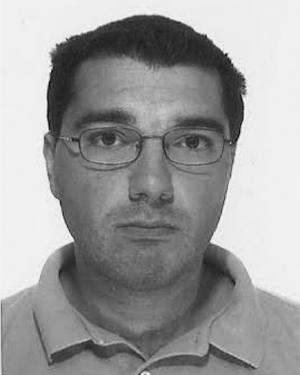 Michela Belotti合作论文数Dipartimento di Fisica “A. Volta”,, Università degli Studi di Pavia1
 Simon Frederick合作论文数1Sorin Mosor合作论文数1Pawan Gogna合作论文数1
 Lucio Andreani合作论文数Physics Department, University of Pavia1Stanley Ross合作论文数1Stefan Fält合作论文数1
 Martin M. Fejer合作论文数Fejer Group, Edward L. Ginzton Laboratory, Stanford University1Martin Winger合作论文数Institute of Quantum Electronics1
 Thomas P. Pearsall合作论文数European Photonics Industry Consortium1
 Matt Eichenfield合作论文数Laboratory of Applied Physics, Sr .;California Institute of Technology;Laboratory of Applied Physics, California Institute of Technology1
 Chad Husko合作论文数Optical Nanostructures Laboratory;Columbia University;Optical Nanostructures Laboratory, Columbia University1




