The fusion of protons with radioactive nuclei is important in stellar explosions such as novae and X-ray bursts and for the production of neutrinos in the sun. The Daresbury Recoil Separator and a windowless gas target system have been installed at ORNL's Holifield Radioactive Ion Beam Facility (HRIBF) for measurements of proton capture reactions in inverse kinematics with radioactive ion beams. The performance of the system has been characterized with a number of experiments using stable ion beams. We report on results from these commissioning measurements and plans for measurements of the 1 H( 17 F, 18 Ne) and 1 H( 7 Be, 8 B) reactions.
For the first time, high-resolution transmission data of (233) U have been obtained using a cooled sample. The samples were cooled to T = 11 K using a cryogenic device, which reduced the Doppler broadening of resonances by 50% compared to room-temperature measurements. The measurements were carried out at the Oak Ridge Electron Linear Accelerator over the energy range from 0.6 eV to 300 keV at the 80-m flight path station. Corrections were made for experimental effects, and the average total cross section in this energy range was determined. Results are compared to previous measurements.
Knowledge of the ${}^{17}\mathrm{F}(p,\ensuremath{\gamma}{)}^{18}\mathrm{Ne}$ reaction rate is important for understanding stellar explosions, but it was uncertain because the properties of an expected but previously unobserved ${3}^{+}$ state in ${}^{18}\mathrm{Ne}$ were not known. This state would provide a strong s-wave resonance for the ${}^{17}\mathrm{F}+p$ system and, depending on its excitation energy, could dominate the stellar reaction rate at temperatures above 0.2 GK. We have observed this missing ${3}^{+}$ state by measuring the ${}^{1}\mathrm{H}{(}^{17}\mathrm{F}{,p)}^{17}\mathrm{F}$ excitation function with a radioactive ${}^{17}\mathrm{F}$ beam at the ORNL Holifield Radioactive Ion Beam Facility (HRIBF). We find that the state lies at a center-of-mass energy of ${E}_{r}=599.8\ifmmode\pm\else\textpm\fi{}{1.5}_{\mathrm{stat}}\ifmmode\pm\else\textpm\fi{}{2.0}_{\mathrm{sys}}$ keV ${(E}_{x}=4523.7\ifmmode\pm\else\textpm\fi{}2.9\mathrm{keV})$ and has a width of $\ensuremath{\Gamma}=18\ifmmode\pm\else\textpm\fi{}{2}_{\mathrm{stat}}\ifmmode\pm\else\textpm\fi{}{1}_{\mathrm{sys}}\mathrm{keV}.$ The measured properties of the resonance are only consistent with a ${J}^{\ensuremath{\pi}}{=3}^{+}$ assignment.
The ${}^{17}\mathrm{F}(p,\ensuremath{\gamma}{)}^{18}\mathrm{Ne}$ reaction is important in stellar explosions, but its rate has been uncertain because of an expected ${3}^{+}$ state in ${}^{18}\mathrm{Ne}$ that has never been conclusively observed. This state would provide a strong $\ensuremath{\ell}\phantom{\rule{0ex}{0ex}}=\phantom{\rule{0ex}{0ex}}0$ resonance and, depending on its excitation energy, could dominate the stellar reaction rate. We have observed this missing ${3}^{+}$ state by measuring the ${}^{1}\mathrm{H}{(}^{17}\mathrm{F},p{)}^{17}\mathrm{F}$ excitation function with a radioactive ${}^{17}\mathrm{F}$ beam at the ORNL Holifield Radioactive Ion Beam Facility. We find that the state lies at a center-of-mass energy of ${E}_{r}\phantom{\rule{0ex}{0ex}}=\phantom{\rule{0ex}{0ex}}599.8\ifmmode\pm\else\textpm\fi{}1{.5}_{\mathrm{stat}}\ifmmode\pm\else\textpm\fi{}{2.0}_{\mathrm{sys}}\phantom{\rule{0ex}{0ex}}\mathrm{keV}$ ( ${E}_{x}\phantom{\rule{0ex}{0ex}}=\phantom{\rule{0ex}{0ex}}4523.7\ifmmode\pm\else\textpm\fi{}2.9\mathrm{keV}$) and has a width of $\ensuremath{\Gamma}\phantom{\rule{0ex}{0ex}}=\phantom{\rule{0ex}{0ex}}18\ifmmode\pm\else\textpm\fi{}{2}_{\mathrm{stat}}\ifmmode\pm\else\textpm\fi{}{1}_{\mathrm{sys}}\phantom{\rule{0ex}{0ex}}\mathrm{keV}$.
We have made improved measurements of the neutron capture and total cross sections for {sup 137}Ba over a sufficiently wide range of energies so that the reaction rate at s-process temperatures (kT=6{endash}23 keV) can be determined solely from the data. These rates are crucial for the interpretation of recently discovered anomalies of Ba isotopes in silicon carbide grains from the Murchison meteorite. Recent stellar models of the s process are in agreement with the meteoric anomaly data for Ba only if the {sup 137}Ba(n,{gamma}) reaction rate is 20{percent} larger than the previously accepted rate. Our reaction rates at s-process temperatures are in agreement with the extrapolated reaction rate from the most recent previous measurement. Hence, our results uphold, and place on much firmer footing, the discrepancy between recent stellar models of the s-process and the meteoric anomaly data. {copyright} {ital 1998} {ital The American Physical Society}
Flight-path lengths have been measured by laser techniques for the 200-, 80-, and 18-m stations along flight path 1, and for the 5-, 20-, 40-, and 150-m stations along flight path 6 at the Oak Ridge Electron Linear Accelerator (ORELA). In each case the distance evaluated from the measurements is the slope distance from the center of the neutron-producing target to a position along the beam path, directly above a suitable benchmark at the experiment station. A total of 25 laser measurements were performed between the various stations. These data, along with appropriate uncertainties, were combined using Bayes' method. From this analysis we obtained the desired flight-path lengths, which typically have uncertainties less than 1.5 mm. The measurment technique, uncertainties, analysis method, and results are documented in detail in this report.
 Jeffery Blackmon合作论文数Department of Physics & Astronomy, College of Science, Louisiana State University8
 Raymond L. Kozub合作论文数7
 Daniel Bardayan合作论文数Department of Physics & Astronomy, College of Science, University of Notre Dame7
 Zhanwen Ma合作论文数6
 Michael Smith合作论文数Stellar Science Solutions6Ma Hofstee合作论文数5A. A. Chen合作论文数5K. B. Swartz合作论文数4p koehler合作论文数Physics division, Los Alamos National Laboratory4P. J. Woods合作论文数4
 Tom Davinson合作论文数School of Physics and Astronomy, The University of Edinburgh4
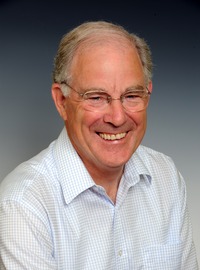 Alan Shotter合作论文数School of Physics and Astronomy, The University of Edinburgh4Dale William Visser合作论文数4Peter D Parker合作论文数4Carl R. Brune合作论文数Department of Physics and Astronomy, Ohio University4V. Y. Hansper合作论文数4
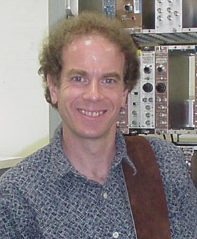 Art Champagne合作论文数Department of Physics and Astronomy, University of North Carolina at Chapel Hill4b a johnson合作论文数3TA Lewis合作论文数3Robert R Spencer合作论文数3
 Brian Moazen合作论文数3
 K. H. Guber合作论文数3arthur e champagne合作论文数2kenneth b swartz合作论文数2
 Frank Strieder合作论文数2Wt Milner合作论文数2JW McConnell合作论文数2RO SAYER合作论文数2VM Cauley合作论文数2Dan Shapira合作论文数2H. Derrien合作论文数2T. A. Lewis合作论文数2
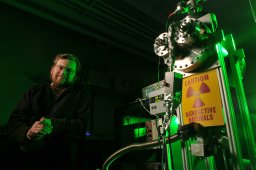 Uwe Greife合作论文数Colorado School of Mines, Golden, CO, USA2
 Jeffrey Harvey合作论文数Department of Physics, The University of Chicago;Enrico Fermi Institute, The University of Chicago;Kadanoff Center for Theoretical Physics, The University of Chicago;Kavli Institute for Cosmological Physics, The University of Chicago2
 Luiz C Leal合作论文数2TE Valentine合作论文数1peter d macd parker合作论文数1D. C. Larson合作论文数1Sanjay Raman合作论文数1An James合作论文数1John Harvey合作论文数1D. Larson合作论文数1ann chen合作论文数1Nathaniel W. Hill合作论文数1M. T. Rabban合作论文数1Fitzgerald R合作论文数Physical Measurements Laboratory, National Institute of Standards and Technology1
 F. Perey合作论文数Oak Ridge1Jeffrey S Thomas合作论文数1Timothy E Valentine合作论文数1




