Results are presented on the production of excited charm and excited charm-strange mesons in hadronic Z0 decays. The results are obtained from approximately 4.3 million hadronic Z0 decays, collected on or near the Z0 resonance using the OPAL detector at LEP. The D~(2420) and D2°(2460) mesons are reconstructed in the n•+"final state and their separate production rates in charm fragmentation and in weak decays of bhadrons are determined. From these measurements, the charm hadronization fractions and the inclusive branching ratios ofb-hadrons to these neutral P-wave charm mesons are determined to be f(cD~) f(c-D2°) f(bD~) f(bD2°) 0.021 ± 0.007( stat) ± 0.003( syst ), 0.052 ± 0.022(stat) ± 0.013( syst ), 0.050 ± 0.014(stat) ± 0.006(syst), 0.04 7 ± 0.024(stat) ± 0.013( syst ). We also present the first observation at LEP of the D;i (2536) meson which is reconstructed in both the D*+K~ and D*°K+ final states. After correcting for the expected contribution from bb events, these results are used to derive the charm hadronization fraction f( c ~ D;i): f(c ~ D;i) = 0.016 ± 0.004(stat) ± 0.003(syst). (To be submitted to Zeitschrift fiir Physik C) The OPAL Collaboration K. Ackersta:ffS, G. Alexander23 , J. Allison16 , N. Altekamp5 , K.J. Anderson9 , S. Anderson12 , S.Arcell?, S.Asai , D.Axen 29 , G.Azuelos18·a, A.H.BalF 7 , E.Barberio , R.J.Barlow , R.Bartoldus3 , J.R.Batley5 , S.Baumann3 , J.Bechtluft1\ C.Beeston , T.Behnke , A.N.BelF, K.W. Bell20 , G. Bella , S. Bentvelsen , P. Berlich , S. Bethke1\ 0. BiebeF\ A. Biguzzi5 , S.D. Bird16 , V. BlobeJ2 , I.J. Bloodworth1 , J .E. Bloomer , M. Bobinski , P. BocPl, D. Bonacors?, M. Boutemeur3\ B.T. Bouwens , S. Braibant , L. Brigliador?, R.M. Brown , H.J. Burckhart8 , C. Burgard8 , R. Biirgin10 , P. Capilupp?, R.K. Carnegie6 , A.A. Carter13, J.R. Carter5 , C.Y. Chang17 , D.G. Charlton1•b, D. Chrisman\ P.E.L. Clarke15 , I. Cohen23 , J.E.Conboy15 , O.C.Cooke16 , M.Cuffian?, S.Dado , C.Dallapiccola , G.M.Dallavalle , S.De Jong , L.A. del Pozo\ K.Desch , M.S.Dixit 7 , E. do Couto e Silva , M.Doucet , E. Duchovn?6 , G. Duckeck\ I.P. Duerdoth , D. Eatough , J.E.G. Edwards , P.G. Estabrooks6 , H.G. Evans9 , M. Evans13 , F. Fabbr?, M. Fanti2 , A.A. Faust30 , F. Fiedler27 , M. Fierro , H.M. Fischer\ I. Fleck , R. Folman , D.G. Fong , M. Foucher , A. Fiirtjes , D.I. Futyan16, P. Gagnon', J.W. Gary\ J. Gascon , S.M. Gascon-Shotkin17 , N.I. Geddes 20 , C. Geich-Gimbel , T. Geralis20 , G. Giacomelli , P. Giacomelli , R. Giacomell?, V. Gibson , W.R.Gibson13 , D.M.Gingrich30·", D.Glenzinski , J.Goldberg , M.J.Goodrick , W.Gorn\ C.Grandi2 , E.Gross 26 , J.Grunhaus 23 , M.Gruwe , C.Hajdu32 , G.G.Hanson , M.Hansroul8 , M. Hapke13 , C.K. Hargrove , P.A. Hart , C. Hartmann , M. Hauschild , C.M. Hawkes", R.Hawkings27 , R.J.Hemingway , M.Herndon, G.Herten, R.D.Heuer , M.D.Hildreth , J .C. HillS, S.J. Hillier1 , T. Hilse10 , P.R. Hobson25 , R.J. Homer\ A.K. Honma28·", D. Horvath ·c, R. Howard29 , D.E. Hutchcroft5 , P. Igo-Kemenes , D.C. Imrie , M.R. Ingram , K. Ishii\ A.Jawahery17 , P.W.Jeffreys20 , H.Jeremie, M.Jimackl, A.Joly , C.R.Jones , G.Jones , M.Jones6 , U.Jost11, P.Jovanovic , T.R.Junk", D.Karlen6 , V.Kartvelishvili , K.Kawagoe\ T. Kawamoto2\ R.K. Keeler28 , R.G. Kellogg , B.W. Kennedy, J. Kirk , A. Klier , S. Kluth8 , T. Kobayash?\ M. KobeF0 , D.S. Koetke , T.P. Kokotts, M. Kolrep , S. Komamiya2\ T. Kress 11 , P. Krieger6 , J. von Krogh1 \ P. Kyberds, G.D. Lafferty , R. Lahmann17 , W.P. Lai19 , D. Lanske1\ J. Lauber15 , S.R. Lautenschlagers\ J.G. Layter\ D.Lazic22 , A.M.Lee31, E.Lefebvre18 , D.Lellouch , J.Letts12 , L.Levinson , S.L.Lloyds, F .K. Loebinger16 , G.D. Long28 , M.J. Losty7 , J. Ludwig10 , A. Macchiolo , A. Macpherson so, M. Mannelli8 , S. Marcellini2 , C. Markuss, A.J. Martin1s, J.P. Martin18 , G. Martinez , T. Mashimo2\ P. Miittigs, W.J. McDonald , J. McKenna , E.A. Mckigney, T.J. McMahon\ R.A. McPherson8 , F. Meijers8 , S. Menkes, F.S. Merritt9 , H. Mes7 , J. Meyer27, A. Michelin?, G. Mikenberg26 , D.J. Miller15 , A. Mincer22·e, R. Mir , W. Mohr10 , A. Montanari , T. Mor?\ M.Morii2\ U.Miillers, K.Nagai26 , I.Nakamura\ H.A.Neal , B.Nellen , R.Nisius , S.W. O'Neale\ F.G. Oakham , F. Odorici , H.O. Ogren , N.J. Oldershaw , M.J. Oreglia , S.Orito2\ J.Palinkas33·d, G.Pasztor32 , J.R.Pater16 , G.N.Patrick , J.Patt10 , M.J.Pearcel, S. Petzold27 , P. Pfeifenschneider14 , J .E. Pilcher9 , J. Pinfold , D.E. Plane , P. Poffenberger , B.Poli , A.Posthaus , H.Przysiezniak , D.L.Rees\ D. Rigby\ S.Robertson , S.A.Robins , N. Rodning , J.M. Roney, A. Rooke , E. Ros , A.M. Rossi', M. Rosvick , P. Routenburg , Y. Rozen22 , K. Runge10 , 0. Runolfsson8 , U. Ruppel\ D.R. Rust , R. Rylko , K. Sachs , T. Saeki2\ E.K.G. Sarkisyan2S, C. Sbarra29 , A.D. Schailes\ 0. Schaile\ F. Scharf\ P. Scharff-Hansen8 , P. Schenk3\ J. Schieck11 , P. Schleper11 , B. Schmitt , S. Schmitt ,
The cross section of the pure QED process e+ e-> "/"/ has been measured using data accumulated during the 1989 and 1990 scans of the Z resonance at LEP. Both the energy dependence and the angular distribution are in good agreement with the QED prediction, Upper limits on the branching ratios of Z -> "f"f, Z -> 1r "f and Z -> rn have been set at lAx I o-4 , 1 Ax 10-'1 and 2.0 x 10⁻⁴ respectively. Lower limits on the cutoff parameters of the modified electron propagator have been found to be A+> 117 GeV and A_ > 110 GeV. The reaction e+e-> "/"1"1 has also been studied and was found to be consistent with the QED prediction_ An upper limit on the branching ratio of Z _,"/"/"/has been set at 6 .. 6 x 10• All the limits are given at 95% confidence leveL (Submitted to Physics Letters D) The OPAL Collaboration lii.Z. Akrawy 12 , G. Alexander22 , J. Allison 15 , P.P. Allport5 , K.J. Anderson9 , J.C. Armitage6 , G.T.J. Arnison 9, P. Ashton15 , G. Azuelos·d, J.T.l\I. Baines15 , A. H. Ball 16 , J. Banks15 , G.J. Barker , R.J. Barlow 15 , .I.R. Batley5 , G. Beaudoin'\ A. Beck 22 , J. Becker10 , T. Behnkes, K.W. Bell' 9 , G. Bella22 , S. Bethken, 0. Bicbel , U. Binder 10 , I.J. Bloodworth', P. Bockn, II. Breukers, R.l\1. Brown 19 , R. Bruns, A. Buijss, H.J. Burckharts, P. Capiluppi2 , R. K. Carncgie , A.A. Carler12 , J .R. Carter5 , C.Y. Chang16 , D.G. Charltons, J .T.l\1. Chrin 15 , P.E.L. Clarkc , I. Cohen , W.J. Collins , J .E. Conboy14 , i\1. Couch , 1\l. Coupland , 1\l. Cuffiani , S. Dado21 , G.l\1. Dallamlle , S. De Jongs, P. Dcbu20 , 1\l.l\l. Deninno , A. Dieckmann ll, 1\l. Dittmar', 1\l.S. Dixit 1 , E. Duchovni25 , l.P. Duerdoth 15 , D .. J.P. Dumas6 , P.A. Elcombe , P.G. Estabrooks6 , E. Etzion , F. Fabbr?, P. Farthouat20 , H.l\1. Fischer , D.G. Fong , 1\LT. French19 , C. Fukunaga , A. Gaidot20 , 0. GaneF5 , J.W. Garyll, .) . Gascon , N .I. Geddes19 , C.N .P. Gee19 , C. Geich-GimbeP, S. W. Gensler9 , F .X. Gentit20 , G. Giacomcll?, V. Gibson 5 , W.R. Gibson 12 , J.D. Gillies , J. Goldberg21 , i\I.J. Goodrick5 , W. Gorn4 , D. Granite21 , E. Gross25 , J. Grunhaus , H. Hagedorn 10 , J. llagemanns, 1\l.llansrouls, C.K.IIargrove7, I. Harrus21 , J. Hart5 , P.l\1. Hattersley', 1\l.llauschilds, C.l\1. Haw kess, E. Heflin 4 , R.J. llemingway6 , ltD. Heuers, J .C. llill5 , S.J. Hillier1 , D.A.llinshaw 17 , C. Ho4, J.D. Hobbs9 , P.R. Hobson', D. Hochman25 , B. HoUS, R.J. l!omer1 , S.R. Ilou16 , C.P.llowarth1\ R.E.llughcs-Jones , R. Humbert10 , P.lgo-Kemcnesn, H. lhssenll, D.C. lmrie24 , L. Janissen6 , A. Jawahery , P.\V. Jcffreys19 , H. Jeremie , M.Jimacks,.M.Jobes1 , R.W.L.Jones12 , P.Jovanovic1 , D. Karlen6 , K.Kawagoe23 , T. Kawamoto23 , R.G. Kcllogg16 , B.W. Kennedy 14 , C. Klein worts, D.E. Klem1s, G. Knop3 , T. Kobayash? , T.P. Kokott3 , L. Kopkes, R. Kowalewski6 , H. Kreutzmann\ J. Kroll , 1\I. Kuwano , P. Kyberd 12 , G.D. Lalferty'5 , F. Lamarche17 , W.J. Larson', J.G. Layter , P. Le Du20 , P. Leblanc17 , A.M. Lee16 , I\!. H. Lehto14 , D. Lellouchs, P. Lennertn, C. Leroy17 , L. Lessard17 , S. Levegriin3 , L. Levinson25 , S.L. Lloyd , F.K. Loebinger15 , J.l\1. Lorah16 , B. Lora.zo17 , 1\l.J. Losty 7, J. Ludwig10 , J. l\Ia4•b, A.A.l\!acbeth15 , 1\L 1\Iannellis, S. Marcellini2, G.l\Iaringer , A.J.l\Iartin12 , J.P. i\Iartin , T. Mashimo , P.l\Iiittig , U.l\Iaur , T.J. Mcl\!ahon 1 , J.R.l\IcNutt24 , F. Meijerss, D. Mensznern, F.S.l\Ierritt9 , H.l\Ies 7, A.l\Iichelinis, R.P. Middleton 19 , G.l\Iikenberg, J. l\!ildenbcrger6 , D.J. Miller 14 , C.l\Iilstcne22 , l\l.l\Iinowa23 , W.l\lohr10 , C.l\loisan17 , A. Montanari2 , T. Mori23 , 1\l.W. Moss , P.G.l\Iurphy' 5 , W.J.l\lurray , B. Ncllen , lUI. Nguyen , 1\l. Nozaki , A.J.P. O'Dowd15 , S.W. O'Neales,c, B.P. O'Neill', F.G. Oakham', F. Odorici2 , 1\I. Ogg6 , II. Oh 4 , 1\I.J. Oreglia9 , S. Orito23 , J.P. Pansart , G.N. Patrick19 , S.J. Pawley' 5 , P. Pfister10 , J.E. Pilcher9 , J.L. Pinfold25 , D.E. Planes, B. Pol?, A. Pouladdej", E. Prebyss, T.W. Pritchard 12 , II. Przysiezniak17 , G. Quasts, M.W. Redmond 9 , D.L. Rees1 , 1\1. Regimbald11 , K. Riles', C.M. Roach , S.A. Robins 12 , A. Rollnik3 , J.l\1. Roney9 , S. Rossberg 10 , A.M. Rossi2·•, P. Routenburg , K. Runge 10 , 0. Runolfssons, S. Sanghera6 , R.A. Sansum , 1\1. Sasaki23 , B.J. Saunders , A.D. Schaile10 , 0. Scha.ile10 , W. Schappert6 , P. Scha.rlf-Ha.nsens, S. Schreiber3 , J. Schwarz , A. Shapira.25 , B.C. Shen\ P. Sherwood", A. Simon3 , P. Singh 12 , G.P. Siroli2 , A. Skuja16 , A.M. Smiths, T.J. Smiths, G.A. Snow 16 , R.W. Springer , 1\I. Sproston , K. Stephens , H.E. Stier10 , R. Stroehmerll, D. Strom9 , H. Ta.kcda , T. Takeshita. , P. Taras, N.J. Tha.ckra.y', T. Tsukamoto23 , I\!. F. Turner5 , G. Tysarczyk-Niemeyeru, D. Va.n den pla.s , R. Va.n Kootens, G.J. VanDalen', G. Va.sseur20 ,
We present evidence for the existence of the strange b-flavoured meson B~ in a data sample of 470 628 hadronic Z decays recorded with the OPAL detector at LEP. A signal of 18.3±5.2(stat.)±0.9(syst.) D;;-£+ pairs (or charge conju,gate, R=e or R=Jl) is found after background subtraction, where the D, meson is detected in the )'lr and K*°K final states. Interpreting this signal as coming from the semileptonic deeay B~ --+ D; e+ v X and combining the two decay modes of the D., we find J(b--+ B~) · B(B~--+ D;;-R+vX) · B(D;;---+ >7r-)= (3.9±l.l(stat.)±0.8(syst.))x10-\ where J(b--+ B~) is the fraction of b quarks that result in a B~ meson in Z decays. This signal for the B~ is supported by our observation of an excess of 147±48 inclusive D, mesons in the >1r and K*°K modes above the number expected from B0 and B+ decays and from the fragmentation of primary c quarks. In addition, a search is made for the exclusive decay B~--+ JflP>. Based on one candidate event the 90% confidence level upper limit is determined to be f(b-+ B~) · B(B~ -+Jj./J>) < 0.22%. (Submitted to Physics Letters B) The 0 PAL Collaboration P.D. Acton, G. Alexander, J. Allison's, P.P. Allports, K.J. Anderson9 , S. Arcell?, A. Astbury2s, D. Axen29 , G. Azuelos1s,a, G.A. Bahan's, J.T.M. Baines's, A.H. Ball17, J. Banks's, R.J. Barlow's, S. Barnett's, J.R. Batley\ G. Bea.udoin18, A. Beck23, J. Becker10, T. Behnke27, K.W. BelP0, G. Bella, P. Berlich, S. Bethke , 0. Biebel', U. Binder10, l.J.Bloodworth , P.Bock11 , B.Boden3 , H.M.Bosch11 , S.Bougerolle29, H.Breukers, R.M. Brown20, A. Buijss, H.J. Burckharts, C. Burgard, I'. Capilupp?, R.K. Carnegies, A.A. Carter, J.R. CarterS, C.Y. Chang , D.G. Charlton8 , P.E.L. Clarke2S, I. Cohen23 , J.C. Clayton', W.J. Collins , J.E. Conboy , M. Cooper , M. Coupland , M. Cuffiani , S. Dado , G.M. Dallavalle, S. De Jong , L.A. del Pozos, H. Deng17, A. Dieckmann11 , M. Dittmar\ M.S. Dixit7 , E. do Couto e Silva12 , J.E. Duboscq , E. Duchovnis, G. Duckeck11 , l.P. Duerdoth1s, D.J.P. Dumass, P.A. ElcombeS, P.G. Estabrooks6 , E. Etzion23 , H. G. Evans9 , F. Fabbri2, M. Fincke-Keeler28, H.M. Fischer3, D.G. Fong17 , M. Foucher17, A. Gaidot 21 , 0. GaneFs, J.W. Gary\ J. Gascon , R.F. McGowan's, N.I. Geddes20, C. Geich-Gimbel3, S.W. Gensler , F.X. Gentit 21 , G. Giacomelli 2, V. Gibsons, W.R. Gibson13, J.D. Gillies20, J.Goldberg22 , M.J.Goodrick5 , W.Gorn\ C.Grandi , F.C.Grant5 , J.Hagemann27, G.G. Hanson , M. Hansroul8 , C.K. Hargrove7, P.F. Harrison1\ J. Hart8 , P.M. Hattersley', M. Hauschild , C.M. Haw kess, E. Heflin\ R.J. Hemingways, R.D. Heuer , J.C. Hill, S.J. Hillier', T. Hilse, D.A. Hinshaw, J.D. Hobbs , P.R. Hobson2s, D. Hochman26, R.J. Homer', A.K. Honma28·•, C.P. Howarth15 , R.E. Hughes-Jones16 , R. Humbert10, P. lgo-Kemenes11 , H. Ihssen11 , D.C. Imrie, A. C. Janissens, A. Jawahery, P.W. Jeffreys20 , H. Jeremie, M. Jimack2 , M. Jobes', R.W.L. Jones13, P. Jovanovic', C. Jui4 , D. Karlen6 , K. Kawagoe24, T. Kawamoto4, R.K. Keeler, R.G. Kellogg, B.W. Kennedy, S. Kluth', T. Kobayashi; T.P. Kokott3 , S. Komamiya24, L. Kopke8 , J.F. Krals, R. Kowalewski6, J. von Krogh11 , J. Kroll , M. Kuwano4, P. Kyberd, G.D. Lafferty's, F. Lamarche, J.G. Layter\ P. Le Du2', P. Leblanc1s, A.M. Lee17, M.H. Lehto15, D. Lellouch2s, P. Lennert11 , C. Leroy18, J. Letts\ S. Levegriin3 , L. Levinsons, S.L. Lloyd'', F.K. Loebinger16, J.M. Lorah17 , B. Lorazo , M.J. Losty7, X. C. Lou12 , J. Ludwig10 , M. Mannellis, S. Marcellini 2, G. Maringer3 , C. Markus3 , A.J. Martin, J.P. Martin, T. Mashimo<, P. Mattig , U. Maur', J. McKenna2s, T.J. McMahon', J.R. McNutt2s, F. Meijerss, D. Menszner11 , F.S. Merritt9 , H. Mes , A. Michelinis, R.P. Middleton, G. Mikenberg, J. Mildenberger, D.J. Miller, R. Mir, W. Mohr, C. Moisan18 , A. Montanari2 , T. Mori24, M. Mo:rii24, T. Mouthuy12 •b, B. Nellen3, H.H. Nguyen9 , M. Nozaki24, S.W. O'Neale•', F.G. Oakham, F. Odorici, H.O. Ogren12 , C.J. Oram•", M.J. Oreglia9 , S. Orito24, J.P. Pansart2', B. Panzer-Steindel8 , P. Paschievici2s, G.N. Patrick, N. Paz-Jaoshvili" , P. Pfister10 , J.E. Pilcher9 , D. Pitman28, D.E. Plane8 , P. Poffenberger28 , B. Poli2 , A. Pouladdejs, E. Prebys8 , T.W. Pritchard13, H. Przysiezniak1s, G. Quast, M.W. Redmond , D.L. Rees', G.E. RichardE
We present measurements of triple gauge boson coupling parameters using data recorded by the OPAL detector at LEP2 at a centre-of-mass energy of 172 GeV. A total of 120 W-pair candidates has been selected in the qqqq, qq`ν` and `ν`` ′ ν`′ decay channels, for an integrated luminosity of 10.4 pb. We use these data to determine several different anomalous coupling parameters using the measured cross-section and the distributions of kinematic variables. We measure αBφ=0.35 +1.29 −1.07 ± 0.38, αWφ=0.00 +0.30 −0.28 ± 0.11, αW=0.18 +0.49 −0.47 ± 0.23, ∆g z 1=−0.03 +0.40 −0.37 ± 0.14, ∆κ γ =0.03 +0.55 −0.51± 0.20, and ∆κ=0.03 +0.49 −0.46± 0.21. Combining the αWφ result with our previous result obtained from the 161 GeV data sample we measure αWφ=−0.08 +0.28 −0.25 ± 0.10. All of these measurements are consistent with the Standard Model. (To be submitted to Zeitschrift fur Physik C.) The OPAL Collaboration K. Ackerstaff, G. Alexander, J. Allison, N. Altekamp, K.J. Anderson, S. Anderson, S. Arcelli, S. Asai, D. Axen, G. Azuelos, A.H. Ball, E. Barberio, R.J. Barlow, R. Bartoldus, J.R. Batley, S. Baumann, J. Bechtluft, C. Beeston, T. Behnke, A.N. Bell, K.W. Bell, G. Bella, S. Bentvelsen, S. Bethke, O. Biebel, A. Biguzzi, S.D. Bird, V. Blobel, I.J. Bloodworth, J.E. Bloomer, M. Bobinski, P. Bock, D. Bonacorsi, M. Boutemeur, B.T. Bouwens, S. Braibant, L. Brigliadori, R.M. Brown, H.J. Burckhart, C. Burgard, R. Burgin, P. Capiluppi, R.K. Carnegie, A.A. Carter, J.R. Carter, C.Y. Chang, D.G. Charlton, D. Chrisman, P.E.L. Clarke, I. Cohen, J.E. Conboy, O.C. Cooke, M. Cuffiani, S. Dado, C. Dallapiccola, G.M. Dallavalle, R. Davis, S. De Jong, L.A. del Pozo, K. Desch, B. Dienes, M.S. Dixit, E. do Couto e Silva, M. Doucet, E. Duchovni, G. Duckeck, I.P. Duerdoth, D. Eatough, J.E.G. Edwards, P.G. Estabrooks, H.G. Evans, M. Evans, F. Fabbri, M. Fanti, A.A. Faust, F. Fiedler, M. Fierro, H.M. Fischer, I. Fleck, R. Folman, D.G. Fong, M. Foucher, A. Furtjes, D.I. Futyan, P. Gagnon, J.W. Gary, J. Gascon, S.M. Gascon-Shotkin, N.I. Geddes, C. Geich-Gimbel, T. Geralis, G. Giacomelli, P. Giacomelli, R. Giacomelli, V. Gibson, W.R. Gibson, D.M. Gingrich, D. Glenzinski, J. Goldberg, M.J. Goodrick, W. Gorn, C. Grandi, E. Gross, J. Grunhaus, M. Gruwe, C. Hajdu, G.G. Hanson, M. Hansroul, M. Hapke, C.K. Hargrove, P.A. Hart, C. Hartmann, M. Hauschild, C.M. Hawkes, R. Hawkings, R.J. Hemingway, M. Herndon, G. Herten, R.D. Heuer, M.D. Hildreth, J.C. Hill, S.J. Hillier, P.R. Hobson, R.J. Homer, A.K. Honma, D. Horvath, K.R. Hossain, R. Howard, P. Huntemeyer, D.E. Hutchcroft, P. Igo-Kemenes, D.C. Imrie, M.R. Ingram, K. Ishii, A. Jawahery, P.W. Jeffreys, H. Jeremie, M. Jimack, A. Joly, C.R. Jones, G. Jones, M. Jones, U. Jost, P. Jovanovic, T.R. Junk, D. Karlen, V. Kartvelishvili, K. Kawagoe, T. Kawamoto, P.I. Kayal, R.K. Keeler, R.G. Kellogg, B.W. Kennedy, J. Kirk, A. Klier, S. Kluth, T. Kobayashi, M. Kobel, D.S. Koetke, T.P. Kokott, M. Kolrep, S. Komamiya, T. Kress, P. Krieger, J. von Krogh, P. Kyberd, G.D. Lafferty, R. Lahmann, W.P. Lai, D. Lanske, J. Lauber, S.R. Lautenschlager, J.G. Layter, D. Lazic, A.M. Lee, E. Lefebvre, D. Lellouch, J. Letts, L. Levinson, S.L. Lloyd, F.K. Loebinger, G.D. Long, M.J. Losty, J. Ludwig, A. Macchiolo, A. Macpherson, M. Mannelli, S. Marcellini, C. Markus, A.J. Martin, J.P. Martin, G. Martinez, T. Mashimo, P. Mattig, W.J. McDonald, J. McKenna, E.A. Mckigney, T.J. McMahon, R.A. McPherson, F. Meijers, S. Menke, F.S. Merritt, H. Mes, J. Meyer, A. Michelini, G. Mikenberg, D.J. Miller, A. Mincer, R. Mir, W. Mohr, A. Montanari, T. Mori, M. Morii, U. Muller, S. Mihara, K. Nagai, I. Nakamura, H.A. Neal, B. Nellen, R. Nisius, S.W. O’Neale, F.G. Oakham, F. Odorici, H.O. Ogren, A. Oh, N.J. Oldershaw, M.J. Oreglia, S. Orito, J. Palinkas, G. Pasztor, J.R. Pater, G.N. Patrick, J. Patt, M.J. Pearce, R. Perez-Ochoa, S. Petzold, P. Pfeifenschneider , J.E. Pilcher, J. Pinfold, D.E. Plane, P. Poffenberger, B. Poli, A. Posthaus, D.L. Rees, D. Rigby, S. Robertson, S.A. Robins, N. Rodning, J.M. Roney, A. Rooke, E. Ros, A.M. Rossi, P. Routenburg, Y. Rozen, K. Runge, O. Runolfsson, U. Ruppel, D.R. Rust, R. Rylko, K. Sachs, T. Saeki, E.K.G. Sarkisyan, C. Sbarra, A.D. Schaile, O. Schaile, F. Scharf, P. Scharff-Hansen, P. Schenk, J. Schieck, P. Schleper, B. Schmitt, S. Schmitt, A. Schoning, M. Schroder, H.C. Schultz-Coulon, M. Schumacher, C. Schwick, W.G. Scott, T.G. Shears, B.C. Shen, C.H. Shepherd-Themistocleous , 1 P. Sherwood, G.P. Siroli, A. Sittler, A. Skillman, A. Skuja, A.M. Smith, G.A. Snow, R. Sobie, S. Soldner-Rembold, R.W. Springer, M. Sproston, K. Stephens, J. Steuerer, B. Stockhausen, K. Stoll, D. Strom, P. Szymanski, R. Tafirout, S.D. Talbot, S. Tanaka, P. Taras, S. Tarem, R. Teuscher, M. Thiergen, M.A. Thomson, E. von Torne, S. Towers, I. Trigger, Z. Trocsanyi, E. Tsur, A.S. Turcot, M.F. Turner-Watson, P. Utzat, R. Van Kooten, M. Verzocchi, P. Vikas, E.H. Vokurka, H. Voss, F. Wackerle, A. Wagner, C.P. Ward, D.R. Ward, P.M. Watkins, A.T. Watson, N.K. Watson, P.S. Wells, N. Wermes, J.S. White, B. Wilkens, G.W. Wilson, J.A. Wilson, G. Wolf, T.R. Wyatt, S. Yamashita, G. Yekutieli, V. Zacek, D. Zer-Zion School of Physics and Space Research, University of Birmingham, Birmingham B15 2TT, UK Dipartimento di Fisica dell’ Universita di Bologna and INFN, I-40126 Bologna, Italy Physikalisches Institut, Universitat Bonn, D-53115 Bonn, Germany Department of Physics, University of California, Riverside CA 92521, USA Cavendish Laboratory, Cambridge CB3 0HE, UK 6 Ottawa-Carleton Institute for Physics, Department of Physics, Carleton University, Ottawa, Ontario K1S 5B6, Canada Centre for Research in Particle Physics, Carleton University, Ottawa, Ontario K1S 5B6, Canada CERN, European Organisation for Particle Physics, CH-1211 Geneva 23, Switzerland Enrico Fermi Institute and Department of Physics, University of Chicago, Chicago IL 60637, USA Fakultat fur Physik, Albert Ludwigs Universitat, D-79104 Freiburg, Germany Physikalisches Institut, Universitat Heidelberg, D-69120 Heidelberg, Germany Indiana University, Department of Physics, Swain Hall West 117, Bloomington IN 47405, USA Queen Mary and Westfield College, University of London, London E1 4NS, UK Technische Hochschule Aachen, III Physikalisches Institut, Sommerfeldstrasse 26-28, D-52056 Aachen, Germany University College London, London WC1E 6BT, UK Department of Physics, Schuster Laboratory, The University, Manchester M13 9PL, UK Department of Physics, University of Maryland, College Park, MD 20742, USA Laboratoire de Physique Nucleaire, Universite de Montreal, Montreal, Quebec H3C 3J7, Canada University of Oregon, Department of Physics, Eugene OR 97403, USA Rutherford Appleton Laboratory, Chilton, Didcot, Oxfordshire OX11 0QX, UK Department of Physics, Technion-Israel Institute of Technology, Haifa 32000, Israel Department of Physics and Astronomy, Tel Aviv University, Tel Aviv 69978, Israel International Centre for Elementary Particle Physics and Department of Physics, University of Tokyo, Tokyo 113, and Kobe University, Kobe 657, Japan Brunel University, Uxbridge, Middlesex UB8 3PH, UK Particle Physics Department, Weizmann Institute of Science, Rehovot 76100, Israel Universitat Hamburg/DESY, II Institut fur Experimental Physik, Notkestrasse 85, D-22607 Hamburg, Germany University of Victoria, Department of Physics, P O Box 3055, Victoria BC V8W 3P6, Canada University of British Columbia, Department of Physics, Vancouver BC V6T 1Z1, Canada 2 University of Alberta, Department of Physics, Edmonton AB T6G 2J1, Canada Duke University, Dept of Physics, Durham, NC 27708-0305, USA Research Institute for Particle and Nuclear Physics, H-1525 Budapest, P O Box 49, Hungary Institute of Nuclear Research, H-4001 Debrecen, P O Box 51, Hungary Ludwigs-Maximilians-Universitat Munchen, Sektion Physik, Am Coulombwall 1, D-85748 Garching, Germany a and at TRIUMF, Vancouver, Canada V6T 2A3 b and Royal Society University Research Fellow c and Institute of Nuclear Research, Debrecen, Hungary d and Department of Experimental Physics, Lajos Kossuth University, Debrecen, Hungary e and Department of Physics, New York University, NY 1003, USA
A search for stable and long-lived massive particles of electric charge |Q/e| = 1 or 2/3, pair-produced in ee collisions at centre-of-mass energies from 130 to 183 GeV, is reported by the OPAL collaboration at LEP. No evidence for production of these particles was observed in a mass range between 45 and 89.5 GeV. Model-independent upper limits on the production cross-section between 0.05 and 0.19 pb have been derived for scalar and spin-1/2 particles with charge ±1. Within the framework of the minimal supersymmetric model (MSSM), this implies a lower limit of 82.5 (83.5) GeV on the mass of long-lived right(left-)handed scalar muons and scalar taus. Long-lived charged leptons and charginos are excluded for masses below 89.5 GeV. For particles with charge ±2/3 the upper limits on the production cross-section vary between 0.05 and 0.2 pb. All limits, on masses and on cross-sections, are valid at the 95% confidence level for particles with lifetimes longer than 10 s. (Submitted to Physics Letters B) The OPAL Collaboration K.Ackerstaff, G.Alexander, J. Allison, N.Altekamp, K.J.Anderson, S.Anderson, S.Arcelli, S.Asai, S.F.Ashby, D.Axen, G.Azuelos, A.H.Ball, E. Barberio, R.J. Barlow, R.Bartoldus, J.R.Batley, S. Baumann, J. Bechtluft, T.Behnke, K.W.Bell, G.Bella, S. Bentvelsen, S. Bethke, S. Betts, O.Biebel, A.Biguzzi, S.D.Bird, V.Blobel, I.J. Bloodworth, M.Bobinski, P. Bock, D.Bonacorsi, M.Boutemeur, S. Braibant, L. Brigliadori, R.M.Brown, H.J. Burckhart, C.Burgard, R.Bürgin, P.Capiluppi, R.K.Carnegie, A.A.Carter, J.R.Carter, C.Y.Chang, D.G.Charlton, D.Chrisman, P.E.L.Clarke, I. Cohen, J.E.Conboy, O.C.Cooke, C.Couyoumtzelis , R.L.Coxe, M.Cuffiani, S.Dado, C.Dallapiccola, G.M.Dallavalle, R.Davis, S.De Jong, L.A. del Pozo, A. de Roeck, K.Desch, B.Dienes, M.S.Dixit, M.Doucet, E.Duchovni, G.Duckeck, I.P.Duerdoth, D. Eatough, P.G.Estabrooks, E. Etzion, H.G.Evans, M.Evans, F. Fabbri, A. Fanfani, M.Fanti, A.A. Faust, L. Feld, F. Fiedler, M.Fierro, H.M.Fischer, I. Fleck, R. Folman, D.G.Fong, M.Foucher, A. Fürtjes, D.I. Futyan, P.Gagnon, J.W.Gary, J.Gascon, S.M.Gascon-Shotkin, N.I.Geddes, C.Geich-Gimbel, T.Geralis, G.Giacomelli, P.Giacomelli, R.Giacomelli, V.Gibson, W.R.Gibson, D.M.Gingrich, D.Glenzinski, J.Goldberg, M.J.Goodrick, W.Gorn, C.Grandi, E.Gross, J.Grunhaus, M.Gruwé, C.Hajdu, G.G.Hanson, M.Hansroul, M.Hapke, C.K.Hargrove, P.A.Hart, C.Hartmann, M.Hauschild, C.M.Hawkes, R.Hawkings, R.J.Hemingway, M.Herndon, G.Herten, R.D.Heuer, M.D.Hildreth, J.C.Hill, S.J.Hillier, P.R.Hobson, A.Hocker, R.J.Homer, A.K.Honma, D.Horváth, K.R.Hossain, R.Howard, P.Hüntemeyer, D.E.Hutchcroft, P. Igo-Kemenes, D.C. Imrie, K. Ishii, A. Jawahery, P.W. Jeffreys, H. Jeremie, M. Jimack, A. Joly, C.R. Jones, M. Jones, U. Jost, P. Jovanovic, T.R. Junk, J.Kanzaki, D.Karlen, V.Kartvelishvili, K.Kawagoe, T.Kawamoto, P.I.Kayal, R.K.Keeler, R.G.Kellogg, B.W.Kennedy, J.Kirk, A.Klier, S.Kluth, T.Kobayashi, M.Kobel, D.S.Koetke, T.P.Kokott, M.Kolrep, S.Komamiya, R.V.Kowalewski, T.Kress, P.Krieger, J. von Krogh, P.Kyberd, G.D. Lafferty, R. Lahmann, W.P. Lai, D. Lanske, J. Lauber, S.R. Lautenschlager, I. Lawson, J.G. Layter, D. Lazic, A.M.Lee, E. Lefebvre, D. Lellouch, J. Letts, L. Levinson, B. List, S.L. Lloyd, F.K. Loebinger, G.D. Long, M.J. Losty, J. Ludwig, D. Lui, A.Macchiolo, A.Macpherson, M.Mannelli, S.Marcellini, C.Markopoulos, C.Markus, A.J.Martin, J.P.Martin, G.Martinez, T.Mashimo, P.Mättig, W.J.McDonald, J.McKenna, E.A.Mckigney, T.J.McMahon, R.A.McPherson, F.Meijers, S.Menke, F.S.Merritt, H.Mes, J.Meyer, A.Michelini, S.Mihara, G.Mikenberg, D.J.Miller, A.Mincer, R.Mir, W.Mohr, A.Montanari, T.Mori, K.Nagai, I. Nakamura, H.A.Neal, B.Nellen, R.Nisius, S.W.O’Neale, F.G.Oakham, F.Odorici, H.O.Ogren, A.Oh, N.J.Oldershaw, M.J.Oreglia, S.Orito, J. Pálinkás, G. Pásztor, J.R.Pater, G.N.Patrick, J. Patt, R. Perez-Ochoa, S. Petzold, P. Pfeifenschneider , J.E. Pilcher, J. Pinfold, D.E.Plane, P. Poffenberger, B. Poli, A. Posthaus, C.Rembser, S. Robertson, S.A.Robins, N.Rodning, J.M.Roney, A.Rooke, A.M.Rossi, P.Routenburg, Y.Rozen, K.Runge, O.Runolfsson, U.Ruppel, D.R.Rust, K. Sachs, T. Saeki, O. Sahr, W.M. Sang, E.K.G. Sarkisyan, C. Sbarra, A.D. Schaile, O. Schaile, F. Scharf, P. Scharff-Hansen, J. Schieck, P. Schleper, B. Schmitt, S. Schmitt, A. Schöning, M. Schröder, M. Schumacher, C. Schwick , W.G. Scott,
Cross-sections for hadronic and leptonic two-fermion events, and leptonic forward-backward asymmetries, have been measured in e + e ? collisions at a centre-of-mass energy of 161 GeV, using the OPAL detector at LEP. Results are presented both including and excluding the dominant production of radiative Z 0 events. We have measured R b , the ratio of the number of bb to all multihadronic events at 161 GeV, and compared it to the result obtained at 130{136 GeV. All results agree well with the Standard Model expectations. In a model-independent t to the Z 0 lineshape, the data presented here give an improved precision on the Z 0-interference term. The data have also been used to obtain new limits on extensions of the Standard Model described by eeective four-fermion contact interactions.
A study of b quark fragmentation at LEP is presented using a sample of semileptonic B decays containing a fully reconstructed charm meson. The data are compared to several theoretical models for heavy quark fragmentation; the free parameters in these models are tted and the sensitivity of the model parameters to the rate of P-wave B meson production is studied. The mean scaled energy fraction of B 0 and B + mesons has been determined to be hx E i = 0:695 0:006 0:003 0:007, where the errors are statistical, systematic and model dependence respectively. This result is consistent with previous, less direct measurements from inclusive leptonic B decays. Also presented is a model independent t to the shape of the energy distribution of weakly decaying B mesons at LEP.
From 1 105 045 hadronic Z 0 decays observed with the OPAL detector at the LEP e + e ? collider, 21 732 four-jet events are selected. A simultaneous t of three selected angular variables from these events by the second order QCD matrix element calculation yields for the ratios of colour factors, in agreement with SU(3) expectations of C A =C F = 9=4 and T F =C F = 3=8.
This letter presents an updated measurement of the lifetime of the Bt meson using 3.6 million hadronic Z” decays recorded by the OPAL detector at LEP from 1990 to 1994. A sample of Bt decays is obtained using D;f? combinations, where the DC is reconstructed in either the &ror K*‘Kdecay mode. From 79 & 13 DSe combinations attributed to BP decays in this data sample, we measure 7(B:) = I .54::$ f 0.06 ps, where the errors are statistical and systematic, respectively.
A search is described for the neutral Higgs bosons h0 and A0 predicted by models with two scalar field doublets and, in particular, the Minimal Supersymmetric Standard Model (MSSM). The search in the Z0h0 and h0A0 production channels is based on data corresponding to an integrated luminosity of 25 pb−1 from e+e− collisions at centre-of-mass energies between 130 and 172 GeV collected with the OPAL detector at LEP. The observation of a number of candidates consistent with Standard Model background expectations is used in combination with earlier results from data collected at the Z0 resonance to set limits on mh and ma in general models with two scalar field doublets and in the MSSM. For example, in the MSSM, for tan β > 1, minimal and maximal scalar top quark mixing and soft SUSY-breaking masses of 1 TeV, the 95% confidence level limits mh > 59.0 GeV and ma > 59.5 GeV are obtained. For the first time, the MSSM parameter space is explored in a detailed scan.
The process e+e− →, γγ(γ) is studied using data recorded with the OPAL detector at LEP. The data sample corresponds to a total integrated luminosity of 25.38 pb−1 taken at centre-of-mass energies of 130–172 GeV. The measured cross-sections agree well with the expectation from QED. In a combined fit using data from all centre-of-mass energies, the angular distribution is used to obtain improved limits on the cut-off parameters: Λ+ > 195 GeV and Λ− > 210 GeV (95% CL). In addition, limits on nonstandard e+e−γ couplings and contact interactions, as well as a 95% CL mass limit for an excited electron,Me*= > 194 GeV for an e+e−γ coupling κ = 1, are determined.
An investigation of CP violation was performed using a total of 24 candidates for B0 → J/ψKS decay, with a purity of about 60%. These events were selected from 4.4 million hadronic Z0 decays recorded by the OPAL detector at LEP. An analysis procedure, involving techniques to reconstruct the proper decay times and tag the produced b-flavours, B0 or B̄0, has been developed to allow a first direct study of the time dependent CP asymmetry that, in the Standard Model, is sin 2β. The result is sin 2β = 3.2 −2.0 ± 0.5 , where the first error is statistical and the second systematic. This result is used to determine probabilities for different values of sin 2β in the physical region from −1 to +1. (Submitted to Physics Letters B) The OPAL Collaboration K. Ackerstaff, G. Alexander, J. Allison, N. Altekamp, K.J. Anderson, S. Anderson, S. Arcelli, S. Asai, S.F. Ashby, D. Axen, G. Azuelos, A.H. Ball, E. Barberio, R.J. Barlow, R. Bartoldus, J.R. Batley, S. Baumann, J. Bechtluft, T. Behnke, K.W. Bell, G. Bella, S. Bentvelsen, S. Bethke, S. Betts, O. Biebel, A. Biguzzi, S.D. Bird, V. Blobel, I.J. Bloodworth, M. Bobinski, P. Bock, D. Bonacorsi, M. Boutemeur, S. Braibant, L. Brigliadori, R.M. Brown, H.J. Burckhart, C. Burgard, R. Bürgin, P. Capiluppi, R.K. Carnegie, A.A. Carter, J.R. Carter, C.Y. Chang, D.G. Charlton, D. Chrisman, P.E.L. Clarke, I. Cohen, J.E. Conboy, O.C. Cooke, C. Couyoumtzelis , R.L. Coxe, M. Cuffiani, S. Dado, C. Dallapiccola, G.M. Dallavalle, R. Davis, S. De Jong, L.A. del Pozo, A. de Roeck, K. Desch, B. Dienes, M.S. Dixit, M. Doucet, E. Duchovni, G. Duckeck, I.P. Duerdoth, D. Eatough, P.G. Estabrooks, E. Etzion, H.G. Evans, M. Evans, F. Fabbri, A. Fanfani, M. Fanti, A.A. Faust, L. Feld, F. Fiedler, M. Fierro, H.M. Fischer, I. Fleck, R. Folman, D.G. Fong, M. Foucher, A. Fürtjes, D.I. Futyan, P. Gagnon, J.W. Gary, J. Gascon, S.M. Gascon-Shotkin, N.I. Geddes, C. Geich-Gimbel, T. Geralis, G. Giacomelli, P. Giacomelli, R. Giacomelli, V. Gibson, W.R. Gibson, D.M. Gingrich, D. Glenzinski, J. Goldberg, M.J. Goodrick, W. Gorn, C. Grandi, E. Gross, J. Grunhaus, M. Gruwé, C. Hajdu, G.G. Hanson, M. Hansroul, M. Hapke, C.K. Hargrove, P.A. Hart, C. Hartmann, M. Hauschild, C.M. Hawkes, R. Hawkings, R.J. Hemingway, M. Herndon, G. Herten, R.D. Heuer, M.D. Hildreth, J.C. Hill, S.J. Hillier, P.R. Hobson, A. Hocker, R.J. Homer, A.K. Honma, D. Horváth, K.R. Hossain, R. Howard, P. Hüntemeyer, D.E. Hutchcroft, P. Igo-Kemenes, D.C. Imrie, K. Ishii, A. Jawahery, P.W. Jeffreys, H. Jeremie, M. Jimack, A. Joly, C.R. Jones, M. Jones, U. Jost, P. Jovanovic, T.R. Junk, J. Kanzaki, D. Karlen, V. Kartvelishvili, K. Kawagoe, T. Kawamoto, P.I. Kayal, R.K. Keeler, R.G. Kellogg, B.W. Kennedy, J. Kirk, A. Klier, S. Kluth, T. Kobayashi, M. Kobel, D.S. Koetke, T.P. Kokott, M. Kolrep, S. Komamiya, R.V. Kowalewski, T. Kress, P. Krieger, J. von Krogh, P. Kyberd, G.D. Lafferty, R. Lahmann, W.P. Lai, D. Lanske, J. Lauber, S.R. Lautenschlager, I. Lawson, J.G. Layter, D. Lazic, A.M. Lee, E. Lefebvre, D. Lellouch, J. Letts, L. Levinson, B. List, S.L. Lloyd, F.K. Loebinger, G.D. Long, M.J. Losty, J. Ludwig, D. Lui, A. Macchiolo, A. Macpherson, M. Mannelli, S. Marcellini, C. Markopoulos, C. Markus, A.J. Martin, J.P. Martin, G. Martinez, T. Mashimo, P. Mättig, W.J. McDonald, J. McKenna, E.A. Mckigney, T.J. McMahon, R.A. McPherson, F. Meijers, S. Menke, F.S. Merritt, H. Mes, J. Meyer, A. Michelini, S. Mihara, G. Mikenberg, D.J. Miller, A. Mincer, R. Mir, W. Mohr, A. Montanari, T. Mori, S. Mihara, K. Nagai, I. Nakamura, H.A. Neal, B. Nellen, R. Nisius, S.W. O’Neale, F.G. Oakham, F. Odorici, H.O. Ogren, A. Oh, N.J. Oldershaw, M.J. Oreglia, S. Orito, J. Pálinkás, G. Pásztor, J.R. Pater, G.N. Patrick, J. Patt, R. Perez-Ochoa, S. Petzold, P. Pfeifenschneider, J.E. Pilcher, J. Pinfold, D.E. Plane, P. Poffenberger, B. Poli, A. Posthaus, C. Rembser, S. Robertson, S.A. Robins, N. Rodning, J.M. Roney, A. Rooke, A.M. Rossi, P. Routenburg, Y. Rozen, K. Runge, O. Runolfsson, U. Ruppel, D.R. Rust, K. Sachs, T. Saeki, O. Sahr, W.M. Sang, E.K.G. Sarkisyan, C. Sbarra, A.D. Schaile, O. Schaile, F. Scharf, P. Scharff-Hansen, J. Schieck, P. Schleper, B. Schmitt, S. Schmitt, A. Schöning, M. Schröder, M. Schumacher, C. Schwick, W.G. Scott, T.G. Shears, B.C. Shen, C.H. Shepherd-Themistocleous ,
A search for decays of the B-c meson was performed using data collected from 1990-1995 with the OPAL detector on or near the Z(o) peak at LEP. The decay channels B-c(+) --> J/psi pi(+), B-c(+) --> J/psi a(1)(+) and B-c(+) --> J/psi l(+) nu were investigated, where l denotes an electron or a muon. Two candidates are observed in the mode B-c(+) --> J/psi pi(+), With an estimated background of (0.63 +/- 0.20) events. The weighted mean of the masses of the two candidates is (6.32 +/- 0.06) GeV/c(2), which is consistent with the predicted mass of the B-c meson. One candidate event is observed in the mode B-c(+) --> J/psi l(+) nu, with an estimated background of (0.82 +/- 0.19) events. No candidate events are observed in the B-c(+) --> J/psi a(1)(+) decay mode, with an estimated background of (1.10 +/- 0.22) events, Upper bounds at the 90% confidence level ate set on the production rates for these processes. (C) 1998 Published bq Elsevier Science B.V.
An investigation of CP violation was performed using a total of 24 candidates for B^0 -> J/psi K^0_S decay, with a purity of about 60%. These events were selected from 4.4 million hadronic Z^0 decays recorded by the OPAL detector at LEP. An analysis procedure, involving techniques to reconstruct the proper decay times and tag the produced b-flavours, B^0 or B^0(bar), has been developed to allow a first direct study of the time dependent CP asymmetry that, in the Standard Model, is sin(2beta). The result is sin(2beta) = 3.2_{-2.0}^{+1.8} +/- 0.5, where the first error is statistical and the second systematic. This result is used to determine probabilities for different values of sin(2beta) in the physical region from -1 to +1.
In e+e2212 collisions at centre-of-mass energies around 91 GeV, D*0 mesons have been reconstructed using data collected with the OPAL detector at LEP. The hadronisation fraction has been measured to be f(c→D*0)=0.218±0.054±0.045±0.007, where the errors correspond to the statistical and systematic errors specific to this analysis, and to systematic uncertainties from externally measured branching fractions, respectively. Together with previous OPAL measurements of the hadronisation fractions of other charmed mesons, this value is used to investigate the relative production of observed vector and pseudoscalar charmed mesons in $$Z^0 \to c\bar c$$ decays. The production ratio is determined to be P effV = V/(V+P)=0.57±0.05. The relative primary production of vector and pseudoscalar mesons, P vrim, is studied in the context of the production and decay of orbitally excited charmed resonances. The first measurement of the inclusive Ds*+ production rate in hadronic Z0 decays is presented.
Events with four distinct jets from e(+)e(-) collisions, collected by the OPAL detector at centre-of-mass energies between 130 and 184 GeV, are analysed for a peak in the sum of dijet masses. This search is motivated by the ALEPH Collaboration's observation of a clear excess of events with dijet mass sums close to 105 GeV in data taken at centre-of-mass energies of 130 and 136 GeV in 1995. We have observed no significant excess of four-jet events compared to the Standard Model expectation for any dijet mass sum at any energy. Our observation is inconsistent with the excess observed by ALEPH in 1995. Upper limits are determined on the production cross-section as a function of the dijet mass sum. (C) 1998 Elsevier Science B.V. All rights reserved.
Using radiative Z(0) --> tau(+) tau(-) gamma events collected with the OPAL detector at LEP at root(s) = M-Z during 1990-95, a direct study of the electromagnetic current at the tau gamma vertex has been performed in terms of the anomalous magnetic form factor F-2 of the tau lepton. The analysis is based on a data sample of 1429 e(+)e(-) --> tau(+)tau(-) gamma events which are examined for a deviation from the expectation with F-2 = 0. From the non-observation of anomalous tau(+)tau(-) gamma production a limit of -0.068 < F-2 < 0.065 is obtained. This can also be interpreted as a limit on the electric dipole form factor F-3 as \eF(3)\ < 3.7 x 10(-16) e cm.The above ranges are valid at the 95% confidence level. (C) 1998 Elsevier Science B.V. All rights reserved.
A search for the resonant production of high mass photon pairs associated with a leptonic or hadronic system has been performed using a total data sample of 25.7 pb −1 taken at centre-of-mass energies between 130 GeV and 172 GeV with the OPAL detector at LEP. The observed number of events is consistent with the expected number from Standard Model processes. The observed candidates are combined with search results from ∝s ≈ Mz to place limits on B (H 0 → γγ within the Standard Model for Higgs boson masses up to 77 GeV, and on the production cross section of any scalar resonance decaying into di-photons. Upper limits on B (H 0 →4 γγ x σ(e + e − → H°Z°) of 290 – 830 fb are obtained over 40 < M H < 160 GeV. Higgs scalars which couple only to gauge bosons with Standard Model strength are ruled out up to a mass of 76.5 GeV at the 95% confidence level.
 Georges Azuelos合作论文数Department of Physics, Faculty of Arts and Science, Université de Montréal;TRIUMF285
 A.H. Ball合作论文数285P. G. Estabrooks合作论文数282
 Gideon Alexander合作论文数School of Physics and Astronomy, Tel-Aviv University282N.I. Geddes合作论文数282R.K. Carnegie合作论文数281B.W. Kennedy合作论文数281M. Hauschild合作论文数European Organisation for Particle Physics CERN CH-1211 Geneva 23 Switzerland281S. Dado合作论文数280
 Richard Batley合作论文数The Cavendish Laboratory, Department of Physics, University of Cambridge280
 Paul Kyberd合作论文数College of Engineering, Design and Physical Sciences, Brunel University London280W. R. Gibson合作论文数280J.G. Layter合作论文数280J.E. Conboy合作论文数280C.K. Hargrove合作论文数279Antony A. Carter合作论文数Queen Mary University of London279P. Igo-Kemenes合作论文数279
 Peter Hobson合作论文数School of Physical and Chemical Sciences, Queen Mary University of London278J.W. Gary合作论文数278Aldo Michelini合作论文数278
 Steve Lloyd合作论文数School of Physical and Chemical Sciences, Queen Mary University of London;Institute of Physics, Queen Mary University of London277Ties Behnke合作论文数277A. D. Schaile合作论文数277O. Runolfsson合作论文数276Dc Imrie合作论文数276G. Mikenberg合作论文数276Shuji Orito合作论文数276R.D. Heuer合作论文数276W. Gorn合作论文数275P. Capiluppi合作论文数275F. K. Loebinger合作论文数275M.J. Losty合作论文数275
 Chris Hawkes合作论文数School of Physics and Astronomy, University of Birmingham275
 Gerald Oakham合作论文数Department of Physics, Carleton University275
 Fabrizio Fabbri合作论文数Istituto Nazionale di Fisica Nucleare Sezione di Bologna274
 G. N. Patrick合作论文数274P. Jovanovic合作论文数274O. Schaile合作论文数274T.P. Kokott合作论文数274Mj Goodrick合作论文数273
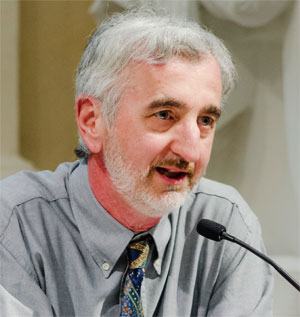 Gian Piero Siroli合作论文数Dipartimento di Fisica e Astronomia "Augusto Righi", Università di Bologna273F. S. Merritt合作论文数273T. J. Mcmahon合作论文数273M. Jimack合作论文数272
 Abolhassan Jawahery合作论文数Department of Physics, College of Computer, Mathematical, & Natural Sciences, University of Maryland272R.J. Homer合作论文数272Richard J Hemingway合作论文数272P. Routenburg合作论文数271
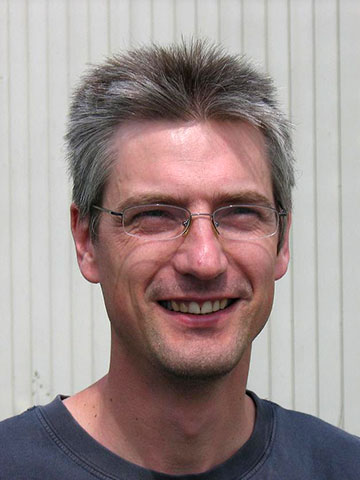 S J Hillier合作论文数School of Physics and Astronomy, University of Birmingham271




