This review reports the synthesis of propargylic derivatives with alkyl chains bearing either one fluorine or a gem-difluoro system. The preparation of the different categories of fluorinated derivatives is analyzed in a systematic manner, based on the nature of substituents close to the fluorine atom(s). In the second part of this review are summarized the synthetic applications of these fluorinated propargylic intermediates, focusing mainly on the preparation of carbo-and heterocyclic derivatives.1 Introduction2 Synthesis of Propargylic Fluorides3 Use of Propargylic Fluorides in the Preparation of Carbo-and Heterocycles with Fluorine-Containing Side Chains4 Conclusions and Perspectives
The Kinugasa reaction, applied to propargylic gem-difluorides, allows a very direct and efficient synthesis of new exoalkylidene β-lactams with a fluorine in the vinylic position.
An entry from the Cambridge Structural Database, the world’s repository for small molecule crystal structures. The entry contains experimental data from a crystal diffraction study. The deposited dataset for this entry is freely available from the CCDC and typically includes 3D coordinates, cell parameters, space group, experimental conditions and quality measures.
The preparation of the new title compounds has been performed using a short and efficient strategy. Starting from appropriately substituted propargylic fluorides, intramolecular enyne metathesis reactions afford in excellent yields 1,3 dienes with the fluorinated side chains in internal position. Then, simple Diels-Alder-aromatisation sequences complete the synthesis of the target molecules. (C) 2014 Elsevier B.V. All rights reserved.
New chroman-4-ones with gem-difluoroalkyl side chains in position 2 are easily accessible in five steps from salicylaldehyde-type derivatives. The crucial intermediates are propargylic alcohols bearing a CF2R substituent on the triple bond and the key step is their based-mediated isomerization into the corresponding enones. After MOM deprotection, an intramolecular oxa-Michael addition affords the target molecules in good overall yields. Such chromanones appear as useful intermediates for the preparation of bioactive oxygen-containing heterocycles with gem-difluoroalkyl side chains.
gem-Difluoroenals are excellent substrates for asymmetric organocatalytic 1,4-additions of thiols and anilines. By using diarylsilylprolinol ether as a catalyst, good to excellent yields with ee values in the same range (up to 98 %) were obtained. The CF2R group strongly activates the enals towards these organocatalytic additions.
Starting from easily accessible gem-difluoropropargylic derivatives, a DBU-mediated isomerisation affords enones in fair yields with a gem-difluoroalkyl chain. These derivatives were used to prepare pyrazolines and pyrrolines with the desired gem-difluoroalkyl side chain by cyclocondensations in good yields and with excellent stereoselectivity. A one-pot process was also successfully developed for these sequential reactions. By carrying out various types of Pd-catalyzed coupling reactions for compounds with a p-bromophenyl substituent a route to focused chemical libraries was demonstrated.
A small library of 26 arylhetaryl systems containing fluorinated side chains, e.g. (III) and (V), is prepared by means of Suzuki—Miyaura and Still cross coupling reactions.
The preparation of focused chemical libraries, based on five- and six-membered heteroaromatic systems with mono- and gemdifluoroalkyl side chains, is described. Four heterocyclic scaffolds with a p-bromophenyl group have been easily prepared from readily available propargylic fluorides. Starting from these scaffolds, palladium-catalyzed reactions have been performed, including by automated procedures, to prepare libraries of molecules designed for biological applications.
A new strategy has been designed for the preparation of gem-difluoro-bisarylic derivatives. It starts from easily accessible and reactive gem-difluoro-propargylic intermediates and elaborates the aromatic rings by a Diels–Alder-aromatization sequence. Heterocyclic systems can be also obtained by 1,3 dipolar cycloadditions, affording mixed aromatic/heteroaromatic derivatives with CF2 as a linker. Since this motif is a bioisostere of O and CO, corresponding bisarylic scaffolds could be of use to prepare chemical libraries of fluorinated analogues of bioactive natural products and/or drugs.
Taking advantage from the development of SV30, a new analogue of the pro-apoptotic molecule HA14-1, the aim of this study was to functionally evaluate SV30 and to develop safe nanocarriers for its administration. By using an inversion phase process, 57nm organic solvent-free lipid nanocapsules loaded with SV30 (SV30-LNCs) were formulated. Biological performance of SV30 and SV30-LNCs were evaluated on F98 cells that express Bax and Bcl-2, through survival assays, HPLC, flow cytometry, confocal microscopy and spectral imaging. We observed that SV30 alone or in combination with paclitaxel, etoposide or beam radiation could trigger cell death in a similar fashion to HA14-1. Although partially blocked by Z-VAD-fmk, this effect was coincident to caspase-3 activation. Hence, we established that SV30-LNCs improved SV30 biological activity together with a potentiation of the mitochondrial membrane potential decrease. Interestingly, flow cytometry and confocal analysis indicated that SV30 itself conferred to LNCs improved mitochondrial targeting skills that may present a great interest toward the development of mitochondria targeted nanomedicines.
New β-aminocyclohexanones and β-aminocyclohexanols, with a primary amino group, have been obtained by a short and efficient sequence involving an intramolecular tandem isomerization-Mannich reaction as the key step. This methodology takes advantage of tert-butanesulfinyl protection of the nitrogen atom.
The synthesis of new derivatives of embelin, a natural inhibitor of X-linked inhibitor of apoptosis protein (XIAP) is described. The design of these new molecules involved introduction of aromatic groups directly linked to the benzoquinone core. To allow a large flexibility in the nature and the length of the added chain, the strategy involves first a Suzuki-Miyaura reaction with functionalized aromatics, yielding a first generation of molecules. Then, by appropriate use of the functional groups, a second generation of representative embelin derivatives was prepared.
AbstractSimple and efficient synthetic routes to gem‐difluoro‐ynones are established.
Synthetic methodology studies are reported towards the preparation of new propargylic ketones with CF(2)R side chains. These molecules are used for the synthesis of various types of five- or six-membered heterocycles with difluoroalkyl side chains. (C) 2010 Elsevier Ltd. All rights reserved.
The use of especially designed omega-diynes allows to establish, through competitive reactions, the effect of C-F, C-OH, CF(2), C=0 and C(OMe)(2) substituents on the reactivity of neighbouring triple bonds in click chemistry and this gives not only a reactivity scale but also a direct access to the difference in activation energies between the competitive reaction pathways. (C) 2010 Elsevier Ltd. All rights reserved.
A versatile strategy is described for the synthesis of new 2-amino-1,4-dihydroquinolines. It involved a Knoevenagel condensation of N-protected-2-amino-5-bromobenzaldehyde with ethylcyanoacetate, followed by a cyclization and protection of the NH group to afford the key intermediates 7 or 19. Then various 1,4 addition reactions have been performed to introduce substituents on the upper part of the 2-amino-1,4-dihydroquinolines.
Chiral pyrimidines with a fluorine atom in the benzylic position are easily accessible in high enantiomeric excesses from optically active propargylic intermediates by two complementary routes. Both the use of optically active propargylic fluorides and the fluorination of the chiral pyrimidine in the final stage give excellent results in terms of enantiocontrol. On the other hand, original pyrimidines with a difluoromethyl side chain are also obtained in a few steps from new propargylic ketones bearing a CHF2 substituent on the triple bond.
The cross enyne metathesis reaction of propargylic fluoride (+)-12 with ethylene affords the enantioenriched 1,3-diene (+)-14 having fluorine-containing side chain at 2-position in good yield. Upon Diels-Alder reaction, followed by aromatization, this diene affords the new benzylic fluorides (+)-16 and (+)-17 in high ee values. This new strategy has been successfully extended to the corresponding gem-difluoro diene 21 and benzylic fluorides 23 and 24.
 René Grée合作论文数Rennes Institute of Chemical Sciences, Universite de Rennes58
 Ali Hachem合作论文数11Michael Prakesch合作论文数9Loïc Toupet合作论文数9
 Ali A. Khalaf合作论文数Faculty of Science, Assiut University6Pierre Bannwarth合作论文数6Valérie Madiot合作论文数5
 Srivari Chandrasekhar合作论文数CSIR-Indian Institute of Chemical Technology4Jaber Nada合作论文数4El Dine Assaad Nasr合作论文数4
 Philippe Lesot合作论文数Laboratoire de Chimie Structurale Organique, Université de Paris-Sud4
 Thierry Roisnel合作论文数Centre de Diffractométrie X, Institut des Sciences Chimiques de Rennes, Université de Rennes4
 Guillaume Viault合作论文数Laboratoire CPM, Université de Rennes 14Jeanmichel Martelli合作论文数4Marguerite Joucla合作论文数4Yves Rolland合作论文数3Olivier Tasseau合作论文数3
 Kendall N. Houk (肯德尔·霍克)合作论文数Houk Research Group, Department of Chemistry and Biochemistry, Division of Physical Sciences, University of California, Los Angeles3
 Jhillu Singh Yadav合作论文数Indian Institute of Chemical Technology3
 Saibal Das合作论文数3
 Florence Manero合作论文数3
 Philippe Juin合作论文数IFR26, Université de Nantes3
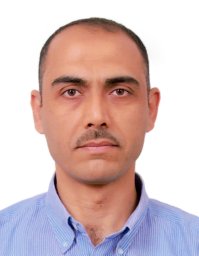 Hassan H. Abdallah合作论文数School of Chemical Sciences, Universiti Sains Malaysia3Jacques Martelli合作论文数3I Ripoche合作论文数2Rene L. Gree合作论文数2J. Kessabi合作论文数2T. J. VERBEUREN合作论文数2Ilyas Washington合作论文数2Fares Fares合作论文数2
 Yves Troin合作论文数2Jacques Gelas合作论文数2
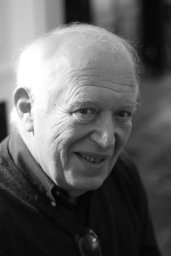 Jacques Courtieu合作论文数Laboratoire de Chimie Structurale Organique Associés au CNRS, Université de Paris-Sud2Mohammed Laabassi合作论文数Faculté des Sciences, Université de Batna2Eric Brown合作论文数2
 Paul Mosset合作论文数2Jack Hamelin合作论文数2Serge Simonet合作论文数2Jérôme Filmon合作论文数2Gilles Dujardin合作论文数2Alain Valleix合作论文数2
 Frederic Caijo合作论文数2Y. Le Floc'H合作论文数2
 Jeroni Morey合作论文数Departament de Quı́mica, Universitat de les Illes Balears2Abdelghani Boukerb合作论文数2P. Menei合作论文数1
 Chiara Cerletti合作论文数1A. Paillard合作论文数1




