Structural health monitoring (SHM) is responsible for identifying techniques and for prototyping systems performing a state diagnosis of structures. Its aim is to prevent sudden civil infrastructure failure as a result of several invisible sources of damage. Since structural damage is often caused by ground phenomena involving circumscribed geographical areas, it is useful to extend SHM systems to allow for the exchange of information among nearby buildings and then to increase the timeliness of the alerts. To this end, in this article, an SHM based on the IoT paradigm is proposed (SHM-IoT). SHM-IoT carries out both localised monitoring on a single building, and it uses information collected by several sensors correlated in time, aiming to identify potentially dangerous damage. It also performs a wider monitoring on a group of buildings in order to alert a larger number of people. SHM-IoT also sends a remote notification, which is finalised in order to alert the authorities and rescuers about the status of each monitored building. In this context, synchronisation problems arise because the information collected by each sensor of the SHM-IoT needs to be correlated in time in order to be used for damage evaluation and alert generation. In this paper, the hardware and software architectures of the proposed SHM-IoT are presented together with the synchronisation requirements and the methods of satisfying them. Experiments are undertaken to validate the SHM-IoT in real scenarios.
The Measurements and Networking (M&N) Workshop has become a biennial privileged forum for the discussion of current and emerging trends on measurements, communications, computer science, wireless systems, and sensor networks, fostering a close and fruitful contact between researchers and practitioners from both academia and industry to debate the role of both measurements for networking and networking for measurements.
This paper proposes a mathematical model for generating synthetic artificial ECG signal based on geometrical features of a real ECG signal. By variation of its parameters each particular wave of PQRST complex can be adjusted as needed allowing the generation of arbitrary ECG patterns typical for diseases and arrhythmia. The input parameters are treated to avoid mixing order of PQRST waves in case of automatic parameter variation and allow generating different patterns for each subsequent heartbeat independently. Each particular wave is modelled using an elementary trigonometric function or a Gaussian monopulse. Including possible addition of equipment noise as well as respiration frequency such an artificial signal can be used as a test signal for some signal processing methods. The model was tested by comparison of synthetized patterns against patterns generated by LabVIEW Biomedical Toolkit, while the parameters of model are found using the differential evolution algorithm.
This paper is an extension of the procedure pointed out to evaluate the distortion of the exponential signal, modeled as multiexponential signal with different amplitudes and time constants. This procedure evaluates the distortion by applying the Prony-like method to the signal reconstructed by zero-crossing time evaluated on the difference between the exponential original signal and the reference sinusoidal one. The extension proposed in this paper concerns with the use of the low-chirp signal as reference instead of the sinusoidal signal. The low-chirp signal permits to increase the number of the zero-crossing time in the section of exponential signal with the higher slope and decreasing in the section with the lower slope. This setting permits to estimate the distortion of the exponential signal with higher accuracy and precision. The parameters' amplitude, phase, and start frequency of the reference low-chirp signal are used to reconstruct the exponential signal in the zero-crossing time in order to overcome the problem of the high-resolution sampling. Their estimation is carried out by the time-varying sine-fitting algorithm that processes the resulting signal that is the difference between the exponential original signal and the low-chirp signal. Advantages of the proposed extended procedure regard the direct estimation of the reference low-chirp signal parameters from the resulting signal over-sampled at low resolution, and the use of only one input acquisition channel that permits to overcome the synchronization problem between the reference and the resulting signal. The numerical and experimental tests validate the extended procedure.
The analysis of the PPG signal in the time domain for the evaluation of the blood pressure (BP) is proposed. Some features extracted from the PPG signal are used to train an Artificial Neural Network (ANN) to determine the function that fit the target systolic and diastolic BP. The data related to the PPG signals and BP used in the analysis are provided by the Multi-parameter Intelligent Monitoring in Intensive Care (MIMIC II) database. The pre-analysis of the signal to remove inconsistent data is also proposed. A set of 1750 valid pulse is considered. The 80% of the input samples is used for the training of the network. Instead, the 10% of the input data are used for the validation of the network and 10% for final test of this last. The results show as the error for both the systolic and diastolic BP evaluation is included in the range of ±3 mmHg. Tab.1 shows the results for 20 PPG pulses randomly selected analyzed together with the systolic and diastolic blood pressure furnished by MIMC and evaluated by the trained ANN. Tab.1 experimental results comparing MIMIC and the ANN results. Moreover, a suitable hardware to validate the ANN with the sphygmomanometer is designed and realized. This hardware allows clinicians to collect data according to the requirements of the validation procedure. With the sphygmomanometer the systolic and diastolic values are referred to two different PPG pulses. As a consequence, it is proposed a new hardware interface allowing the synchronized acquisition and storage of the PPG signal and clinician voice. For the validation, the clinician: (i) evaluates the BP on both the arms and assesses that no significant differences occur; (ii) plugs the PPG sensor on the finger of one arm; (iii) starts the recording of both the PPG signal and the audio signal; (iv) evaluates the BP on the other arm with sphygmomanometer and says the systolic and diastolic values when detected. Through suitable post processing algorithm, the Systolic and Diastolic values are associated to the corresponding PPG Pulses. Following this procedure, the dataset to further validate the ANN according the standard is obtained. Once the ANN is validated it will be implemented on smartphone to have always in the pocket a reliable measurement system for Blood Pressure, oximetry and heart rate.
This paper reports about a research project aimed to the development of an agent-based software architecture for a Distributed Measurement System (DMS) as a Cyber Physical Systems (CPS) part. Agents are used because they naturally support the modeling of the interaction between the measurement nodes and provide the concept of action, useful to implement measurement procedures. A support to model continuity is novel in the approach, that is, the possibility of using the same model for property analysis using simulation, down to final implementation and real-time execution. A case study is presented concerning DMS devoted to real-time monitoring and control of an electric power system.
Internet-of-things (IoT) paradigm exploits the Distributed Measurement System (DMS) to execute measurements. Each node of the DMS has computational and communicative capabilities, and can be equipped by sensors and measurement instruments. Therefore, it can be assumed as Smart Object (SO). The availability of mobile SO (MSO) (cars, smartphones, drones) is taken into consideration in the research to investigate about its effect on the synchronization task of the DMS. The changing topology of the network makes difficult the application of traditional synchronization techniques based on a hierarchical approach. The consensus technique is experimented in the case of a MSO moving in a wireless network. Numerical tests assess the influence of the speed of the MSO on the synchronization accuracy and the time interval required to synchronize all the SOs.
This work develops an agent and control based approach for modeling, analysis and implementation of Cyber-Physical Systems (CPSs). Novel in this software engineering approach is a support to model continuity, that is the possibility of transitioning a same model from property analysis based on simulation, down to design, implementation and real-time execution. The paper introduces the basic concepts of the methodology, illustrates some implementation issues and presents a case study concerned with power management in a smart micro-grid.
In the paper is proposed a procedure to characterize the distortion of the exponential signal generated by Arbitrary Wave Generator (AWG). The basis of the procedure is the same in the case the AWG is set to generate sinusoidal signal. In particular, the resulting signal from the difference between the exponential generated signal and the sinusoidal reference one is digitalized by low resolution and high sampling frequency acquisition system. The Prony-like method is used to evaluate the distortion parameters of the reconstructed exponential signal by the zero crossing time sequence and the reference signal parameters extracted from the resulting signal. The characteristics of the exponential signal address the specific changes respect to the sinusoidal one. The changes concern with (i) the use of only one channel of the acquisition system, (ii) the extraction of the proper subset of the resulting signal valid to extract the parameters of the reference signal, and (iii) the frequency setting of the reference signal to ensure the reconstruction of the exponential shape with high slope. Numerical and experimental tests validate the proposed method.
The synchronization accuracy of the nodes of a wireless sensor network (WSN) can be perturbed by the plug-in of nonsynchronized nodes (NSNs). In the case of peer-to-peer synchronization algorithms, the reference time of the WSN is established on the basis of the clock time of all nodes. Therefore, each NSN changes the reference time to synchronize all nodes with the new reference time interval needs. In this time interval, the synchronization accuracy can degrade, i.e., the delay among node clocks overcomes the admissible range. In the case of only one or many NSNs, it was assessed in previous papers that by filtering the message of each NSN, the synchronization accuracy of the already synchronized nodes (ASNs) is preserved. However, the spatial distribution of the NSNs can fool the ASNs, foiling the effect of the message filtering. This paper presents a procedure that overcomes this inconvenience. The new fully distributed and consensus-based procedure iteratively filters the messages of communicating NSNs that would increase the time delay over the admissible range. As a consequence, the synchronization accuracy is preserved whatever the spatial distribution of ASNs and NSNs. Numerical and experimental tests are performed to validate the proposed procedure.
Recently the technological advances have allowed the introduction of new standards to model and monitor control systems. The classical distributed measurement systems (DMSs) have been enriched with the use of a large number of new measurement devices, increasing the amount of produced data. New paradigms for their management are needed, that coupled with actuators, enable the integration of DMSs into more complex systems, known as Cyber-Physical Systems (CPSs). CPSs application field includes different areas such as health care, power management in smart micro grids, and, more in general, management and execution of time-dependent event-driven systems. This paper proposes a framework that allows the modelling, analysis and the implementation of CPSs. In particular, the proposed framework introduces an original feature called model continuity that offers the possibility of using a same model for both simulation phase and real-time execution phase.
In the paper the problem of the reuse of cubilot slag for the production of bricks usable as building materials is studied. The results of the experimental tests demonstrate that the typical measurement techniques defined in the UNI-EN guidelines to evaluate the properties, the characteristics and the possible use of the traditional ceramics, can be applied to these waste bricks. However, these measurement techniques are not sufficient to define the safety of these type of bricks. Indeed, UNI-EN guidelines for ceramics does not includes measurement devoted to define the crystallinity of the products and the interaction between the slag and the clay. In order to provide an improvement of the standard to include the waste bricks as building materials, the authors propose the introduction of X-Ray Diffraction and Thermal Analysis measurements to determine the rule of slag in the bricks production and define the specification parameters adapted to the waste materials.
Many applications Internet-of-things (loT) based exploit Distributed Measurement System (DMS) to acquire data from sensors equipping objects or measurement instruments constituting the DMS nodes. The heterogeneity of the smart objects used to develop IoT applications has become a challenge in the design of the DMS, and very strong is the need to move towards new paradigm for programming and managing such systems. In fact, a current major limitation in the DMS development is the requirement of a deep knowledge about the different programming language and communication protocols. Aim of this paper is to provide an overview on DMS, focusing on the issues and the different technologies used, highlighting the software and architectural limits to the large diffusion for home automation, with a proposal to overcome them.
The acoustic emission (AE) is a powerful and potential nondestructive testing method for structural monitoring in civil engineering. Here, we show how systematic investigation of crack phenomena based on AE data can be significantly improved by the use of advanced signal processing techniques. Such data are a fundamental source of information that can be used as the basis for evaluating the status of the material, thereby paving the way for a new frontier of innovation made by data-enabled analytics. In this article, we propose a framework based on the Hilbert–Huang Transform for the evaluation of material damages that (i) facilitates the systematic employment of both established and promising analysis criteria, and (ii) provides unsupervised tools to achieve an accurate classification of the fracture type, the discrimination between longitudinal (P-) and traversal (S-) waves related to an AE event. The experimental validation shows promising results for a reliable assessment of the health status through the monitoring of civil infrastructures.
In the mineral part of the teeth the calcium phosphates and calcium carbonates are combined in a collagen with the mucopolysaccharides of the organic matrix. The infection on the tooth surface caused by bacteria can modify the tooth structures resulting in the tooth decay. In order to determine the modification on the tooth structure the use of thermal analysis technique is proposed. With this aim is fundamental the definition of an experimental protocol for the preparation of the sample under examination that does not modify the structure of the tooth. Preliminary experimental results confirm the capability of the measurement technique pointed out to correctly classify the modification of the tooth structure due to the aging or the carious.
The recent literature proposes the smartphone's camera to evaluate the arterial blood oxygenation (SpO 2 %) with the characteristic of friendly and ubiquitous measurement instrument. Some issues remain open, making difficult the compensation of artefacts causing error in the estimation of the photoplethysmogram signal (PPG) and not guarantying that the measurement of SpO 2 % is correctly executed. In the research, a method is proposed for setting-up the parameters to compensate the effects of the environmental light sources. Initially, the method evaluates the quality of the PPG signals by analysing the light intensity in the red and green colour channels of the video frames of the patient fingertip. Successively, a proper digital procedure sets the scale factor of the PPG to compensate the effects of external light for improving the accurate evaluation of the SpO 2 %. In order to assess the effectiveness of the proposed method, the experimental results are compared with the gas chromatography analysis.
Proper measurement is crucial in the medical, biomedical, and healthcare fields because it forms the basis of medical diagnosis, prognosis, and evaluation. In fact, it is known that "measuring is the cornerstone of medical research and clinical practice" [1]. Medical professionals such as doctors or clinical laboratory scientists must have confidence in the results reported by their instruments or their measurement methods to make the correct decision for their patient. While in many industries incorrect measurements would simply lead to customer dissatisfaction or loss of money, in the medical field incorrect measurements could be fatal and lead to loss of life. Hence, we can say that proper instrumentation and measurement is vital in the medical field. In this article, we take a look at the latest biomedical topics from the perspective of Instrumentation and Measurement (I&M), and we summarize the latest medical I&M topics published in IEEE Transactions on Instrumentation and Measurement (TIM), to familiarize medical practitioners and researchers in how to achieve a proper medical I&M paper. We also briefly introduce the IEEE Instrumentation and Measurement Society's (IMS) main medical conference, the IEEE Symposium on Medical Measurements and Applications (IEEE MeMeA), which promotes the I&M aspects of the medical field in general, and we present guidelines on the I&M aspects that are useful for authors with primarily biomedical backgrounds who would like to publish in IEEE TIM.
Using effect estimates from genome-wide association studies (GWAS), we identified a genetic risk score (GRS) that has the strongest association with type 2 diabetes (T2D) status in a population-based cohort and investigated its potential for prospective T2D risk assessment.By varying the number of single-nucleotide polymorphisms (SNPs) and their respective weights, alternative versions of GRS can be computed. They were tested in 1,181 T2D cases and 9,092 controls of the Estonian Biobank cohort. The best-fitting GRS was chosen for the subsequent analysis of incident T2D (386 cases).The best fit was provided by a novel doubly weighted GRS that captures the effect of 1,000 SNPs. The hazard for incident T2D was 3.45 times (95% CI: 2.31–5.17) higher in the highest GRS quintile compared with the lowest quintile, after adjusting for body mass index and other known predictors. Adding GRS to the prediction model for 5-year T2D risk resulted in continuous net reclassification improvement of 0.324 (95% CI: 0.211–0.444). In addition, a significant effect of the GRS on all-cause and cardiovascular mortality was observed.The proposed GRS would improve the accuracy of T2D risk prediction when added to the currently used set of predictors.Genet Med 19 3, 322–329.
Exponential voltage was proposed as a stimulus in the analog-to-digital converter (ADC) test because it is much more similar to the theoretical one than the sinusoidal signal. For the correct execution of the ADC test, the distortion of the exponential stimulus must be assessed by evaluating the amplitude and the time coefficient of the fundamental and the superimposed exponential components that best fit the real exponential voltage. To achieve this goal, the Prony-like method is proposed in this paper. Two problems arise: the a priori evaluation of the degree of polynomial function that best fits the input samples, and the number of exponential components that have to be evaluated. To overcome these problems, two proper sub-routines are pointed out allowing operation without a priori information and in accordance with the physical model of the signal. The results of experimental tests are shown in order to assess the correctness and the accuracy of the proposed procedure.
 Francesco Lamonaca合作论文数Dept . of Electronics;System Sciences;University of Calabria;System Sciences, University of Calabria78
 Domenico Luca Carnì合作论文数Department of Electronics;Computer and System Sciences;University of Calabria;Department of Electronics, University of Calabria62
 Pasquale Daponte合作论文数Dipartimento di Ingegneria, Università degli Studi del Sannio di Benevento39
 Sergio Rapuano合作论文数Dipartimento di Ingegneria, Università degli Studi del Sannio di Benevento21
 Libero Nigro合作论文数Department of Computer Engineering, Modelling, Electronics and Systems, Università Della Calabria14
 Alfonso Nastro合作论文数13
 Linus Michaeli合作论文数11
 Paolo F. Sciammarella合作论文数DIMES, Univ Calabria9Yuriy Kurylyak合作论文数8Vitaliano Spagnuolo合作论文数7Guglielmelli, G.合作论文数6
 Franco Cicirelli合作论文数Laboratorio di Ingegneria del Software;Dipartimento di Elettronica Informatica e Sistemistica;Università della Calabria;Laboratorio di Ingegneria del Software, Università della Calabria6
 Aldo Baccigalupi合作论文数6
 Angelo Furfaro合作论文数Dipartimento di Ingegneria Informatica, Elettronica, Modellistica, University of Calabria6a aiello合作论文数5Maria Riccio合作论文数5
 Kurt Barbe合作论文数Vrije Universiteit Brussel5
 Annalisa Liccardo合作论文数Department of Electrical Engineering;University of Naples;Federico II;Department of Electrical Engineering, University of Naples5
 Giancarlo Fortino合作论文数SenSysCal S.r.l.;Laboratory of Smart, PErvasive and Mobile systems Engineering, Department of Computer, Modeling, Electronic, and System Engineering, University of Calabria;Shenzhen Institute of Advanced Technology, Chinese Academy of Sciences;Huazhong Agricultural University5Antonio Carrozzini合作论文数4piazza roma合作论文数3Loizzo, E.合作论文数3A. Palumbo合作论文数Sch Comp & Biomed Engn, Magna Graecia Univ Catanzaro3F. Cennamo合作论文数3
 Eulalia Balestrieri合作论文数Department of Engineering;University of Sannio;Department of Engineering, University of Sannio3
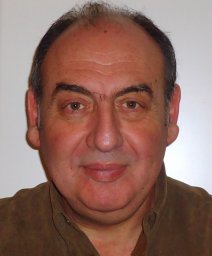 Theodore Laopoulos合作论文数3
 Anatoly Sachenko合作论文数Department of Information Computing Systems and Control
Ternopil National Economic University3
Anatoly Sachenko合作论文数Department of Information Computing Systems and Control
Ternopil National Economic University3 R. S. Olivito合作论文数3Leonardo Serratore合作论文数3Carmelo Macrì合作论文数3Ya. D. Sergeyev合作论文数2mihail marinov合作论文数2
 Claudio De Capua合作论文数2
 Monica Vasile合作论文数2Andrea Bernieri合作论文数Dip. di Ingegneria Elettrica e dell’Informazione, Universita di Cassino e del Lazio Meridionale2Polimeni, G.合作论文数2
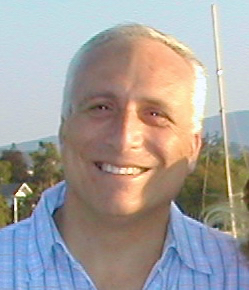 Pasquale Arpaia合作论文数Department of Electrical Engineering and Information Technology, University of Naples Federico II2
 Antonella Molinaro合作论文数University Mediterranea of Reggio Calabria2
 Dario Petri合作论文数Department of Industrial Engineering, University of Trento2
 Gregorio Andria合作论文数Department of Electrics and Electronics;Politecnico di Bari;Department of Electrics and Electronics, Politecnico di Bari2
 Antonio Guerrieri合作论文数Talent Garden Cosenza2Ihor Paliy合作论文数2Renato S. Olivito合作论文数2
 Antonino S. Fiorillo合作论文数School of Computer and Biomedical Engineering, Università degli Studi Magna Græcia di Catanzaro2
 Remigiusz J. Rak合作论文数2
 Mladen Borsic合作论文数2
 Emanuele Garone合作论文数Dipartimento di Elettronica, Informatica e Sistemistica, Università degli Studi della Calabria2
 Antonio Speranza合作论文数Società Italiana Progresso Scienze2
 Luigi Martirano合作论文数Department of Electrical Engineering, University of Rome2




