In both animals and plants, stem cell niches balance between cell-renewal and the generation of progeny cells that differentiate into specialized tissues. The multipotent and highly proliferative transit amplifying cells (TACs) integrate signals from stem cells and their differentiating progeny cells. Here we used spatial transcriptomics mapped to individual cells to illustrate the localization of TACs in maize meristems based on transcriptional gradients. Through genetic interactions and fluctuations in the transcriptional gradients we show that the multiplicative cell divisions are independently controlled from the TAC cell divisions. The dynamic nature of transcriptional variation in response to cell state or environment, together with the potential to improve yield by their modulation highlights the importance of finetuned modulation of networks rather than constitutive perturbations for crop improvement. ### Competing Interest Statement The authors have declared no competing interest.
A major advantage of using CRISPR/Cas9 for gene editing is multiplexing, that is, the simultaneous targeting of many genes. However, primary transformants typically contain hetero-allelic mutations or are genetic mosaic, while genetically stable lines that are homozygous are desired for functional analysis. Currently, a dedicated and labor-intensive effort is required to obtain such higher-order mutants through several generations of genetic crosses and genotyping. We describe the design and validation of a rapid and efficient strategy to produce lines of genetically identical plants carrying various combinations of homozygous edits, suitable for replicated analysis of phenotypical differences. This approach was achieved by combining highly multiplex gene editing in Zea mays (maize) with in vivo haploid induction and efficient in vitro generation of doubled haploid plants using embryo rescue doubling. By combining three CRISPR/Cas9 constructs that target in total 36 genes potentially involved in leaf growth, we generated an array of homozygous lines with various combinations of edits within three generations. Several genotypes show a reproducible 10% increase in leaf size, including a septuple mutant combination. We anticipate that our strategy will facilitate the study of gene families via multiplex CRISPR mutagenesis and the identification of allele combinations to improve quantitative crop traits.
Ensuring food security for an ever-growing global population while adapting to climate change is the main challenge for agriculture in the 21st century. Although new technologies are being applied to tackle this problem, we are approaching a plateau in crop improvement using conventional breeding. Recent advances in CRISPR/Cas9-mediated gene engineering have paved the way to accelerate plant breeding to meet this increasing demand. However, many traits are governed by multiple small-effect genes operating in complex interactive networks. Here, we present the gene discovery pipeline BREEDIT, which combines multiplex genome editing of whole gene families with crossing schemes to improve complex traits such as yield and drought tolerance. We induced gene knockouts in 48 growth-related genes into maize (Zea mays) using CRISPR/Cas9 and generated a collection of over 1,000 gene-edited plants. The edited populations displayed (on average) 5%-10% increases in leaf length and up to 20% increases in leaf width compared with the controls. For each gene family, edits in subsets of genes could be associated with enhanced traits, allowing us to reduce the gene space to be considered for trait improvement. BREEDIT could be rapidly applied to generate a diverse collection of mutants to identify promising gene modifications for later use in breeding programs.
The plant shoot apex houses the shoot apical meristem, a highly organized and active stem-cell tissue where molecular signaling in discrete cells determines when and where leaves are initiated. We optimized a spatial transcriptomics approach, in situ sequencing (ISS), to colocalize the transcripts of 90 genes simultaneously on the same section of tissue from the maize (Zea mays) shoot apex. The RNA ISS technology reported expression profiles that were highly comparable with those obtained by in situ hybridizations (ISHs) and allowed the discrimination between tissue domains. Furthermore, the application of spatial transcriptomics to the shoot apex, which inherently comprised phytomers that are in gradual developmental stages, provided a spatiotemporal sequence of transcriptional events. We illustrate the power of the technology through PLASTOCHRON1 (PLA1), which was specifically expressed at the boundary between indeterminate and determinate cells and partially overlapped with ROUGH SHEATH1 and OUTER CELL LAYER4 transcripts. Also, in the inflorescence, PLA1 transcripts localized in cells subtending the lateral primordia or bordering the newly established meristematic region, suggesting a more general role of PLA1 in signaling between indeterminate and determinate cells during the formation of lateral organs. Spatial transcriptomics builds on RNA ISH, which assays relatively few transcripts at a time and provides a powerful complement to single-cell transcriptomics that inherently removes cells from their native spatial context. Further improvements in resolution and sensitivity will greatly advance research in plant developmental biology.
 Hilde Nelissen合作论文数4
 Kevin Debray合作论文数3
 Tom Van Hautegem合作论文数Univ Ghent, Dept Plant Biotechnol & Bioinformat, Ghent, Belgium3
 Kirin Demuynck合作论文数3
 Laurens Pauwels合作论文数Flanders Institute for Biotechnology and Department of Plant Biotechnology and Genetics, Ghent University3Julie Pevernagie合作论文数2
 Christian Damian Lorenzo合作论文数2Wout Vandeputte合作论文数2
 Reinout Laureyns合作论文数2Lennert Impens合作论文数2Griet Coussens合作论文数Univ Ghent, Dept Plant Biotechnol & Bioinformat, B-9052 Ghent, Belgium2
 Dirk Inzé合作论文数Center for Plant Systems Biology, Vlaams Instituut Voor Biotechnologie2
 Thomas Jacobs合作论文数Bernhard Nocht Inst Trop Med2
 Tom Ruttink合作论文数Research Institute for Agriculture Fisheries and Food2
 Josh Strable合作论文数2Lotte Pollaris合作论文数1Michiel Bontinck合作论文数1Yara de Boe合作论文数1Ward Develtere合作论文数1Dries Schaumont合作论文数1Thomas Depuydt合作论文数1Pieter Wytynck合作论文数1
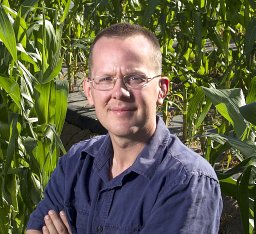 Whipple Clinton J合作论文数Dept Biol, Brigham Young Univ1
 Benjamin Pavie合作论文数Green Center for Systems Biology, UT Southwestern Medical Center1Korfhage Christian合作论文数1Aesaert Stijn合作论文数1
 Samik Bhattacharya合作论文数Aerospace Engineering Department1
 Yvan Saeys合作论文数Department of Mathematics, Computer Science and Statistics, Faculty of Sciences, Ghent University1
 Klaas Vandepoele合作论文数Department of Plant Biotechnology and Bioinformatics, Faculty of Sciences, Ghent University1




