While the methods thus far developed for vorticity-streamfunction formulation are thus far restricted to 2D flows, they are applicable to both viscous and inviscid flows, including problems with multiply-connected domains. The present solution techniques for the velocity-pressure formulation can be extended to 3D problems. Attention is given to (1) two multistep formulations that use piecewise bilinear functions for the velocity and piecewise constant functions for the pressure, and (2) a novel multistep velocity-pressure formulation based on the equal-order interpolation of velocity and pressure.
AbstractA review of our solution techniques for the vorticity–streamfunction formulation of two‐dimensional incompressible flows is presented. While both the viscous and inviscid cases are considered, the derivation of the proper finite element formulations for multiply connected domains is emphasized. In all formulations associated with the vorticity transport equation, the streamline upwind/Petrov–Galerkin method is used. The adaptive implicit–explicit and grouped element‐by‐element solution strategies are employed to maximize the computational efficiency. The solutions obtained in all test cases compare well with solutions from previously published investigations. The convergence and benchmark studies performed in this paper show that the solution techniques presented are accurate, reliable and efficient.
Finite element procedures and computations based on the velocity-pressure and vorticitystream function formulations of incompressible flows are presented. Two new multi-step velocity-pressure formulations are proposed and are compared with the vorticity-stream function and one-step formulations. The example problems chosen are the standing vortex problem and flow past a circular cylinder. Benchmark quality computations are performed for the cylinder problem. The numerical results indicate that the vorticity-stream function formulation and one of the two new multi-step formulations involve much less numerical dissipation than the one-step formulation.
A new numerical simulation model for electrophoresis separation phenomena is presented. The proposed model employs a Petrov-Galerkin scheme to solve for the concentrations, the electric potential and its gradient via a mixed finite element formulation. This formulation does not involve any restrictions on the electric current density or the finite element mesh. The scheme is stable, accurate, and can be applied to intricate geometries in higher space dimensions without loss of generality. Moreover this formulation avoids the usage of higher order elements which can be expensive. Example simulations are performed in one and two space dimensions. The one-dimensional results closely agree with those from past publications. The success of the simulations in two dimensions indicates the potential of the scheme to address design strategies in practical separation techniques.
A numerical simulation capability has been developed for electrochemical processes, in particular for electrophoresis separation techniques. The numerical method employed is based on the streamline upwind/Petrov-Galerkin formulations which have desirable stability and accuracy properties for the convection-diffusion-reaction type equations that govern these problems.
A new Petrov-Galerkin finite element formulation has been proposed for transient convection-diffusion problems. Most Petrov-Galerkin formulations take into account the spatial discretization, and the weighting functions so developed give satisfactory solutions for steady state problems. Though these schemes can be used for transient problems, there is scope for improvement. The schemes proposed here, which consider temporal as well as spatial discretization, provide improved solutions. Electrophoresis, which involves the motion of charged entities under the influence of an applied electric field, is governed by equations similiar to those encountered in fluid flow problems, i.e., transient convection-diffusion equations. Test problems are solved in electrophoresis and fluid flow. The results obtained are satisfactory. It is also expected that these schemes, suitably adapted, will improve the numerical solutions of the compressible Euler and the Navier-Stokes equations.
A new Petrov-Galerkin finite element formulation has been proposed for transient convection-diffusion problems. Most Petrov-Galerkin formulations take into account the spatial discretization and the weighting functions so developed give satisfactory solutions for steady state problems. Though these schemes can be used for transient problems, there is scope for improvement. The schemes proposed here, which take into account temporal as well as spatial discretization, provide improved solutions. In view of the generality of the differential equation being solved, these schemes can be implemented for any physical problem which is governed by the transient convection-diffusion equation. It is also expected that these schemes, suitably adapted, will improve the numerical solutions of the compressible Euler and Navier-Stokes equations.
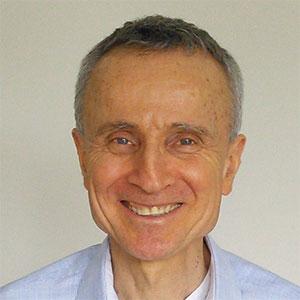 Tayfun E. Tezduyar合作论文数Faculty of Science and Engineering, Waseda University5
 Jingjia Liou合作论文数3
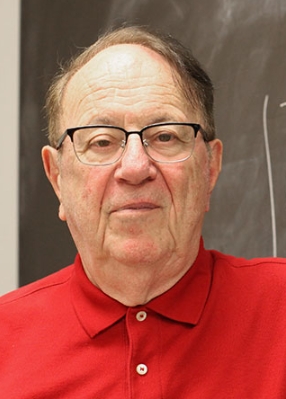 Roland Glowinski合作论文数Department of Mathematics, College of Natural Sciences and Mathematics, University of Houston;Department of Mechanical Engineering, Cullen College of Engineering, University of Houston1W.D. Goodrich合作论文数1
 Marek Behr合作论文数Department of Chemical and Biomolecular Engineering and Computer and Information Technology Institute;Rice University;Department of Chemical and Biomolecular Engineering and Computer and Information Technology Institute, Rice University1




