We train an instantaneous quantum polynomial-time (IQP) Born machine on real high-energy-physics calorimeter shower images at 64 qubits and compile the trained model into a single sampling-hard IQP circuit for quantum deployment. The pipeline has three components: a Mixture-of-IQP () architecture, whose Walsh-diagonal MMD^2 loss is classically trainable by Van den Nest Fourier Monte Carlo; the Pearson-Stabilized Correlation Kernel (), a positive-definite MMD kernel that biases descent toward correlation-sensitive directions through a data-evaluated Jacobian of the empirical Pearson matrix; and an exact deferred-measurement compilation of into a single IQP circuit on + ⌈log_2 ⌉ qubits (). Across five seeds at = 8, 1500 epochs, the model reaches = 0.069 ± 0.008 against a 0.052 encoding-fidelity floor on the training split and 0.071 ± 0.008 on a held-out test split, versus a Liu–Wang baseline at = 0.100. The compiled reproduces the marginal to 0.591 ± 0.012 times the Monte Carlo noise floor.
The prospect of quantum computing with a potential exponential speed-up compared to classical computing identifies it as a promising method in the search for alternative future High Energy Physics (HEP) simulation approaches. HEP simulations, such as employed at the Large Hadron Collider at CERN, are extraordinarily complex and require an immense amount of computing resources in hardware and time. For some HEP simulations, classical machine learning models have already been successfully developed and tested, resulting in several orders of magnitude speed-up. In this research, we proceed to the next step and explore whether quantum computing can provide sufficient accuracy, and further improvements, suggesting it as an exciting direction of future investigations. With a small prototype model, we demonstrate a full quantum Generative Adversarial Network (GAN) model for generating downsized eight-pixel calorimeter shower images. The advantage over previous quantum models is that the model generates real individual images containing pixel energy values instead of simple probability distributions averaged over a test sample. To complete the picture, the results of the full quantum GAN model are compared to hybrid quantum-classical models using a classical discriminator neural network.
We present the results of the 'Fast Calorimeter Simulation Challenge 2022'-the CaloChallenge. We study state-of-the-art generative models on four calorimeter shower datasets of increasing dimensionality, ranging from a few hundred voxels to a few tens of thousand voxels. The 31 individual submissions span a wide range of current popular generative architectures, including variational autoencoders (VAEs), generative adversarial networks (GANs), normalizing flows, diffusion models, and models based on conditional flow matching. We compare all submissions in terms of quality of generated calorimeter showers, as well as shower generation time and model size. To assess the quality we use a broad range of different metrics including differences in one-dimensional histograms of observables, KPD/FPD scores, AUCs of binary classifiers, and the log-posterior of a multiclass classifier. The results of the CaloChallenge provide the most complete and comprehensive survey of cutting-edge approaches to calorimeter fast simulation to date. In addition, our work provides a uniquely detailed perspective on the important problem of how to evaluate generative models. As such, the results presented here should be applicable for other domains that use generative AI and require fast and faithful generation of samples in a large phase space.Report Numbers: HEPHY-ML-24-05, FERMILAB-PUB-24-0728-CMS, TTK-24-43.
Results are presented from a search for supersymmetry in events with a single electron or muon, and multiple hadronic jets. The data correspond to a sample of proton-proton collisions at $\sqrt{s}=13$ TeV with an integrated luminosity of $138 \ \text{fb}^{-1}$, recorded by the CMS experiment at the LHC. The search targets gluino pair production, where the gluinos decay into the lightest supersymmetric particle (LSP) and a pair of light quarks in the final state. We include the angular correlation between the lepton and the W boson's transverse momenta in a machine learning driven multi-classification for a strong separation between the signal and the background processes. Furthermore, the effort for a reinterpretation of our results in the pMSSM19 framework to broaden the probed SUSY phase space is presented.
Quantum Machine Learning models typically require expensive on-chip training procedures and often lack efficient gradient estimation methods. By employing Pauli propagation, it is possible to derive a symbolic representation of observables as analytic functions of a circuit's parameters. Although the number of terms in such functional representations grows rapidly with circuit depth, suitable choices of ansatz and controlled truncations on Pauli weights and frequency components yield accurate yet tractable estimators of the target observables. With the right ansatz design, this approach can be extended to system sizes beyond the reach of classical simulation, enabling scalable training for larger quantum systems. This also enables a form of classical pre-training through gradient-based optimization prior to deployment on quantum hardware. The proposed approach is demonstrated on the Variational Quantum Eigensolver for obtaining the ground state of a spin model, showing that accurate results can be achieved with a scalable and computationally efficient procedure.
The Quantum Angle Generator (QAG) is a cutting-edge quantum machine learning model designed to generate precise images on current Noise Intermediate Scale Quantum devices. It utilizes variational quantum circuits and incorporates the MERA-upsampling architecture, achieving exceptional accuracy. The study demonstrates the QAG model’s ability to learn hardware noise behavior, with stable results in the presence of simulated quantum hardware noise up to 1.5% during inference and 3% during training. However, deploying the noiseless trained model on real quantum hardware reduces accuracy. Training the model directly on hardware allows it to learn the underlying noise behavior, maintaining precision comparable to the noisy simulator. The QAG model’s noise robustness and accuracy make it suitable for analyzing simulated calorimeter shower images used in high-energy physics simulations at CERN’s Large Hadron Collider.
The simulation of calorimeter showers presents a significant computational challenge, impacting the efficiency and accuracy of particle physics experiments. While generative ML models have been effective in enhancing and accelerating the conventional physics simulation processes, their application has predominantly been constrained to fixed detector readout geometries. With CaloPointFlow we have presented one of the first models that can generate a calorimeter shower as a point cloud. This study describes CaloPointFlow II, which exhibits several significant improvements compared to its predecessor. This includes a novel dequantization technique, referred to as CDF-Dequantization, and a normalizing flow architecture, referred to as DeepSet- Flow. The new model was evaluated with the fast Calorimeter Simulation Challenge (CaloChallenge) Dataset II and III.
Collider data generation with machine learning has become increasingly popular in particle physics due to the high computational cost of conventional Monte Carlo simulations, particularly for future high-luminosity colliders. We propose a generative model for point clouds that employs an attention-based aggregation while preserving a linear computational complexity with respect to the number of points. The model is trained in an adversarial setup, ensuring input permutation equivariance and invariance for the generator and critic, respectively. To stabilize known unstable adversarial training, a feature matching loss is introduced. We evaluate the performance on two different datasets. The former is the top-quark JetNet150 dataset, where the model outperforms the current state-of-the-art GAN-based model, despite having significantly fewer parameters. The latter is dataset 2 of the CaloChallenge, which comprises point clouds with up to 30× more points compared to the first dataset. The model and its corresponding code are available at .
In High Energy Physics, detailed and time-consuming simulations are used for particle interactions with detectors. To bypass these simulations with a generative model, the generation of large point clouds in a short time is required, while the complex dependencies between the particles must be correctly modelled. Particle showers are inherently tree-based processes, as each particle is produced by the decay or detector interaction of a particle of the previous generation. In this work, we present a novel Graph Neural Network model (DeepTreeGAN) that is able to generate such point clouds in a tree-based manner. We show that this model can reproduce complex distributions, and we evaluate its performance on the public JetNet dataset.
The main challenge of quantum computing on its way to scalability is the erroneous behaviour of current devices. Understanding and predicting their impact on computations is essential to counteract these errors with methods such as quantum error mitigation. Thus, it is necessary to construct and evaluate accurate noise models. However, the evaluation of noise models does not yet follow a systematic approach, making it nearly impossible to estimate the accuracy of a model for a given application. Therefore, we developed and present a systematic approach to benchmark noise models for quantum computing applications. It compares the results of hardware experiments to predictions of noise models for a representative set of quantum circuits. We also construct a noise model and optimize its parameters with a series of training circuits. We then perform a volumetric benchmark comparing our model to other models from the literature.
The H1 Collaboration reports the first measurement of the 1-jettiness event shape observable $\tau_1^b$ in neutral-current deep-inelastic electron-proton scattering (DIS). The observable $\tau_1^b$ is equivalent to a thrust observable defined in the Breit frame. The data sample was collected at the HERA $ep$ collider in the years 2003-2007 with center-of-mass energy of $\sqrt{s}=319\,\text{GeV}$, corresponding to an integrated luminosity of $351.1\,\text{pb}^{-1}$. Triple differential cross sections are provided as a function of $\tau_1^b$, event virtuality $Q^2$, and inelasticity $y$, in the kinematic region $Q^2>150\,\text{GeV}^{2}$. Single differential cross section are provided as a function of $\tau_1^b$ in a limited kinematic range. Double differential cross sections are measured, in contrast, integrated over $\tau_1^b$ and represent the inclusive neutral-current DIS cross section measured as a function of $Q^2$ and $y$. The data are compared to a variety of predictions and include classical and modern Monte Carlo event generators, predictions in fixed-order perturbative QCD where calculations up to $\mathcal{O}(\alpha_s^3)$ are available for $\tau_1^b$ or inclusive DIS, and resummed predictions at next-to-leading logarithmic accuracy matched to fixed order predictions at $\mathcal{O}(\alpha_s^2)$. These comparisons reveal sensitivity of the 1-jettiness observable to QCD parton shower and resummation effects, as well as the modeling of hadronization and fragmentation. Within their range of validity, the fixed-order predictions provide a good description of the data. Monte Carlo event generators are predictive over the full measured range and hence their underlying models and parameters can be constrained by comparing to the presented data.
The quantum angle generator (QAG) is a new full quantum machine learning model designed to generate accurate images on current noise intermediate scale quantum devices. Variational quantum circuits form the core of the QAG model, and various circuit architectures are evaluated. In combination with the so-called MERA-upsampling architecture, the QAG model achieves excellent results, which are analyzed and evaluated in detail. To our knowledge, this is the first time that a quantum model has achieved such accurate results. To explore the robustness of the model to noise, an extensive quantum noise study is performed. In this paper, it is demonstrated that the model trained on a physical quantum device learns the noise characteristics of the hardware and generates outstanding results. It is verified that even a quantum hardware machine calibration change during training of up to 8% can be well tolerated. For demonstration, the model is employed in indispensable simulations in high energy physics required to measure particle energies and, ultimately, to discover unknown particles at the large Hadron Collider at CERN.
The Breit frame provides a natural frame to analyze lepton–proton scattering events. In this reference frame, the parton model hard interactions between a quark and an exchanged boson defines the coordinate system such that the struck quark is back-scattered along the virtual photon momentum direction. In Quantum Chromodynamics (QCD), higher order perturbative or non-perturbative effects can change this picture drastically. As Bjorken-x decreases below one half, a rather peculiar event signature is predicted with increasing probability, where no radiation is present in one of the two Breit-frame hemispheres and all emissions are to be found in the other hemisphere. At higher orders in α _s or in the presence of soft QCD effects, predictions of the rate of these events are far from trivial, and that motivates measurements with real data. We report on the first observation of the empty current hemisphere events in electron–proton collisions at the HERA collider using data recorded with the H1 detector at a center-of-mass energy of 319 GeV. The fraction of inclusive neutral-current DIS events with an empty hemisphere is found to be 0.0112 ± 3.9%_stat± 4.5%_syst± 1.6%_mod in the selected kinematic region of 150
In High Energy Physics, detailed and time-consuming simulations are used for particle interactions with detectors. To bypass these simulations with a generative model, the generation of large point clouds in a short time is required, while the complex dependencies between the particles must be correctly modelled. Particle showers are inherently tree-based processes, as each particle is produced by the decay or detector interaction of a particle of the previous generation. In this work, we present a significant extension to DeepTreeGAN, featuring a critic, that is able to aggregate such point clouds iteratively in a tree-based manner. We show that this model can reproduce complex distributions, and we evaluate its performance on the public JetNet 150 dataset.
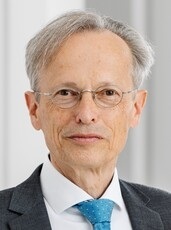 Martin Erdmann合作论文数Physics Institute III A, RWTH Aachen University244
 G Eckerlin合作论文数227C. Kleinwort合作论文数222
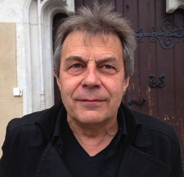 Hannes Jung合作论文数University of Antwerp;Deutsches Elektronen-Synchrotron DESY;Institut für Theoretische Physik, University of Hamburg220
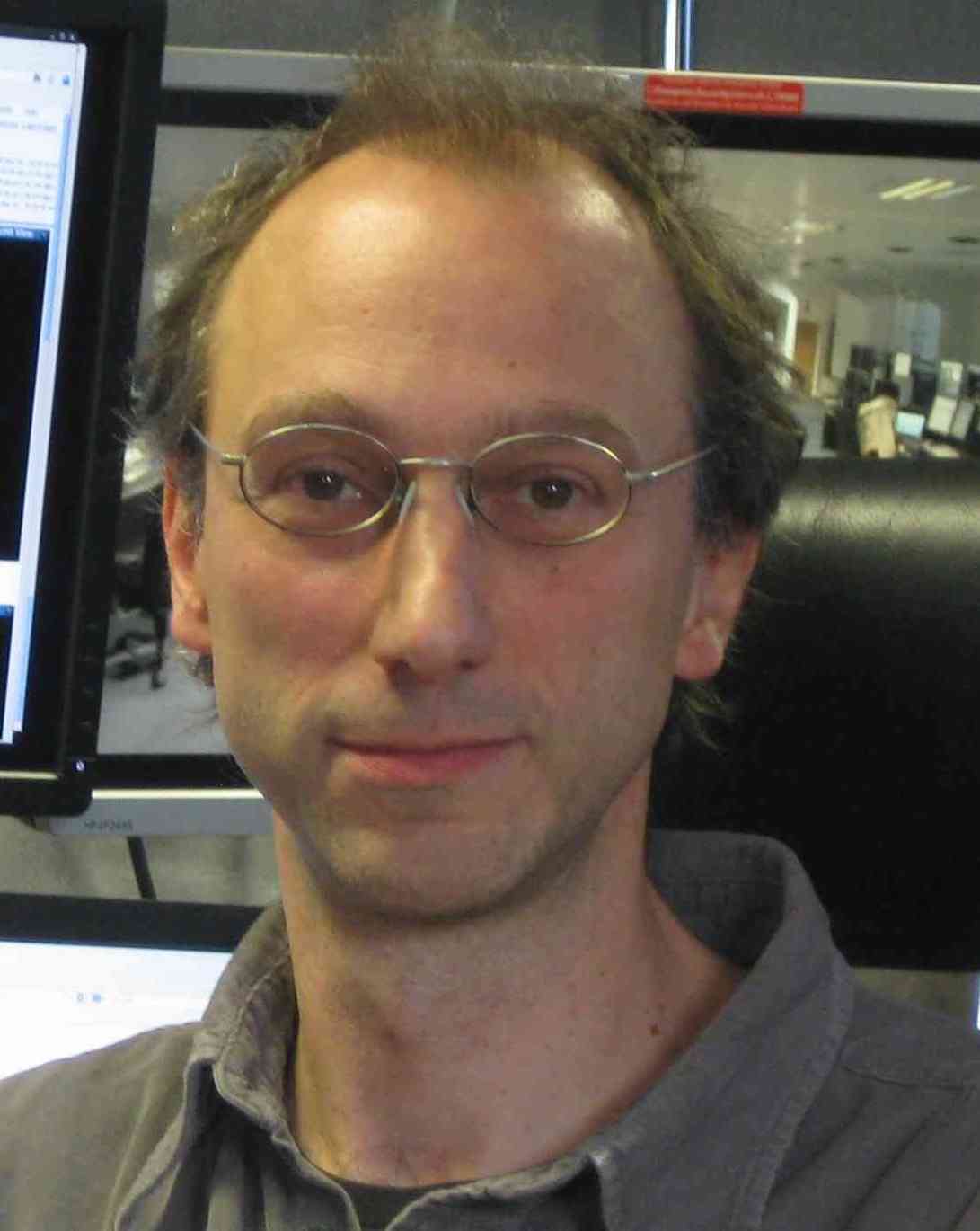 Laurent Favart合作论文数Faculté des Sciences, Université Libre de Bruxelles219
 Guenter Fluegge合作论文数III. Physikalisches Institut B, RWTH Aachen University218D Pitzl合作论文数211
 Barbara Clerbaux合作论文数Faculté des Sciences, Université Libre de Bruxelles210W. Lange合作论文数209Y. Sirois合作论文数208Tomas Linden合作论文数Helsinki Institute of Physics, Faculty of Science, University of Helsinki201
 Fotios Ptochos合作论文数Department of Physics, University of Cyprus197
 Matthias Kasemann合作论文数Deutsche Elektronen-Synchrotron196R. Hadjiiska合作论文数195
 Peicho Petkov合作论文数Department of Atomic Physics, Faculty of Physics, University of Sofia194
 Thomas Bergauer合作论文数Department for Detector Development, Institute of High Energy Physics, Austrian Academy of Sciences194
 Michael Tytgat合作论文数High-Energy Physics Research Centre, Vrije Universiteit Brussel;Universiteit Gent192
 M. Titov合作论文数190
 Robert Schöfbeck合作论文数Institute of High Energy Physics, Austrian Academy of Sciences190
 Kerstin Borras合作论文数DESY;RWTH Aachen University190U. Goerlach合作论文数185C. Collard合作论文数185
 Martti Raidal合作论文数National Institute of Chemical Physics and Biophysics183Sami Lehti合作论文数Helsinki Institute of Physics, Faculty of Science, University of Helsinki182
 Mikko Voutilainen合作论文数180P. Schleper合作论文数179
 Andreas B. Meyer合作论文数Deutsches Elektronen-Synchrotron;Hamburg University178Florian Beaudette合作论文数178
 Nikola Godinovic合作论文数Department of Physics, University of Split177
 F. Blekman合作论文数Vrije Universiteit Brussel175
 Andre Sznajder合作论文数Instituto de Fisica, Departamento de Física Nuclear e Altas Energias, Universidade do Estado do Rio de Janeiro175
 Luiz Mundim合作论文数Instituto de Física Armando Dias Tavares, Universidade do Estado do Rio de Janeiro;Departamento de Física Nuclear e Altas Energias, Universidade do Estado do Rio de Janeiro175
 W. Waltenberger合作论文数Univ Vienna175
 Christophe Delaere合作论文数Centre for Cosmology, Particle Physics and Phenomenology, Institut de Recherche en Mathématique et Physique, Université Catholique de Louvain;Ecole de Physique, Faculté des Sciences, Université Catholique de Louvain174Marko Dragicevic合作论文数Institut für Hochenergiephysik der OeAW, Wien, Austria174
 Christoph Grab合作论文数Institute for Particle Physics and Astrophysics, Department of Physics, ETH Zurich173M. Besancon合作论文数DSM/IRFU, CEA/Saclay, Gif-sur-Yvette, France173
 Panja Luukka合作论文数Department of Physics, School of Engineering Science, Lappeenranta-Lahti University of Technology172R. Granier De Cassagnac合作论文数Laboratoire Leprince-Ringuet, Ecole Polytechnique, IN2P3-CNRS, Palaiseau, France172
 Xavier Janssen合作论文数Universiteit Antwerpen172
 Armen Tumasyan合作论文数A.I. Alikhanyan's National Science Laboratory, Yerevan Physics Institute172
 Gautier Hamel de Monchenault合作论文数Département de Physique des Particules, CEA170Maxime Gouzevitch合作论文数Université Claude Bernard Lyon 1;Institut de Physique des 2 Infinis de Lyon169M. Lethuillier合作论文数166
 Pierre Van Mechelen合作论文数Department of Physics, University of Antwerp165
 Mario Kadastik合作论文数Department of Cybernetics, School of Science, Tallinn University of Technology;CERN;National Institute of Chemical Physics and Biophysics165B. Ille合作论文数164
 Sandro Fonseca De Souza合作论文数Department of Nuclear and High Energy Physics, Universidade do Estado do Rio de Janeiro163
 Peter Robmann合作论文数Physik-Institut, Universität Zürich163




