•ML classification of ear tag accelerometer data detects behaviour change at lambing.•Predicted grazing and general activity fell to a minimum on the day of lambing.•Predicted standing and walking behaviour peaked at parturition.•Predicted frequency of posture change more than doubled over the lambing period.•This study supports ML classification of ewe behaviour to monitor parturition.
This systematic review explores the use of on-animal sensors in sheep and their potential application in objective welfare monitoring. The key questions posed were: To what extent can current scientific knowledge inform a sensor-based approach to welfare evaluations? And, how might this knowledge shape development of commercial monitoring systems? These questions were explored through retrospective classification of published sensor applications using The Five Domains (FD) Model as a framework for animal welfare assessment. A total of 71 studies were reviewed. The results indicate studies specifically evaluating the use of sensors for welfare assessment are limited, though many experiments could still be related to some aspect of welfare. The assessment of sensor utilisation revealed the greatest proportion of applications within the ‘Behaviour’ Domain (90.1%; n = 64), and the lowest within the ‘Health’ (25.4%; n = 18) and ‘Mental state’ Domains (25.4%; n = 18). The review also highlights how different sensor types (location, motion or physiological) differ in their applicability for welfare assessment. This paper is the first to classify published sensor applications using the FD Model as a framework and highlights the potential for sensor technology in sheep welfare monitoring. The results suggest that any attempt to create a commercial sensor-based system for objective welfare assessment will require the integration of more than one sensor type, particularly if multiple Domains are to be addressed.
The assignment of maternal parentage, although time-consuming and expensive using traditional methods, is essential for genetic improvement. Within the sheep industry the recording of time-based ( temporal) associations without human intervention has been routinely used to derive maternal parentage, however it has not been researched in extensive beef production systems. To determine whether temporal associations could be used to assign maternal parentage, cows and calves had their identity recorded as they walked to water over a 27-day trial. Two methods of association were investigated, being the half-weight index and the time difference between a cow and calf having their identity recorded. The half-weight index, which is a measure of the number of times two individuals are recorded together, correctly assigned greater than 90% of maternal pairs. When investigating the duration of data recording it was shown that 85% of maternal parentage could be achieved within only 21 days. Further work is required to determine the effect of calf age, herd and paddock size; however, the results showed that the half-weight index method of determining maternal associations is a labour-saving and accurate alternative to traditional methods used to identify maternal parentage.
A significant number of lambs born each yr in Australia die within 72 h of birth. Periods of high wind, combined with rain and low temperatures, can lead to marked increases in the level of mortality. Under these weather conditions mortality levels may be reduced with the provision of shelter, provided it is utilized by lambs. This study used GPS collars to determine the use of shelter by ewes and lambs, to compare the movement of ewes with twin lambs across 2 types of shelter (hedgerows and shrubs), while also comparing ewes with single and twin lambs in a single shelter type (hedgerows). Additionally, the birth sites of 364 lambs and death sites of 252 lambs were recorded across the 3 shelter type and litter size combinations (Twins in shrubs, Twins in hedgerows, Singles in hedgerows) plus an unsheltered group (Singles in unsheltered). A higher (P < 0.001) than randomly expected percentage of ewes lambed in the areas closest to both shelter types; in the shrub shelter 42% of ewes lambed within 2.5 m of shrub rows compared to an expected 11% based on the proportion of the paddock this area constituted. Despite the higher than expected percentage of ewes lambing close to the shelter rows, ewes in both twin lamb shelter types avoided the areas close to the shelter before and after lambing (Hedgerows-2.5 m; Shrubs- 6.25 m) and single bearing ewes showed no preference for or against these areas. With a high proportion of twin bearing ewes lambing close to the shelter, a design that reduces the potential for ewe and offspring separation while providing good shelter will offer the greatest potential reduction in newborn twin lamb mortality arising from exposure.
This study used a systematic literature review methodology to determine whether there is evidence that drinking frequency has effects on cattle performance, what performance responses to drinking frequency are documented and how performance responses vary according to environmental and animal factors. Electronic databases were searched for English language articles with original data on at least one performance attribute (e.g. water intake, feed intake, live weight) of cattle in response to voluntary drinking frequency or controlled access periods to water. Sixteen experiments on dairy cows and 12 experiments on beef cattle were retrieved from the literature. For beef cattle, all experiments reported reduced water and feed intake with access to water once every second and/or third day compared with once-daily access. Median reductions of 15% and 25% in water intake and 16% and 9% in feed intake were found across experiments respectively. Live weight responses of beef cattle to access to water were limited and yielded positive, negative and no effects. For dairy cows, most experiments reported reduced water intake, milk yield and milk fat content with access to water twice or once daily compared with controls (ad libitum or ad libitum except at the dairy). Median reductions of 13% and 12% in water intake, 2% and 1% in milk yield and 1% and 2% in milk fat content were found across experiments respectively. Water availability effects on feed intake and live weight were very limited for dairy cows and yielded positive, neutral and negative effects. Season, climate, experiment conditions, animal class and animal genotype were identified to potentially influence intake responses of cattle. The review highlights a number of important gaps in the literature where future work is required to better understand the optimum drinking frequency of cattle and implications of water availability on health, welfare and performance.
Understanding how animal social relationships are created, maintained and severed has ecological and evolutionary significance. Animal social relationships are inferred from observations of interactions between animals; the pattern of interaction over time indicates the existence (or absence) of a social relationship. Autonomous behavioural recording technologies are increasingly being used to collect continuous interaction data on animal associations. However, continuous data sequences are typically aggregated to represent a relationship as part of one (or several) pictures of the network of relations among animals, in a way that parallels human social networks. This transformation entails loss of information about interaction timing and sequence, which are particularly important to understand the formation of relationships or their disruption. Here, we describe a new statistical model, termed the relational event model, that enables the analysis of fine-grained animal association data as a continuous time sequence without requiring aggregation of the data. We apply the model to a unique data set of interaction between familiar and unfamiliar steers during a series of 36 experiments to investigate the process of social disruption and relationship formation. We show how the model provides key insights into animal behaviour in terms of relationship building, the integration process of unfamiliar animals and group building dynamics. The relational event model is well suited to data structures that are common to animal behavioural studies and can therefore be applied to a range of social interaction data to understand animal social dynamics.
Cattle are a highly gregarious species that form strong social connections. Social support following calving serves to increase offspring survival and conception rates for the following breeding season. It has been shown that cattle change their association preferences following calving, but the correlation between social association and postpartum age class has not been explored. This study investigated the effect of postpartum age on association strength based on the amount of time pairs of individuals spent within close proximity as recorded by proximity logging collars. The associations of 58 mixed breed cattle were recorded over an 11 week period and associations analyzed within and between three maternal classes: maternal (calved prior to the beginning of the trial); pregnant and calved during the trial. There was a clear distinction in the association preferences between the maternal and pregnant cows: both cow classes associated more within their own maternal status than between statuses (maternal 181.47s, pregnant 141.48s, between groups 91.62s, P < 0.001). Network analyzes showed both between and within group preferences for the two groups, with some individuals playing a prominent social role in connecting the groups together. The cows that calved during the study showed an immediate change in association preference from the pregnant to the maternal group following parturition. The effect of this was correlated with age of calf; newly maternal cows preferentially associated with cows that had calves of a similar age. This study demonstrates that maternal status is an important determinant of association preference. The change in association patterns once a pregnant cow calves and the strong dyadic relationships between newly calved cows supports the notion that an offspring at foot might provide a motivation for reciprocity. (C) 2015 Elsevier B.V. All rights reserved.
Reproductive efficiency is an important determinant of profitable cattle breeding systems and the success of assisted reproductive techniques (ART) in wildlife conservation programs. Methods of estrous detection used in intensive beef and dairy cattle systems lack accuracy and remain the single biggest issue for improvement of reproductive rates and such methods are not practical for either large-scale extensive beef cattle enterprises or free-living mammalian species. Recent developments in UHF (ultra high frequency) proximity logger telemetry devices have been used to provide a continuous pair-wise measure of associations between individual animals for both livestock and wildlife. The objective of this study was to explore the potential of using UHF telemetry to identify the reproductive cycle phenotype in terms of intensity and duration of estrus. The study was conducted using Belmont Red (interbred Africander Brahman Hereford–Shorthorn) cattle grazing irrigated pasture on Belmont Research Station, northeastern Australia. The cow-bull associations from three groups of cows each with one bull were recorded over a 7-week breeding season and the stage of estrus was identified using ultrasonography. Telemetry data from bull and cows, collected over 4 8-day logger deployments, were log transformed and analyzed by ANOVA. Both the number and duration of bull-cow affiliations were significantly (P < 0.001) greater in estrous cows compared to anestrus cows. These results support the development of the UHF technology as a hands-off and noninvasive means of gathering socio-sexual information on both wildlife and livestock for reproductive management.
Dyadic association between individuals forms the basis of group structures for herding animals. Group associations and social bonds are dynamic and can result in the establishment of new subgroups. The onset of parturition and the introduction of an offspring create a social change for a mother that is part of a herd. There is a need to nurture the young, develop and maintain a strong maternal bond, and build or maintain social networks within the larger herd. The present study explored associations within a herd of cattle that included pregnant cows and cows with calves (maternal cows). Group dynamics were determined by daily observations of group associations over an 11-week period. During the period, some pregnant cows calved and it was possible to quantify their associations before and post-calving. The associations between individual cows were quantified using a half-weight index (HWI). The HWI data for the maternal and pregnant class of cows were compared. The overall HWI data and the individual class data (pregnant or maternal) were tested against a random model, using data that were generated using permutation methods. There were significant differences in the associations of the pregnant and maternal cows; the maternal cows had stronger associations with other maternal cows while the pregnant cows showed evidence of weaker associations with other pregnant cows and the maternal cows. As pregnant cows calved, they developed stronger associations with other maternal cows. The present study provided evidence that pregnant cows prefer to maintain a degree of isolation, but strengthen their social bonds with other mothers as they enter a maternal phase.
The principles of domestic herbivore nutrition are well understood and have been developed through detailed physiological studies, although methods to accurately measure field-based intake still challenge herbivore nutrition research. Nutritional ecology considers an animal's interaction with the environment based on its nutritional demands. Although there are a number of theoretical frameworks that can be used to explore nutritional ecology, optimal foraging provides a suitable starting point. Optimal foraging models have progressed from deterministic techniques to spatially explicit agent-based simulation methods. The development of optimal foraging modelling points towards opportunities for field-based research to explore behavioural preferences within studies that have an array of nutritional choices that vary both spatially and temporally. A number of techniques including weighing animals, weighing herbage, using markers (both natural and artificial) and sampling forage, using oesophageal-fistulated animals, have been used to determine intake in the field. These intake measurement techniques are generally most suited to studies that occur over a few days and with relatively small (often less than 10) groups of animals. Over the last 10 years, there have been a number of advances in automated behavioural monitoring technology (e.g. global positioning systems) to track animal movement. A number of recent studies have integrated detailed spatial assessments of vegetation using on-ground sampling and satellite remote sensing; these data have been linked to behavioural preferences of herbivores. Although the recent studies still do not address nutritional interactions over months or years, they do point to methods that could be used to address landscape scale nutritional interactions. Emerging telemetry techniques used to monitor herbivore behavioural preferences and also to determine detailed landscape vegetation mapping provide the opportunity for future herbivore nutritional ecology studies.
We hypothesised that (i) increased feeding motivation will cause sheep to move further apart as a result of individuals trying to find food and (ii) in conditions of high food availability, sheep will move less and show greater social attraction. The effects of both feeding motivation and food availability on spatial distribution was examined in eight groups of food-deprived (high feeding motivation) and satiated (low feeding motivation) sheep in good or poor food resource plots in a 2 × 2 design. Distance travelled was assessed using Global Positioning System collars, grazing time using scan sampling and social cohesion using proximity collars that record the number and duration of encounters within 4 m. Food-deprived sheep in the good-resource plots grazed the most, whereas satiated sheep in the poor-resource plots grazed the least (P = 0.004). Food deprivation had no significant effect on the number or duration of encounters and feeding motivation appeared to have little effect on spatial distribution. Contrary to expectation, sheep had more encounters (P = 0.04) of a longer total duration (P = 0.02) in poor-resource plots than in good-resource plots, indicating that sheep were showing more social cohesion if food was scarce. Our findings suggest that when food is scarce, animals may come together in an attempt to share information on food availability. However, when a highly preferred food is abundant and well dispersed, they may move apart in order to maximise the intake. It is concluded that the particular details of our experiment, namely the even distribution or absence of a highly preferred food, affected spatial distribution patterns as sheep tried to find this food and maximise the intake.
Animal behaviour is often a function of the animal's physiological state. Groups of animals will often contain individuals with a range of physiological states and the grazing behaviour of herbivores is affected by their physiological state. This study compared the grazing decisions of animals in groups of single and mixed physiological states. Using a grazing model that simulated individual herbivore behaviour in relation to environmental distributions of forage resource (grass) and parasites (faeces), we tested the hypothesis that an animal's level of parasite exposure via the faecal-oral route is affected by the composition of physiological states in the group. Four physiological states were considered: parasite-naive, parasitized, lactating and parasite-immune animals. Baseline parasite exposure levels for each state were generated by simulating single-state groups and were compared to simulations of each of the six two-state combinations. In single-state groups parasitized animals had the least and lactating animals had the greatest levels of parasite exposure. When co-grazing with lactating animals, parasitized, immune and naive animals increased their parasite exposure, relative to single-state groups. When co-grazing with parasitized animals, lactating, immune and naive animals reduced their parasite exposure, relative to single-state groups. There was no difference in parasite exposure of the immune or naive animals co-grazing together when compared to the single-state groups. These results highlight the need to recognize the impact of the individual when studying group-living animals. (C) 2010 The Association for the Study of Animal Behaviour. Published by Elsevier Ltd. All rights reserved.
A significant number of lambs born each year in Australia die within 72 h of birth. Periods of high wind, combined with rain and low temperatures can lead to marked increases in the mortality level. Under these climatic conditions mortality levels may be reduced with the provision of shelter. This study used contact loggers to compare interactions between ewes with twin lambs across two shelter types (Hessian and shrubs), while also comparing ewes with single and twin lambs in a single shelter type (Hessian). The contact loggers record the time of the initial contact (within approximately 4 to 5 m) between collared animals and the duration of each contact. Contact levels between ewes immediately after lambing were only 10% of the initial levels (1 h/day). For single-born lambs, lambs averaged 11 h contact per day with their mother, while for twinborn lambs, each lamb averaged 9.25 h/day with its mother and 14.7 h/day with its sibling. The level of contact between ewes and each of their offspring in the Hessian was 24% lower (P < 0.05) for ewes with twin lambs than with singles. For ewes with twin lambs the level of contact was 17% lower (P < 0.05) in the Hessian shelter compared with shrub shelter. We conclude that shelter type and birth number can affect the level of contact between ewes and their offspring.
Environmental sensor networks (ESNs) provide new opportunities for improving our understanding of the environment. In contrast to remote sensing technologies where measurements are made from large distances (e.g. satellite imagery, aerial photography, airborne radiometric surveys), ESNs focus on measurements that are made in close proximity to the target environmental phenomenon. Sensors can be used to collect a much larger number of measurements, which are quantitative and repeatable. They can also be deployed in locations that may otherwise be difficult to visit regularly. Sensors that are commonly used in the environmental sciences include ground-based multispectral vegetation sensors, soil moisture sensors, GPS tracking and bioacoustics for tracking movement in wild and domesticated animals. Sensors may also be coupled with wireless networks to more effectively capture, synthesise and transmit data to decision-makers. The climate and weather monitoring domains provide useful examples of how ESNs can provide real-time monitoring of environmental change (e.g. temperature, rainfall, sea-surface temperature) to many users. The objective of this review is to examine state-of-the-art use of ESNs for three environmental monitoring domains: (a) terrestrial vegetation, (b) animal movement and diversity, and (c) soil. Climate and aquatic monitoring sensor applications are so extensive that they are beyond the scope of this review. In each of the three application domains (vegetation, animals and soils) we review the technologies, the attributes that they sense and briefly examine the technical limitations. We conclude with a discussion of future directions.
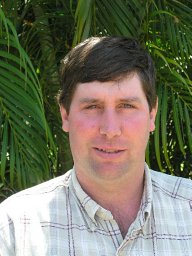 Greg Bishop-Hurley合作论文数CSIRO Livestock Industries16
 Tim Wark合作论文数CSIRO ICT Centre8
 Peter Corke合作论文数School of Electrical Engineering & Robotics, Faculty of Engineering, Queensland University of Technology;Lyro Robotics8
 Michael Hutchings合作论文数University of Sussex7
 Glenn Marion合作论文数Biomathematics and Statistics Scotland7Kym P. Patison合作论文数6
 Rebecca N. Handcock合作论文数5
 E. Charmley合作论文数4
 Philip Valencia合作论文数Commonwealth Scientific and Industrial Research Organisation4
 Michael Friend合作论文数3
 Greg M Cronin合作论文数3
 Mark G. Trotter合作论文数Cooperative Research Centre for Spatial Information and Precision Agriculture Research Group, University of New England3
 Chris Crossman合作论文数3
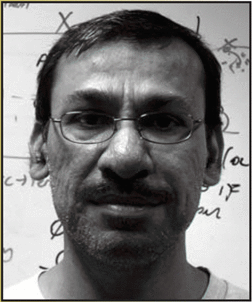 Pavan Sikka合作论文数CSIRO ICT3R. L. Dehaan合作论文数2a finger合作论文数2
 Eloise Fogarty合作论文数Inst Future Farming Syst, Cent Queensland Univ2
 Don Menzies合作论文数Precis Livestock Management Res Grp, Cent Queensland Univ2
 Luis E Moraes合作论文数Department of Animal Science, University of California, Davis2
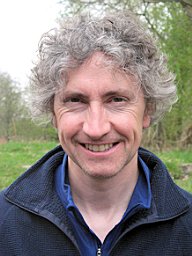 Piran C. L. White合作论文数School of Biological Sciences, University of Bristol2
 J. C. Broster合作论文数2
 Nicholas J Corbet合作论文数2jeanlouis durand合作论文数1b j king合作论文数1a k behura合作论文数1C. POLHEMUS合作论文数1R. MEIRICK合作论文数1J. TEWELL合作论文数1
 David Walker合作论文数1s coffey合作论文数1g lemaire合作论文数1
 Cook Alex Richard合作论文数Saw Swee Hock School of Public Health, National University of Singapore1O'Neill Christopher J合作论文数1Roberts D J合作论文数1
 Ying Guo合作论文数1
 Ross S Davidson合作论文数1
 Garry Robins合作论文数Melbourne School of Psychological Sciences, University of Melbourne1Raphael Viscarra Rossel合作论文数Curtin University1S. M. Robertson合作论文数1L.A Wilson合作论文数1
 Paul Banks Thompson合作论文数Department of Philosophy, Purdue University1Robert W. Mayes合作论文数1
 Erik D. Doerr合作论文数Sustainable Ecosystems1K. L. Wells合作论文数1
 Veronica A. J. Doerr合作论文数Sustainable Ecosystems1Peter O'Reagain合作论文数Department of Primary Industries and Fisheries1
 Philippa Eleanor (Pip) Pattison合作论文数University of Sydney1John M. Henshall合作论文数1
 Rafael V. M. Freire合作论文数Centre for Neuroscience and Animal Behaviour, University of New England1




