This paper is concerned with microbubble dynamics in a viscous compressible liquid near a rigid boundary. The compressible effects are modelled using the weakly compressible theory of Wang & Blake (2010, Non-spherical bubble dynamics in a compressible liquid. Part 1. Travelling acoustic wave. J. Fluid Mech., 730, 245–272), since the Mach number associated is small. The viscous effects are approximated using the viscous potential flow theory of Joseph & Wang (2004, The dissipation approximation and viscous potential flow. J. Fluid Mech., 505, 365–377), because the flow field is characterized as being an irrotational flow in the bulk volume but with a thin viscous boundary layer at the bubble surface. Consequently, the phenomenon is modelled using the boundary integral method, in which the compressible and viscous effects are incorporated into the model through including corresponding additional terms in the far field condition and the dynamic boundary condition at the bubble surface, respectively. The numerical results are shown in good agreement with the Keller–Miksis equation, experiments and computations based on the Navier–Stokes equations. The bubble oscillation, topological transform, jet development and penetration through the bubble and the energy of the bubble system are simulated and analysed in terms of the compressible and viscous effects.
This paper is concerned with microbubble dynamics in a blood vessel surrounded by elastic tissue subject to ultrasound, which are associated with important applications in medical ultrasonics. Both the blood flow inside the vessel and the tissue flow external to the vessel are modeled using the potential flow theory coupled with the boundary element method. The elasticity of tissue is modeled through the inclusion of a pressure term in the dynamic boundary condition at the interface between the two fluids. Weakly viscous effects are considered using viscous potential flow theory. The numerical model is validated by comparison with the theoretical results of the Rayleigh-Plesset equation for spherical bubbles, the numerical results for acoustic bubbles in an unbounded flow, and the experimental images for a spark generated bubble in a rigid circular cylinder. Numerical analyses are then performed for the bubble oscillation, jet formation and penetration through the bubble, and the deformation of the vessel wall in terms of the ultrasound amplitude and the vessel radius.
Cavitation is a potentially effective and less damaging method of removing biofilm from biomaterial surfaces. The aim of this study is to characterise individual microbubbles around ultrasonic scaler tips using high speed imaging and image processing. This information will provide improved understanding on the disruption of dental biofilm and give insights into how the instruments can be optimised for ultrasonic cleaning. Individual cavitation microbubbles around ultrasonic scalers were analysed using high speed recordings up to a million frames per second with image processing of the bubble movement. The radius and rate of bubble growth together with the collapse was calculated by tracking multiple points on bubbles over time. The tracking method to determine bubble speed demonstrated good inter-rater reliability (intra class correlation coefficient: 0.993) and can therefore be a useful method to apply in future studies. The bubble speed increased over its oscillation cycle and a maximum of 27 ms(-1) was recorded during the collapse phase. The maximum bubble radii ranged from 40 to 80 mu m. Bubble growth was observed when the ultrasonic scaler tip receded from an area and similarly bubble collapse was observed when the tip moved towards an area, corresponding to locations of low pressure around the scaler tip. Previous work shows that this cavitation is involved in biofilm removal. Future experimental work can be based on these findings by using the protocols developed to experimentally analyse cavitation around various clinical instruments and comparing with theoretical calculations. This will help to determine the main cleaning mechanisms of cavitation and how clinical instruments such as ultrasonic scalers can be optimised. (C) 2017 The Authors. Published by Elsevier B.V.
Cavitation occurs around dental ultrasonic scalers, which are used clinically for removing dental biofilm and calculus. However it is not known if this contributes to the cleaning process. Characterisation of the cavitation around ultrasonic scalers will assist in assessing its contribution and in developing new clinical devices for removing biofilm with cavitation. The aim is to use high speed camera imaging to quantify cavitation patterns around an ultrasonic scaler. A Satelec ultrasonic scaler operating at 29 kHz with three different shaped tips has been studied at medium and high operating power using high speed imaging at 15,000, 90,000 and 250,000 frames per second. The tip displacement has been recorded using scanning laser vibrometry. Cavitation occurs at the free end of the tip and increases with power while the area and width of the cavitation cloud varies for different shaped tips. The cavitation starts at the antinodes, with little or no cavitation at the node. High speed image sequences combined with scanning laser vibrometry show individual microbubbles imploding and bubble clouds lifting and moving away from the ultrasonic scaler tip, with larger tip displacement causing more cavitation.
Cavitation and bubble dynamics have a wide range of practical applications in a range of disciplines, including hydraulic, mechanical and naval engineering, oil exploration, clinical medicine and sonochemistry. However, this paper focuses on how a fundamental concept, the Kelvin impulse, can provide practical insights into engineering and industrial design problems. The pathway is provided through physical insight, idealized experiments and enhancing the accuracy and interpretation of the computation. In 1966, Benjamin and Ellis made a number of important statements relating to the use of the Kelvin impulse in cavitation and bubble dynamics, one of these being ‘One should always reason in terms of the Kelvin impulse, not in terms of the fluid momentum…’. We revisit part of this paper, developing the Kelvin impulse from first principles, using it, not only as a check on advanced computations (for which it was first used!), but also to provide greater physical insights into cavitation bubble dynamics near boundaries (rigid, potential free surface, two-fluid interface, flexible surface and axisymmetric stagnation point flow) and to provide predictions on different types of bubble collapse behaviour, later compared against experiments. The paper concludes with two recent studies involving (i) the direction of the jet formation in a cavitation bubble close to a rigid boundary in the presence of high-intensity ultrasound propagated parallel to the surface and (ii) the study of a ‘paradigm bubble model’ for the collapse of a translating spherical bubble, sometimes leading to a constant velocity high-speed jet, known as the Longuet-Higgins jet.
In this paper we examine the dynamics of an initially stable bubble due to ultrasonic forcing by an acoustic wave. A tissue layer is modelled as a density interface acted upon by surface tension to mimic membrane effects. The effect of a rigid backing to the thin tissue layer is investigated. We are interested in ultrasound contrast agent type bubbles which have immediate biomedical applications such as the delivery of drugs and the instigation of sonoporation. We use the axisymmetric boundary integral technique detailed in Curtiss et a l. (J. Comput. Phys., 2013, submitted) to model the interaction between a single bubble and the tissue layer. We have identified a new peeling mechanism whereby the re-expansion of a toroidal bubble can peel away tissue from a rigid backing. We explore the problem over a large range of parameters including tissue layer depth, interfacial tension and ultrasonic forcing.
We investigate two-dimensional natural convection in a shallow rectangular cavity filled with a porous medium which is saturated with a fluid which has a density maximum. One sidewall of the cavity is maintained at a temperature below the density maximum and the other sidewall is maintained at a temperature above the density maximum. The top and bottom boundaries are insulating. Attention is paid to the case when the aspect ratio, A, defined as the ratio of the height of the cavity to its width, is asymptotically small. The domain is divided into two end zone regions near the hot and cold walls, a density maximum turning zone region, and two central core regions in between the end-zone regions and the density maximum region. Asymptotic analysis is performed in the conduction regime when the Rayleigh number Ra similar to O(1) and in the intermediate regime when Ra similar to O(1/A), and heat transfer correlations are presented. Numerical solutions to the full governing solutions are obtained and these solutions are compared with the asymptotic results.
In hydraulic and naval engineering, cavitation is often associated with intense vortical structures. In this paper, we discuss developments associated with solid spheres and bubbles near a tip-vortex and a ring vortex. The first part of the paper reviews the mathematical and numerical development of vortex filament methods and representation of solid spheres and bubbles. Equations of motion are based on the Biot-Savart law and the Kelvin impulse. The classic studies of the motion of a sphere towards and parallel to the vortex axis is extended to consider bubble motion in the presence of a line vortex. The second study is concerned with bubble-vortex ring interaction for both small and large bubble examples. The multipole approach used in this paper compares favourably with the numerical experimental studies of Chahine (1995), 'Bubble interactions with vortices', in Fluid Vortices, Kluwer Academic Press, for the prediction of bubble shapes.
Laser-generated cavitation bubbles in a thin liquid layer lead to the formation of fast liquid jets at both the free surface to the liquid layer and as an opposing jet within the collapsing bubble. This paper studies this phenomenom from both an analytical perspecitive, using the Kelvin impulse, and through computational techniques based on the boundary integral method. Output includes bubble and jet shapes and the percentage of the impulse and energy in the jet of the collapsing bubble. Calculations indicate that in excess of 30% of the liquid energy and 60% of the impulse can be found in the jet in the examples considered in this paper.
This paper examines an experimental study of optimal nozzle design for a dissolved air flotation system. The term optimal is in reference to field studies of bubble-floc agglomeration in an actual DAF tank. The primary mechanism of floc removal has been identified as bubble clustering. By understanding the significance of bubble clustering it was possible to design a nozzle that could be successfully operated at reduced saturation pressures while still achieving improved levels of turbidity in the post-DAF water.
We investigate the collapse of an axisymmetric cavity or bubble inside a fluid of small viscosity, like water. Any effects of the gas inside the cavity as well as of the fluid viscosity are neglected. Using a slender-body description, we compute the local scaling exponent alpha=dlnh_{0}/dlnt' of the minimum radius h_{0} of the cavity, where t' is the time from collapse. The exponent alpha very slowly approaches a universal value according to alpha=1/2+1/[4 square root [-ln(t')]]. Thus, as observed in a number of recent experiments, the scaling can easily be interpreted as evidence of a single nontrivial scaling exponent. Our predictions are confirmed by numerical simulations.
 Qianxi Wang合作论文数School of Mathematics, University of Birmingham9
 Stuart Bruce Dalziel合作论文数Department of Applied Mathematics and Theoretical Physics, University of Cambridge6
 John R. Blake合作论文数School of Mathematics and Statistics, The University of Birmingham6
 Anthony Damien Walmsley合作论文数Department of Restorative Dentistry, School of Dentistry, University of Birmingham3
 John Lister合作论文数Department of Applied Mathematics and Theoretical Physics, Faculty of Mathematics, University of Cambridge3
 Nina Vyas合作论文数College of Medical and Dental Sciences, University of Birmingham2
 Hamid Dehghani合作论文数School of Computer Science, University of Birmingham2
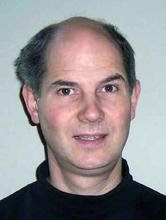 Jens Eggers合作论文数School of Mathematics, University of Bristol2
 Rachel Sammons合作论文数School of Dentistry, University of Birmingham2
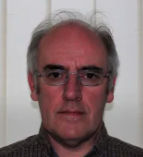 D. Andrew S. Rees合作论文数Department of Mechanical Engineering, University of Bath/Université Paul Sabatier2t r b lattimer合作论文数1john byattsmith合作论文数1MILES WILSON合作论文数1PETER M. HAESE合作论文数1WenKe Liu合作论文数1
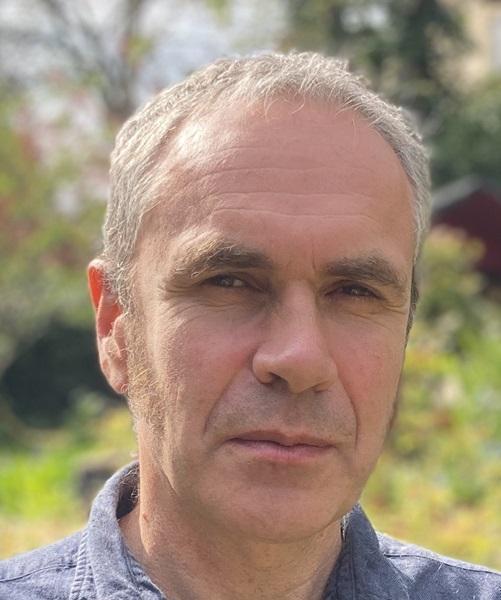 Giles Richardson合作论文数Faculty of Social Sciences, University of Southampton1A. Pearson合作论文数1
 Yunlong Liu (刘云龙)合作论文数College of Shipbuilding Engineering, Harbin Engineering University1
 Paul Linden合作论文数Department of Applied Mathematics and Theoretical Physics, University of Cambridge;Downing College, University of Cambridge;Department of Mechanical and Aerospace Engineering, University of California, San Diego1
 Aman Zhang (张阿漫)合作论文数College of Shipbuilding Engineering, Harbin Engineering University1Yanmin Zhang合作论文数1
 Shiping Wang (王诗平)合作论文数哈尔滨工程大学造船工程学院1
 Emilia Pecheva合作论文数Institute of Solid State Physics, Bulgarian Academy of Sciences 72, Tzarigradsko Chaussee blv. Sofia 1784 Bulgaria1
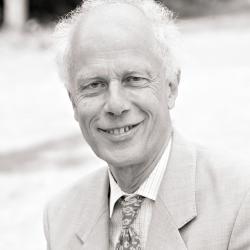 John Ockendon合作论文数Mathematical Institute,University of Oxford1
 S. Jon Chapman合作论文数Oxford Centre for Industrial and Applied Mathematics, Mathematical Institute, University of Oxford1
 Jonathan James Wylie合作论文数Department of Mathematics, College of Science, City University of Hong Kong;Department of Physics, College of Science, City University of Hong Kong1
 Steve R. Otto合作论文数1
 A. D. Fitt合作论文数1
 Jacco Snoeijer合作论文数Physics of Fluids Group, Faculty of Science and Technology, University of Twente1Marco A. Fontelos合作论文数Instituto de Matemáticas y Física Fundamental c/ Serrano, Consejo Superior de Investigaciones Científicas1




