BACKGROUND:Ill health associated with household air pollution (HAP) is increasingly recognized as a public health problem in sub-Saharan Africa. To date, attempts to reduce HAP have focussed on smoke from cooking fires and have ignored traditional cultural practices which generate purposely produced smoke (PPS). This study aimed to investigate PPS prevalence, reasons for use and safety perceptions.METHODS:The study was conducted in Wollo, Ethiopia, and used a mixed methods approach of quantitative surveys (analysed descriptively) and qualitative interviews with householders and healthcare workers (analysed thematically).RESULTS:PPS use was reported by 99% of survey respondents and it was considered a fundamental part of life. Although reasons for use included housekeeping, culture/religion and well-being, coffee ceremony was most commonly cited (44% of respondents). Both householders and healthcare workers appeared to assume PPS is safe, except for people with certain underlying conditions. Healthcare workers felt the lack of evidence of harm from PPS meant there was no justification for intervention.CONCLUSION:This study, the first in-depth study of PPS, has shown its use to be widespread, with many perceived benefits and thus a very important part of local culture in this sample Ethiopian community. Consequently, any public health interventions aimed at reducing HAP in this setting need to consider PPS.
PurposeThe purpose of this paper is to present a language-agnostic approach to facilitate the discovery of “parallel passages” stored in historic and cultural heritage digital archives.Design/methodology/approachThe authors explore a novel, and relatively simple approach, using a character-based statistical language model combined with a tailored version of the Basic Local Alignment Tool to extract exact and approximate string patterns shared between groups of documents.FindingsThe approach is applicable to a wide range of languages, and compensates for variability in the text of the documents as a result of differences in dialect, authorship, language change over time and errors due to inaccurate transcriptions and optical character recognition errors as a result of the digitisation process.Research limitations/implicationsA number of case studies demonstrate that the approach is practical and generalisable to a wide range of archives with documents in different languages, domains and of varying quality.Practical implicationsThe approach described can be applied to any digital archive of modern and contemporary texts. This makes the approach applicable to digital archives recording historic texts, but also those composed of more recent news articles, for example.Social implicationsThe analysis of “parallel passages” enables researchers to quantify the presence and extent of text-reuse in a collection of documents, which can provide useful data on author style, text genres and cultural contexts.Originality/valueThe approach is novel and addresses a need by humanities researchers for tools that can identify similar documents and local similarities represented by shared text sequences in a potentially vast large archive of documents. As far as the authors are aware, there are no tools currently exist that provide the same level of tolerance to the language of the documents.
Background: Providing medical care for non-communicable diseases (NCDs) in rural sub-Saharan Africa has proved to be difficult because of poor treatment adherence and frequent loss to follow-up (LTFU). The reasons for this are poorly understood.Objective: To investigate LTFU among patients with two different but common NCDs who attended rural Ethiopian health centres.Method: The study was based in five health centres in southern Ethiopia with established NCD clinics run by nurses and health officers. Patients with epilepsy or hypertension who were lost to follow-up and non-LTFU comparison patients were identified and traced; a questionnaire was administered enquiring about the reasons for LTFU.Results: Of the 147 LTFU patients successfully located, 62 had died, moved away or were attending other medical facilities. The remaining 85 patients were compared with 211 non-LFTU patients. The major factors associated with LTFU were distance from the clinic, associated costs and a preference for traditional treatments, together with a misunderstanding of the nature of NCD management.Conclusions: The delivery of affordable care closer to the patients' homes has the greatest potential to address the problem of LTFU. Also needed are increased levels of patient education and interaction with traditional healers to explain the nature of NCDs and the need for life-long management.
TransfusionVolume 59, Issue 12 p. 3559-3559 TRANSFUSION MEDICINE ILLUSTRATED The emperor and the blood center Naomi Rahimi-Levene, Corresponding Author Naomi Rahimi-Levene nrlevene@shamir.gov.il orcid.org/0000-0003-3411-886X Blood Bank and Hematology Institute, Shamir Medical Center, Zerifin, Israel Sackler Faculty of Medicine, Tel Aviv University, Tel Aviv, IsraelAddress reprint requests to: Naomi Rahimi-Levene, Blood Bank and Hematology Institute, Shamir Medical Center, Zerifin 7033001, Israel; e-mail: nrlevene@shamir.gov.il.Search for more papers by this authorDan Levene, Dan Levene Department of Humanities, University of Southampton, Southampton, United KingdomSearch for more papers by this authorS. Gerald Sandler, S. Gerald Sandler Department of Pathology and Laboratory Medicine, MedStar Georgetown University Hospital, Washington, D.CSearch for more papers by this author Naomi Rahimi-Levene, Corresponding Author Naomi Rahimi-Levene nrlevene@shamir.gov.il orcid.org/0000-0003-3411-886X Blood Bank and Hematology Institute, Shamir Medical Center, Zerifin, Israel Sackler Faculty of Medicine, Tel Aviv University, Tel Aviv, IsraelAddress reprint requests to: Naomi Rahimi-Levene, Blood Bank and Hematology Institute, Shamir Medical Center, Zerifin 7033001, Israel; e-mail: nrlevene@shamir.gov.il.Search for more papers by this authorDan Levene, Dan Levene Department of Humanities, University of Southampton, Southampton, United KingdomSearch for more papers by this authorS. Gerald Sandler, S. Gerald Sandler Department of Pathology and Laboratory Medicine, MedStar Georgetown University Hospital, Washington, D.CSearch for more papers by this author First published: 05 September 2019 https://doi.org/10.1111/trf.15498Read the full textAboutPDF ToolsRequest permissionExport citationAdd to favoritesTrack citation ShareShare Give accessShare full text accessShare full-text accessPlease review our Terms and Conditions of Use and check box below to share full-text version of article.I have read and accept the Wiley Online Library Terms and Conditions of UseShareable LinkUse the link below to share a full-text version of this article with your friends and colleagues. Learn more.Copy URL Share a linkShare onFacebookTwitterLinked InRedditWechat No abstract is available for this article. Volume59, Issue12December 2019Pages 3559-3559 RelatedInformation
Household air pollution is now recognized as the single largest environmental health risk factor worldwide contributing to the global burden of disease, with the World Health Organization (WHO) estimating that close to 4million people per year die prematurely as a result(1,2).This form of pollution is widespread in resource-poor countries mainly due to the use of biomass fuels, derived from crop residues, animal dung, wood or charcoal, as a source of household energy. It has been linked with an increased frequency of lower respiratory infection, cataract, ischemic stroke, hemorrhagic stroke, hypertension, ischemic heart disease and chronic obstructive pulmonary disease, as well as tracheal, bronchial and lung cancer (2). Vulnerable groups, such as the rural poor or women and children, appear to be disproportionately affected, the former as they are forced by economic circumstances to use more polluting fuel sources and the latter as a consequence of carrying out common domestic tasks such as cooking. The substantial disease burden and its propensity to affect vulnerable populations have led to its identification as a major target for intervention to improve global health and it is specifically mentioned in the current Sustainable Development Goals (Goal 3 –which recommends implementation of the WHO indoor air quality guidelines on household fuel combustion).
This book aims to present an initial catalogue of the Vorderasiatisches Museum collection of Babylonian incantation bowls and related items. The catalogue comprises 177 entries, consisting of incantation bowls and fragments thereof, as well as 2 skulls, 1 bone fragment and 1 eggshell, similarly bearing inscriptions.
The collection of Aramaic magic bowls and related objects in the Vorderasiatisches Museum in Berlin is one of the most important in the world. This book presents a description of each object and its contents, including details of users and other names, biblical quotations, parallel texts, and linguistic features. Combined with the detailed indices, the present volume makes the Berlin collection accessible for further research. Furthermore, sixteen texts, which are representative of the whole collection, are edited. This book results from an impressive collaboration between Siam Bhayro, James Nathan Ford, Dan Levene, and Ortal-Paz Saar, with further contributions by Matthew Morgenstern, Marco Moriggi, and Naama Vilozny, and will be of interest for all those engaged in the study of these fascinating objects. "The presentation, transcriptions, translations, and commentaries are excellent examples of the finest scholarship from some of the leading scholars in the study of ancient Aramaic and its dialects.... The manuscript and the bowls it introduces should be eagerly received and examined by graduate students and scholars of the Hebrew Bible, esoteric traditions of later antiquity (like the seals of Solomon, demonology, etc.), and the historical development of Aramaic." - Peter T. Lanfer, Occidental College, in: Review of Biblical Literature 8 (2019)
It is of great interest to researchers and scholars in many disciplines (particularly those working on cultural heritage projects) to study parallel passages (i.e., identical or similar pieces of text describing the same thing) in digital text archives. Although there exist a few software tools for this purpose, they are restricted to a specific domain (e.g., the Bible) or a specific language (e.g., Hebrew). In this article, we present in detail how we build a digital infrastructure that can facilitate the search and discovery of parallel passages for any domain in any language. It is at the core of our Samtla (Search And Mining Tools with Linguistic Analysis) system designed in collaboration with historians and linguists. The system has already been used to support research on five large text corpora that span a number of different domains and languages. The key to such a domain-independent and language-independent digital infrastructure is a novel combination of a character-based n-gram language model, space-optimized suffix tree, and generalized edit distance. A comprehensive evaluation through crowdsourcing shows that the effectiveness of our system’s search functionality is on par with the human-level performance.
Effective medical care for non-communicable diseases (NCD) remains lamentably poor in Ethiopia and many low-income countries. Consequently, where modern medicine does not reach or is rejected, traditional treatments prevail. These are fragmented and esoteric by nature, and their understanding of illness is so fundamentally different that confusionproliferates when attempts are made to introduce modern medical care. Ethiopia is host to a variety of longstanding medical belief systems that coexist and function together, where modern medicine is often viewed as just anotherchoice. This multiplicity of approaches to illness is accompanied by the Ethiopian custom of weaving layers of meaning, often contradictory, into speech and conversation - sometimes referred to as wax and gold', the wax' being the literal and the gold' the deeper, even hidden, meaning or significance. We argue that engagement with traditional belief systems and understanding these subtleties of meaning could assist in more effective NCD care.
Samtla (Search And Mining Tools with Linguistic Analysis) is an online integrated research environment designed in collaboration with historians and linguists to facilitate the study of digitised texts written in any language. It currently supports the research of two corpora: the Genizah collection held by the Taylor-Schechter Genizah Research Unit in Cambridge University, and a collection of Aramaic incantation texts from late antiquity. In contrast to standard search engines and text mining systems that rely on the bag-of-words representation of text, Samtla provides the retrieval and discovery of fuzzy text patterns/motifs (aka "formulae" to historians), which is achieved through applying a character-based n-gram statistical language model built on top of a powerful generalised suffix tree data structure. This paper briefly describes the major components of Samtla and their underlying techniques.
This article comprises a new edition of two incantation bowls in the Vorderasiatisches Museum, Berlin originally published by J. Wohlstein in 1894. The bowls were written for the same client and appear to have originally been bound together. Both are directed against various types of malevolent forces, but each formula is otherwise distinct. The bowls contain a number of non-standard phonetic spellings, including (sic) for (sic) 'Ahata-de-'abuh', (sic) for (sic) 'wild asses', for (sic) 'savoury' (sic) for (sic), 'leave her alone', and (sic) for (sic) 'and that are not'. Both elements of the phrase (sic) 'be exorcized and rebuked' appear to derive from the root (sic) 'to be angry; to threaten, rebuke'. VA 2414 is remarkable in that the demon is told to leave the client in favour of the flesh and blood of gazelles and wild asses and, surprisingly, flesh-eating maggots.
One of the striking features of ancient Jewish magic is the disappearance of numerous magical spells and formulae that are known to us from the Babylonian Aramaic incantation bowls; spells that come to be absent from the register of later Jewish magic. In the present paper we present one exception to this general rule, by editing a Genizah fragment (Hebrew Union College 1029) that contains a spell which is well attested in the incantation bowls. The fragment in question was copied in the twelfth century as part of a larger magical recipe book. One of its recipes, entitled ‘A deed of divorce for Lilith’, contains an anti-demonic get (divorce formula) which is attested in several different versions in the Babylonian incantation bowls, produced half a millennium earlier. In our paper, we offer a synopsis of all these versions, and a detailed assessment of the significance of this discovery.
AbstractBabylonian incantation bowls, also known as magic bowls, are a type of amulet that consists of an incantation written on domestic earthenware dishes.
The most obvious connection between all the bowls in this group of five from Berlin is the fact that all define themselves as being a qyblʾ - in this particular group of texts meaning that they are a kind of counter-charm. Thus they are all intended to return adverse magical actions to their originin these cases identified specifically as individuals who are personally named. Another group of bowls that describe themselves as qyblʾ bowls, and therefore relevant to this study, are three from the British Museum (BM): 039A, 040A and 041A. An examination of the two pairs of qyblʾ bowls from Berlin yielded the following: VA 2434 and VA 2424 is one of the pairs of qyblʾ texts that were each written by the same scribe for the same client against the same antagonist. Keywords:Berlin; counter-charm; qyblʾ
 James Nathan Ford合作论文数Bar Ilan Univ26Ortal-Paz Saar合作论文数25Naama Vilozny合作论文数24Matthew Morgenstern合作论文数24Marco Moriggi合作论文数23beno rothenberg合作论文数7
 David I. W. Phillips合作论文数Southampton General Hospital;University of Southampton4Martyn Harris合作论文数Dept Comp Sci & Informat Syst, Birkbeck Univ London3
 Dell Zhang合作论文数The Institute of Artificial Intelligence, China Telecom;Birkbeck, University of London3
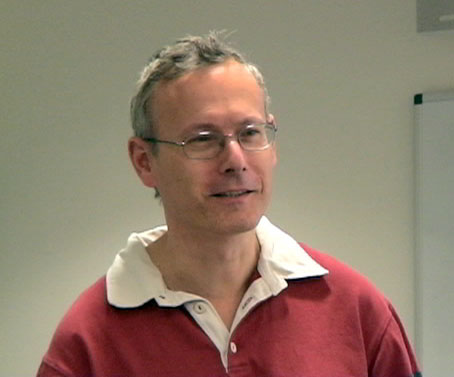 Mark Levene合作论文数Department of Computer Science and Information Systems, Birkbeck University of London3A. Mortimore合作论文数2Gideon Bohak合作论文数2M Kaba合作论文数1Rebecca Wilkinson合作论文数1
 Tsion Afework Habte合作论文数1Rahimi-Levene Naomi合作论文数1
 Shitaye Alemu合作论文数1
 Mirgissa Kaba合作论文数1Luintel Akish合作论文数North Middlesex Hospital1Eldryd Parry合作论文数1
 Gerald Sandler合作论文数1
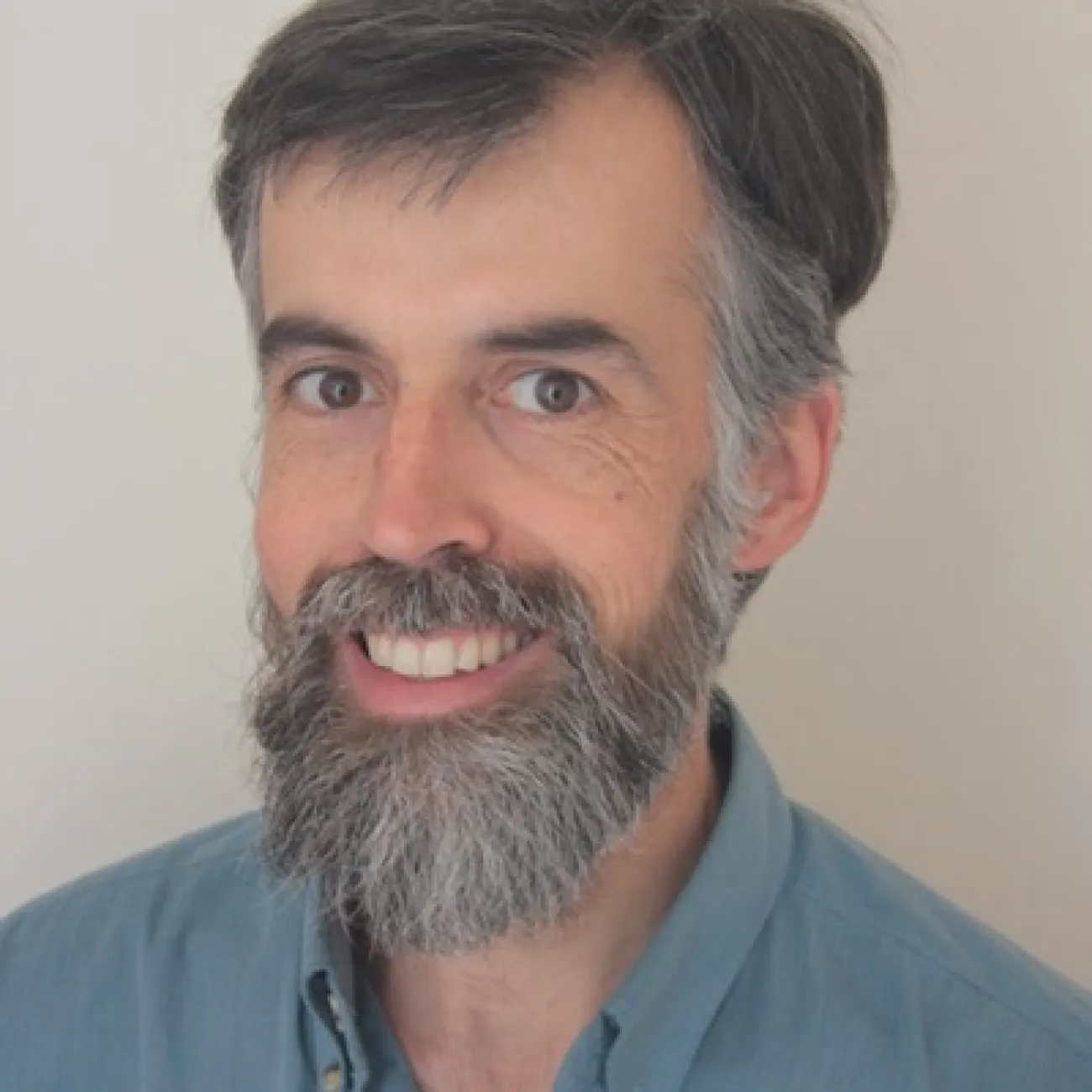 Merlin Willcox合作论文数Department of Primary Care and Population Sciences, University of Southampton;Primary Care Research Centre, University of Southampton1Siam Bhayro合作论文数1




