The valence shell electronically excited states of 1-phenylimidazole and 1-benzylimidazole have been studied by employing synchrotron radiation to measure the absolute photoabsorption cross-section of each molecule, from threshold up to an energy of 10.8 eV. Assignments have been proposed for some of the broad absorption bands using calculated transition energies and oscillator strengths. Natural transition orbital plots have allowed the Rydberg and/or valence character of the electronically excited states to be assessed. Some of the calculated transitions in 1-benzylimidazole and 1-phenylimidazole have initial and final orbitals that are analogous to those of transitions in the isolated constituent rings of imidazole and benzene. Other mixed Rydberg/valence transitions, especially those leading to some of the low energy electronically excited states in 1-phenylimidazole, have an initial orbital located on the imidazole ring while valence character in the final orbital is localised on the phenyl ring. Thus, photoexcitation results in charge transfer from the donor site (imidazole) to the acceptor (the phenyl ring) in the nascent ion core of the Rydberg state. In both 1-benzylimidazole and 1-phenylimidazole the lowest energy excited state arises from a transition analogous to the 1e(1g) -> 1e(2u) 1B(2u) electric dipole-forbidden transition in benzene. [GRAPHICS]
Molecular Auger spectra typically consist of many overlapping lines that are hard or impossible to resolve experimentally even with highest-resolution electron spectroscopy techniques. Since molecular Auger energies depend on non-adibatatic dynamics, they can also be difficult to calculate precisely, such that the assignment of molecular Auger transitions is often ambiguous. Here we show that by measuring Auger-electron multi-ion coincidences, we can disentangle the spectra into the contributions from specific ionic final states, which helps significantly with their interpretation and assignment.
Single-photon, photoelectron-photoion coincidence spectroscopy is used to record the mass-selected ion spectra and slow photoelectron spectra of C4H5 radicals produced by the abstraction of hydrogen atoms from three C4H6 precursors by fluorine atoms generated by a microwave discharge. Three different C4H5 isomers are identified, with the relative abundances depending on the nature of the precursor (1-butyne, 1,2-butadiene, and 1,3-butadiene). The results are compared with our previous work using 2-butyne as a precursor [Hrodmarsson, H. R. J. Phys. Chem. A 2019, 123, 1521-1528]. The slow photoelectron spectra provide new information on the three radical isomers that is in good agreement with previous experimental and theoretical results [Lang, M. J. Phys. Chem. A 2015, 119, 3995-4000; Hansen, N. J. Phys. Chem. A 2006, 110, 3670-3678]. The energy scans of the C4H5 photoionization signal are recorded with substantially better resolution and signal-to-noise ratio than those in earlier work, allowing the observation of autoionizing resonances based on excited states of the C4H5 cation. Photoelectron images recorded at several energies are also reported, providing insight into the decay processes of these excited states. Finally, in contrast to the earlier work using 2-butyne as a precursor, where H-atom abstraction was the only observed process, F- and H-atom additions to the present precursors are also observed through the detection of C4H6F, C4H5F, and C4H7.
A double-imaging photoelectron-photoion spectrometer and synchrotron radiation have been used to measure the HBr X (2)Pi(3/2) v(+) = 0, 1, 2 and the (2)Pi(1/2) v(+) = 0 state photoelectron angular distributions, as characterized by the anisotropy parameter beta, the total ion yield, and the threshold photoelectron spectrum. Particular attention has been focussed on the photon energy range between the (2)Pi(3/2) and the (2)Pi(1/2) spin-orbit components of the ground ionic state. This region encompasses Rydberg states, belonging to series converging onto the upper (2)Pi(1/2) ionization limit, which may decay by autoionization into the (2)Pi(3/2) ionization continuum. A detailed study has been performed on the effects of autoionization on the (2)Pi(3/2) v(+) = 0 state photoelectron angular distributions. The observed energy dependent variations in the beta-values exhibit a regular pattern that correlates with excitation into members of a very broad d-type Rydberg series. Additional rapid variations in the beta-parameters, which occur over a narrow energy range, appear to coincide with sharp autoionizing Rydberg states belonging to s, p and d series. The present experimental results for the HBr X (2)Pi(3/2) v(+) = 0 state photoelectron anisotropy parameter are compared to previously reported theoretical predictions and to earlier studies of the Kr+ 4p(5) P-2(3/2) stated beta-parameter. The threshold photoelectron spectrum of the X (2)Pi(3/2) v(+) = 0 band exhibits partially resolved rotational structure. A simulation of this structure yields an ionization threshold of 11.6673 +/- 0.0010 eV, which is consistent with previous measurements.
Polarization dependent photoelectron spectra encompassing the outer valence orbitals of oxalyl chloride have been recorded in the photon energy range 19-91 eV. These have allowed photoelectron anisotropy parameters and branching ratios to be determined. Photoionization partial cross sections and photoelectron anisotropy parameters have been calculated with the Continuum Multiple Scattering - X alpha approach. Four of the outer valence orbitals are predicted to possess a significant Cl 3p lone-pair character and have closely grouped binding energies. The photoionization dynamics of these four orbitals are predicted to be strongly affected by the Cooper minimum associated with the Cl 3p orbital in the isolated atom at photon energies around 40 eV. A comparison between the theoretical and measured photoelectron anisotropy parameters has enabled the molecular orbital sequence to be clarified. A doublet has been observed in the region of the photoelectron spectrum where a band due to the 5b(u) orbital might be anticipated. Our calculations indicate that the 6b(u) and 5b(u) orbitals are coupled. This coupling may account for the apparent lack of a pronounced Cooper minimum in the beta-parameter associated with the nominal 6b(u) ionization and for the unexpected appearance of the adjacent photoelectron band, nominally associated with the 5b(u) orbital. The vertical ionization energy of the outermost 7a(g) orbital was experimentally determined to be 11.266 +/- 0.005 eV.
We present new high-resolution data on the photoionization of the 2-butyn-1-yl radical (CH3C≡C-•CH2) formed by H atom abstraction from 2-butyne by F atoms. The spectra were recorded from 7.7 to 11 eV by using double-imaging, photoelectron-photoion coincidence spectroscopy, which allows the unambiguous correlation of photoelectron data and the mass of the species. The photoionization spectrum shows significant resonant autoionizing structure converging to excited states of the C4H5+ cation, similar to what is observed in the closely related propargyl radical (HC≡C-•CH2). The threshold photoelectron spectrum, obtained with a resolution of 17 meV, is also reported. This spectrum is consistent with previous measurements of the first photoionization band but has been extended to higher energy to allow the observation of bands corresponding to excited electronic states of the ion. A refined value of the adiabatic ionization energy is extracted: IE(C4H5) = 7.93 ± 0.01 eV. A determination of the absolute photoionization cross section of the 2-butyn-1-yl radical at 9.7 eV is also reported: σion(C4H5) = 6.1 ± 1.8 Mb.
The valence shell photoelectron spectrum of cis-dichloroethene has been studied both experimentally and theoretically. Photoelectron spectra have been recorded with horizontally and vertically plane polarized synchrotron radiation, thereby allowing the anisotropy parameters, characterizing the angular distributions, to be determined. The third-order algebraic-diagrammatic construction approximation scheme for the one-particle Green’s function has been employed to compute the complete valence shell ionization spectrum. In addition, the vertical ionization energies have been calculated using the outer valence Green’s function (OVGF) method and the equation-of-motion coupled-cluster, with single and double substitutions for calculating ionization potentials (EOM-IP-CCSD) model. The theoretical results have enabled assignments to be proposed for most of the structure observed in the experimental spectra, including the inner-valence regions dominated by satellite states. The linear vibronic coupling model has been employed to study the vibrational structure of the lowest photoelectron bands, using parameters obtained from ab initio calculations. The ground state optimized geometries and vibrational frequencies have been computed at the level of the second-order Møller-Plesset perturbation theory, and the dependence of the ionization energies on the nuclear configuration has been evaluated using the OVGF method. While the adiabatic approximation holds for the X̃ 2B1 state photoelectron band, the à 2B2, B̃ 2A1, and C̃ 2A2 states interact vibronically and form a complex photoelectron band system with four distinct maxima. The D̃ 2B1 and Ẽ 2B2 states also interact vibronically with each other. The potential energy surface of the D̃ 2B1 state is predicted to have a double-minimum shape with respect to the out-of-plane a2 deformations of the molecular structure. The single photoelectron band resulting from this interaction is characterized by a highly irregular structure, reflecting the non-adiabatic nuclear dynamics occurring on the two coupled potential energy surfaces forming a conical intersection close to the minimum of the Ẽ 2B2 state.
The influence of vibronic coupling on the outer valence ionic states of cis-dichloroethene has been investigated by recording photoelectron spectra over the excitation range 19-90 eV using plane polarized synchrotron radiation, for two polarization orientations. The photoelectron anisotropy parameters and electronic state branching ratios derived from these spectra have been compared to theoretical predictions obtained with the continuum multiple scattering approach. This comparison shows that the photoionization dynamics of the Ã2B2, B̃2A1, C̃2A2, and D̃2B1 states, all of which are formed through the ejection of an electron from a nominally chlorine lone-pair orbital, exhibit distinct evidence of the Cooper minimum associated with the halogen atom. While retaining a high degree of atomic character, these orbital ionizations nevertheless display clear distinctions. Simulations, assuming the validity of the Born-Oppenheimer and the Franck-Condon approximations, of the X̃2B1, Ã2B2, and D̃2B1 state photoelectron bands have allowed some of the vibrational structure observed in the experimental spectra to be assigned. The simulations provide a very satisfactory interpretation for the X̃2B1 state band but appear less successful for the Ã2B2 and D̃2B1 states, with irregularities appearing in both. The B̃2A1 and C̃2A2 state photoelectron bands exhibit very diffuse and erratic profiles that cannot be reproduced at this level. Photoelectron anisotropy parameters, β, have been evaluated as a function of binding energy across the studied photon energy range. There is a clear step change in the β values of the Ã2B2 band at the onset of the perturbed peak intensities, with β evidently adopting the value of the B̃2A1 band β. The D̃2B1 band β values also display an unexpected vibrational level dependence, contradicting Franck-Condon expectations. These various behaviors are inferred to be a consequence of vibronic coupling in this system.
The single-photon, photoelectron-photoion coincidence spectrum of N2 has been recorded at high (∼1.5 cm-1) resolution in the region between the N2+ X Σg2+, v+ = 0 and 1 ionization thresholds by using a double-imaging spectrometer and intense vacuum-ultraviolet light from the Synchrotron SOLEIL. This approach provides the relative photoionization cross section, the photoelectron energy distribution, and the photoelectron angular distribution as a function of photon energy. The region of interest contains autoionizing valence states, vibrationally autoionizing Rydberg states converging to vibrationally excited levels of the N2+ X Σg2+ ground state, and electronically autoionizing states converging to the N2+A2Π and B 2Σu+ states. The wavelength resolution is sufficient to resolve rotational structure in the autoionizing states, but the electron energy resolution is insufficient to resolve rotational structure in the photoion spectrum. A simplified approach based on multichannel quantum defect theory is used to predict the photoelectron angular distribution parameters, β, and the results are in reasonably good agreement with experiment.
The valence shell ionization spectrum of pyridine was studied using the third-order algebraic-diagrammatic construction approximation scheme for the one-particle Green's function and the outer-valence Green's function method. The results were used to interpret angle resolved photoelectron spectra recorded with synchrotron radiation in the photon energy range of 17-120 eV. The lowest four states of the pyridine radical cation, namely, 2A2(1a2-1), 2A1(7a1-1), 2B1(2b1-1), and 2B2(5b2-1), were studied in detail using various high-level electronic structure calculation methods. The vertical ionization energies were established using the equation-of-motion coupled-cluster approach with single, double, and triple excitations (EOM-IP-CCSDT) and the complete basis set extrapolation technique. Further interpretation of the electronic structure results was accomplished using Dyson orbitals, electron density difference plots, and a second-order perturbation theory treatment for the relaxation energy. Strong orbital relaxation and electron correlation effects were shown to accompany ionization of the 7a1 orbital, which formally represents the nonbonding σ-type nitrogen lone-pair (nσ) orbital. The theoretical work establishes the important roles of the π-system (π-π* excitations) in the screening of the nσ-hole and of the relaxation of the molecular orbitals in the formation of the 7a1(nσ)-1 state. Equilibrium geometric parameters were computed using the MP2 (second-order Møller-Plesset perturbation theory) and CCSD methods, and the harmonic vibrational frequencies were obtained at the MP2 level of theory for the lowest three cation states. The results were used to estimate the adiabatic 0-0 ionization energies, which were then compared to the available experimental and theoretical data. Photoelectron anisotropy parameters and photoionization partial cross sections, derived from the experimental spectra, were compared to predictions obtained with the continuum multiple scattering approach.
The absolute photoabsorption cross section of s-triazine has been measured between 4 and 40 eV, and is dominated by bands associated with valence states. Structure due to Rydberg excitations is both weak and irregular. Jahn-Teller interactions affect the vibronic structure observed in the Rydberg absorption bands due to excitation from the 1e″ or 6e′ orbitals. The interpretation of the experimental spectrum has been guided by transition energies and oscillator strengths, for Rydberg and valence states, calculated with the time-dependent version of density functional theory and with the coupled cluster linear response approach. The theoretical studies indicate that Rydberg/Rydberg and Rydberg/valence mixing is important.
The absolute photoabsorption, photoionisation and photodissociation cross sections and the photoionisation quantum efficiency of carbonyl sulphide have been measured using a double ion chamber and synchrotron radiation in the energy range from the ionisation threshold to 24 eV. In addition to the absorption bands associated with well established Rydberg series, some previously unassigned features have been tentatively attributed to an f-type Rydberg series converging onto the (B) over tilde (2)Sigma(+) state ionisation threshold. Structure appearing in the photodissociation spectrum has been correlated with that observed in earlier fluorescence yields for emission, due mainly to the CS photofragment, occurring between 160 and 300 nm. The photoionisation quantum efficiency reaches a plateau value close to unity for energies above similar to 16 eV. The predissociation of Rydberg states into neutral fragments does not appear to affect the photoionisation quantum efficiency of carbonyl sulphide to the extent that is commonly observed in other small molecules. A sum rule analysis has been carried out by combining the present absolute photoabsorption measurements with similar data covering the remaining energy regions. (C) 2016 Elsevier B.V. All rights reserved.
We present photoelectron energy and angular distributions for resonant two-photon ionization via several low-lying Rydberg states of atomic Kr. The experiments were performed by using synchrotron radiation to pump the Rydberg states and a continuous-wave laser to probe them. Photoelectron images, recorded with both linear and circular polarized pump and probe light, were obtained in coincidence with mass-analyzed Kr ions. The photoelectron angular distributions and branching ratios for direct ionization into the Kr+ P-2(3/2) and P-2(1/2) spin-orbit continua show considerable dependence on the intermediate level, as well as on the polarizations of the pump and probe light. Photoelectron images were also recorded with several polarization combinations following two-color excitation of the (P-2(1/2))5f[5/2](2) autoionizing resonance. These results are compared with the results of recent work on the corresponding autoionizing resonance in atomic Xe [E. V. Gryzlova et al., New J. Phys. 17, 043054 (2015)].
The absolute photoabsorption cross sections of 1- and 2-butyne have been recorded at high resolution by using the vacuum-ultraviolet Fourier-Transform spectrometer at the SOLEIL Synchrotron. Both spectra show more resolved structure than previously observed, especially in the case of 2-butyne. In this work, we assess the potential importance of Rydberg states with higher values of orbital angular momentum, l, than are typically observed in photoabsorption experiments from ground state molecules. We show how the character of the highest occupied molecular orbitals in 1- and 2-butyne suggests the potential importance of transitions to such high-l (l = 3 and 4) Rydberg states. Furthermore, we use theoretical calculations of the partial wave composition of the absorption cross section just above the ionization threshold and the principle of continuity of oscillator strength through an ionization threshold to support this conclusion. The new absolute photoabsorption cross sections are discussed in light of these arguments, and the results are consistent with the expectations. This type of argument should be valuable for assessing the potential importance of different Rydberg series when sufficiently accurate direct quantum chemical calculations are difficult, for example, in the n ≥ 5 manifolds of excited states of larger molecules.
A joint experimental and theoretical approach has been used to study the valence shell electronic structure and photoionisation dynamics of s-triazine (1,3,5-triazine). Synchrotron radiation has been employed to record angle resolved photoelectron spectra of the complete valence shell for photon energies between 17.5 and 100 eV, thereby allowing photoelectron anisotropy parameters and branching ratios to be determined. Absolute photoionisation partial cross sections have been estimated as the product of these branching ratios and the absolute photoabsorption cross section. The Kohn–Sham and the time-dependent version of density functional theory methods have been used to calculate photoelectron anisotropy parameters and photoionisation partial cross sections, and these have been compared with the corresponding experimental data. The calculations predict that shape resonances affect the photoionisation dynamics of several of the molecular orbitals. The angle resolved photoelectron spectra suggest that the 1a2″(π) orbital is more tightly bound than the 5e′(σ) orbital, and that the 4a1′(σ) orbital is more tightly bound than the 1a2′(σ) orbital, in agreement with the predicted molecular orbital sequence. For the outer valence orbitals the single-particle picture of ionisation holds but electron correlation becomes increasingly important for the inner valence 4e′, 3e′ and 3a1′ orbitals and leads to a redistribution of intensity. Instead of a readily distinguishable main-line, associated with each of these orbitals, the photoelectron intensity is spread over numerous satellite states and the resulting band is broad and featureless.
The room-temperature photoabsorption spectra of a number of linear alkynes with internal triple bonds (e.g., 2-butyne, 2-pentyne, and 2- and 3-hexyne) show similar resonances just above the lowest ionization threshold of the neutral molecules. These features result in a substantial enhancement of the photoabsorption cross sections relative to the cross sections of alkynes with terminal triple bonds (e.g., propyne, 1-butyne, 1-pentyne, ...). Based on earlier work on 2-butyne [ Xu et al., J. Chem. Phys. 2012, 136, 154303 ], these features are assigned to excitation from the neutral highest occupied molecular orbital (HOMO) to a shape resonance with g (l = 4) character and approximate π symmetry. This generic behavior results from the similarity of the HOMOs in all internal alkynes, as well as the similarity of the corresponding gπ virtual orbital in the continuum. Theoretical calculations of the absorption spectrum above the ionization threshold for the 2- and 3-alkynes show the presence of a shape resonance when the coupling between the two degenerate or nearly degenerate π channels is included, with a dominant contribution from l = 4. These calculations thus confirm the qualitative arguments for the importance of the l = 4 continuum near threshold for internal alkynes, which should also apply to other linear internal alkynes and alkynyl radicals. The 1-alkynes do not have such high partial waves present in the shape resonance. The lower l partial waves in these systems are consistent with the broader features observed in the corresponding spectra.
Angle resolved photoelectron spectra of the X̃2B1, Ã2A2, B̃2B2, and C̃2B1 states of bromobenzene have been recorded over the excitation range 20.5-94 eV using linearly polarized synchrotron radiation. The photoelectron anisotropy parameters and electronic branching ratios derived from these spectra have been compared to theoretical predictions obtained with the continuum multiple scattering approach. This comparison shows that ionization from the 8b2 orbital and, to a lesser extent, the 4b1 orbital is influenced by the Cooper minimum associated with the bromine atom. The 8b2 and 4b1 orbitals are nominally bromine lone-pairs, but the latter orbital interacts strongly with the π-orbitals in the benzene ring and this leads to a reduced atomic character. Simulations of the X̃2B1, B̃2B2, and C̃2B1 state photoelectron bands have enabled most of the vibrational structures appearing in the experimental spectra to be assigned. Many of the photoelectron peaks exhibit an asymmetric shape with a tail towards low binding energy. This asymmetry has been examined in the simulations of the vibrationally unexcited peak, due mainly to the adiabatic transition, in the X̃2B1 state photoelectron band. The simulations show that the asymmetric profile arises from hot-band transitions. The inclusion of transitions originating from thermally populated levels results in a satisfactory agreement between the experimental and simulated peak shapes.
The photoabsorption spectra of C4H4O and C4D4O have been measured between ∼5.5 and 17.7 eV using a synchrotron radiation-based Fourier transform spectrometer. In addition to several broad bands due to transitions into valence states, the spectra exhibit numerous sharp bands associated with Rydberg states belonging to series converging onto the X̃2A2 or the Ã2B1 state limits. Vertical excitation energies and oscillator strengths have been computed using the second- and third-order algebraic-diagrammic construction polarisation propagator methods (ADC(2) and ADC(3)), and the equation-of-motion coupled-cluster method at the level of singles and doubles model (EOM-CCSD). Adiabatic excitation energies have been estimated using previously computed corrections. The theoretical predictions have allowed assignments to be proposed for the Rydberg series observed in the present single-photon absorption spectra and for some additional series, mainly of A2 symmetry, reported in previous multiphoton excitation studies. The assignments of some of the Rydberg series converging onto the Ã2B1 state limit have been revised and, guided by our calculations, the principal series is ascribed to the 2b1 → nda2 1B2 and 2b1 → ndb1 1A1 transitions. f-type Rydberg series, previously observed only in the multiphoton absorption spectrum of furan, have been observed and assigned. Such f-type series, converging onto either the X̃2A2 or the Ã2B1 state thresholds, contribute significantly to the single-photon absorption spectrum. Many of the absorption bands associated with Rydberg states display vibrational progressions which resemble those in the corresponding photoelectron band. It appears that some of the structure associated with the 1a2 → 3pb2 1B1 and 1a2 → 3pb1 1B2 transitions involves excitation of non-totally symmetric vibrational modes.
 L. Karlsson合作论文数33D.A. Shaw合作论文数28David Shaw合作论文数23Albert C. Parr合作论文数National Institute of Standards and Technology20L. G. Shpinkova合作论文数20Aw Potts合作论文数18Joseph L. Dehmer合作论文数17E.E. Rennie合作论文数16JB WEST合作论文数15Ivan Powis合作论文数School of Chemistry, University Park Nottingham14
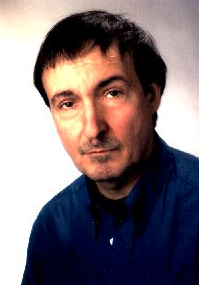 Jochen Schirmer合作论文数Institute of Physical Chemistry, Universität Heidelberg13
 J. E. Parker合作论文数13Ma Hayes合作论文数12
 Michael Alastair Macdonald合作论文数12Martin a Hayes合作论文数12B. Wannberg合作论文数10Dl Ederer合作论文数9
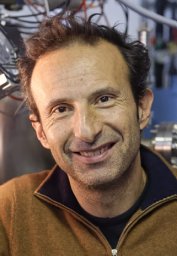 Laurent Nahon合作论文数Science Division, Synchrotron SOLEIL9S. T. Pratt合作论文数9C.A.F. Johnson合作论文数8M. A. MacDonald合作论文数7Berenger Gans合作论文数Laboratoire de Photophysique Moléculaire, Univ. Paris-Sud 117
 Evgeniy V Gromov合作论文数Irkutsk State University Russia7Kai Siegbahn合作论文数6Christophe Nicolas合作论文数6Boyé-Péronne Séverine合作论文数6
 Gustavo Garcia Jr合作论文数Veergen Inc;Department of Molecular and Medical Pharmacology, University of California, Los Angeles6Keith Codling合作论文数6
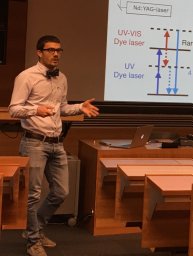 Ugo Jacovella合作论文数Laboratorium für Physikalische Chemie, ETH Zürich6Leanne J Cooper合作论文数6
 Peter Baltzer合作论文数6Piero Decleva合作论文数Dipartimento di Scienze Chimiche e Farmaceutiche, Università Degli Studi di Trieste6
 Mauro Stener合作论文数Dipartimento di Scienze Chimiche, Università di Trieste6Wolfgang Von Niessen合作论文数Technische Universitat Braunschweig6Sean Mcsweeney合作论文数6A HOPKIRK合作论文数6
 Minna Patanen合作论文数Department of Physical Sciences, University of Oulu6L E Archer合作论文数5de Oliveira N A合作论文数5
 Egill Antonsson合作论文数5
 Stephen H. Southworth合作论文数Argonne National Laboratory5Denis Joyeux合作论文数5R.A Mackie合作论文数5
 Catalin Miron合作论文数Institute for the Sciences of Light, Université Paris-Saclay;Laboratory for Interactions, Dynamics and Lasers, Commissariat for Atomic Energy and Alternative Energies5I.L. Zaytseva合作论文数4R C Menzies合作论文数4R. Stockbauer合作论文数4
 Wendy Flavell合作论文数Department of Physics and Astronomy, School of Natural Sciences, Faculty of Science and Engineering, The University of Manchester4
 Rein Maripuu合作论文数4




