This report documents the design and implementation of ImmGnosis, a stateless Web-based expert system that reasons over matters involving immigration law. We discuss the development of the knowledge base and compare our rule-based representation of expert knowledge to other possible approaches. Additional v, we present a modified expert system shell that dynamically handles multiple consultations in a stateless environment while using only a single instance of the inference application. Finally we evaluate the accuracy of the diagnoses, the performance of the stateless architecture, and the practical usability of the final product.
We present a flexible, extensible method for integrating multiple tools into a single large decision support system (DSS) using a forest ecosystem management DSS (NED-2) as an example. In our approach, a rich ontology for the target domain is developed and implemented in the internal data model for the DSS. Semi-autonomous agents control external components and communicate using a blackboard. We illustrate how this multi-agent approach with its blackboard architecture supports the expansion of a DSS (in this case, NED-2) to incorporate new models and decision support tools as they become available. The exemplar NED-2 DSS developed using this method is a goal-driven DSS that integrates a sophisticated inventory system, treatment plan development, growth-and-yield models, wildlife models, fire risk models, knowledge based systems for goal satisfaction analysis, and a powerful report generation system.
NED-2 is an intelligent information system for ecosystem management in development by the USDA Forest Service. Using PROLOG knowledge bases and inference engines, NED-2 evaluates forest inventories according to a set of predefined goals. NED-2 is a blackboard system with agents implemented in PROLOG. The primary storage medium of NED-2 is a set of relational databases. The present paper focuses upon the integration of PROLOG and relational databases to form NED-2’s blackboard. This is an issue of central importance
For many years we have held to the notion that an Intelligent Information System (IIS) is composed of a unified knowledge base, database, and model base. The main idea behind this notion is the transparent processing of user queries. The system is responsible for “deciding” which information sources to access in order to fulfil a query regardless of whether this involves a data retrieval, an inference, a computational method, a problem solving module, or some combination of these. The NED IIS project is an effort to develop a robust, intelligent, goal-driven forest ecosystem management system to help forest managers plan and achieve wildlife, ecological, water, landscape, and timber goals. NED, using a blackboard architecture dominated by semi autonomous intelligent agents, integrates a core database, domain knowledge, meta-knowledge, and a GUI with external (possibly distributed) legacy and special purpose (heterogeneous) information sources. The current version of NED is NED-2. NED-2 is still under construction, however a prototype incorporating the major components of the architecture has been completed and demonstrated.
NED-2 is a software system in development by the USDA Forest Service to facilitate ecosystem management. Using PROLOG knowledge bases and inference engines, NED-2 evaluates forest inventories to determine the degree to which they satisfy a set of predefined goals. By integrating third-party simulation and visualization packages, NED-2 allows the user to plan, predict, and assess forest treatment scenarios.
—An Intelligent Information System (IIS) is viewed as composed of a unified knowledge base, database, and model base. This allows an IIS to provide responses to user queries regardless of whether the query process involves a data retrieval, an inference, a computational method, a problem solving module, or some combination of these. NED-2 is a full-featured intelligent information system for the sustainable management of forestlands. It is designed to help managers plan for wildlife, ecology, water, and landscape objectives as well as timber production. FVS is one of the integrated decision support model components in NED-2. We provide the FVS simulation agent and “wrapper” that permit commu-nication between FVS and NED-2. We are developing a meta-knowledge base. Simulation agents can use it to set up and execute external simulation models. This paper will briefly describe the NED decision process, the NED-2 architecture, and discuss the design issues explaining the integration of NED-2 and FVS.
We explore a goal-oriented as opposed to a problem-oriented approach to DSS development for ecosystem management. Ecosystem management ordinarily is guided by a set of goals that may conflict in various ways. Problems are perceived obstacles to realizing goals. Identifying and resolving conflicts between goals, testing current or projected situations for goal satisfaction, and problem identification all require a robust model of the goal structure for the intended domain. The lowest level of this goal structure must be represented as desirable future conditions consisting of proposed values for observable indicators. A model of the causal, legal, and other institutional relations between these desirable future conditions is also needed. Two projects based on a goal-oriented approach to DSS development are described. The first project has produced an initial prototype that incorporates goals for forest management in rules representing three tiers: management unit goals, stand-level goals, and desirable future conditions. The second, at an initial knowledge acquisition stage, is an attempt to develop a participatory decision-making methodology for socially and environmentally sensitive economic development in Central America.
NED is a collective term for a set of software intended to help resource managers develop goals, assess current and potential conditions, and produce sustainable management plans for forest properties. The software tools are being developed by the USDA Forest Service, Northeastern and Southern Research Stations, in cooperation with many other collaborators. NED-1 is a Windows-based program that helps analyze forest inventory data from the perspective of various resources on management areas as large as several thousand hectares. Resources addressed include visual quality, ecology, forest health, timber, water, and wildlife. NED-1 evaluates the degree to which an individual stand or an entire management unit may provide the conditions required to accomplish specific goals. NED-1 users select from a variety of reports, including tabular data summaries, general narratives, and goal-specific analyses. An extensive hypertext system provides information about the resource goals, the desired conditions that support achieving those goals, and related data used to analyze the actual condition of the forest, as well as detailed information about the program itself and the rules and formulas used to produce the analyses. The software is constructed in C++ using an application framework; the inferencing component that handles the rule bases uses Prolog.
A programming environment for developing complex decision support systems (DSSs) should support rapid prototyping and modular design, feature a flexible knowledge representation scheme and sound inference mechanisms, provide project management, and be domain-independent. We have previously developed DSSTools (Decision Support System Tools), a reusable, domain-independent, and open-ended toolkit for developing DSSs in Prolog. DSSTools provides modular design, a flexible knowledge representation scheme, and sound inference mechanisms to support development of any knowledge based system components of a DSS. It also provides tools for building the DSS interface and for integrating other non-Prolog components of a DSS such as simulation models, databases, or geographical information system, into a multi-component DSS. DSSTools does not provide project management, and its complex syntax makes rapid prototyping difficult. AppBuilder for DSSTools is a GUI-based application development environment for developing DSSs in DSSTools that supports rapid prototyping and project management. AppBuilder’s easy-to-use dialogues for managing and building knowledge based and top-level control components of a DSS free developers from having to memorize complex syntax and reduce development time without sacrificing the flexibility of the underlying toolkit. AppBuilder has been used to develop the Regeneration DSS, a system for predicting the regeneration of southern Appalachian hardwoods. AppBuilder is an application development environment for both prototyping and developing a complete DSS.
We describe a knowledge based system (AneSoft) for making and evaluating recommendations for anesthetizing canine surgery candidates. The system is designed both to provide expert consultations and for use as a reaching tool. AneSoft can provide a set of recommendations for pre-anesthetic medications and agents to use to induce and to maintain anesthesia based on. information about the patient AneSoft can also evaluate recommendations made by a student or other user, explaining why any part of that recommendation might be countraindicated and offering suggestions for modifying the recommendation. Written in LPA WIN-PROLOG, AneSoft operates by modifying standard anesthesia protocols to accommodate particular needs of the patient. Along with standard recommendations for classes of patients, the knowledge base includes rules specifying when each drug in the system is countraindicated. Other rules specify when a drug that is not routinely recommended would be indicated finally, there are rules for drug incompatibilities and rules that specify when the use of one drug requires the use of another drug as part of the recommendation. Each rule includes text that can be used to construct explanations for the recommendations or critiques generated by AneSoft.
We propose development of an argument-based decision support system utilizing defeasible or nonmonotonic reasoning. Defeasible logic graphs (d-graphs) represent the knowledge contained in a defeasible theory. A method for propagating labels through a d-graph is developed as a means for reasoning about the theory from which the d-graph is generated. This method is proven to be sound with respect to Nute's defeasible logic and complete for finite, consistent theories with acyclic d-graphs.
We describe a tool to help users construct and explore graphs representing possibly incomplete or uncertain relations between propositions in a domain of interest selected by the user. The inference engine for this argument-based system (ABS) is derived from defeasible logic. Our prototype ABS implements a modification of an algorithm for reasoning with these graphs first reported in (Nute and Erk, 1996). We also report improved soundness and completeness results of the sort found in (Nute and Erk, 1996).
Developing a knowledge based system as native high-level language code gives the developer maximum flexibility at the cost of development time. Using a shell can cut development time drastically, but shells often involve high computational overhead and their restrictions on the development of the control structure and the user interface may be severe for a particular application. This paper introduces a toolkit approach and a toolkit for development of decision support systems in PROLOG (DSSTOOLS). The toolkit approach provides some of the benefits of the expert system shell while making available all the flexibility of a high-level language. A toolkit is a library of reusable software code for developing knowledge based decision support systems. DSSTOOLS extends the PROLOG language by defining new PROLOG predicates and procedures that allow the developer to use a blackboard architecture and to call powerful inference engines and user interface routines simply. DSSTOOLS currently consists of three major components: (1) a blackboard architecture and the routines to maintain it; (2) a set of user interface tools including explanation facilities; and (3) a suite of inference engines. It has been used to develop forest management systems for even-aged stands of red pine and aspen and will be used to develop a decision support system for choosing silvicultural prescriptions to support sustainable, long-term productivity in southern Appalachian hardwood forests.
of the Forest Management Advisory Systems Yousong Chang and Donald Nute Artificial Intelligence Programs University of Georgia Athens, GA 30602 E-mail:ychang@ai.uga.edu Expert system technology is a powerful tool for enhancing the decision making capabilities of nonexperts with reasonable knowledge of a domain to expert level in that domain. U.S.D.A. Forest Service has been working on forest management expert systems for several years. However, building different expert systems for each kind of forest is a demanding task. To develop a complete expert system in a high level language, we think the best approach to take is the toolkit approach. The idea is to develop separate modules for different kinds of inferencing, different kinds of user interaction, and different kinds of explanatory facilities. So we developed a toolkit mostly in Prolog for building expert systems for forest management. The first components of the toolkit were developed in Visual Basic, Hypertxt for Windows, Windows Notepad, and LPA Prolog for Windows to support development of a management system for red pine forests. This first system is called Red Pine Forest Management Advisory System (RPFMAS). The same tools used in RPFMAS were then used to develop a system for aspen forests . Our toolkit architecture includes three logical levels: a domain level, a tactical level, and a strategic level. The domain level should support as many different knowledge representation schemes as possible. We now support three structures. (1) facts and rules with or without MYCIN-like certainty factors (2) Prolog databases (3) procedures The tactical level includes the inference engines and the user interface. We now have: (1) backward chaining (2) forward chaining (3) mixed backward and forward chaining Backward and forward chaining will support reasoning with incomplete or uncertain information using either MYCIN-like certainty factors or defeasible rules. The RPFMAS supports incomplete but certain information. The user interface provides a variety of methods for collecting task-specific information from the user and for communicating conclusions to the user. The user interface of RPFMAS allows reasonable opportunity for the user to review and to change responses without the need to restart the consultation. The explanatory facility, controlled by Visual Basic through DDE to Hypertxt for Windows, provides explanations for questions asked and for conclusions offered. The strategic level includes tools combining different components of the tactical level to produce-a consultation driver suitable for a particular application. It is at this level that the control structure for an entire system is developed. This level includes a variety of tools to help the developer test and tune systems at the domain, the tactical, and the strategic levels. The basic architecture for our toolkit is a blackboard system implemented in Prolog. Each module reads the blackboard and becomes active when appropriate. Non-Prolog modules are activated by Prolog demons which read the blackboard for them. The major modules in the RPFMAS are shown below. All the modules are written in Prolog except “Growth simulator” in Visual Basic, “Explanatory facilities” in Visual Basic and Hypertxt, “Trace” in Windows Notepad. Figure 1: RPFMAS architecture
Artificial networks can be used to identify hydrogen nuclear magnetic resonance (1H-NMR) spectra of complex oligosaccharides. Feed-forward neural networks with back-propagation of errors can distinguish between spectra of oligosaccharides that differ by only one glycosyl residue in twenty. The artificial neural networks use features of the strongly overlapping region of the spectra (hump region) as well as features of the resolved regions of the spectra (structural reporter groups) to recognize spectra and efficiently recognized 1H-NMR spectra even when the spectra were perturbed by minor variations in their chemical shifts. Identification of spectra by neural network-based pattern recognition techniques required less than 0.1 second. It is anticipated that artificial neural networks can be used to identify the structures of any complex carbohydrate that has been previously characterized and for which a 1H-NMR spectrum is available.
Despite the attention conditional logic has received since Stalnaker's seminal paper [1968], few papers have appeared that explore the role tense plays in the truth conditions of conditionals. I will develop a semantics for a formal language containing tense operators, a historical necessity operator, and a conditional operator. In developing this semantics, I will assume an indeterministic stance and suppose that future tense statements generally lack truth values. The semantics will include possible worlds and pseudo-branching time. I will argue that the technical notion of an actual world makes no sense from this Aristotelian perspective and should be replaced with the notion of an actual manifold, a set of worlds that has not yet been ruled out by either history or physics. I will defend two main conclusions in the paper, one negative and one positive. The negative conclusion is that we cannot in general represent English conditional sentences by combinations of conditional operators and standard tense operators. The positive conclusion is that all true intensional conditionals are historically necessary and all false intensional conditionals are historically impossible.
A novel nonmonotonic system called defeasible logic is presented that disarms the Yale shooting problem and other familiar examples of common sense reasoning that cause problems for many nonmonotonic systems, including examples that involve inheritance hierarchies with exceptions. Defeasible logic is easily implemented as an extension to Prolog, and it has knowledge-representation capabilities not found in other recent nonmonotonic systems
An approach to nonmonotonic reasoning in expert systems is presented that does not rely on numerical probabilities or confidence factors, using instead rules-of-thumb that cover the normal or typical case but are known to have exceptions. A logic for such defeasible rules is implemented in d-Prolog, an extension of Prolog. FORE, a prototype, knowledge-based system written in d-Prolog, is also presented. FORE uses ordinary Prolog rules to specify when a business forecasting method is indicated or counterindicated. A small kernel of defeasible metarules controls FORE's final recommendations.<>
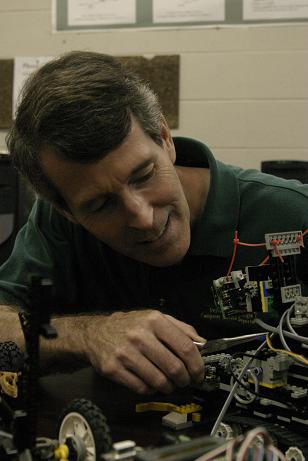 Walter D. Potter合作论文数Artificial Intelligence Center6
 h m rauscher合作论文数5Jin Wang合作论文数5
 Mark J. Twery合作论文数USDA Forest Service5
 Mayukh Dass合作论文数Rawls College of Business Administration, Texas Tech University;University of South-Eastern Norway4Hajime Uchiyama合作论文数3H. Uchiyama合作论文数2Scott Thomasma合作论文数2Peter D. Knopp合作论文数2G Rosenberg合作论文数2Geneho Kim合作论文数2Shree S. Nath合作论文数2B. P. Verma合作论文数1E. B. Knapp合作论文数1deborah bennett合作论文数1
 Andrew Nelson合作论文数1W Mitcheltree合作论文数1SA THOMASMA合作论文数1Zhiyuan Cheng合作论文数1
 Wei Jen Wang (王維仁)合作论文数Department of Architecture, University of Hong Kong1
 Eric Gustafson合作论文数Institute for Applied Ecosystem Studies, United States Forest Service Forest Service1Hunter, Z.合作论文数1Henderson, C.合作论文数1Brewer, B.合作论文数1
 William York合作论文数Department of Biochemistry and Molecular Biology, Franklin College of Arts and Sciences, University of Georgia1G. Leclerc合作论文数1B Verma合作论文数1M Grove合作论文数1Bernd Meyer合作论文数1David S. Decalesta合作论文数1Astrid Glende合作论文数1W. C. Bell合作论文数1
 Susan L. Stout合作论文数USDA Forest Service;Northeastern Research Station;USDA Forest Service, Northeastern Research Station1
 Morgan Grove合作论文数Northern Research Station, Forest Service, U.S. Department of Agriculture1
 Katrin Erk合作论文数Department of Linguistics, College of Liberal Arts, University of Texas at Austin;Department of Computer Science, College of Natural Sciences, University of Texas at Austin1Robert E. Mann合作论文数1H. Michael Rauscher合作论文数1Jeffery Sellers合作论文数1Yousong Chang合作论文数1R.Peter Kollasch合作论文数1
 Frederick Maier合作论文数University of Georgia1
 James F Palmer合作论文数College of Environmental Science and Forestry, State University of New York Syracuse1
 Alan Darvill合作论文数Department of Biochemistry and Molecular Biology, Franklin College of Arts and Sciences, University of Georgia;Complex Carbohydrate Research Center, University of Georgia1
 Peter Albersheim合作论文数University of Georgia1J. A. Cox合作论文数1Helene Cleveland合作论文数1David L. Loftis合作论文数1




