Three weeks prior to the commencement of Cassini's 4 year tour of the saturnian system, the spacecraft executed a close flyby of the outer satellite Phoebe. The infrared channel of the Visual Infrared Mapping Spectrometer (VIMS) obtained images of reflected light over the 0.83–5.1 μm spectral range with an average spectral resolution of 16.5 nm, spatial resolution up to 2 km, and over a range of solar phase angles not observed before. These images have been analyzed to derive fundamental photometric parameters including the phase curve and phase integral, spectral geometric albedo, bolometric Bond albedo, and the single scattering albedo. Physical properties of the surface, including macroscopic roughness and the single particle phase function, have also been characterized. Maps of normal reflectance show the existence of two major albedo regimes in the infrared, with gradations between the two regimes and much terrain with substantially higher albedos. The phase integral of Phoebe is 0.29±0.03, with no significant wavelength dependence. The bolometric Bond albedo is 0.023±007. We find that the surface of Phoebe is rough, with a mean slope angle of 33°. The satellite's surface has a substantial forward scattering component, suggesting that its surface is dusty, perhaps from a history of outgassing. The spectrum of Phoebe is best matched by a composition including water ice, amorphous carbon, iron-bearing minerals, carbon dioxide, and Triton tholin. The characteristics of Phoebe suggest that it originated outside the saturnian system, perhaps in the Kuiper Belt, and was captured on its journey inward, as suggested by Johnson and Lunine (2005).
Cassini observations of the surface of Titan offer unprecedented views of its surface through atmospheric windows in the 1–5 μm region. Images obtained in windows for which the haze opacity is low can be used to derive quantitative photometric parameters such as albedo and albedo distribution, and physical properties such as roughness and particle characteristics. Images from the early Titan flybys, particularly T0, Ta, and T5 have been analyzed to create albedo maps in the 2.01 and 2.73 μm windows. We find the average normal reflectance at these two wavelengths to be 0.15±0.02 and 0.035±0.003, respectively. Titan's surface is bifurcated into two albedo regimes, particularly at 2.01 μm. Analysis of these two regimes to understand the physical character of the surface was accomplished with a macroscopic roughness model. We find that the two types of surface have substantially different roughness, with the low-albedo surface exhibiting mean slope angles of ∼18°, and the high-albedo terrain having a much more substantial roughness with a mean slope angle of ∼34°. A single-scattering phase function approximated by a one-term Henyey–Greenstein equation was also fit to each unit. Titan's surface is back-scattering (g∼0.3–0.4), and does not exhibit substantially different backscattering behavior between the two terrains. Our results suggest that two distinct geophysical domains exist on Titan: a bright region cut by deep drainage channels and a relatively smooth surface. The two terrains are covered by a film or a coating of particles perhaps precipitated from the satellite's haze layer and transported by eolian processes. Our results are preliminary: more accurate values for the surface albedo and physical parameters will be derived as more data is gathered by the Cassini spacecraft and as a more complete radiative transfer model is developed from both Cassini orbiter and Huygens Lander measurements.
The Visual and Infrared Mapping Spectrometer (VIMS) instrument aboard the Cassini spacecraft obtained its first spectral map of the satellite Iapetus in which new absorption bands are seen in the spectra of both the low-albedo hemisphere and the H2O ice-rich hemisphere. Carbon dioxide is identified in the low-albedo material, probably as a photochemically produced molecule that is trapped in H2O ice or in some mineral or complex organic solid. Other absorption bands are unidentified. The spectrum of the low-albedo hemisphere is satisfactorily modeled with a combination of organic tholin, poly-HCN, and small amounts of H2O ice and Fe2O3. The high-albedo hemisphere is modeled with H2O ice slightly darkened with tholin. The detection of CO2 in the low-albedo material on the leading hemisphere supports the contention that it is carbon-bearing material from an external source that has been swept up by the satellite's orbital motion.
We present the observations of to acquired by the Solid State Imaging (SSI) experiment during the Galileo Millennium Mission (GMM) and the strategy we used to plan the exploration of to. Despite Galileo's tight restrictions on data volume and downlink capability and several spacecraft and camera anomalies due to the intense radiation. close to Jupiter, there were many successful SSI observations during GMM. Four giant, high-latitude plumes, including the largest plume ever observed on to, were documented over a period of eight months; only faint evidence of such plumes had been seen since the Voyager 2 encounter, despite monitoring by Galileo during the previous five years. Moreover, the source of one of the plumes was Tvashtar Catena, demonstrating that a single site can exhibit remarkably diverse eruption styles-from a curtain of lava fountains, to extensive surface flows, and finally a similar to 400 km high plume-over a relatively short period of time (similar to 13 months between orbits 125 and G29). Despite this substantial activity, no evidence of any truly new volcanic center was seen during the six years of Galileo observations. The recent observations also revealed details of mass wasting processes acting on to. Slumping and landsliding dominate and occur in close proximity to each other, demonstrating spatial variation in material properties over distances of several kilometers. However, despite the ubiquitous evidence for mass wasting, the rate of volcanic resurfacing seems to dominate; the floors of paterae in proximity to mountains are generally free of debris. Finally, the highest resolution observations obtained during Galileo's final encounters with to provided further evidence for a wide diversity of surface processes at work on to. (C) 2003 Elsevier Inc. All rights reserved.
We present rotational light-curve data for Saturn's satellite Phoebe taken over the observing period prior to the Cassini mission's encounter with that moon. We find a rotation period of 9.2735 ± 0.0006 hr, a factor of 25 improvement in the rotation period's uncertainty over previously published data. This improved rotation period measurement allow s us to correlate previously observed spectral features and colors with albedo features observed by Voyager and to predict which side of Phoebe will be observed by Cassini during its 2004 June 11 encounter. The light curve, sampled at subobserver latitudes farther south than achieved by Voyager, shows evidence of surface features that cannot be explained by previously published shape models or albedo maps and that may be located in the regions in Phoebe's southern hemisphere that were unobserved by Voyager.
Near-infrared observations of Europa's disk-integrated opposition surge by Cassini VIMS, first published in Fig. 4 of Brown et al. (2003, Icarus, 164, 461), have now been modeled with the commonly used Hapke photometric function. The VIMS data set emphasizes observations at 16 solar phase angles from 0.4° to 0.6°—the first time the <1° phase “heart” of Europa's opposition surge has been observed this well in the near-IR. This data set also provides a unique opportunity to examine how the surge is affected by changes in wavelength and albedo: at VIMS wavelengths of 0.91, 1.73, and 2.25 μm, the geometric albedo of Europa is 0.81, 0.33, and 0.18, respectively. Despite this factor-of-four albedo range, however, the slope of Europa's phase curve at <1° phase is similar at all three wavelengths (to within the error bars) and this common slope is similar to the phase coefficient seen in visible-light observations of Europa. The two components of the opposition surge—involving different models of the physical cause of the surge—are the Shadow Hiding Opposition Effect (SHOE) and the Coherent Backscatter Opposition Effect (CBOE). Because of sparse VIMS phase coverage, it is not possible to constrain all the surge parameters at once in a Hapke function that has both SHOE and CBOE; accordingly, we performed separate Hapke fits for SHOE-only and CBOE-only surges. At 2.25 μm, where VIMS data are somewhat noisy, both types of surges can mimic the slope of the VIMS phase curve at <1° phase. At 0.91 and 1.73 μm, however—where VIMS data are “cleaner”—CBOE does a noticeably poorer job than SHOE of matching the VIMS phase coefficient at <1° phase; in particular, the best CBOE fit insists on having a steeper phase-curve slope than the data. This discrepancy suggests that Europa's near-IR opposition surge cannot be explained by CBOE alone and must have a significant SHOE component, even at wavelengths where Europa is bright.
Six nights of R-band CCD observations of the classical Kuiper Belt Object (KBO) 20000 Varuna (2000 WR106) were obtained at the Palomar Mountain 60- and 200-in telescopes. The observations were scheduled to take advantage of a particularly favorable apparition which allowed us to sample down to extremely small solar phase angle (α=0.036°). After rotational lightcurve subtraction, we found that the KBO exhibited a strong opposition surge of ∼0.1 mag at phase angles α<0.1°. We modeled our composite solar phase curve of Varuna using both H–G parameterization and Hapke theory and concluded that similar opposition surges may be wide spread among KBOs and that the regolith of Varuna may be significantly more porous than a typical main-belt C-type asteroid. Wide-spread opposition surges lead to higher albedos than derived assuming linear phase behavior: on the whole KBOs may be brighter than previously assumed.
During three close flybys in late 1999 and early 2000 the Galileo spacecraft acquired new observations of the mountains that tower above to's surface. These images have revealed surprising variety in the mountains' morphologies. They range from jagged peaks several kilometers high to lower, rounded structures. Some are very smooth, others are covered by numerous parallel ridges. Many mountains have margins that are collapsing outward in large landslides or series of slump blocks, but a few have steep, scalloped scarps. From these observations we can gain insight into the structure and material properties of to's crust as well as into the erosional processes acting on to. We have also investigated formation mechanisms proposed for these structures using finite-element analysis. Mountain formation might be initiated by global compression due to the high rate of global subsidence associated with to's high resurfacing rate; however, our models demonstrate that this hypothesis lacks a mechanism for isolating the mountains. The large fraction (similar to40%) of mountains that are associated with paterae suggests that in some cases these features are tectonically related. Therefore we have also simulated the stresses induced in to's crust by a combination of a thermal upwelling in the mantle with global lithospheric compression and have shown that this can focus compressional stresses. If this mechanism is responsible for some of Io's mountains, it could also explain the common association of mountains with paterae.
In December and January 2000-2001, the Cassini spacecraft made a gravity-assist flyby of the Jovian system which included detailed studies of the Galilean satellites. During the encounter the Visual Infrared Mapping Spectrometer (VIMS) gathered measurements of these bodies at unique geometries and new spectral ranges. Among these results were an observation of Europa's opposition surge over the 0.9 to 3.0 micron range. Between a phase angle of 0.38 and 0.60 degrees, 16 observations of the satellite were obtained, and between 1.5 and 7 degrees, four measurements were obtained. In the near IR, Europa's solar phase curve exhibits a much steeper rise below one degree. The phase coefficient between 7 and 1.5 degrees is "0.01 magnitudes/degree, similar to values determined from visible ground-based and Voyager results. However, below one degree, the phase coefficient has values ranging from 0.2 magnitudes/degree at 2.6 microns to 0.25 magnitudes/degree at 0.9 microns: Europa exhibits a huge opposition surge in the near-IR. We find a wavelength dependence to the surge at these small phase angles: As the wavelength (or albedo) increases, the phase coefficient decreases. No clear trend was observed between solar phase angles of 1.5 and 7 degrees.
This presentation discusses our initial observations about the Chaac-Camaxtli region of Jupiter's moon Io, using Galileo SSI and NIMS data from the February 2000 flyby (orbit I27) and planetary mapping. Additional information is contained in the original extended abstract.
The Solid‐State Imaging (SSI) instrument provided the first high‐ and medium‐resolution views of Io as the Galileo spacecraft closed in on the volcanic body in late 1999 and early 2000. While each volcanic center has many unique features, the majority can be placed into one of two broad categories. The “Promethean” eruptions, typified by the volcanic center Prometheus, are characterized by long‐lived steady eruptions producing a compound flow field emplaced in an insulating manner over a period of years to decades. In contrast, “Pillanian” eruptions are characterized by large pyroclastic deposits and short‐lived but high effusion rate eruptions from fissures feeding open‐channel or open‐sheet flows. Both types of eruptions commonly have ∼100‐km‐tall, bright, SO 2 ‐rich plumes forming near the flow fronts and smaller deposits of red material that mark the vent for the silicate lavas.
 Alfred McEwen合作论文数Lunar & Planetary Laboratory, College of Science, The University of Arizona44
 Joseph Veverka合作论文数Department of Astronomy, The College of Arts & Sciences, Cornell University31
 Peter Thomas合作论文数Cornell Center for Astrophysics and Planetary Science, Cornell University25
 Paul E. Geissler合作论文数Astrogeology Science Center, US Geological Survey21
 Laszlo P. Keszthelyi合作论文数Lunar and Planetary Laboratory, University of Arizona Tucson20
 Michael J. Belton合作论文数Kitt Peak National Observatory19
 Elizabeth P. Turtle合作论文数15
 Paul Helfenstein合作论文数13
 Brian T. Carcich合作论文数Center for Radiophysics and Space Research, Cornell University12
 Bonnie Buratti合作论文数Science Division, Jet Propulsion Laboratory, California Institute of Technology11
 T. V. Johnson合作论文数9K. P. Klaasen合作论文数8moses pollen milazzo合作论文数8galileo ssi team合作论文数8galileo imaging team合作论文数7f p fanale合作论文数7
 Cynthia B Phillips合作论文数NASA Jet Propulsion Laboratory7
 Roger N. Clark合作论文数Planetary Science Institute7
 James B. Pollack合作论文数Ames Research Center, NASA7
 M. J. S. Belton合作论文数Belton Space Exploration Initiatives7
 Jani Radebaugh合作论文数Brigham Young University7h h breneman合作论文数6
 Thomas McCord合作论文数Bear Fight Institute6M. Belton合作论文数6
 Clark R. Chapman合作论文数Department of Space Studies, Southwest Research Institute6
 Ralf Jaumann合作论文数Institute of Geological Sciences, Department of Earth Sciences, Freie Universität Berlin6
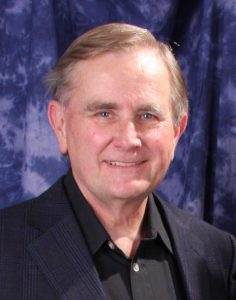 Dale Cruikshank合作论文数Astrophysics Branch, Ames Research Center, National Aeronautics and Space Administration5
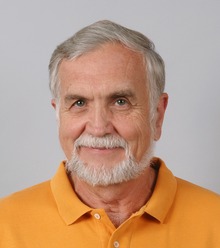 Ronald Greeley合作论文数Ronald Greeley Center for Planetary Studies, Arizona State University;School of Earth and Space Exploration, Arizona State University5
 James W Head合作论文数Department of Earth, Environmental and Planetary Sciences, Brown University5
 Chris McKay合作论文数NASA Ames Research Center5
 James Charles Granahan合作论文数5
 James Bauer合作论文数Jet Propulsion Laboratory, NASA;NASA Astrobiology Institute;University of Maryland College Park5K. P. Magee合作论文数4craig phillips合作论文数4
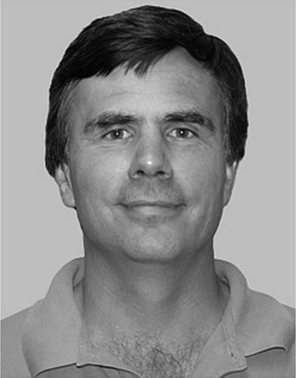 Mark Robinson合作论文数Department of Geological Sciences, Northwestern University4Torrence V. Johnson合作论文数Jet Propulsion Laboratory, NASA4Moses Pollen Milazzo合作论文数4Michael D. Hicks合作论文数4
 Kenneth P. Klaasen合作论文数4
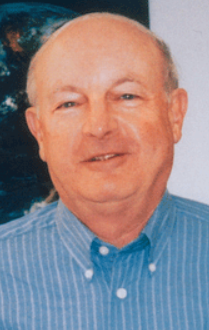 Gerald Schubert合作论文数Department of Earth and Space Sciences, Institute of Geophysics and Planetary Physics, University of California, Los Angeles4H. Breneman合作论文数4DA Williams合作论文数3kathleen edwards合作论文数3
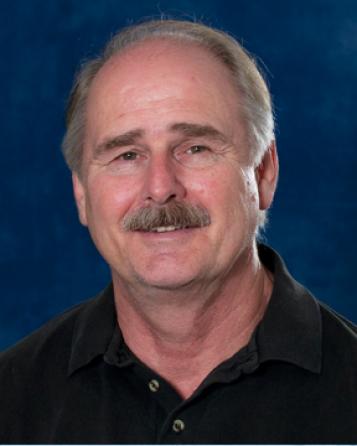 Robert Hamilton Brown合作论文数Lunar & Planetary Laboratory, College of Sciences, The University of Arizona3
 Joe Burns合作论文数Department of Astronomy, College of Arts & Sciences, Cornell University3
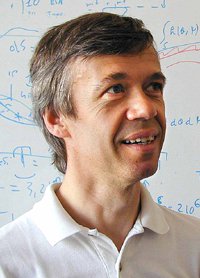 Christophe Sotin合作论文数Jet Propulsion Laboratory, California Institute of Technology;University of Nantes3
 Robert Pappalardo合作论文数Planetary Science Section, Science Division, Jet Propulsion Laboratory, California Institute of Technology3




