The total cross section of the $^{82}$Kr(p,$\gamma$)$^{83}$Rb reaction was measured for the first time at effective center-of-mass energies between 2.4 and 3.0 MeV, within the relevant Gamow window for the astrophysical $\gamma$ process. The experiment took place at the National Superconducting Cyclotron Laboratory at Michigan State University using the ReA facility. A $^{82}$Kr beam was directed onto a hydrogen gas cell located at the center of the Summing NaI(Tl) (SuN) detector. The obtained spectra were analyzed using the $\gamma$-summing technique and the extracted cross section was compared to standard statistical model calculations using the \textsc{non-smoker} and \textsc{talys} codes. The comparison indicates that standard statistical model calculations tend to overproduce the cross section of the $^{82}$Kr(p,$\gamma$)$^{83}$Rb reaction relative to the experimentally measured values. Furthermore, the experimental data was used to provide additional constraints on the nuclear level density and $\gamma$-ray strength function used in the statistical model calculations.
Element specific ultrafast demagnetization was studied in Fe$_{1-x}$Ni$_{x}$ alloys, covering the concentration range between $0.1<x<0.9$. For all compositions, we observe a delay in the onset of Ni demagnetization relative to the Fe demagnetization. We find that the delay is correlated to the Curie temperature and hence also the exchange interaction. The temporal evolution of demagnetization is fitted to a magnon diffusion model based on the presupposition of enhanced ultrafast magnon generation in the Fe sublattice. The spin wave stiffness extracted from this model correspond well to known experimental values.
The speed of light in vacuum, $c$, is a fundamental constant of nature. Photons belonging to a structured beam of finite transverse size, generated by a spatial light modulator, have been observed to travel with a group velocity, $v_g$, which is smaller than $c$ also when propagating in vacuum [1-3]. This is an effect that depends on the geometry of the beam. From quantum mechanical considerations, these photons must in any case propagate at the speed of light. This paradox can be resolved by taking into account a projection effect. What was measured in these experiments as group velocity was in fact its projection onto the beam propagation axis [4]. This depends on the divergence of the beams used in these experiments. We have found that for hypergeometric beams carrying orbital angular momentum (OAM), generated by sources with equal aperture [5-8], $v_g$ obeys an OAM/velocity relationship similar to that proposed by Majorana between spin and mass for bosonic and fermionic relativistic particles. This relationship, depending on the geometrical properties of the beam, can pave the way for an alternative estimation of OAM or to implement a time buffer in optical communications.
Special and general relativity extended our understanding of the concepts of space and time,two of the most basic topics of investigation of modern physics. However, quantum theory hasshown that there is more to learn regarding these concepts. The group of Lorentz transformationsis scale invariant. However, considerations of how to combine the concepts of quantum mechanicsand gravity (quantum gravity) indicate that there is a “natural scale” at which the physics ofspace-time predicted by relativity theory breaks down and thus requires modification, or a newparadigm (Saslow, 1998). This natural scale is the Planck scale, E
In the previous paper (Part~1), we have verified that the SK assumption on the direction does not hold in the analysis of neutrino events occurred inside the SK detector. We have made four possible L/E analyses, L_nu/E_nu, L_nu/E_mu, L_mu/E_nu and L_mu/E_mu. Among four kinds of L/E analyses, we have shown that only L_nu/E_nu analysis can give the signature of maximum oscillations clearly, while the L_mu/E_mu analysis which are really done by Super-Kamiokande Collaboration cannot give the maximum oscillation at all. It is thus concluded that Super-Kamiokande type experiment cannot find the maximum oscillation from L/E analysis. Therefore, we would suggest Super-Kamiokande Collaboration to re-analyze the zenith angle distribution of the neutrino events which occur inside the detector carefully.
This contribution is a brief review of the status of hybrid baryons, which are hypothetical baryons that incorporate a gluonic excitation. We first summarize the status of hybrid mesons, since this closely related topic has seen considerable recent activity with the identification of two exotic candidates. Next we review theoretical expectations for the masses and quantum numbers of hybrid baryons, which have come from studies of the bag model, QCD sum rules and the flux tube model. Finally hybrid baryon experiment is discussed, including suggestions for experimenters at COSY.
A treatment of edge magnetoplasmons (EMP), based on a microscopic evaluation of the local contributions to the current density, is presented. It is valid in the quantum Hall regime for filling factor \nu=1 or 2 and low temperatures when the dissipation is localized near the edge. The confining potential, flat in the interior of the channel, is assumed smooth on the magnetic length scale but sufficiently steep at the edges that the density profile is sharp and the dissipation considered results only from electron intraedge-intralevel transitions due to scattering by piezoelectrical phonons. For wide channels there exist independent EMP modes spatially symmetric and antisymmetric with respect to the edge. Certain of these modes can propagate nearly undamped even when the dissipation is strong and are thus termed edge helicons. In contrast with well-known results for a spatially homogeneous dissipation within the channel, we obtain that the damping of the fundamental EMP is not quantized and varies as T**3 or $T**(-3), where T is the temperature, in the high- and low-frequency limits, respectively. The characteristic length of the resulting dispersion relation and of the charge density distortion is the magnetic length. The screening of the metallic gates, when present, is taken into account.
The energy of the ultrahigh energy spectral cutoff was measured, integrating over the northern hemisphere sky, by the Telescope Array (TA) collaboration, to be $10^{19.78 \pm 0.06}$ eV, in agreement with the High Resolution Fly's Eye (HiRes) experiment, whereas the Pierre Auger experiment, integrating over the southern hemisphere sky, measured the cutoff to be at 10$^{19.62 \pm 0.02}$ eV. An 11% energy scale difference between the TA and Auger does not account for this difference. However, in comparing the spectra of the Telescope Array and Pierre Auger experiments in the band of declination common to both experiments ($-15.7^{\circ} < \delta < 24.8^{\circ}$) we have found agreement in the energy of the spectral cutoff. While the Auger result is essentially unchanged, the TA cutoff energy has changed to $10^{19.59 \pm 0.06}$ eV. In this paper we argue that this is an astrophysical effect.
 C. University合作论文数3U Tennessee合作论文数2O. Olivas-Gomez合作论文数1P. Department合作论文数1H Germany合作论文数1E. C. Good合作论文数1East Lansing合作论文数1Shanghai Jiao Tong University合作论文数1T. University合作论文数1M. Errando合作论文数1T. Stroman合作论文数1T. Inadomi合作论文数1T. Uehama合作论文数1S. Kasami合作论文数1M. Melles合作论文数1I. Buckland合作论文数1K. Fujisue合作论文数1D. Shinto合作论文数1S. Liddick合作论文数1Y. Tameda合作论文数1Y. Tsunesada合作论文数1A. Tsantiri合作论文数1Y. Zhezher合作论文数1R. Onogi合作论文数1R. Mayta合作论文数1
 Panagiotis Gastis合作论文数1R. Arimura合作论文数1Robert Stefanuik合作论文数Dept Phys & Astron, Uppsala Univ1G. Furlich合作论文数1I. Myers合作论文数1E. Barcikowski合作论文数1K. Sekino合作论文数1S. Kishigami合作论文数1Dibya Phuyal合作论文数Dept Appl Phys, KTH Royal Inst Technol1d ikeda合作论文数1Ivan Kharuk合作论文数1
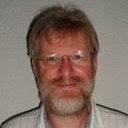 Peter Mohr合作论文数1Andrew Mccann合作论文数1
 Henric Krawczynski合作论文数Center for Quantum Leaps, Department of Physics, College of Arts & Sciences, Washington University in St. Louis;McDonnell Center for the Space Sciences, Department of Physics, College of Arts & Sciences, Washington University in St. Louis1
 Raghuveer Chimata合作论文数Department of Physics and Astronomy, Uppsala University1
 Somnath Jana合作论文数1
 Artemis Spyrou合作论文数National Superconducting Cyclotron Laboratory, Michigan State University1
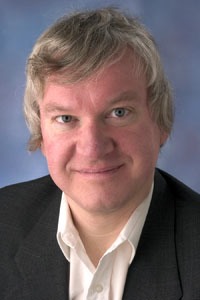 Philip Kaaret合作论文数National Aeronautics and Space Administrationa1
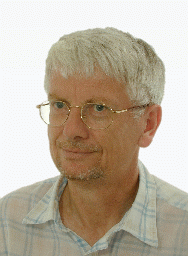 Stanislaw Jadach合作论文数Department of Particle Theory Institute of Nuclear Physics1
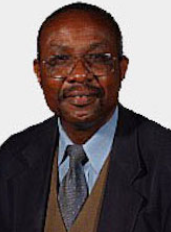 Bennie Franklin Leon Ward合作论文数Department of Physics, Baylor University1
 Dongsu Ryu合作论文数Astrophysics Lab, Department of Physics, College of Natural Science, Ulsan National Institute of Science and Technology1
 Jorge Pereira合作论文数1Y. Minorikawa合作论文数1
 A. Nepomuk Otte合作论文数School of Physics, College of Sciences, Georgia Institute of Technology1




