The use of Vis-NIR spectroscopy in digital soil mapping is emerging as a fast, viable option to provide spatial and temporal information on specific soil parameters that serve as good indicators for soil health. While MIR spectroscopy tends to be a much more reliable (high-precision) tool for different soil properties estimations, currently only NIR can be adapted for rapid in-situ soil surveys.The Subterra Green device, developed by “S4 Mobile Laboratories”, equipped with a Visible and an FTIR spectrometer can optimally capture spectra until 90 cm underground down to a 1 cm resolution. With a carefully selected sampling pattern, a survey of several hectares can be conducted in a matter of few days as a single insertion takes about 2-6 minutes.One scope of the PHENET project is to carry out soil surveys in different locations with varying soil types, from the humid continental zones of Austria to the temperate oceanic climate of Portugal. This will be done by creating models which are verified with laboratory biochemical analysis of soil samples. Previous scientific resource concluded that some soil properties like the soil water content or texture can have a major effect on the recorded spectra, so when building up a database for machine learning models from different site surveys (with unique spatial and temporal conditions) a lot of external factors should be taken into consideration and pre-processing techniques selected, like external parameter orthogonalization or calibration spiking for creating an accurately predicting model for soil parameters prediction. The aim is to provide estimations of soil organic carbon and nitrogen stocks as well as interpolated maps in different soil depths. Being able to do fast and highresolution soil maps using in-situ Vis-NIR soil spectroscopy makes it possible to improve precision agriculture and monitor soil properties over space and time.
Conjugated polymers are promising candidates in the design of polymer solar cell materials with suitable electronic properties. Recent studies show that the use of different functional groups as side chain in thiophene-based polymers changes the electronic and conformation structures. Here we design new thiophene-based molecules by replacing the hydrogen attached to the backbone of P3MT with electron-donating and electron-withdrawing groups. We then calculate the HOMO, LUMO, and HOMO-LUMO energy gap to quantify the theoretical merit of the new polymers as solar absorbers and their inter-ring torsional potential to understand their suitability to link together in high conductivity, extended conjugated systems. Calculations are done with first-principles density functional theory (DFT), implemented using B3LYP with dispersion function and 6-31G(d,p) as basis set. Our results show that the HOMO-LUMO gap is sensibly lowered by donating groups and we found that the substitution of the hydrogen with -NH2, and -F gives an energy gap lower than the energy gap of P3MT. The lowest energy gap was found when substituting with -NH2. Electron-withdrawing groups lower the HOMO, with the overall lowest found when -NO2 is used. -COCl, -CONH2, and -Cl give a steric hindrance greater than that of PTB7, which is set as reference. Our calculations show a possible approach to the rational design of donor materials when substituents are inserted systematically in a generic oligomer.
The infrared Fourier transform spectrum of the S–H stretching fundamental band of 12CH3 32SH has been recorded using synchrotron radiation at the far-infrared beamline of the Canadian Light Source in Saskatoon. The S–H stretch is a hybrid band predominantly of perpendicular b-type with a small parallel a-component. With both ΔK = +1 and ΔK = −1 sub-bands present, the assignments are well determined from ground-state combination difference relations. The identified sub-bands access S–H stretching ground torsional substates from K′ = 0–14 for A and E torsional species. The substate origins have been obtained by expanding the term values in J(J + 1) power series, and have been fitted to a simple 6-parameter Fourier Hamiltonian to deduce the torsional energies. The oscillation amplitude of the S–H stretching torsional curves is 0.547 cm− 1 compared to 0.653 cm− 1 for the ground state, implying an increase on the order of 6.9% in the torsional barrier height. The vibrational wavenumber for the S–H stretch mode is found to be 2603.5 cm− 1.
High-resolution Fourier transform spectra of the asymmetric methyl-bending and methyl-stretching bands of CH3SH have been recorded employing synchrotron radiation at the FIR beamline of the Canadian Light Source. Analysis of the torsion-rotation structure and relative intensities has revealed the novel feature that for both bend and stretch the in-plane and out-of-plane modes behave much like a Coriolis-coupled l-doublet pair originating from degenerate E modes of a symmetric top. As the axial angular momentum K increases, the energies of the coupled “l = ±1” modes diverge linearly, with effective Coriolis ζ constants typical for symmetric tops. For the methyl-stretching states, separated at K = 0 by only about 1 cm−1, the assigned sub-bands follow a symmetric top Δ(K − l) = 0 selection rule, with only ΔK = −1 transitions observed to the upper l = −1 in-plane A′ component and only ΔK = +1 transitions to the lower l = +1 out-of-plane A″ component. The K = 0 separation of the CH3-bending states is larger at 9.1 cm−1 with the l-ordering reversed. Here, both ΔK = +1 and ΔK = −1 transitions are seen for each l-component but with a large difference in relative intensity. Term values for the excited state levels have been fitted to J(J + 1) power-series expansions to obtain substate origins. These have then been fitted to a Fourier model to characterize the torsion-K-rotation energy patterns. For both pairs of vibrational states, the torsional energies display the customary oscillatory behaviour as a function of K and have inverted torsional splittings relative to the ground state. The spectra show numerous perturbations, indicating local resonances with the underlying bath of high torsional levels and vibrational combination and overtone states. The overall structure of the two pairs of bands represents a new regime in which the vibrational energy separations, torsional splittings and shifts due to molecular asymmetry are all of the same order, creating a challenging and complex vibration-torsion-rotation coupling environment.
A high-throughput CW slit-jet apparatus coupled to a high-resolution FTIR was used to record the asymmetric NO stretch band of nitromethane. The b-type band, including torsionally excited states with m≤3, has been assigned for Ka″≤10, J″≤20. The ground state combination differences derived from these assigned levels were fit with the RAM36 program to give an RMS deviation of 0.0006cm−1. The band origin is 1583.0 (±0.1) cm−1 and the torsional level spacing is nearly identical to that in the ground state. The upper state levels are split into multiplets by perturbations. A subset of the available upper state combination differences for m=0, Ka′≤7, J′≤10 were fit with the same program, but with rather poorer precision (0.01cm−1) than for the ground state.
In analyzing high-resolution spectra of the methyl-deformation bands of methyl mercaptan recorded at the Canadian Light Source synchrotron, we have encountered interesting interactions between certain levels of the v(4) in-plane asymmetric CH3-bending mode and its v(10) out-of-plane bending partner below. The origin of the K = OA v(4) substate is just 0.2 cm(-1) higher than that of the K = 2A v(10) substate, while the K= OE v(4) origin is only 0.035 cm(-1) below the K= 2E v(10) origin. These very close accidental near degeneracies lead to substantial perturbations in the spectrum. For the former, the A(+)/A(-) asymmetry K-doublet coupling rules are such that the A-component of the 2A v(10) doublet interacts and mixes strongly with the OA(+) v(4) levels whereas the 2A(+) component is unaffected. The 2A(-) levels are pushed rapidly downwards by the coupling creating an extremely large apparent K= 2A asymmetry splitting. We call this "giant K-doubling" by analogy with a comparable phenomenon seen for methanol. The OA(+) v(4) state, in turn, is perturbed upward and passes through the descending K = 1A(+) v(4) state between J= 22 and 23, leading to distinct local perturbations near the level-crossing. The OE v(4) and 2E v(10) coupling produces a correspondingly strong repulsion and mixing between those two substates, and gives rise to a forbidden K= 0 <- 3E intermode sub-band in the spectrum via intensity borrowing. (C) 2017 The Authors. Published by Elsevier Inc.
An extended E⊗e Jahn-Teller Hamiltonian is presented for the case where the (slow) nuclear motion extends far from the symmetry point and may be described approximately as motion on a sphere. Rather than the traditional power series expansion in the displacement from the C3v symmetry point, an expansion in the spherical harmonics is employed. Application is made to the vibrational Jahn-Teller effect in CH3XH, with X = S, O, where the equilibrium CXH angles are 83° and 72°, respectively. In addition to the symmetry-required conical intersection (CI) at the C3v symmetry point, ab initio calculations reveal sets of six symmetry-allowed vibrational CIs in each molecule. The CIs for each molecule are arranged differently in the large-amplitude space, and that difference is reflected in the infrared spectra. The CIs in CH3SH are found in both eclipsed and staggered geometries, whereas those for CH3OH are found only in the eclipsed geometry near the torsional saddle point. This difference between the two molecules is reflected in the respective high-resolution spectra in the CH stretch fundamental region.
Optimal control theory has been employed to populate a dark state of the acetylene polyad N s =1, N r = 5 at J=30 by indirect coupling via the ground state starting from a distribution of rotationalstates of the ground state. Relevant level energies and transition dipole moments are extracted from theexperimental literature. The optimal pulse is rather simple. The evolution of the populations isshown for the duration of the control process and also for the field free-evolution that follows thecontrol. The dark state appears to be a potential target for realistic experimental investigation becausethe average population of the Rabi oscillation remains high and decoherence is expected to be weak.
The infrared Fourier transform spectrum of the asymmetric C-H stretching bands of CH 3 SH has been recorded in the 2950-3100 cm -1 region at Doppler limited resolution using synchrotron radiation at the FIR beamline of the Canadian Light Source in Saskatoon.Assignment of numerous torsion-rotation sub-bands for the asymmetric stretches has revealed a surprising pseudo-symmetric behavior, in which each band is seen in only one of the two possible ∆K selection rules.The upper states of the two asymmetric stretching vibrational bands thus appear to behave more like l = ± 1 components of a degenerate E state of a symmetric top rather than distinct vibrational states.The two components are separated by about 1.5 cm -1 at K = 0, and then diverge linearly at higher K with torsional oscillation amplitude similar to that of the ground state of about 1.3 cm -1 .The divergence is consistent with an a-type Coriolis splitting picture with an effective Coriolis constant ζ ≈ 0.075.
The adiabatic separation in methyl mercaptan of the high-frequency asymmetric CH stretch vibrations from the lowfrequency torsional (γ) and CSH bend (ρ) coordinates yields a set of 7 vibrational conical intersections (CIs). The three CIs in the staggered conformation at ρ = 79◦ are close to the global minimum energy geometries (ρe = 83.3◦), accounting for the observed near-degeneracy of the two asymmetric CH stretch vibrations. The vibrational frequencies were computed at the CCSD(T)/aug-cc-pVTZ level. A new high-order Exe Jahn-Teller model, which involves a spherical harmonic expansion in ρ and γ, fits the calculated electronic and vibrational energies over the whole range of γ and for ρ between 0◦ and 100◦ to within a standard deviation of 0.2 cm−1. The pattern of the CIs contrasts with that in methanol where the CIs occur only in the eclipsed conformation near the top of the torsional barrier. An examination of three alternative diabatization schemes for the two molecules points to rather different nuclear dynamics. In CH3SH crossings between the upper and lower adiabatic surfaces are predicted to occur predominantly with motion along the CSH bending coordinate; whereas in CH3OH, such crossings are predicted to occur predominantly with torsional motion.
Chemical reactions involve large-amplitude nuclear motion along the reaction coordinate that serves to distinguish reactants from products. Some reactions, such as roaming reactions and reactions proceeding through a loose transition state, involve more than one large-amplitude degree of freedom. Because of the limitation of exact quantum nuclear dynamics to small systems, one must, in general, define the active degrees of freedom and separate them in some way from the other degrees of freedom. In this project, we use large-amplitude motion in bound model systems to investigate the coupling of large-amplitude degrees of freedom to other nuclear degrees of freedom. This approach allows us to use the precision and power of high-resolution molecular spectroscopy to probe the specific coupling mechanisms involved, and to apply the associated theoretical tools. In addition to slit-jet spectra at the University of Akron, the current project period has involved collaboration with Michel Herman and Nathalie Vaeck of the Université Libre de Bruxelles, and with Brant Billinghurst at the Canadian Light Source (CLS).
In the CH 4 -F -complex, an adiabatic separation of the CH stretch frequencies from the CH 4 orientational coordinates allows the calculation of the four adiabatic CH stretch surfaces.These ab initio calculations reveal (i) a large variation of CH stretch frequencies (>100 cm -1 ) in the orientational space and (ii) the existence of four symmetrically equivalent sets of vibrational conical intersections (CIs).Two sets of symmetry-allowed CIs are identified in addition to the symmetry-required CIs at the front-and back-side C 3v geometries.These results have implications for the evolution of excited CH vibrations in methane during its approach to a potentially reactive surface.
The high-resolution rotationally resolved Fourier-transform infrared spectrum of the NO2 in-plane rock band (440–510cm−1) of nitromethane (CH3NO2) has been recorded using the Far-Infrared Beamline at the Canadian Light Source, with a resolution of 0.00096cm−1. About 1773 transitions reaching the upper state levels m′=0;Ka′⩽7;J′⩽50 have been assigned using an automated ground-state combination difference program together with the traditional Loomis–Wood approach. These data from the lowest torsional state, m′=0, were fit using the six-fold torsion-rotation program developed by Ilyushin et al. (2010). The analysis reveals that the rotational energy level structure in the upper vibrational state is similar to that of the ground vibrational state, but the sign and magnitude of high-order constants are significantly changed suggesting the presence of multiple perturbations.
 Mahesh B Dawadi合作论文数Department of Chemistry, The University of Akron23
 Ram S. Bhatta合作论文数Department of Chemistry, The University of Akron23
 Greg Bethardy合作论文数23
 Thomas Rizzo合作论文数Institute of Chemical Sciences and Engineering, School of Basic Sciences, Ecole Polytechnique Federale de Lausanne;Isospec Analytics21
 Oleg Boyarkine合作论文数Institute of Chemical Sciences and Engineering, School of Basic Sciences, École Polytechnique Fédérale de Lausanne20
 Sylvestre Twagirayezu合作论文数Department of Chemistry, The University of Akron19
 Andrei Chirokolava合作论文数15
 Li-Hong Xu合作论文数Department of Physical Sciences, University of New Brunswick13
 Michel Herman合作论文数12
 Indranath Mukhopadhyay合作论文数12Tsige Mesfin合作论文数Dept Polymer Sci, Univ Akron11thomas j cronin合作论文数10
 Bishnu Prasad Thapaliya合作论文数Div Chem Sci, Oak Ridge Natl Lab10brooks h pate合作论文数10Badr Amyay合作论文数10Billinghurst Brant E合作论文数9Justin L. Neill合作论文数Department of Chemistry, University of Virginia9Matt T. Muckle合作论文数Department of Chemistry, University of Virginia9j go合作论文数8Yun-Bo Duan合作论文数7a m de souza合作论文数6Devinder Kaur合作论文数6
 David Rueda合作论文数Department of Infectious Disease, Faculty of Medicine, Imperial College London6jonathan martens合作论文数5xiaoliang wang合作论文数5
 Yimer Yeneneh Y合作论文数Department of Polymer Science, The University of Akron5
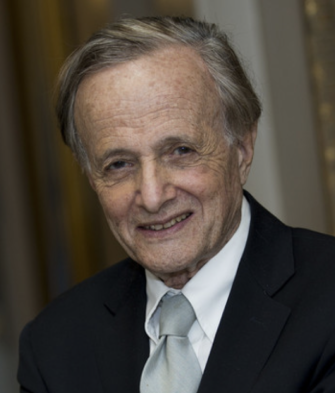 John Polanyi合作论文数Department of Chemistry, Faculty of Arts & Science, University of Toronto5Indranil Mukhopadhyay合作论文数5
 Gerald T. Fraser合作论文数National Institute of Standards and Technology5M. Abbouti Temsamani合作论文数5C. Michael Lindsay合作论文数U. S. Air Force Research Laboratory5lou degliumberto合作论文数4Harold B. Levene合作论文数4
 Trocia Clasp合作论文数4Linda R Barrett合作论文数4Santos Ludovic合作论文数4
 Eric Herbst合作论文数Department of Chemistry, The College and Graduate School of Arts & Sciences, University of Virginia4
 Nathalie Vaeck合作论文数Laboratory of Spectroscopy, Quantum Chemistry and Atmospheric Remote Sensing, Université Libre De Bruxelles4
 Richard Zare合作论文数The Zarelab, Department of Chemistry, School of Humanities and Sciences, Stanford University4André Fayt合作论文数4M. Desouter-Lecomte合作论文数4
 Timothy Matney合作论文数4A. Chirokolava合作论文数4
 Ronald M. Lees合作论文数4Anthony Miller合作论文数4Howard Mettee合作论文数4M. B. Dawadi合作论文数3Js Go合作论文数3




