Mono- and 1,1-disubstituted ethylenes are available by vicinal elimination of benzotriazolyl and trimethylsilyl groups from readily available intermediates of type BtCRR'. CH2SiMe3 (Bt = benzotriazol-1-yl). Low-valent Ti compounds cause vicinal elimination of benzotriazolyl and hydroxyl groups from both diastereoisomers of RCHBt . CHR . OH compounds to give styrenes and dienes with high trans-stereoselectivity: the starting materials are easily obtained from Bt-stabilized carbanions and aldehydes.
Several substituted 2- and 4-hydroxyacetophenones are linked to Wang resin via a modified Mitsunobu protocol. These resin-bound acetophenones are condensed with aromatic aldehydes, and the resulting chalcones 5 are used for the synthesis of 2-dialkylamino- (9a-d) and 2-alkylamino-4,6-diarylpyridines (11a-f), and 2-alkyl-4,6-diaryl- (14a) and 2,4,6-triarylpyrimidines (14b,c) in a manner suitable for combinatorial applications.
AbstractChemInform is a weekly Abstracting Service, delivering concise information at a glance that was extracted from about 100 leading journals. To access a ChemInform Abstract of an article which was published elsewhere, please select a “Full Text” option. The original article is trackable via the “References” option.
p-Nitroaryl alkyl ketones and p-nitroaryl aryl ketones are prepared regioselectively by reactions of non-functionalized nitroarenes and benzotriazole stabilized carbanions.
2-Alkyl-substituted butadienes are synthesized starting from a masked butadiene reagent, which allows the regiospecific synthesis of 2-alkylbutadienes by lithiation and subsequent reaction with alkyl halides or aliphatic aldehydes. The regioselectivity of the reaction with allylic halides and aliphatic and aromatic aldehydes is studied.
The title compounds la-e readily undergo deprotonation and subsequent reactions with the appropriate electrophiles to form intermediates of types 4 and 7 which, upon treatment with Lewis acids, cyclize to afford fused aromatics 5 and 8. Tetrahydronaphthalene 11a, 1,2,3,4-tetrahydrochromanes (11b-d, 13), indanes (16, 18), 9,10-dihydrophenanthrenes (21a-c, 25), and tetrahydro[1,2-alpha]indoles (28, 30) with phenyl, substituted phenyl, and thienyl substituents were prepared in this manner.
ADVERTISEMENT RETURN TO ISSUEPREVNoteNEXTNovel Syntheses of 1,2-Diarylprop-2-en-1-onesAlan R. Katritzky, Dorin Toader, and Christophe ChassaingView Author Information Center for Heterocyclic Compounds, Department of Chemistry, University of Florida, Gainesville, Florida 32611-7200 Cite this: J. Org. Chem. 1998, 63, 26, 9983–9986Publication Date (Web):November 25, 1998Publication History Received24 August 1998Published online25 November 1998Published inissue 1 December 1998https://pubs.acs.org/doi/10.1021/jo981725chttps://doi.org/10.1021/jo981725cbrief-reportACS PublicationsCopyright © 1998 American Chemical SocietyRequest reuse permissionsArticle Views206Altmetric-Citations7LEARN ABOUT THESE METRICSArticle Views are the COUNTER-compliant sum of full text article downloads since November 2008 (both PDF and HTML) across all institutions and individuals. These metrics are regularly updated to reflect usage leading up to the last few days.Citations are the number of other articles citing this article, calculated by Crossref and updated daily. Find more information about Crossref citation counts.The Altmetric Attention Score is a quantitative measure of the attention that a research article has received online. Clicking on the donut icon will load a page at altmetric.com with additional details about the score and the social media presence for the given article. Find more information on the Altmetric Attention Score and how the score is calculated. Share Add toView InAdd Full Text with ReferenceAdd Description ExportRISCitationCitation and abstractCitation and referencesMore Options Share onFacebookTwitterWechatLinked InRedditEmail Other access optionsGet e-AlertscloseSupporting Info (1)»Supporting Information Supporting Information SUBJECTS:Anions,Chemical reactions,Ketones,Mixtures,Reagents Get e-Alerts
ADVERTISEMENT RETURN TO ISSUEPREVNoteNEXTNovel and Efficient Entry to γ-Aryl-Substituted γ,δ-Unsaturated Ketones, Amides, Nitriles, and Sulfones by Conjugate Additions of 2-BenzotriazolylethylsilanesAlan R. Katritzky, Michael V. Voronkov, and Dorin ToaderView Author Information Department of Chemistry, Center for Heterocyclic Compounds, University of Florida, Gainesville, Florida 32611-7200 Cite this: J. Org. Chem. 1998, 63, 26, 9987–9988Publication Date (Web):November 24, 1998Publication History Received11 June 1998Published online24 November 1998Published inissue 1 December 1998https://pubs.acs.org/doi/10.1021/jo9811221https://doi.org/10.1021/jo9811221brief-reportACS PublicationsCopyright © 1998 American Chemical SocietyRequest reuse permissionsArticle Views151Altmetric-Citations14LEARN ABOUT THESE METRICSArticle Views are the COUNTER-compliant sum of full text article downloads since November 2008 (both PDF and HTML) across all institutions and individuals. These metrics are regularly updated to reflect usage leading up to the last few days.Citations are the number of other articles citing this article, calculated by Crossref and updated daily. Find more information about Crossref citation counts.The Altmetric Attention Score is a quantitative measure of the attention that a research article has received online. Clicking on the donut icon will load a page at altmetric.com with additional details about the score and the social media presence for the given article. Find more information on the Altmetric Attention Score and how the score is calculated. Share Add toView InAdd Full Text with ReferenceAdd Description ExportRISCitationCitation and abstractCitation and referencesMore Options Share onFacebookTwitterWechatLinked InRedditEmail Other access optionsGet e-Alertsclose SUBJECTS:Amides,Conjugate acid-base pairs,Ketones,Reagents,Sulfones Get e-Alerts
Reactions of alpha-aryl-, alpha-heteroaryl-, and alpha-heteroatom-substituted masked alkenyllithiums with aldehydes and ketones provide a general method for the synthesis of allylic alcohols substituted with an aryl or heteroaryl in the beta position and aryl, heteroaryl or alkyl substituents in the a position via a [1,4]-C-->O silicon rearrangement. In the case of reactions with enolizable aldehydes and ketones, anhydrous CeCl3 was used as an additive. High diastereoselectivities are observed for allyl alcohols produced from a-substituted aldehydes.
Vicinal elimination of trimethylsilyl and benzotriazolyl groups from 2-benzotriazolyl-2-aryl-3-ketopropylsilanes forms, along with the expected 1,1-disubstituted ethylenes, significant amounts of the corresponding chalcones. A study of this transformation by carbon labeling suggests the intermediate formation of cyclopropanes. Stabilizing/destabilizing (electron-donor/acceptor) para-substituents on the aryl group affect the product distribution of the elimination in a manner consistent with the proposed mechanism.
SASRIN™ resin is synthesized by a two step sequence involving linking 4-hydroxy-2-methoxybenzaldehyde to Merrifield resin, followed by reduction with sodium borohydride.
AbstractChemInform is a weekly Abstracting Service, delivering concise information at a glance that was extracted from about 100 leading journals. To access a ChemInform Abstract of an article which was published elsewhere, please select a “Full Text” option. The original article is trackable via the “References” option.
A general regiospecific method for the synthesis of (p-nitroaryl)diarylmethanes has been developed starting from diarylmethanols and 2- and/or 3-substituted nitrobenzenes. This utilizes the quantitative condensation between benzotriazole and diarylmethanols under acidic catalysis and in the presence of perfluorocarbon fluids, followed by vicarious nucleophilic substitution of the resulting diarylmethylbenzotriazoles upon nitrobenzenes in moderate to high yield. Oxidative nucleophilic substitution of hydrogen is observed as a side process. These vicarious nucleophilic substitutions complement Friedel-Crafts reactions for the synthesis of triarylmethanes.
Peterson olefination of aldehydes and ketones with trimethylsilyl(methoxy)(benzo triazol-1-yl)methyl anion 6 afforded 1 -(benzo-triazol-1-yl)-1-methoxyalk-1-enes 7 which were treated without isolation with zinc bromide and hydrochloric acid, to yield the corresponding one-carbon homologated carboxylic acids 4 in good overall yields.
Anions formed from the lithiation of a variety of 1-(arylmethyl)- and 1-(heteroarylmethyl)benzotriazoles 1 with n-BuLi underwent addition to aliphatic and aromatic aldehydes and cyclic and acyclic ketones. Subsequent in situ thermal rearrangements of the intermediates in the presence of zinc bromide provided one-carbon chain-extended or ring-expanded alpha-aryl- and alpha-heteroaryl-substituted ketones 2 in moderate to excellent yields in simple one-pot operations with excellent regioselectivity in most cases. Substituent effects on the relative migration rates were investigated in the insertion reactions of 1-(4-methoxybenzyl)benzotriazole (1e) with XC(6)H(4)COPh. The small and negative Hammett rho(+) value (-0.92) suggested that the rearrangements proceed via early, reagent-like, electron deficient transition states.
AbstractChemInform is a weekly Abstracting Service, delivering concise information at a glance that was extracted from about 100 leading journals. To access a ChemInform Abstract of an article which was published elsewhere, please select a “Full Text” option. The original article is trackable via the “References” option.
AbstractChemInform is a weekly Abstracting Service, delivering concise information at a glance that was extracted from about 100 leading journals. To access a ChemInform Abstract of an article which was published elsewhere, please select a “Full Text” option. The original article is trackable via the “References” option.
ADVERTISEMENT RETURN TO ISSUEPREVArticleNEXTGeneral and Efficient Carbon Insertion Route to One-Carbon-Homologated .alpha.-Aryl, .alpha.-Alkenyl, .alpha.-Alkoxy, and .alpha.-Phenylthio Alkyl KetonesAlan R. Katritzky, Linghong Xie, Dorin Toader, and Larisa SerdyukCite this: J. Am. Chem. Soc. 1995, 117, 48, 12015–12016Publication Date (Print):December 1, 1995Publication History Published online1 May 2002Published inissue 1 December 1995https://pubs.acs.org/doi/10.1021/ja00153a032https://doi.org/10.1021/ja00153a032research-articleACS PublicationsRequest reuse permissionsArticle Views293Altmetric-Citations36LEARN ABOUT THESE METRICSArticle Views are the COUNTER-compliant sum of full text article downloads since November 2008 (both PDF and HTML) across all institutions and individuals. These metrics are regularly updated to reflect usage leading up to the last few days.Citations are the number of other articles citing this article, calculated by Crossref and updated daily. Find more information about Crossref citation counts.The Altmetric Attention Score is a quantitative measure of the attention that a research article has received online. Clicking on the donut icon will load a page at altmetric.com with additional details about the score and the social media presence for the given article. Find more information on the Altmetric Attention Score and how the score is calculated. Share Add toView InAdd Full Text with ReferenceAdd Description ExportRISCitationCitation and abstractCitation and referencesMore Options Share onFacebookTwitterWechatLinked InRedditEmail Other access optionsGet e-AlertscloseSupporting Info (1)»Supporting Information Supporting Information Get e-Alerts
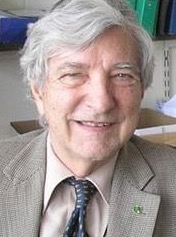 Alan R. Katritzky合作论文数Center for Heterocyclic Chemistry, University of Florida15
 Linghong Xie合作论文数4C Chassaing合作论文数3Xiaojing Wang合作论文数3L. Serdyuk合作论文数3John S. Kiely合作论文数1AR Katritzky合作论文数1Diana C. Aslan合作论文数1Katherine Gill合作论文数1Karen Watson合作论文数1Michael V. Voronkov合作论文数Center for Heterocyclic Compounds;Department of Chemistry;University of Florida1Jinlong Jiang合作论文数1




