At the end of their lifetime asymptotic giant branch (AGB) stars and red super giants expel large amounts of material into space. This material forms dust and small to intermediate sized molecules—especially molecules composed of refractory materials like metal atoms, carbon or silicon. To better understand the chemical composition of gas-phase species in the region around these stars, molecules can be observed at mid-infrared wavelengths, i.e., at the typical IR fingerprint region, at high-spectral resolution. In that way, possible pathways to dust formation can be found via the detection of molecular intermediates. As many IR spectra of these molecular intermediates are still not known, performing laboratory experiments is crucial for further progress. Our laboratory mid-IR high-resolution experimental setup is presented and examples of investigated molecules, like TiO and Al _2 O are given. We also describe observations of late-type stars using the TEXES spectrograph on the NASA Infrared Telescope Facility (IRTF).
Dialuminum monoxide, Al2O, has been investigated in the laboratory at mid-IR wavelengths around 10 μm at high spectral resolution. The molecule was produced by laser ablation of an aluminum target with the addition of gaseous nitrous oxide, N2O. Subsequent adiabatic cooling of the gas in a supersonic beam expansion led to rotationally cold spectra. In total, 848 ro-vibrational transitions have been assigned to the fundamental asymmetric stretching mode ν3 and to five of its hot bands, originating from excited levels of the ν1 symmetric stretching mode and the ν2 bending mode. The measurements encompass 11 vibrational energy states (v1 v2l v3). The ro-vibrational transitions show spin statistical line intensity alternation of 7:5, which is caused by two identical aluminum nuclei of spin I = 5/2 at both ends of the centrosymmetric molecule of structure Al-O-Al. The less effective cooling of vibrational states in the supersonic beam expansion allowed measurement of transitions in excited vibrational states at energies of 1000 cm-1 and higher, while rotational levels within vibrational modes exhibited thermal population, with rotational temperatures around Trot = 115 K. Molecular parameters for 11 vibrational states were derived, including rotation and centrifugal distortion constants and l-type doubling constants for the states (v1 v2l v3) = (0 11 0) and (0 11 1) and an l-type resonance between the states (0 20 0) - (0 22 0) and (0 20 1) - (0 22 1). From the experimental results, rotational correction terms and the equilibrium bond length re were derived. The measurements were supported and guided by high-level quantum-chemical calculations that agree well with the derived experimental results.
In the vicinity of evolved stars cosmic dust forms via nucleation processes.Many of the initial steps of nucleation are not well understood but the investigation of small di-and triatomic molecules at radio or infrared wavelengths in these stellar environments can help elucidating the dust formation process.Especially molecules made of refractory material that condense already at temperatures above thousand Kelvin, like aluminum, are thought to act as seed molecules for dust grains.In this work the gas phase spectrum of the symmetric linear dialuminum monoxide Al-O-Al is investigated in our laboratory.Because Al 2 O has no permanent electric dipole moment it can not be detected at radio wavelengths but it has a unique infrared ro-vibrational spectrum around 10 µm.We recorded the ro-vibrational absorption spectrum of Al 2 O by using a frequency modulated quantum cascade laser in combination with Herriott-type multipass optics.The molecules were produced and rotationally cooled down to around 120 K by laser ablating an aluminum rod and purging the resulting ablation plume with a N 2 O/He buffer gas mixture that subsequently underwent an adiabatic expansion into a vacuum chamber.The spectra reveal a line intensity alteration due to the spin-statistical weight induced by two identical spin 5/2 27 Al atoms.The fundamental ν 3 = 1-0 as well as five hot band transitions could be observed.Highly precise molecular constants could be determined and a l-type resonance was analyzed.The here presented transition frequencies will allow for astrophysical searches of this molecule in space.
In this study, we present the ro-vibrationally resolved gas-phase spectrum of the diatomic molecule TiO around 1000 cm(-1). Molecules were produced in a laser ablation source by vaporizing a pure titanium sample in the atmosphere of gaseous nitrous oxide. Adiabatically expanded gas, containing TiO, formed a supersonic jet and was probed perpendicularly to its propagation by infrared radiation from quantum cascade lasers. Fundamental bands of 46-50TiO and vibrational hotbands of (TiO)-Ti-48 are identified and analyzed. In a mass-independent fitting procedure combining the new infrared data with pure rotational and electronic transitions from the literature, a Dunham-like parameterization is obtained. From the present data set, the multi-isotopic analysis allows to determine the spin-rotation coupling constant c and the BornOppenheimer correction coefficient DTiU10 for the first time. The parameter set enables to calculate the BornOppenheimer correction coefficients Delta(Ti)(U02) and Delta(O)(U02). In addition, the vibrational transition moments for the observed vibrational transitions are reported. (C) 2021 Elsevier Inc. All rights reserved.
Context. Young stellar objects (YSOs) and their environments are generally geometrically and dynamically challenging to model, and the corresponding chemistry is often dominated by regions in non-thermal equilibrium. In addition, modern astrochemical models have to consider not only gas-phase reactions, but also solid-state reactions on icy dust grains. Solving the geometrical, physical, and chemical boundary conditions simultaneously requires a high computational effort and still runs the risk of false predictions due to the intrinsically non-linear effects that can occur. As a first step, solving problems of reduced complexity is helpful to guide more sophisticated approaches. Aims. The objective of this work is to test a model that uses shell-like structures (i.e., assuming a power-law number density and temperature gradient of the environment surrounding the YSO) to approximate the geometry and physical structure of YSOs, that in turn utilizes an advanced chemical model that includes gas-phase and solid-state reactions to model the chemical abundances of key species. A special focus is set on formaldehyde (H2CO) and methanol (CH3OH) as these molecules can be traced in the gas phase but are produced on icy dust grains. Furthermore, this kind of molecule is believed to be key to understanding the abundance of more complex species. We compare the influence of the geometry of the object on the molecular abundances with the effect induced by its chemistry. Methods. We set up a model that combines a grain-gas phase chemical model with a physical model of YSOs. The model ignores jets, shocks, and external radiation fields and concentrates on the physical conditions of spherically symmetric YSOs with a density and temperature gradient derived from available spectral energy distribution observations in the infrared. In addition, new observational data are presented using the APEX 12 m and the IRAM 30 m telescopes. Formaldehyde and methanol transitions have been searched for in three YSOs (R CrA-IRS 5A, C1333-IRAS 2A, and L1551-IRS 5) that can be categorized as Class 0 and Class 1 objects, and in the pre-stellar core L1544. The observed abundances of H2CO and CH3OH are compared with those calculated by the spherical physical-chemical model. Results. Compared to a standard “ρ and T constant” model, i.e., a homogeneous (flat) density and temperature distribution, using number density and temperature gradients results in reduced abundances for the CO hydrogenation products formaldehyde and methanol. However, this geometric effect is generally not large, and depends on the source and on the molecular species under investigation. Although the current model uses simplified geometric assumptions the observed abundances of H2CO and CH3OH are well reproduced for the quiescent Class 1 object R CrA-IRS 5A. Our model tends to overestimate formaldehyde and methanol abundances for sources in early evolutionary stages, like the pre-stellar core L1544 or NGC 1333-IRS 2A (Class 0). Observational results on hydrogen peroxide and water that have also been predicted by our model are discussed elsewhere.
Context. In the laboratory, hydrogen peroxide (HOOH) was proven to be an intermediate product in the solid-state reaction scheme that leads to the formation of water on icy dust grains. When HOOH desorbs from the icy grains, it can be detected in the gas phase. In combination with water detections, it may provide additional information on the water reaction network. Hydrogen peroxide has previously been found toward rho Oph A. However, further searches for this molecule in other sources failed. Hydrogen peroxide plays a fundamental role in the understanding of solid-state water formation and the overall water reservoir in young stellar objects (YSOs). Without further HOOH detections, it is difficult to assess and develop suitable chemical models that properly take into account the formation of water on icy surfaces.Aims. The objective of this work is to identify HOOH in YSOs and thereby constrain the grain surface water formation hypothesis.Methods. Using an astrochemical model based on previous work in combination with a physical model of YSOs, the sources R CrA-IRS 5A, NGC C1333-IRAS 2A, L1551-IRS 5, and L1544 were identified as suitable candidates for an HOOH detection. Long integration times on the APEX 12 m and IRAM 30 m telescopes were applied to search for HOOH signatures in these sources.Results. None of the four sources under investigation showed convincing spectral signatures of HOOH. The upper limit for HOOH abundance based on the noise level at the frequency positions of this molecule for the source R CrA-IRS 5A was close to the predicted value. For NGC 1333-IRAS 2A, L1544, and L1551-IRS 5, the model overestimated the hydrogen peroxide abundances.Conclusions. HOOH remains an elusive molecule. With only one secure cosmic HOOH source detected so far, namely rho Oph A, the chemical model parameters for this molecule cannot be sufficiently well determined or confirmed in existing models. Possible reasons for the nondetections of HOOH are discussed.
We report the first detection of the isotopologues 13CCC and C13CC. We used the heterodyne receivers GREAT and upGREAT on board SOFIA to search for the ro-vibrational transitions Q(2) and Q(4) of 13CCC and C13CC at 1.9 THz along the line of sight towards SgrB2(M). For both species the ro-vibrational absorption lines Q(2) and Q(4) have been identified, primarily arising from the warm gas physically associated with the strong continuum source SgrB2(M). In addition, to determine the local excitation temperature we analyzed data from nine ro-vibrational transitions of the main isotopologue CCC in the frequency range between 1.6-1.9 THz which were taken from the Herschel Science Data Archive, and derived a gas excitation temperature of Tex = 44.4(+4.7/-3.9) K and a total column density of N(CCC)=3.88(+0.39/-0.35)x10^15 cm^-2. Assuming the excitation temperatures of C13CC and 13CCC to be the same as for CCC, we obtained column densities of the 13C-isotopologues of N(C13CC) = 2.1(+0.9/-0.6)X10^14 cm^-2 and N(13CCC)=2.4(+1.2/-0.8)x10^14 cm^-2. The derived 12C/13C abundance ratio in the C3 molecules is 20.5(4.2), which is in agreement with the elemental ratio of 20, typically observed in SgrB2(M). However, we find the N(13CCC) / N(C13CC) ratio to be 1.2(0.1), which is shifted from the statistically expected value of 2. We propose that the discrepant abundance ratio arises due to the lower zero-point energy of C13CC which makes position exchange reaction converting 13CCC to C13CC energetically favorable.
Context. In the laboratory, hydrogen peroxide (HOOH) was proven to be an intermediate product in the solid-state reaction scheme that leads to the formation of water on icy dust grains. When HOOH desorbs from the icy grains, it can be detected in the gas phase. In combination with water detections, it may provide additional information on the water reaction network. Hydrogen peroxide has previously been found toward ρ Oph A. However, further searches for this molecule in other sources failed. Hydrogen peroxide plays a fundamental role in the understanding of solid-state water formation and the overall water reservoir in young stellar objects (YSOs). Without further HOOH detections, it is difficult to assess and develop suitable chemical models that properly take into account the formation of water on icy surfaces. Aims. The objective of this work is to identify HOOH in YSOs and thereby constrain the grain surface water formation hypothesis. Methods. Using an astrochemical model based on previous work in combination with a physical model of YSOs, the sources R CrA-IRS 5A, NGC C1333-IRAS 2A, L1551-IRS 5, and L1544 were identified as suitable candidates for an HOOH detection. Long integration times on the APEX 12 m and IRAM 30 m telescopes were applied to search for HOOH signatures in these sources. Results. None of the four sources under investigation showed convincing spectral signatures of HOOH. The upper limit for HOOH abundance based on the noise level at the frequency positions of this molecule for the source R CrA-IRS 5A was close to the predicted value. For NGC 1333-IRAS 2A, L1544, and L1551-IRS 5, the model overestimated the hydrogen peroxide abundances. Conclusions. HOOH remains an elusive molecule. With only one secure cosmic HOOH source detected so far, namely ρ Oph A, the chemical model parameters for this molecule cannot be sufficiently well determined or confirmed in existing models. Possible reasons for the nondetections of HOOH are discussed.
The ν3 antisymmetric stretching mode of disilicon-carbide, Si2C, was studied using a narrow line width infrared quantum cascade laser spectrometer operating at 8.3 μm. The Si2C molecules were produced in an Nd:YAG laser ablation source from a pure silicon sample with the addition of a few percent methane diluted in a helium buffer gas. Subsequent adiabatic expansion was used to cool the gas down to rotational temperatures of a few tens of kelvin. A total of 183 infrared transitions recorded in the spectral range between 1200 and 1220 cm-1 were assigned to the fundamental ν3 mode of Si2C. In addition, pure rotational transitions of Ka = 1 and 2 between 278 and 375 GHz were recorded using a supersonic jet spectrometer for submillimeter wavelengths. Molecular parameters for the ( v1 v2 v3) = (001) vibrationally excited state were derived and improved molecular parameters for the vibrational ground-state (000) were obtained from a global fit data analysis, which includes our new laboratory data and millimeter wavelength data from the literature. We found the rotational levels Ka = 0 and Ka = 2 in the vibrationally excited (001) state being perturbed by a Coriolis-type interaction with energetically close lying levels of the symmetric stretching and triple-excited bending mode (130). The data analysis was supported by quantum chemical calculations performed at the coupled-cluster level of theory. All experimental results were found to be in excellent agreement with the theory.
Small silicon and carbon containing molecules are thought to be important building blocks of interstellar grains.Some of them have been detected in circumstellar environments of late-type stars by means of rotational spectroscopy e.g., SiC, SiC 2 , Si 2 C, c-SiC 3 , SiC 4 , while centro-symmetric species, e.g., C 3 , C 4 , C 5 , Si 2 C 2 , Si 2 C 3 , can only be detected by vibrational transitions, mainly in the infrared.In view of a new generation of high resolution infrared telescope instruments, e.g., EXES (Echelon-Cross-Echelle Spectrograph) onboard SOFIA (Observatory for Infrared Astronomy) and TEXES (Texas Echelon Cross Echelle Spectrograph) at the Gemini-North observatory, accurate laboratory data of small siliconcarbides in the infrared region are of high demand.In this talk we present first laboratory data of the Si 2 C asymmetric stretching mode at 1200 cm -1 .A pulsed Nd:YAG-laser is used to vaporize a solid target of silicon exposed to a dilute sample of methane in helium buffer gas.Si 2 C is formed in an adiabatic expansion of a supersonic jet and radiation of a quantum cascade laser is used to record rotationally resolved spectra.To date, 160 ro-vibrational lines and have been assigned to the asymmetric stretching vibration of Si 2 C, and derived molecular parameters are in excellent agreement with ab initio calculations.In our global fit analysis recently published microwave laboratory data (McCarthy et al. 2015) a and astronomical data (Cernicharo et al. 2015) b were taken into account.Our new results allow for the identification of Si 2 C by means of high resolution infrared astronomy towards the warm background of carbon-rich stars.
 Guido W. Fuchs合作论文数Institute of Physics, University of Kassel14
 Thomas Giesen合作论文数Institute of Physics, The Faculty of Mathematics and Natural Sciences, Universität Kassel13
 Alexander A. Breier合作论文数Lab Astrophys, Univ Kassel6Eileen Döring合作论文数5
 Jürgen Gauss合作论文数Department of Chemistry, Johannes Gutenberg-Universität Mainz4
 Doris Herberth合作论文数3Johanna Chantzos合作论文数3
 Karl Menten合作论文数Millimeter and Submillimeter Astronomy Department, Max-Planck-Institut für Radioastronomie3
 Harold V.J. Linnartz合作论文数Laboratory for Astrophysics, Leiden Observatory, Leiden University3
 Rohini S. Giles合作论文数Space Sci & Engn Div, Southwest Res Inst2Lutter Volker合作论文数2Bhaswati Mookerjea合作论文数Tata Institute of Fundamental Research2
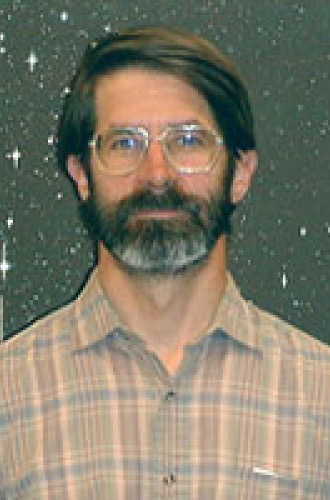 John H Lacy合作论文数Department of Astronomy, College of Natural Sciences, The University of Texas at Austin2
 Thomas Greathouse合作论文数Space Science Department, Southwest Research Institute2Koichi M.T. Yamada合作论文数2R. Simon合作论文数1
 Jurgen Stutzki合作论文数Mathematisch-Naturwissenschaftliche Fakultät, Universitat Zu Koln1




