Malware continues to increase in prevalence and sophistication, posing significant challenges to cybersecurity. Leading cyber threat intelligence sources such as AV-TEST and VirusTotal report the discovery of over one million unique malicious files daily. Despite this staggering volume, research shows that the majority of these samples are not fundamentally novel; rather, they are variants of previously observed malware families, often exhibiting shared codebases, behavioral patterns, or structural features. In response, Artificial Intelligence (AI) models are increasingly leveraged to enhance malware classification and remediation efforts. However, while such models trained to classify malware datasets often perform well in controlled environments, research increasingly shows that conventional AI-based malware classifiers struggle to generalize to real-world, highly diverse malware datasets. We address these limitations by providing three unique contributions to the field of malware family classification. (1) We release a new benchmark dataset called MABEL: M alware A nalysis BE nchmark for AI and Machine L earning. MABEL is a curated dataset containing over 82,000 labeled malware samples spanning 468 families, each described by 600+ structural, behavioral, and metadata features. (2) We introduce a novel heterogeneous ensemble with a dynamic Classification Arbiter agent that leverages the strengths of 61 diverse classifiers to improve accuracy, precision, and generalization. (3) Feedback and granular evaluation of model performance is crucial for explainability and classification optimization. This research provides enhanced classification reporting that identifies which models and features are most effective in classifying specific malware families and highlights areas for targeted model optimization. To our knowledge, this research represents one of the first to amass such a large, feature-rich dataset with malware attributed to known families and a dynamic heterogeneous ensemble that outperforms existing state-of-the-art models tested on the MABEL dataset. Furthermore, this research introduces an enhanced ensemble paradigm that can be applied to various classification domains.
Generative Flow Networks (GFlowNets) learn to sample states proportional to an unnormalized reward. Despite their theoretical promise, practical training is often unstable, exhibiting severe loss spikes and mode collapse. To tackle this, we first assess the sensitivity of GFlowNet objectives, demonstrating that a small Total Variation (TV) distance between the learned and target distributions does not preclude unbounded training loss. Motivated by this mismatch, we establish converse guarantees by deriving loss-to-TV bounds that certify global fidelity from bounded trajectory balance losses. Lastly, we propose Stable GFlowNets, an algorithm that leverages our theoretical results to stabilize training, and empirically demonstrate improved training behavior and superior distributional fidelity.
Vision-language models (VLMs) are used as high-level planners for embodied agents, translating natural language instructions and visual observations into action plans. While prior work has studied abstention in LLMs, existing benchmarks are largely text-only and do not capture the perceptual grounding and physical constraints inherent to embodied robotics environments. In such settings, abstention requires recognizing when instructions are ambiguous, physically infeasible, based on false premises, or otherwise unresolvable given the available sensory modalities and context. To address this gap, we introduce a taxonomy to categorize abstention in the context of embodied robotics and present RoboAbstention, a scalable and auditable framework for generating abstention instructions grounded in images gathered from five robotics datasets. RoboAbstention instantiates the taxonomy through a three-phase pipeline: (1) structured visual grounding, (2) deterministic constraint derivation, and (3) controlled instruction generation via category-specific templates. This enables the construction of a diverse dataset with verifiable abstention conditions. We evaluate several frontier VLMs and find that all models exhibit significant weaknesses in abstention, including those with advanced reasoning capabilities. The best-performing model, Gemini 2.5 Flash, abstains on only 39.0
Programmable Logic Controllers (PLCs) increasingly run multiple applications alongside the main control program, with shared access to PLC variables. Yet, Industrial Control System (ICS) defenses primarily detect malicious updates by checking whether variable values violate expected bounds, without considering which application performed the update. A malicious application can exploit this gap by modifying variables within normal bounds while still driving the physical process toward an unsafe state. Even when such manipulation is detected, operators cannot identify the responsible application because PLCs do not associate variable updates with application identity. We present MARS, an automated framework for application-level authorization and attribution of PLC variable manipulations. MARS profiles applications on an isolated virtual PLC (vPLC) to derive application-specific variable-access policies and uses a shadow vPLC during operation to attribute production-PLC updates to individual applications without instrumenting the production controller. MARS also detects manipulations that occur only on the production PLC and therefore have no corresponding update on the shadow vPLC. We evaluate MARS on manufacturing, chemical, and water-treatment systems against attacks in which unauthorized applications manipulate PLC variables while remaining within normal bounds. Our results show that MARS detects these manipulations and identifies the responsible application.
Deep learning models have become integral to security applications due to their ability to model complex relationships in data and detect sophisticated threats. However, their complexity makes it difficult to understand how predictions are generated, posing significant challenges for interpretability, particularly in security applications where transparency is critical. Existing explanation methods, such as visual explanation techniques and post-hoc approaches, suffer from several limitations: reduced faithfulness due to local approximation errors, instability caused by reliance on randomness, and computational inefficiency that hinders real-time usage. To address these issues, we introduce XSec, a self-explainable deep architecture developed for security applications. During training, XSec uses a novel mask-based approach to extract informative sub-features from the data and learns prototypes, representative patterns that characterize each class. XSec then leverages the prototypes in a dedicated similarity layer at test time to compute similarity scores and generates interpretable explanations without the need for post-hoc analysis. We evaluate XSec across five diverse security scenarios, demonstrating its ability to achieve an average classification accuracy of 97.33
A trend in industrial control systems is that programmable logic controllers (PLCs) are increasingly becoming multi-app platforms, with industrial server programs running alongside the main PLC program. In this paper, we reveal that these programs access the same set of PLC variables without concurrency control. Consequently, we identify a class of PLC attacks where a remote attacker manipulates the sensing or actuation variables within a PLC cycle, via legitimate client-side APIs provided by the server applications without compromising any program in the $P L C$. Moreover, we observe that such attacks require timing-awareness for the variable manipulation – relative to the periodic execution of the main PLC program, which may invalidate the manipulation effect if the timing of the manipulation is not right. As the first effort to address the timingawareness problem, we introduce ReVISE, an automated attack technique and a penetration-testing tool, which infers appropriate timing to manipulate target PLC variables with a significantly improved attack success rate. The input of ReVISE is a variable manipulation goal; and ReVISE will automatically achieve the goal via a three-step operation, including (1) PLC variable value monitoring; (2) timing-aware target variable manipulation; and (3) target variable value restoration. We evaluate ReVISE on three ICS experimental platforms controlled by real-world PLCs. ReVISE achieves an average of $86 \%$ success rate in 15 remote PLC variable manipulation attacks, compared to an average of $6 \%$ attack success rate without ReVISE.
As one of the key tools in many security tasks, decompilers reconstruct human-readable source code from binaries. Yet, despite recent advances, their outputs often suffer from syntactic and semantic errors and remain difficult to read. Recently, with the advent of large language models (LLMs), researchers began to explore the potential of LLMs to refine decompiler output. Nevertheless, our study of these approaches reveals their problems, such as introducing new errors and relying on unreliable accuracy validation. In this paper, we present D-LIFT, an enhanced decompiler-LLM pipeline with a fine-tuned LLM using code quality-aware reinforcement learning. Unlike prior work that overlooks preserving accuracy, D-LIFT adheres to a key principle for enhancing the quality of decompiled code: preserving accuracy while improving readability. Central to D-LIFT, we propose D-Score, an integrated code quality assessment system to score the decompiled source code from multiple aspects, and use it to guide reinforcement learning fine-tuning and to select the best output during inference. In line with our principle, D-Score assigns low scores to any inaccurate output and only awards higher scores for readability to code that passes the accuracy check. Our implementation, based on Ghidra and a range of LLMs, demonstrates significant improvements for the accurate decompiled code from the coreutils and util-linux projects. Compared to baseline LLMs without D-Score-driven fine-tuning, our trained LLMs produce 55.3
Named after the Viking King Harald Bluetooth, Bluetooth is the de facto standard for short-range wireless communications. The introduction of Bluetooth Low Energy (BLE) and Mesh protocols has further paved the way for its domination in the era of IoT. Meanwhile, attacks against Bluetooth, such as BlueBorne [1] and BLESA [2], have been booming in the past few years, impacting billions of devices. Thus, in this paper, we summarize a systematization-of-knowledge paper [3] focusing on the diverse experimental methods in Bluetooth vulnerability identification and prevention to shed some light on the landscape of this research domain.
For decades, the Controller Area Network (CAN) has served as the primary in-vehicle bus (IVB) and extended its use to many non-vehicular systems. Over the past years, CAN security has been intensively scrutinized, yielding extensive research literature. Despite its wealth, the literature lacks structured systematization, complicating efforts to assess attack severity, defense efficacy, identify security gaps, or root causes. This leaves non experts uncertain about the relevancy of specific attacks or defenses to their systems, inadvertently portraying CAN as irredeemably insecure. Further, the introduction of new IVB technologies--CAN evolutions, add-ons, and alternative buses--with heightened security claims risks fostering the misconception that merely adopting these technologies resolves CAN's security challenges. This paper systematizes existing CAN security knowledge, presenting a comprehensive taxonomy and assessment models of attackers, attacks, and defenses. It identifies replicable attacks and defense gaps, investigating their root causes as inherent, accidental, unique, or universal. It then extrapolates these insights to emerging IVB technologies by formally analyzing three emerging IVBs to identify shared root causes with CAN and assess their ability to close security gaps. The findings challenge common perceptions, demonstrating that CAN is more securable than perceived, that most insecurity root causes are shared across IVBs, and that merely adopting newer IVB technology does not solve persistent security issues. The paper concludes by highlighting future research directions to secure IVB communication down the road.
The Controller Area Network (CAN bus) is a critical communication protocol used in vehicles. Its lack of built-in security allows an attacker with bus access to launch various impersonation attacks, such as spoofing and replay. Researchers proposed defense approaches to counter these attacks using various features, such as message frequencies, voltages, signal asymmetries, and more recently, timing. In this paper, we propose a new timing feature which we call "transmit signatures" (TS). TS strongly depends on the physical distances and propagation delays between ECUs, allowing us to detect and localize impersonation attacks. Unlike prior approaches, we extract TS from the natural time intervals between messages, without installing additional wiring or modifying ECUs' software and traffic. We formulate a hypothesis about TS' distance dependency. We then conduct experiments to validate and refine our hypothesis. Using the refined theory, we introduce and evaluate a TS modeling approach and propose attack detection and localization methods.
The usage of Deep Neural Network (DNN) models in edge devices (e.g., IoT devices) has surged. In this usage scenario, the inference phase of the DNN model is executed by a dedicated, compiled piece of code (i.e., a DNN binary). From the security standpoint, the ability to reverse engineer such binaries (i.e., recovering the original, high-level representation of the implemented DNN) enables several applications, such as stealing DNN models, gray/white-box adversarial machine learning attacks and defenses, and backdoor detection. While a few recent works proposed dedicated approaches to reverse engineer DNN binaries, these approaches are fundamentally limited in the type of DNN binaries they support. To address these limitations, in this paper, we propose NEUROSCOPE, a novel data-driven approach based on dynamic analysis and machine learning to reverse engineer DNN binaries. This compiler-independent and code-featurefree approach enables NEUROSCOPE to support a larger variety of DNN binaries across different DNN compilers and hardware platforms, including binaries implementing DNN models using an interpreter-based approach. We demonstrate NEUROSCOPE'S capability by using it to reverse engineer DNN binaries unsupported by previous approaches with high accuracy. Moreover, we showcase how NEUROSCOPE can reverse engineer a proprietary DNN binary compiled with a closed-source compiler and enable gray-box adversarial machine learning attacks.
Physical sensor attacks against robotic vehicles (RV) have become a serious concern due to their prevalence and potential physical threat. However, RV software developers often do not deploy appropriate countermeasures. This hesitance stems from their belief that attackers face substantial challenges when conducting sensor attacks, e.g., nullifying sensor redundancy in hardware and circumventing sensor filters in software. Yet, we discover that attackers can overcome the challenges by fulfilling specific prerequisites and finely tuning attack parameters. The misconceptions that the developers have arisen from a lack of study regarding the level of difficulty attackers face in successfully achieving their attack goals, which we call "attack hardness". In this paper, we examine the hardness of 12 well-known sensor attacks. We first identify the prerequisites required to conduct the attacks successfully. We then quantify the hardness of each attack as how frequent the prerequisites enabling a specific attack are in the real world. To automate this analysis, we introduce RVPROBER, an attack prerequisite analysis framework. RVPROBER discovered that the 12 sensor attacks require, on average, 4.4 prerequisites, highlighting that previous literature has often missed important details required to perform these attacks. By satisfying the identified prerequisites and tuning attack parameters, we increased the number of successful attacks from 6 to 11. Moreover, our analysis showed that an average of 57.08% of actual RV users are vulnerable to sensor attacks. Finally, starting from the identified prerequisites, we analyzed the reasons behind the success of each attack and found previously-unknown root causes, such as design flaws in the RV software's fail-safe logic.
Bluetooth Low Energy (BLE) provides an efficient and convenient means for connecting a wide range of devices and peripherals. While its designers attempted to make tracking devices difficult through the use of MAC address randomization, a comprehensive analysis of the untraceability for the entire BLE protocol has not previously been conducted. In this paper, we create a formal model for BLE untraceability to reason about additional ways in which the specification allows for user tracking. Our model, implemented using ProVerif, transforms the untraceability problem into a reachability problem, and uncovers four previously unknown issues, namely IRK (Identity Resolving Key) reuse, BD_ADDR (MAC Address of Bluetooth Classic) reuse, CSRK (Connection Signature Resolving Key) reuse, and ID_ADDR (Identity Address) reuse, enabling eight passive or active tracking attacks against BLE. We then build another formal model using Diff-Equivalence (DE) as a comparison to our reachability model. Our evaluation of the two models demonstrates the soundness of our reachability model, whereas the DE model is neither sound nor complete. We further confirm these vulnerabilities in 13 different devices, ranging from embedded systems to laptop computers, with each device having at least 2 of the 4 issues. We finally provide mitigations for both developers and end users. In so doing, we demonstrate that BLE systems remain trackable under several common scenarios.
Industrial Control Systems (ICSs) rely on Programmable Logic Controllers (PLCs) to operate within a set of states. The states are composed of variables that determine how sensor data is interpreted, configuration parameters are applied, and actuator commands are issued. Recent works have shown that attackers can manipulate these variables to compromise ICS safety and security. To detect such attacks, previous approaches have leveraged invariants—a set of rules defining the correct behavior of an ICS. However, these invariants suffer from a critical limitation: they are state-agnostic. This means they define variable ranges across all possible ICS states, leading to loosely bounded detection thresholds. Unfortunately, attackers can exploit these loose bounds and launch stealthy attacks that evade detection without violating such invariants. In this paper, we introduce SAIN, an automated method to derive state-aware ICS invariants with tighter bounds and enforce them through a PLC-based monitor. SAIN first generates invariant templates by identifying the PLC program states, state transitions, and the inter-dependencies among sensing, actuation, and configuration variables within each state through program analysis. It then partitions the ICS data traces into state-specific sub-traces and quantifies the invariant templates with concrete, tighter bounds, as system-specific knowledge about the subject ICS. Lastly, it enforces the state-aware invariants through a run-time monitor. We evaluate SAIN on a Fischertechnik manufacturing plant and a chemical plant simulator against 17 attacks. SAIN protects the plants, on average, with a false positive rate of 2% and a run-time overhead of 3%.
The panel was held on 14 November 2023 at Purdue University as part of a Grand Challenges in Resilience Workshop sponsored by the U.S. National Science Foundation and organized by our center, the Center for Resilient Infrastructures, Systems, and Processes (CRISP).
The Controller Area Network (CAN) is a pivotal communication protocol extensively utilized in vehicles, aircraft, factories, and diverse cyber-physical systems (CPSs). The extensive CAN security literature resulting from decades of wide usage may create an impression of thorough scrutiny. However, a closer look reveals its reliance on a specific threat model with a limited range of abilities. Notably, recent works show that this model is outdated and that a more potent and versatile model could soon become the norm, prompting the need for a new defense paradigm. Unfortunately, the security impact of this emerging model on CAN systems has not received sufficient attention, and the defense systems addressing it are almost nonexistent. In this paper, we introduce ERACAN, the first comprehensive defense system against this new threat model. We first begin with a threat analysis to ensure that ERACAN comprehensively understands this model's capabilities, evasion tactics, and propensity to enable new attacks or enhance existing ones. ERACAN offers versatile protection against this spectrum of threats, providing attack detection, classification, and optional prevention abilities. We implement and evaluate ERACAN on a testbed and a real vehicle's CAN bus to demonstrate its low latency, real-time operation, and protective capabilities. ERACAN achieves detection rates of 100% and 99.7%+ for all attacks launched by the conventional and the enhanced threat models, respectively.
Aimed at reducing energy consumption and improving efficiency and sustainability, the state-of-the-art research on building energy prediction and optimization is increasingly driven by advanced ML/AI technologies using large volumes of Internet of Things (IoT) data continuously streamed from smart building facilities. Despite significant progress in recent years, researchers still encounter major challenges on data storage, access, processing, and integration due to large volumes, heterogeneous formats, continuous generation, and non-standardized metadata of IoT sensor data, as well as significant computational demands of ML/AI models. In this paper we describe the design and implementation of a scalable open-source AnalytiXIN (AXIN) data lake platform for streaming data management, modeling, and analysis. We will also describe how AXIN data lake has been used to enable data driven energy prediction and optimization research using ML/AI approach. Built on open-source software stacks including StreamCI[1], JupyterHub, and HUBzero, and integrated with both composable and GPU high performance computing (HPC) resources, the AXIN data lake infrastructure provides a flexible and scalable solution for streaming data driven research beyond the energy domain.
Named after the Viking King Harald Bluetooth, Bluetooth is the de facto standard for short-range wireless communications. The introduction of Bluetooth Low Energy (BLE) and Mesh protocols has further paved the way for its domination in the era of IoT and 5G. Meanwhile, attacks against Bluetooth, such as BlueBorne, BleedingBit, KNOB, BIAS, and BLESA, have been booming in the past fewyears, impacting billions of devices. While Bluetooth security has drawn significant attention from the security research community, a systematic understanding of this field is still missing, impeding the advancement of this field. In this paper, we first summarize the evolution of Bluetooth security in the specification in the past 24 years. Then, we provide a systematization of Bluetooth security by diving into 76 attacks and 33 defenses presented by previous research in this area. We first categorize attacks and defenses based on their affected layers and protocols in the Bluetooth stack as well as their threat models. Then, we cross-check the attacks and defenses to have a big picture of Bluetooth security. Based on the systematization, we find that the existing formal analyses of Bluetooth do not cover most of the security aspects of Bluetooth Mesh. Lastly, we take a step towards securing Bluetooth Mesh by designing and implementing a comprehensive formal model of Bluetooth Mesh covering all its security-related protocols. Our systematization reveals, for instance, that the security of Bluetooth pairing faces challenges caused by users' mistakes, and that Bluetooth fuzzing is effective yet not comprehensive. Based on the systematization, we provide promising future directions to shed some light on future Bluetooth security research.
During this research project, response surface methodology (RSM) was used to optimise the adsorption of quinoline on modified orange peel biochar (MOPBC). The RSM was laid out using a design of experiments CCD (central composite design) with three experimental factors: initial concentration, temp
Embedded systems comprise of low-power microcontrollers and constitute computing systems from IoT nodes to supercomputers. Unfortunately, due to the low power constraint, the security of these systems is often overlooked, leaving a huge attack surface. For instance, an attacker compromising a user task can access any kernel data structure. Existing work has applied compartmentalization to reduce the attack surface, but these systems either incur a high runtime overhead or require major modifications to existing firmware. In this paper, we present Embedded Compartmentalizer (EC), a comprehensive and automatic compartmentalization toolchain for Real-Time Operating Systems (RTOSs) and baremetal firmware. EC provides the Embedded Compartmentalizer Compiler (ECC) to automatically partition firmware into different compartments and enforces memory protection among them using the Embedded Compartmentalizer Kernel (ECK), a formally verified microkernel implementing a novel architecture for compartmentalizing firmware using intra-kernel isolation. Our evaluation shows that EC is 1.2x faster than state-of-the-art systems and can achieve up to 96.2% ROP gadget reduction in firmwares. EC provides a low-cost, practical, and effective compartmentalization solution for embedded systems with memory protection and debug hardware extension.
 Xiangyu Zhang合作论文数Department of Computer Science, College of Science, Purdue University63
 Xuxian Jiang (蒋旭宪)合作论文数PeckShield Inc.38
 Klara Nahrstedt合作论文数Siebel School of Computing and Data Science, The Grainger College of Engineering, University of Illinois Urbana-Champaign28
 John Rhee合作论文数Department of Computer Science, College of Mathematics & Science, University of Central Oklahoma;Center for Cybersecurity Leaders, Education and Research, University of Central Oklahoma23
 Brendan Saltaformaggio合作论文数School of Computer Science, College of Computing, Georgia Institute of Technology;Institute for Information Security and Privacy, College of Computing, Georgia Institute of Technology;School of Electrical and Computer Engineering, College of Engineering, Georgia Institute of Technology;School of Cybersecurity and Privacy, College of Computing, Georgia Institute of Technology20
 Zhiqiang Lin合作论文数Department of Computer Science and Engineering, College of Engineering, The Ohio State University;Institute for Cybersecurity and Digital Trust, The Ohio State University;Center for Automotive Research, Translational Data Analytics Institute, The Ohio State University19
 Z. Berkay Celik合作论文数Department of Computer Science, College of Science, Purdue University;Purdue Security Laboratory, Purdue University19
 Antonio Bianchi合作论文数Computer Science Department, Purdue University18
 Duangdao Wichadakul合作论文数Department of Computer Science;University of Illinois at Urbana-Champaign;Department of Computer Science, University of Illinois at Urbana-Champaign16
 Yonghwi Kwon合作论文数Purdue University14
 Zhongshu Gu合作论文数12
 Shiqing Ma合作论文数Manning College of Information and Computer Sciences, University of Massachusetts Amherst11
 Dave (Jing) Tian (田径)合作论文数Department of Computer Science, Purdue University11
 Bharat K. Bhargava合作论文数Department of Computer Science, School of Electrical & Computer Engineering, Purdue University11
 Ramana Kompella合作论文数Cisco11
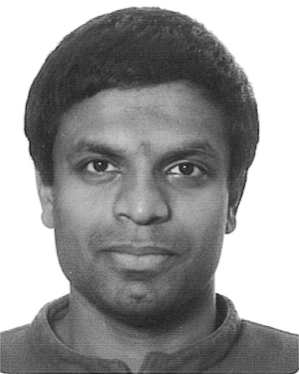 Sahan Gamage合作论文数11
 Chung Hwan Kim合作论文数Department of Computer Science, Erik Jonsson School of Engineering and Computer Science, University of Texas at Dallas;Software & Systems Security Laboratory, University of Texas at Dallas11
 Taegyu Kim合作论文数10
 Paul Ruth合作论文数Network Research & Infrastructure Group, Renaissance Computing Institute10
 Zhui Deng合作论文数Purdue University10Ardalan Kangarlou合作论文数NetApp10
 Kyu Hyung Lee合作论文数Purdue University10
 Fan Fei合作论文数Purdue Univ, Sch Mech Engn, W Lafayette, IN 47907 USA9
 Muslum Ozgur Ozmen合作论文数Oregon State Univ, Corvallis, OR 97331 USA9Bhatia Rohit合作论文数Purdue University9Wenzhao Li合作论文数9
 Xinyan Deng合作论文数School of Mechanical Engineering, Purdue University9Zhan Tu (屠展)合作论文数9
 Hengyong Xu (徐恒泳)合作论文数中国科学院大连化学物理研究所8
 Hong-Jun Choi合作论文数Dept. of Hydrogen & Fuel Cell, Dongshin Univ.;c;Dept. of Hydrogen & Fuel Cell, Dongshin Univ.8
 Vireshwar Kumar合作论文数Bradley Dept. of Electr. & Comput. Eng., Virginia Tech.;c;Bradley Dept. of Electr. & Comput. Eng., Virginia Tech.8
 Ryan Riley合作论文数Purdue University8BC Li合作论文数7
 Khaled Serag合作论文数Purdue Univ7Arslan Khan合作论文数Purdue Univ.7
 Deyu Li合作论文数Nanoscale Transport Phenomena Laboratory, Department of Mechanical Engineering, School of Engineering, Vanderbilt University7
 Kim Hyungsub合作论文数Dept Mat Engn, Hanyang Univ7
 Mohamed Hefeeda合作论文数School of Computing Science, Faculty of Applied Sciences, Simon Fraser University7
 Eugene H. Spafford合作论文数Department of Computer Sciences, Purdue University7
 Huamin Zhang (张华民)合作论文数Division of Energy Storage, Dalian Institute of Chemical Physics, Chinese Academy of Sciences;Physical and Chemical Test Center, Dalian Institute of Chemical Physics, Chinese Academy of Sciences;Dalian Rongke Power Co., Ltd.7
 Cong Xu合作论文数7
 Mathias Payer合作论文数HexHive Laboratory, School of Computer and Communication Science, Ecole Polytechnique Federale de Lausanne7Fei Wang合作论文数6
 Qingjie Ge (葛庆杰)合作论文数中国科学院大连化学物理研究所6
 Qingjie Guo (郭庆杰)合作论文数Qingdao University of Science and Technology;State Key Laboratory of High-Efficiency Utilization of Coal and Green Chemical Engineering, Ningxia University6
 Vinod Yegneswaran合作论文数Computer Science Laboratory, SRI International6
 Jianliang Wu (吴建良)合作论文数School of Mathematics, Shandong University6
 Sebastien Goasguen合作论文数NVIDIA6
 Catherine Rosenberg合作论文数Department of Electrical and Computer Engineering, University of Waterloo6




