Mobile messaging scams–fraudulent messages delivered over SMS and other mobile applications–have become a persistent and evolving security threat, yet the attributes underlying these campaigns remain unclear. This study seeks to address this gap by examining trends in mobile messaging scams and testing the effectiveness of commercial and open-source off-the-shelf detection tools. We characterize mobile messaging scam operations, focusing on how phone numbers, URLs, and text content are used across campaigns. To achieve this objective, we collect and measure a dataset of 175,430 user-reported mobile messaging scams from Reddit between June 2020 and December 2025. While reply-based scams constitute only 50
Fake Base Station (FBS) detection has been a critical focus of cellular security research for over two decades. However, significant financial and regulatory barriers to accessing commercial FBS (C-FBS) devices have limited direct visibility into real-world operations, forcing detection systems to be designed and evaluated around self-built prototypes. In this paper, we present Devilray, a reconfigurable and reference-grade adversarial baseline designed to systematically explore the realistic adversarial space and identify adversarial blind spots in current detection – regions of realistic adversarial behavior excluded by prevailing threat models. We establish an empirical ground truth through the first academic analysis of a C-FBS and extend these observations into specification-driven operational variants permitted by 3GPP standards. Devilray enables the systematic exploration of 2,592 feasible and realistic FBS instances, capturing a wide range of operational possibilities. Using Devilray, we evaluate seven representative accessible FBS detectors and uncover coverage gaps across all seven, revealing blind spots rooted in assumption-bound design and evaluation. Our work provides the first robust adversarial model grounded in real-world behavior and specification analysis, enabling the community to develop and evaluate future detection mechanisms in a rigorous manner.
Given a source image of a clothed person (an image subject), AI-based nudification applications can produce nude (undressed) images of that person. Moreover, not only do such applications exist, but there is ample evidence of the use of such applications in the real world and without the consent of an image subject. Still, despite the growing awareness of the existence of such applications and their potential to violate the rights of image subjects and cause downstream harms, there has been no systematic study of the nudification application ecosystem across multiple applications. We conduct such a study here, focusing on 20 popular and easy-to-find nudification websites. We study the positioning of these web applications (e.g., finding that most sites explicitly target the nudification of women, not all people), the features that they advertise (e.g., ranging from undressing-in-place to the rendering of image subjects in sexual positions, as well as differing user-privacy options), and their underlying monetization infrastructure (e.g., credit cards and cryptocurrencies). We believe this work will empower future, data-informed conversations — within the scientific, technical, and policy communities — on how to better protect individuals' rights and minimize harm in the face of modern (and future) AI-based nudification applications.
IMSI-Catchers allow parties other than cellular network providers to covertly track mobile device users. While the research community has developed many tools to combat this problem, current solutions focus on correlated behavior and are therefore subject to substantial false classifications. In this paper, we present a standards-driven methodology that focuses on the messages an IMSI-Catcher must use to cause mobile devices to provide their permanent identifiers. That is, our approach focuses on causal attributes rather than correlated ones. We systematically analyze message flows that would lead to IMSI exposure (most of which have not been previously considered in the research community), and identify 53 messages an IMSI-Catcher can use for its attack. We then perform a measurement study on two continents to characterize the ratio in which connections use these messages in normal operations. We use these benchmarks to compare against open-source IMSI-Catcher implementations and then observe anomalous behavior at a largescale event with significant media attention. Our analysis strongly implies the presence of an IMSI-Catcher at said public event (p << 0.005), thus representing the first publication to provide evidence of the statistical significance of its findings.
We examine stalkerware apps used to target vulnerable people in abusive relationships. We find extensive code reuse, repackaging, and obfuscation. App markets could flag shared code to remove these apps and protect users from technology-facilitated abuse.
The Heilmeier Catechism consists of a set of questions that researchers and practitioners can consider when formulating research and applied engineering projects. In this article, we suggest explicitly asking who is included and who is left out of consideration.
Sharing high-quality research data specifically for reuse in future work helps the scientific community progress by enabling researchers to build upon existing work and explore new research questions without duplicating data collection efforts. Because current discussions about research artifacts in Computer Security focus on reproducibility and availability of source code, the reusability of data is unclear. We examine data sharing practices in Computer Security and Measurement to provide resources and recommendations for sharing reusable data. Our study covers five years (2019-2023) and seven conferences in Computer Security and Measurement, identifying 948 papers that create a dataset as one of their contributions. We analyze the 265 accessible datasets, evaluating their understandability and level of reuse. Our findings reveal inconsistent practices in data sharing structure and documentation, causing some datasets to not be shared effectively. Additionally, reuse of datasets is low, especially in fields where the nature of the data does not lend itself to reuse. Based on our findings, we offer data-driven recommendations and resources for improving data sharing practices in our community. Furthermore, we encourage authors to be intentional about their data sharing goals and align their sharing strategies with those goals.
Reproducibility has been an increasingly important focus within the Security Community over the past decade. While showing great promise for increasing the quantity and quality of available artifacts, reproducibility alone only addresses some of the challenges to establishing experimental validity in scientific research and is not enough to move forward our discipline. Instead, replicability is required to test the bounds of a hypothesis and ultimately show consistent evidence to a scientific theory. Although there are clear benefits to replicability, it remains imprecisely defined, and a formal framework to reason about and conduct replicability experiments is lacking. In this work, we systematize over 30 years of research and recommendations on the topics of reproducibility, replicability, and validity, and argue that their definitions have had limited practical application within Computer Security. We address these issues by providing a framework for reasoning about replicability, known as the Tree of Validity (ToV). We evaluate an attack and a defense to demonstrate how the ToV can be applied to threat modeling and experimental environments. Further, we show two papers with Distinguished Artifact Awards and demonstrate that true reproducibility is often unattainable; however, meaningful comparisons are still attainable by replicability. We expand our analysis of two recent SoK papers, themselves replicability studies, and demonstrate how these papers recreate multiple paths through their respective ToVs. In so doing, we are the first to provide a practical framework of replicability with broad applications for, and beyond, the Security research community.
Audio deepfakes are increasingly in-differentiable from organic speech, often fooling both authentication systems and human listeners. While many techniques use low-level audio features or optimization black-box model training, focusing on the features that humans use to recognize speech will likely be a more long-term robust approach to detection. We explore the use of prosody, or the high-level linguistic features of human speech (e.g., pitch, intonation, jitter) as a more foundational means of detecting audio deepfakes. We develop a detector based on six classical prosodic features and demonstrate that our model performs as well as other baseline models used by the community to detect audio deepfakes with an accuracy of 93 we demonstrate the benefits of using a linguistic features-based approach over existing models by applying an adaptive adversary using an L_∞ norm attack against the detectors and using attention mechanisms in our training for explainability. We show that we can explain the prosodic features that have highest impact on the model's decision (Jitter, Shimmer and Mean Fundamental Frequency) and that other models are extremely susceptible to simple L_∞ norm attacks (99.3 overall performance may be similar, we illustrate the robustness and explainability benefits to a prosody feature approach to audio deepfake detection.
Deepfake speech represents a real and growing threat to systems and society. Many detectors have been created to aid in defense against speech deepfakes. While these detectors implement myriad methodologies, many rely on low-level fragments of the speech generation process. We hypothesize that breath, a higher-level part of speech, is a key component of natural speech and thus improper generation in deepfake speech is a performant discriminator. To evaluate this, we create a breath detector and leverage this against a custom dataset of online news article audio to discriminate between real/deepfake speech. Additionally, we make this custom dataset publicly available to facilitate comparison for future work. Applying our simple breath detector as a deepfake speech discriminator on in-the-wild samples allows for accurate classification (perfect 1.0 AUPRC and 0.0 EER on test data) across 33.6 hours of audio. We compare our model with the state-of-the-art SSL-wav2vec and Codecfake models and show that these complex deep learning model completely either fail to classify the same in-the-wild samples (0.72 AUPRC and 0.89 EER), or substantially lack in the computational and temporal performance compared to our methodology (37 seconds to predict a 1 minute sample with Codecfake vs. 0.3 seconds with our model).
Deepfake media represents an important and growing threat not only to computing systems but to society at large. Datasets of image, video, and voice deepfakes are being created to assist researchers in building strong defenses against these emerging threats. However, despite the growing number of datasets and the relative diversity of their samples, little guidance exists to help researchers select datasets and then meaningfully contrast their results against prior efforts. To assist in this process, this paper presents the first systematization of deepfake media. Using traditional anomaly detection datasets as a baseline, we characterize the metrics, generation techniques, and class distributions of existing datasets. Through this process, we discover significant problems impacting the comparability of systems using these datasets, including unaccounted-for heavy class imbalance and reliance upon limited metrics. These observations have a potentially profound impact should such systems be transitioned to practice - as an example, we demonstrate that the widely-viewed best detector applied to a typical call center scenario would result in only 1 out of 333 flagged results being a true positive. To improve reproducibility and future comparisons, we provide a template for reporting results in this space and advocate for the release of model score files such that a wider range of statistics can easily be found and/or calculated. Through this, and our recommendations for improving dataset construction, we provide important steps to move this community forward.
Bluetooth Low Energy (BLE) provides an efficient and convenient means for connecting a wide range of devices and peripherals. While its designers attempted to make tracking devices difficult through the use of MAC address randomization, a comprehensive analysis of the untraceability for the entire BLE protocol has not previously been conducted. In this paper, we create a formal model for BLE untraceability to reason about additional ways in which the specification allows for user tracking. Our model, implemented using ProVerif, transforms the untraceability problem into a reachability problem, and uncovers four previously unknown issues, namely IRK (Identity Resolving Key) reuse, BD_ADDR (MAC Address of Bluetooth Classic) reuse, CSRK (Connection Signature Resolving Key) reuse, and ID_ADDR (Identity Address) reuse, enabling eight passive or active tracking attacks against BLE. We then build another formal model using Diff-Equivalence (DE) as a comparison to our reachability model. Our evaluation of the two models demonstrates the soundness of our reachability model, whereas the DE model is neither sound nor complete. We further confirm these vulnerabilities in 13 different devices, ranging from embedded systems to laptop computers, with each device having at least 2 of the 4 issues. We finally provide mitigations for both developers and end users. In so doing, we demonstrate that BLE systems remain trackable under several common scenarios.
Cellular network infrastructure serves as the backbone of modern mobile wireless communication. As such, cellular cores must be proactively secured against external threats to ensure reliable service. Compromised base station attacks against the core are a rising threat to cellular networks, while user device inputs have long been considered as an attack vector; despite this, few techniques exist to comprehensively test RAN-Core interfaces against malicious input. In this work, we devise a fuzzing framework that performantly fuzzes cellular interfaces accessible from a base station or user device, overcoming several challenges in fuzzing specific to LTE/5G network components. We also introduce ASNFuzzGen, a tool that compiles ASN.1 specifications into structure-aware fuzzing modules, thereby facilitating effective fuzzing exploration of complex cellular protocols. We run fuzzing campaigns against seven open-source and commercial cores and discover 119 vulnerabilities, with 93 CVEs assigned. Our results reveal common implementation mistakes across several cores that lead to vulnerabilities, and the successful coordination of patches for these vulnerabilities across several vendors demonstrates the practical impact ASNFuzzGen has on hardening user-exposed cellular systems.
Industry is increasingly adopting private 5G networks to securely manage their wireless devices in retail, manufacturing, natural resources, and healthcare. As with most technology sectors, open-source software is well poised to form the foundation of deployments, whether it is deployed directly or as part of well-maintained proprietary offerings. This paper seeks to examine the use of cryptography and secure randomness in open-source cellular cores. We design a set of 13 CodeQL static program analysis rules for cores written in both C/C++ and Go and apply them to 7 open-source cellular cores implementing 4G and 5G functionality. We identify two significant security vulnerabilities, including predictable generation of TMSIs and improper verification of TLS certificates, with each vulnerability affecting multiple cores. In identifying these flaws, we hope to correct implementations to fix downstream deployments and derivative proprietary projects.
Audio deepfakes represent a rising threat to trust in our daily communications. In response to this, the research community has developed a wide array of detection techniques aimed at preventing such attacks from deceiving users. Unfortunately, the creation of these defenses has generally overlooked the most important element of the system - the user themselves. As such, it is not clear whether current mechanisms augment, hinder, or simply contradict human classification of deepfakes. In this paper, we perform the first large-scale user study on deepfake detection. We recruit over 1,200 users and present them with samples from the three most widely-cited deepfake datasets. We then quantitatively compare performance and qualitatively conduct thematic analysis to motivate and understand the reasoning behind user decisions and differences from machine classifications. Our results show that users correctly classify human audio at significantly higher rates than machine learning models, and rely on linguistic features and intuition when performing classification. However, users are also regularly misled by pre-conceptions about the capabilities of generated audio (e.g., that accents and background sounds are indicative of humans). Finally, machine learning models suffer from significantly higher false positive rates, and experience false negatives that humans correctly classify when issues of quality or robotic characteristics are reported. By analyzing user behavior across multiple deepfake datasets, our study demonstrates the need to more tightly compare user and machine learning performance, and to target the latter towards areas where humans are less likely to successfully identify threats.
In response to the growing sophistication of censorship methods deployed by governments worldwide, the existence of open-source censorship measurement platforms has increased. Analyzing censorship data is challenging due to the data's large size, diversity, and variability, requiring a comprehensive understanding of the data collection process and applying established data analysis techniques for thorough information extraction. In this work, we develop a framework that is applicable across all major censorship datasets to continually identify changes in censorship data trends and reveal potentially unreported censorship. Our framework consists of control charts and the Mann-Kendall trend detection test, originating from statistical process control theory, and we implement it on Censored Planet, GFWatch, the Open Observatory of Network Interference (OONI), and Tor data from Russia, Myanmar, China, Iran, Turkiye, and Pakistan from January 2021 through March 2023. Our study confirms results from prior studies and also identifies new events that we validate through media reports. Our correlation analysis reveals minimal similarities between censorship datasets. However, because our framework is applicable across all major censorship datasets, it significantly reduces the manual effort required to employ multiple datasets, which we further demonstrate by applying it to four additional Internet outage-related datasets. Our work thus provides a tool for continuously monitoring censorship activity and acts as a basis for developing more systematic, holistic, and in-depth analysis techniques for censorship data.
Audio Rogue Base Stations (ARBSs) allow an adversary to intercept cellular calls. These devices represent a substantial escalation in the threat posed by traditional rogue base stations, which only collect device identity information. This paper presents the first technique for detecting call eavesdropping via an ARBS. Our system, which we call LeopardSeal, uses distance bounding over the call audio channel to determine whether or not extra wireless hops (and therefore increased audio delay) that are characteristic of ARBSs are present during a call. We implement a proof of concept ARBS using open-source guides and perform a measurement study across the United States. We demonstrate the ability to detect all attacks (with zero false positives) due to a statistically significant difference in round trip times between benign and attack call audio (i.e., t-test: p ≪ 0.01) due to the large cost of additional wireless hops. Through this effort, we demonstrate the ability to robustly detect these eavesdropping devices.
Audio CAPTCHAs are supposed to provide a strong defense for online resources; however, advances in speech-to-text mechanisms have rendered these defenses ineffective. Audio CAPTCHAs cannot simply be abandoned, as they are specifically named by the W3C as important enablers of accessibility. Accordingly, demonstrably more robust audio CAPTCHAs are important to the future of a secure and accessible Web. We look to recent literature on attacks on speech-to-text systems for inspiration for the construction of robust, principle-driven audio defenses. We begin by comparing 20 recent attack papers, classifying and measuring their suitability to serve as the basis of new "robust to transcription" but "easy for humans to understand" CAPTCHAs. After showing that none of these attacks alone are sufficient, we propose a new mechanism that is both comparatively intelligible (evaluated through a user study) and hard to automatically transcribe (i.e., $P({\rm transcription}) = 4 \times 10^{-5}$). Finally, we demonstrate that our audio samples have a high probability of being detected as CAPTCHAs when given to speech-to-text systems ($P({\rm evasion}) = 1.77 \times 10^{-4}$). In so doing, we not only demonstrate a CAPTCHA that is approximately four orders of magnitude more difficult to crack, but that such systems can be designed based on the insights gained from attack papers using the differences between the ways that humans and computers process audio.
Bluetooth is overwhelmingly the protocol of choice for personal area networking, and the Bluetooth Classic standard has been in continuous use for over 20 years. Bluetooth devices make themselves Discoverable to communicate, but best practice to protect privacy is to ensure that devices remain in Non-Discoverable mode. This paper demonstrates the futility of protecting devices by making them Non-Discoverable. We introduce the Blue's Clues attack, which presents the first direct, non-disruptive approach to fully extracting the permanent, unique Bluetooth MAC identifier from targeted devices in Non-Discoverable mode. We also demonstrate that we can fully characterize device capabilities and retrieve identifiers, some of which we discover often contain identifying information about the device owner. We demonstrate Blue's Clues using a software-defined radio and mounting the attack over the air against both our own devices and, with institutional approval, throughout a public building. We find that a wide variety of Bluetooth devices can be uniquely identified in less than 10 seconds on average, with affected devices ranging from smartphones and headphones to gas pump skimmers and nanny-cams, spanning all versions of the Bluetooth Classic standard. While we provide potential mitigation against attacks, Blue's Clues forces a reassessment of over 20 years of best practices for protecting devices against discovery.
Reproducibility is crucial to the advancement of science; it strengthens confidence in seemingly contradictory results and expands the boundaries of known discoveries. Computer Security has the natural benefit of creating artifacts that should facilitate computational reproducibility, the ability for others to use someone else's code and data to independently recreate results, in a relatively straightforward fashion. While the Security community has recently increased its attention on reproducibility, an independent and comprehensive measurement of the current state of reproducibility has not been conducted. In this paper, we perform the first such study, targeting reproducible artifacts generated specifically by papers on machine learning security (one of the most popular areas in academic research) published in Tier 1 security conferences over the past ten years (2013-2022). We perform our measurement study of indirect and direct reproducibility over nearly 750 papers, their codebases, and datasets. Our analysis shows that there is no statistically significant difference between the availability of artifacts before and after the introduction of Artifact Evaluation Committees in Tier 1 conferences. However, based on three years of results, artifacts that pass through this process work at a higher rate than those that do not. From our collected findings, we offer data-driven suggestions for improving reproducibility in our community, including five common problems observed in our study. In so doing, we demonstrate that significant progress still needs to be made in computational reproducibility in Computer Security research.
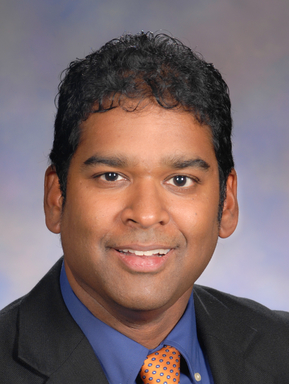 Kevin R. B. Butler合作论文数Department of Computer and Information Science and Engineering, University of Florida;Florida Institute for Cybersecurity Research, University of Florida59
 Patrick McDaniel合作论文数School of Computer, Data & Information Sciences, University of Wisconsin-Madison20
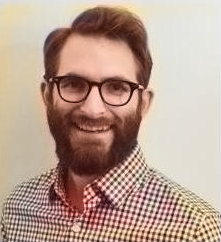 Bradley Reaves合作论文数Department of Computer Science, North Carolina State University17
 Nolen Scaife合作论文数University of Colorado16
 Tom La Porta合作论文数School of Electrical Engineering and Computer Science, College of Engineering, Pennsylvania State University16
 Henry Carter合作论文数Georgia Institute of Technology15
 Logan Blue合作论文数University of Florida14
 Dave (Jing) Tian (田径)合作论文数Department of Computer Science, Purdue University13
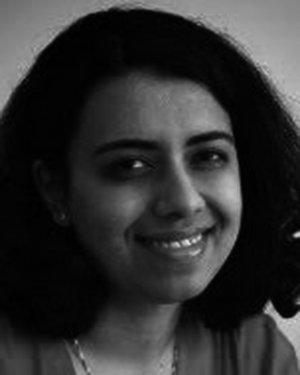 Chaitrali Amrutkar合作论文数Georgia Institute of Technology13
 William Enck合作论文数Department of Computer Science, College of Engineering, North Carolina State University13Daniel Olszewski合作论文数University of Florida11
 Christian Peeters合作论文数University of Florida11
 Hadi Abdullah合作论文数Florida Institute for Cybersecurity, University of Florida11
 Mustaque Ahamad合作论文数Center for Experimental Research in Computer Systems, College of Computing, Georgia Institute of Technology;School of Computer Science, College of Computing, Georgia Institute of Technology;Institute for Information Security and Privacy, College of Computing, Georgia Institute of Technology;School of Cybersecurity and Privacy, College of Computing, Georgia Institute of Technology10
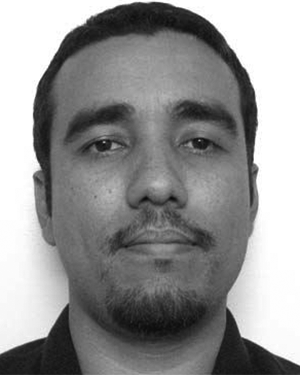 Italo Dacosta合作论文数Georgia Institute of Technology10
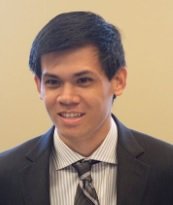 Kevin Warren合作论文数University of Florida9
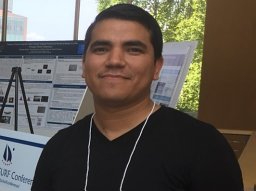 Luis M. Tapia Vargas合作论文数national university of san marcos9
 Jasmine Bowers合作论文数University of Florida8
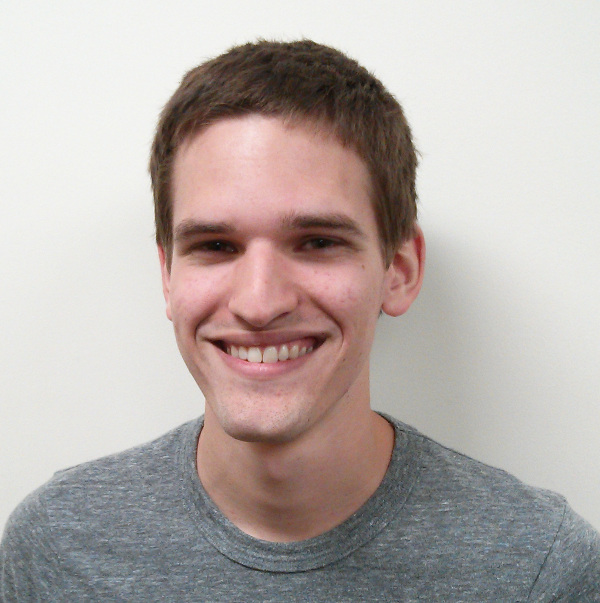 Grant Hernandez合作论文数University of Florida8
 Choi Joseph合作论文数Royal Victoria Hospital, McGill University6
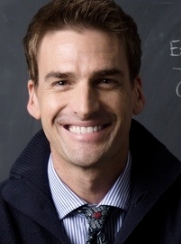 Tom Shrimpton合作论文数Department of Computer and Information Science and;Engineering, University of Florida6Tyler Tucker合作论文数5
 Washington Garcia合作论文数University of Florida5Imani N. Sherman合作论文数University of Florida, Gainesville, FL, USA5
 Vincent Bindschaedler合作论文数University of Florida5Benjamin Mood合作论文数5Seth Layton合作论文数4Vanessa Frost合作论文数4Cassidy Gibson合作论文数4Muhammad Sajidur Rahman合作论文数Avast Software s r o4
 Christopher Patton合作论文数University of Florida Gainesville4
 Wenke Lee合作论文数School of Computer Science, College of Computing, Georgia Institute of Technology4
 Carrie Gates合作论文数CA Labs, CA4
 Guohong Cao (曹国宏)合作论文数Mobile Computing and Networking Lab, Department of Computer Science and Engineering, The Pennsylvania State University4
 Adam Bates Yuile合作论文数Department of Computer Science, Siebel School of Computing and Data Science, The Grainger College of Engineering, University of Illinois Urbana-Champaign;Provenance Security Inc.4
 Trent Jaeger合作论文数Computer Science and Engineering Department, University of California, Riverside4Tyler Ward合作论文数3
 Kapil Singh合作论文数Thomas J. Watson Research Center3
 Heesook Choi合作论文数3Arunabh Verma合作论文数3Saurabh Chakradeo合作论文数3
 Tan Wong合作论文数Department of Electrical & Computer Engineering, Herbert Wertheim College of Engineering, University of Florida3Vikhyath Rao合作论文数3
 Vijay Balasubramaniyan合作论文数Pindrop Security3
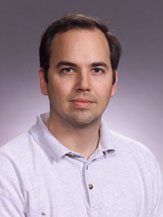 John M Shea合作论文数University of Florida3Anna Crowder合作论文数2Nathaniel Bennett合作论文数2Allison Lu合作论文数2




