The expected emergence of cryptographically relevant quantum computers (CRQCs) will represent a singular discontinuity in the history of digital security, with wide ranging impacts. This Perspective seeks to elucidate specific implications that the capabilities of developing quantum architectures have on blockchain vulnerabilities and potential mitigation strategies. First, we provide new resource estimates for breaking the 256-bit Elliptic Curve Discrete Logarithm Problem over the secp256k1 curve, the core of modern blockchain cryptography. We demonstrate that Shor’s algorithm for this problem can execute with either ≤1200 logical qubits and ≤90 million Toffoli gates or ≤1450 logical qubits and ≤70 million Toffoli gates. In the interest of responsible disclosure, we use a zero-knowledge proof to validate these results without disclosing attack vectors. On superconducting architectures with 10^{−3} physical error rates and planar connectivity, those circuits can execute in minutes using fewer than half a million physical qubits. We introduce a critical distinction between “fast-clock” (such as superconducting and photonic) and “slow-clock” (such as neutral atom and ion trap) architectures. Our analysis reveals that the first fast-clock CRQCs would enable “on-spend” attacks on public mempool transactions of some cryptocurrencies. We survey major cryptocurrency vulnerabilities through this lens, identifying systemic risks associated with advanced features in some blockchains such as smart contracts, proof-of-stake consensus, and data availability sampling mechanism, as well as the enduring concern of “abandoned” assets. We argue that technical solutions would benefit from accompanying public policy and discuss various frameworks of “digital salvage” to regulate the recovery or destruction of dormant assets while preventing adversarial seizure. We also discuss implications for other digital assets and tokenization as well as challenges and successful examples of the ongoing transition to post-quantum cryptography (PQC). Finally, we urge all vulnerable cryptocurrency communities to join the migration to PQC without delay.
This whitepaper seeks to elucidate implications that the capabilities of developing quantum architectures have on blockchain vulnerabilities and mitigation strategies. First, we provide new resource estimates for breaking the 256-bit Elliptic Curve Discrete Logarithm Problem, the core of modern blockchain cryptography. We demonstrate that Shor's algorithm for this problem can execute with either <1200 logical qubits and <90 million Toffoli gates or <1450 logical qubits and <70 million Toffoli gates. In the interest of responsible disclosure, we use a zero-knowledge proof to validate these results without disclosing attack vectors. On superconducting architectures with 1e-3 physical error rates and planar connectivity, those circuits can execute in minutes using fewer than half a million physical qubits. We introduce a critical distinction between fast-clock (such as superconducting and photonic) and slow-clock (such as neutral atom and ion trap) architectures. Our analysis reveals that the first fast-clock CRQCs would enable on-spend attacks on public mempool transactions of some cryptocurrencies. We survey major cryptocurrency vulnerabilities through this lens, identifying systemic risks associated with advanced features in some blockchains such as smart contracts, Proof-of-Stake consensus, and Data Availability Sampling, as well as the enduring concern of abandoned assets. We argue that technical solutions would benefit from accompanying public policy and discuss various frameworks of digital salvage to regulate the recovery or destruction of dormant assets while preventing adversarial seizure. We also discuss implications for other digital assets and tokenization as well as challenges and successful examples of the ongoing transition to Post-Quantum Cryptography (PQC). Finally, we urge all vulnerable cryptocurrency communities to join the ongoing migration to PQC without delay.
Batch encryption enables a holder of the secret key to publish a succinct pre-decryption key for a set of ciphertexts, such that exactly that set can be decrypted while other ciphertexts remain secret. Existing constructions either rely on epochs or, when epochless, suffer from large public parameters, and are vulnerable to censorship. In this work, we present an epochless, censorship-resistant batch encryption scheme with linear-sized public parameters, constant-sized pre-decryption keys and ciphertexts, and efficient batch decryption. Our construction extends the partial fraction techniques of Jutla, Nema, and Roy’s threshold encryption scheme: we exploit partial fraction decomposition such that publishing a single group element as the pre-decryption key lets the decryptor decrypt all ciphertexts in the batch. We prove CCA security of our scheme, and show how to thresholdize it. Our results directly benefit applications such as encrypted mempools for MEV mitigation and time-lock encrypted storage.
We present the first comprehensive evaluation of AI agents against human cybersecurity professionals in a live enterprise environment. We evaluate ten cybersecurity professionals alongside six existing AI agents and ARTEMIS, our new agent scaffold, on a large university network consisting of $\sim$8,000 hosts across 12 subnets. ARTEMIS is a multi-agent framework featuring dynamic prompt generation, arbitrary sub-agents, and automatic vulnerability triaging. In our comparative study, ARTEMIS placed second overall, discovering 9 valid vulnerabilities with an 82\% valid submission rate and outperforming 9 of 10 human participants. While existing scaffolds such as Codex and CyAgent underperformed relative to most human participants, ARTEMIS demonstrated technical sophistication and submission quality comparable to the strongest participants. AI agents offer advantages in systematic enumeration, parallel exploitation, and cost---certain ARTEMIS variants cost $18/hour versus $60/hour for professional penetration testers. We also identify key capability gaps: AI agents exhibit higher false-positive rates and struggle with GUI-based tasks.
We present Hawkeye, a system for analyzing and reproducing GPU-level arithmetic operations. Using our framework, anyone can re-execute on a CPU the exact matrix multiplication operations underlying a machine learning model training or inference workflow that was executed on an NVIDIA GPU, without any precision loss. This is in stark contrast to prior approaches to verifiable machine learning, which either introduce significant computation overhead to the original model owner, or suffer from non-robustness and quality degradation. The main technical contribution of Hawkeye is a systematic sequence of carefully crafted tests that study rounding direction, subnormal number handling, and order of (non-associative) accumulation during matrix multiplication on NVIDIA's Tensor Cores. We test and evaluate our framework on multiple NVIDIA GPU architectures ( Ampere, Hopper, and Lovelace) and precision types (FP16, BFP16, FP8). In all test cases, Hawkeye enables perfect reproduction of matrix multiplication on a CPU, paving the way for efficient and trustworthy third-party auditing of ML model training and inference.
In a threshold decryption system, a secret key is split across a number of parties so that any threshold of them can decrypt a given ciphertext. We introduce a new concept in threshold decryption called a decryption context, which is an additional argument that is used during decryption. The context ensures that decryption shares that are generated for a ciphertext using different contexts are isolated from each other and cannot be jointly used to decrypt the ciphertext. For example, suppose the decryption threshold is t. Further, suppose that less than t decryption shares are generated for a ciphertext c under one context, and less than t decryption shares are generated for c under a different context. Then this set of shares is insufficient to decrypt c even if the total number of shares exceeds t. This new concept has several important applications, most notably for implementing an encrypted mempool in a consensus protocol. We give two CCA-secure threshold decryption constructions that support context. One is based on ElGamal encryption, and the other is generic showing how to add context to any CCA-secure threshold decryption system without changing the encryption algorithm.
zkVMs promise general-purpose verifiable computation through ISA-level compatibility with modern programs and toolchains. However, compatibility extends further than just the ISA; modern programs often cannot run or even compile without an operating system and libc. zkVMs attempt to address this by maintaining forks of language-specific runtimes and statically linking them into applications to create self-contained unikernels, but this ad-hoc approach leads to version hell and burdens verifiable applications (vApps) with an unnecessarily large trusted computing base. We solve this problem with ZeroOS, a modular library operating system (libOS) for vApp unikernels; vApp developers can use off-the-shelf toolchains to compile and link only the exact subset of the Linux ABI their vApp needs. Any zkVM team can easily leverage the ZeroOS ecosystem by writing a ZeroOS bootloader for their platform, resulting in a reduced maintainence burden and unifying the entire zkVM ecosystem with consolidated development and audit resources. ZeroOS is free and open-sourced at https://github.com/LayerZero-Labs/ZeroOS.
Existing fully homomorphic encryption (FHE) schemes primarily support a plaintext space defined over a relatively small prime. However, in some important applications of FHE one needs arithmetic over a large prescribed prime. In this paper we construct a new FHE system that is specifically designed for this purpose. Our system composes three layers of residue systems to enable much better performance than was previously possible. Our experiments show that for arithmetic modulo a 256-bit integer, when compared to the TFHE-rs implementation of 256-bit arithmetic, our new system achieves a factor of two thousand better multiplication throughput and a factor of twenty better latency. Moreover, for a 2048-bit prime modulus we achieve far better performance than was previously possible.
Verifiable random functions (VRFs) are pseudorandom functions where the function owner can prove that a generated output is correct relative to a committed key. In this paper we introduce the notion of an exponent-VRF (eVRF): a VRF that does not provide its output y explicitly, but instead provides Y = y · G , where G is a generator of some finite cyclic group (or Y=g^y in multiplicative notation). We construct eVRFs from the Paillier encryption scheme and from DDH, both in the random-oracle model. We then show that an eVRF is a powerful tool that has many important applications in threshold cryptography. In particular, we construct (1) a one-round fully simulatable distributed key-generation protocol (after a single two-round initialization phase), (2) a two-round fully simulatable signing protocol for multiparty Schnorr with a deterministic variant, (3) a two-party ECDSA protocol that has a deterministic variant, (4) a threshold Schnorr signing protocol where the parties can later prove that they signed without being able to frame another group, and (5) an MPC-friendly and verifiable HD-derivation. All these applications are derived from this single new eVRF abstraction, and the resulting protocols are concretely efficient.
A threshold verifiable random function (threshold VRF) is a VRF where the evaluation key is secret shared among.n parties, and a quorum of.t parties is needed to evaluate the VRF. Threshold VRFs are used widely in practice in applications such as randomness beacons and deterministic wallets. Despite their long history, the question of accountability for leaking key shares in a threshold VRF has not been studied. Specifically, consider a set of f parties who use their key shares to create an evaluation box E that lets anyone evaluate the VRF at any point in the domain of the VRF. When F is less than the threshold.t, this box E must also take as input t - f additional evaluation shares. Our goal is to design a threshold VRF where there is a tracing algorithm that can trace any such box E to the coalition of F parties that created it, using only blackbox access to E. The risk of tracing should deter the coalition from selling such a box. Questions in this vein were previously explored in the context of threshold decryption and secret sharing. Here we define and study traceability for a threshold VRF. Our traceable threshold VRF is built from a VRF based on Paillier encryption. The starting point for our tracing algorithm is the tracing technique of Boneh-Partap-Rotem (Crypto 2024) designed for tracing leaks in the context of secret sharing. However, there are multiple technical challenges in making this approach work, and we develop the necessary tools to overcome all these challenges. The end result is a threshold VRF with a provably secure tracing algorithm.
Language Model (LM) agents for cybersecurity that are capable of autonomously identifying vulnerabilities and executing exploits have potential to cause real-world impact. Policymakers, model providers, and researchers in the AI and cybersecurity communities are interested in quantifying the capabilities of such agents to help mitigate cyberrisk and investigate opportunities for penetration testing. Toward that end, we introduce Cybench, a framework for specifying cybersecurity tasks and evaluating agents on those tasks. We include 40 professional-level Capture the Flag (CTF) tasks from 4 distinct CTF competitions, chosen to be recent, meaningful, and spanning a wide range of difficulties. Each task includes its own description, starter files, and is initialized in an environment where an agent can execute commands and observe outputs. Since many tasks are beyond the capabilities of existing LM agents, we introduce subtasks for each task, which break down a task into intermediary steps for a more detailed evaluation. To evaluate agent capabilities, we construct a cybersecurity agent and evaluate 8 models: GPT-4o, OpenAI o1-preview, Claude 3 Opus, Claude 3.5 Sonnet, Mixtral 8x22b Instruct, Gemini 1.5 Pro, Llama 3 70B Chat, and Llama 3.1 405B Instruct. For the top performing models (GPT-4o and Claude 3.5 Sonnet), we further investigate performance across 4 agent scaffolds (structured bash, action-only, pseudoterminal, and web search). Without subtask guidance, agents leveraging Claude 3.5 Sonnet, GPT-4o, OpenAI o1-preview, and Claude 3 Opus successfully solved complete tasks that took human teams up to 11 minutes to solve. In comparison, the most difficult task took human teams 24 hours and 54 minutes to solve. Anonymized code and data are available at https://drive.google.com/file/d/1kp3H0pw1WMAH-Qyyn9WA0ZKmEa7Cr4D4 and https://drive.google.com/file/d/1BcTQ02BBR0m5LYTiK-tQmIK17_TxijIy.
AI agents have the potential to significantly alter the cybersecurity landscape. Here, we introduce the first framework to capture offensive and defensive cyber-capabilities in evolving real-world systems. Instantiating this framework with BountyBench, we set up 25 systems with complex, real-world codebases. To capture the vulnerability lifecycle, we define three task types: Detect (detecting a new vulnerability), Exploit (exploiting a specific vulnerability), and Patch (patching a specific vulnerability). For Detect, we construct a new success indicator, which is general across vulnerability types and provides localized evaluation. We manually set up the environment for each system, including installing packages, setting up server(s), and hydrating database(s). We add 40 bug bounties, which are vulnerabilities with monetary awards of $10-$30,485, covering 9 of the OWASP Top 10 Risks. To modulate task difficulty, we devise a new strategy based on information to guide detection, interpolating from identifying a zero day to exploiting a specific vulnerability. We evaluate 8 agents: Claude Code, OpenAI Codex CLI with o3-high and o4-mini, and custom agents with o3-high, GPT-4.1, Gemini 2.5 Pro Preview, Claude 3.7 Sonnet Thinking, and DeepSeek-R1. Given up to three attempts, the top-performing agents are OpenAI Codex CLI: o3-high (12.5
A multisignature scheme is used to aggregate signatures by multiple parties on a common message m into a single short signature on m. Multisignatures are used widely in practice, most notably, in proof-of-stake consensus protocols. In existing multisignature schemes, the verifier needs the public keys of all the signers in order to verify a multisignature issued by some subset of signers. We construct new practical multisignature schemes with three properties: (i) the verifier only needs to store a constant size public key in order to verify a multisignature by an arbitrary subset of parties, (ii) signature size is constant beyond the description of the signing set, and (iii) signers generate their secret signing keys locally, that is, without a distributed key generation protocol. Existing schemes satisfy properties (ii) and (iii). The new capability is property (i) which dramatically reduces the verifier’s memory requirements from linear in the number of signers to constant. We give two pairing-based constructions: one in the random oracle model and one in the plain model. We also show that by relaxing property (iii), that is, allowing for a simple distributed key generation protocol, we can further improve efficiency while continuing to satisfy properties (i) and (ii). We give a pairing-based scheme and a lattice-based scheme in this relaxed model. Our pairing based constructions are closely related to a multisignature scheme due to Boneh, Drijvers, and Neven (Asiacrypt 2018), but with several key differences.
In verifiable outsourcing, an untrusted server runs an expensive computation and produces a succinct proof (called a SNARK) of the results. In many scenarios, the computation accesses a RAM that the server maintains a commitment to (persistent RAM) or that is initially zero (volatile RAM). But, SNARKs for such scenarios are limited by the high overheads associated with existing techniques for RAM checking. We develop new proofs about volatile, persistent, and sparse persistent RAM that reduce SNARK proving times. Our results include both asymptotic and concrete improvements-including a proving time reduction of up to 51.3x for persistent RAM. Along the way, we apply two tools that may be of independent interest. First, we generalize an existing construction to convert any algebraic interactive proof (AIP) into a SNARK. An AIP is a public-coin, non-succinct, interactive proof with a verifier that is an arithmetic circuit. Second, we apply Bezout's identity for polynomials to construct new AIPs for uniqueness and disjointness. These are useful for showing the independence of accesses to different addresses.
Folding is a technique for building efficient succinct proof systems. Many existing folding protocols rely on the discrete-log based Pedersen commitment scheme, and are therefore not post-quantum secure and require a large (256-bit) field. Recently, Boneh and Chen constructed LatticeFold, a folding protocol using lattice-based commitments which is plausibly post-quantum secure and can operate with small (64bit) fields. For knowledge soundness, LatticeFold requires the prover to provide a range proof on all the input witnesses using bit-decomposition, and this slows down the prover. In this work we present LatticeFold+, a very different lattice-based folding protocol that improves on LatticeFold in every respect: the prover is significantly faster, the verification circuit is simpler, and the folding proofs are shorter. To do so we develop two novel lattice techniques. First, we develop a new purely algebraic range proof which is much more efficient than the one in LatticeFold, and may be of independent interest. We further shrink the proof using double commitments (commitments of commitments). Second, we show how to fold statements about double commitments using a new sumcheck-based transformation.
 Mark Horowitz合作论文数Department of Electrical Engineering, Stanford University;Department of Computer Science, School of Engineering, Stanford University22
 Brent Waters合作论文数Department of Computer Science, The University of Texas at Austin;NTT Research20
 Edward Frank合作论文数19Robert F. Brammer合作论文数19Laura Haas合作论文数19Vijay Kumar合作论文数19Farnam Jahanian合作论文数19Beth Mynatt合作论文数19
 Eric Horvitz合作论文数Microsoft19
 Daniela Rus合作论文数Computer Science & Artificial Intelligence Laboratory, Schwarzman College of Computing, Massachusetts Institute of Technology;Liquid AI;SymphonyAI;Symbotic;MBZUAI19
 Craig Partridge合作论文数Department of Computer Science, College of Natural Science, Colorado State University19
 Fred B. Schneider合作论文数Department of Computer Science, Cornell University19
 Luiz Andre Barroso合作论文数Google19
 Dick Lipton合作论文数College of Computing, Georgia Institute of Technology;Telcordia Technologies18
 Henry Corrigan Gibbs合作论文数Electrical Engineering and Computer Science, Massachusetts Institute of Technology;Schwarzman College of Computing, Massachusetts Institute of Technology16
 Hovav Shacham合作论文数Department of Computer Science, College of Natural Sciences, The University of Texas at Austin14
 Amit Sahai合作论文数Department of Computer Science, University of California, Los Angeles14
 David Wu合作论文数Department of Computer Science, The University of Texas at Austin14
 Xavier Boyen合作论文数School of Computer Science, Faculty of Science, Queensland University of Technology13
 Collin Jackson合作论文数Department of Electrical & Computer Engineering,Carnegie Mellon University12
 Elie Bursztein合作论文数Google12Bob Blakley合作论文数11
 Margaret Martonosi合作论文数Department of Computer Science, Princeton University11
 Michele Mosca合作论文数Institute for Quantum Computing, University of Waterloo11
 Jungsang Kim合作论文数Department of Electrical and Computer Engineering, Pratt School of Engineering, Duke University;IonQ Inc.;Trinity College of Arts & Sciences, Duke University11
 John M. Martinis合作论文数Department of Physics, University of California, Santa Barbara11
 Susan Landau合作论文数School of Engineering, Department of Computer Science, Tufts University11
 John Mitchell合作论文数Department of Computer Science, School of Engineering, Stanford University11
 Umesh V. Vazirani合作论文数Computer Science Division, University of California, Berkeley;Berkeley Quantum Computation Center11
 Alán Aspuru-Guzik合作论文数Department of Chemistry, Faculty of Arts & Science, University of Toronto;NVIDIA;Kebotix, Inc.11
 Moshe Y. Vardi合作论文数Department of Computer Science, Rice University11
 Susan Nan Coppersmith合作论文数Physics Department,University of Wisconsin-Madison;School of Physics, Faculty of Science, The University of New South Wales11
 David E. Culler合作论文数Department of Electrical Engineering and Computer Sciences, University of California at Berkeley11
 Krysta M. Svore合作论文数NVIDIA11Aditi Partap合作论文数10
 Saba Eskandarian合作论文数Department of Computer Science, College of Arts and Sciences, The University of North Carolina at Chapel Hill10
 Steven M. Bellovin合作论文数Department of Computer Science, Columbia University in the City of New York10
 Hristo Bojinov合作论文数Google10
 Eu-Jin Goh合作论文数Google10
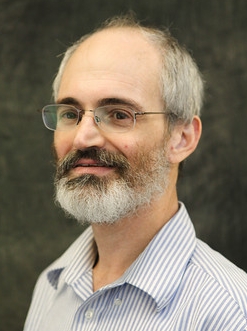 Matt Franklin合作论文数Department of Computer Science, College of Engineering, University of California, Davis10
 Sherman Lo合作论文数9
 Benedikt Bünz合作论文数Courant Institute Computer Science, New York University;Espresso Systems9
 Florian Tramèr合作论文数Department of Computer Science, Eidgenössische Technische Hochschule Zürich9
 William D. Oliver合作论文数Department of Physics, Massachusetts Institute of Technology;Center for Quantum Engineering, Massachusetts Institute of Technology9
 Craig Gentry合作论文数Cornami, Inc.;Selfii9
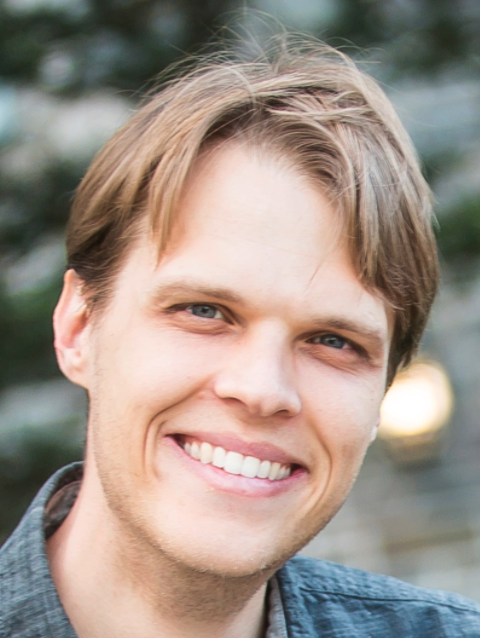 Mark Zhandry合作论文数Cryptography and Information Security Laboratories, NTT Research, Inc.9
 Per Enge合作论文数School of Engineering, Stanford University9Richard Littlehale合作论文数8
 Shafi Goldwasser合作论文数Department of Electrical Engineering & Computer Sciences, University of California, Berkeley8