A systematic measurement of the (alpha,gamma) reaction for all the stable nickel isotopes has been performed using the gamma-summing technique. For two of the isotopes, Ni-60 and Ni-61, the alpha-capture cross sections have been experimentally measured for the first time. For Ni-58,Ni-62,Ni-64, the current measurement is in excellent agreement with earlier results found in the literature, and additionally extends the energy range of the measured cross sections up to 8.7 MeV. The data provided a tool for testing the cross section predictions of Hauser-Feshbach calculations. The experimental results were compared to the cross sections calculated with the TALYS 1.6 code and commonly used databases NON-SMOKER and BRUSLIB. For each of the investigated isotopes a combination of input parameter for TALYS was identified that best reproduces the experimental data, and recommended reaction rate has been calculated. Additionally, a set of inputs for Hauser-Feshbach calculations was given that, simultaneously for all the isotopes under consideration, reproduces the experimental data within the experimental uncertainties.
Several emerging technologies are aiming to meet renewable fuel standards, mitigate greenhouse gas emissions, and provide viable alternatives to fossil fuels. Direct conversion of solar energy into fungible liquid fuel is a particularly attractive option, though conversion of that energy on an industrial scale depends on the efficiency of its capture and conversion. Large-scale programs have been undertaken in the recent past that used solar energy to grow innately oil-producing algae for biomass processing to biodiesel fuel. These efforts were ultimately deemed to be uneconomical because the costs of culturing, harvesting, and processing of algal biomass were not balanced by the process efficiencies for solar photon capture and conversion. This analysis addresses solar capture and conversion efficiencies and introduces a unique systems approach, enabled by advances in strain engineering, photobioreactor design, and a process that contradicts prejudicial opinions about the viability of industrial photosynthesis. We calculate efficiencies for this direct, continuous solar process based on common boundary conditions, empirical measurements and validated assumptions wherein genetically engineered cyanobacteria convert industrially sourced, high-concentration CO(2) into secreted, fungible hydrocarbon products in a continuous process. These innovations are projected to operate at areal productivities far exceeding those based on accumulation and refining of plant or algal biomass or on prior assumptions of photosynthetic productivity. This concept, currently enabled for production of ethanol and alkane diesel fuel molecules, and operating at pilot scale, establishes a new paradigm for high productivity manufacturing of nonfossil-derived fuels and chemicals.
A unique multifunctional glycosyl hydrolase was discovered by screening an environmental DNA library prepared from a microbial consortium collected from cow rumen. The protein consists of two adjacent catalytic domains. Sequence analysis predicted that one domain conforms to glycosyl hydrolase family 5 and the other to family 26. The enzyme is active on several different β-linked substrates and possesses mannanase, xylanase, and glucanase activities. Site-directed mutagenesis studies on the catalytic residues confirmed the presence of two functionally independent catalytic domains. Using site-specific mutations, it was shown that one catalytic site hydrolyzes β-1,4-linked mannan substrates, while the second catalytic site hydrolyzes β-1,4-linked xylan and β-1,4-linked glucan substrates. Polysaccharide Analysis using Carbohydrate gel Electrophoresis (PACE) also confirmed that the enzyme has discrete domains for binding and hydrolysis of glucan- and mannan-linked polysaccharides. Such multifunctional enzymes have many potential industrial applications in plant processing, including biomass saccharification, animal feed nutritional enhancement, textile, and pulp and paper processing.
 Jay Milton Short合作论文数24
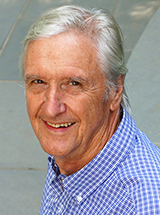 Peter Leslie Dutton合作论文数Department of Biochemistry and Biophysics, Perelman School of Medicine, University of Pennsylvania18
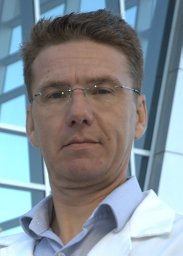 Toby H. Richardson合作论文数Diversa Corporation14
 Fevzi Daldal合作论文数Department of Biology, School of Arts & Sciences, University of Pennsylvania10
 Kevin A. Gray合作论文数9nelson r barton合作论文数8Eric J. Mathur合作论文数8
 Peter Luginbühl合作论文数Diversa Corporation6Xuqiu Tan合作论文数6Keith A. Kretz合作论文数6christian perry ridley合作论文数5nikos basil reppas合作论文数5Huangen Ding (丁焕根)合作论文数Wenzhou Medical University5Geoffrey P. Hazlewood合作论文数5Frank A. Skraly合作论文数5
 Marilyn Gunner合作论文数Department of Physics, The City College of New York5
 Noubar Afeyan合作论文数Flagship Pioneering;Moderna Therapeutics5R.V. Swanson合作论文数4dennis murphy合作论文数4
 Eric Jan Mathur合作论文数4Mj Burk合作论文数4Ka Gray合作论文数4b d green合作论文数4john reid合作论文数4Gerhard Frey合作论文数4Grace Desantis合作论文数Principle Scientist, Diversa Corporation4
 Christopher C Moser合作论文数University of Pennsylvania4James B. Garrett合作论文数4Florence Goubet合作论文数3v w jr thomas合作论文数3Mark A. Miller合作论文数3Paul E. Swanson合作论文数3Weiner I David合作论文数3
 Natalia Ivanova合作论文数DOE Joint Genome Institute3
 H. Ronald Kaback合作论文数Brain Research Institute, University of California, Los Angeles3
 Paul Dupree合作论文数Department of Biochemistry, University of Cambridge;School of the Biological Sciences, University of Cambridge3
 Peng Wang (王鹏)合作论文数Department of Pharmacology, School of Medicine, Southern University of Science and Technology;Wayne State University3Jennifer A. Chaplin合作论文数3C. W. Thomas合作论文数3Michelle H. Cayouette合作论文数3Everett A. Jenne合作论文数3
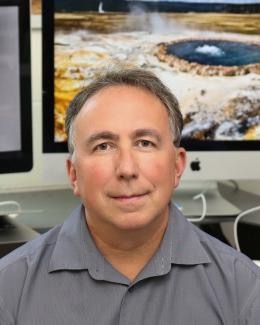 Mircea Podar合作论文数Biosciences Division, Oak Ridge National Laboratory3Kathleen M. Giangiacomo合作论文数3Nisha Palackal合作论文数3N.L. Wynhoff合作论文数3
 Jared R. Leadbetter合作论文数Division of Geological and Planetary Sciences, California Institute of Technology3Janne Kerovuo合作论文数3C.W. Thomas合作论文数3
 Chien Ho (何潛)合作论文数McGowan Institute for Regenerative Medicine, University of Pittsburgh;Department of Biological Sciences, Carnegie Mellon University;Pittsburgh NMR Center for Biomedical Research3




