BACKGROUND:Humans are exposed to tens of thousands of chemical substances that need to be assessed for their potential toxicity. Acute systemic toxicity testing serves as the basis for regulatory hazard classification, labeling, and risk management. However, it is cost- and time-prohibitive to evaluate all new and existing chemicals using traditional rodent acute toxicity tests. In silico models built using existing data facilitate rapid acute toxicity predictions without using animals. OBJECTIVES:The U.S. Interagency Coordinating Committee on the Validation of Alternative Methods (ICCVAM) Acute Toxicity Workgroup organized an international collaboration to develop in silico models for predicting acute oral toxicity based on five different end points: Lethal Dose 50 (LD50 value, U.S. Environmental Protection Agency hazard (four) categories, Globally Harmonized System for Classification and Labeling hazard (five) categories, very toxic chemicals [LD50 (LD50≤50mg/kg)], and nontoxic chemicals (LD50>2,000mg/kg). METHODS:An acute oral toxicity data inventory for 11,992 chemicals was compiled, split into training and evaluation sets, and made available to 35 participating international research groups that submitted a total of 139 predictive models. Predictions that fell within the applicability domains of the submitted models were evaluated using external validation sets. These were then combined into consensus models to leverage strengths of individual approaches. RESULTS:The resulting consensus predictions, which leverage the collective strengths of each individual model, form the Collaborative Acute Toxicity Modeling Suite (CATMoS). CATMoS demonstrated high performance in terms of accuracy and robustness when compared with in vivo results. DISCUSSION:CATMoS is being evaluated by regulatory agencies for its utility and applicability as a potential replacement for in vivo rat acute oral toxicity studies. CATMoS predictions for more than 800,000 chemicals have been made available via the National Toxicology Program's Integrated Chemical Environment tools and data sets (ice.ntp.niehs.nih.gov). The models are also implemented in a free, standalone, open-source tool, OPERA, which allows predictions of new and untested chemicals to be made. https://doi.org/10.1289/EHP8495.
Earlier we created a chemical hazard database via natural language processing of dossiers submitted to the European Chemical Agency with approximately 10 000 chemicals. We identified repeat OECD guideline tests to establish reproducibility of acute oral and dermal toxicity, eye and skin irritation, mutagenicity and skin sensitization. Based on 350-700+ chemicals each, the probability that an OECD guideline animal test would output the same result in a repeat test was 78%-96% (sensitivity 50%-87%). An expanded database with more than 866 000 chemical properties/hazards was used as training data and to model health hazards and chemical properties. The constructed models automate and extend the read-across method of chemical classification. The novel models called RASARs (read-across structure activity relationship) use binary fingerprints and Jaccard distance to define chemical similarity. A large chemical similarity adjacency matrix is constructed from this similarity metric and is used to derive feature vectors for supervised learning. We show results on 9 health hazards from 2 kinds of RASARs-"Simple" and "Data Fusion". The "Simple" RASAR seeks to duplicate the traditional read-across method, predicting hazard from chemical analogs with known hazard data. The "Data Fusion" RASAR extends this concept by creating large feature vectors from all available property data rather than only the modeled hazard. Simple RASAR models tested in cross-validation achieve 70%-80% balanced accuracies with constraints on tested compounds. Cross validation of data fusion RASARs show balanced accuracies in the 80%-95% range across 9 health hazards with no constraints on tested compounds.
 Thomas Hartung合作论文数Department of Environmental Health and Engineering, Johns Hopkins University Bloomberg School of Public Health3
 Thomas Harrison Luechtefeld合作论文数3
 Craig Rowlands合作论文数The Dow Chemical Company2Joyce V Bastos合作论文数1Jeremy Fitzpatrick合作论文数1Dave Allen合作论文数1Tyler R. Auernhammer合作论文数1Filippo Lunghini合作论文数1Reine Note合作论文数1Amanda K. Parks合作论文数1Kristijan Vuković合作论文数1Fagen F. Zhang合作论文数1Tyler Peryea合作论文数1
 Daniel Patrick Russo合作论文数1Zijun XIAO (肖子君)合作论文数1Andrew J Wedlake合作论文数1
 Heather L Ciallella合作论文数1Zhen Zhang合作论文数1Dan Wilson合作论文数1
 Risa R Sayre合作论文数1
 Daniela Trisciuzzi合作论文数Dipartimento di Farmacia-Scienze del Farmaco, Università degli Studi di Bari Aldo Moro1Jeffery M. Gearhart合作论文数1
 Stephen Capuzzi合作论文数Univ North Carolina Chapel Hill, Chem Biol & Med Chem, Chapel Hill, NC USA1
 Arthur de Carvalho e Silva合作论文数Univ Fed Goias, Fac Farm, LabMol Lab Mol Modeling & Drug Design, BR-74605510 Goiania, Go, Brazil1
 Kimberley M Zorn合作论文数Collaborat Pharmaceut Inc1
 Christopher Grulke合作论文数Center for Computational Toxicology and Exposure, U.S. Environmental Protection Agency1Feng Gao合作论文数Equal contribution.1Michael Lawless合作论文数1
 Sergey Sosnin合作论文数Skolkovo Innovat Ctr, Skolkovo Inst Sci & Technol, Moscow 143026, Russia1
 Cosimo Toma合作论文数Inst Risk Assessment Sci IRAS, Univ Utrecht1
 Ignacio J. Tripodi合作论文数Crisis Text Line1Timothy Sheils合作论文数Div Preclin Innovat, Natl Ctr Adv Translat Sci1
 Charles Siegel合作论文数Pacific Northwest Natl Lab1
 Agnes L Karmaus合作论文数Integrated Lab Syst, Inotiv Co1
 Patricia Ruiz合作论文数Off Innovat & Analyt, Agcy Tox Subst & Dis Registry1
 Sudin Bhattacharya合作论文数Inst Integrat Toxicol, Michigan State Univ1Nathalie Alepee合作论文数L'Oréal1
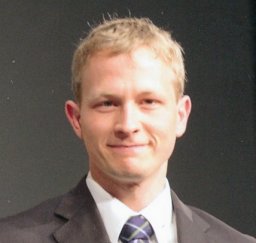 Brown, J.B.合作论文数Dept. of Syst. Biosci. for Drug Discovery, Kyoto Univ.;c;Dept. of Syst. Biosci. for Drug Discovery, Kyoto Univ.1
 Trung D Nguyen合作论文数1
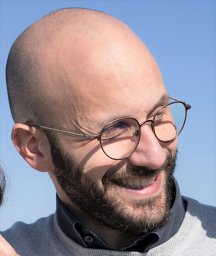 Giuseppe Felice Mangiatordi合作论文数Dipartimento Farm Sci Farmaco, Univ Bari Aldo Moro1
 Wijeyesakere Sanjeeva J合作论文数School Medical School, University of Michigan1
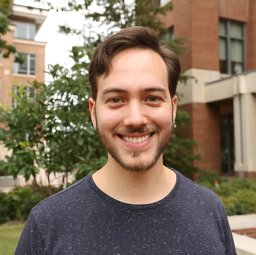 Vinicius Nicchio Alves合作论文数1
 Timothy E H Allen合作论文数Serna Bio1
 Prachi Pradeep合作论文数Department of Mathematics, Statistics, and Computer Science, Marquette University;c;Department of Mathematics, Statistics, and Computer Science, Marquette University1
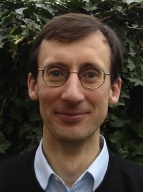 Jonathan Goodman合作论文数Clare College, University of Cambridge;Yusuf Hamied Department of Chemistry, University of Cambridge;Centre for Molecular Informatics, University of Cambridge1
 Judy Strickland合作论文数1
 Sean Ekins合作论文数University of Medicine and Dentistry of New Jersey Robert Wood Johnson Medical School;Collaborations Pharmaceuticals, Inc.1
 Shannon Marie Bell合作论文数Oak Ridge Institute for Science and Education;National Health and Environmental Effects Research Laboratory, U.S. Environmental Protection Agency1
 Gadaleta Domenico合作论文数1




