The deep sea (>200 m) is vast, covering 92.6% of the seafloor and largely unexplored. Imaging and sensor platforms capable of surviving the immense pressures at these depths are expensive and often engineered by individuals and institutions in affluent countries as unique, monolithic vehicles that require significant expertise and investment to build, operate, and maintain. Maka Niu was co-designed with a global community of deep-sea researchers. It is a low-cost, modular imaging and sensor platform that leverages off-the-shelf commodity hardware along with the efficiencies of mass production to decrease the price per unit and allow more communities to explore previously unseen regions of the deep ocean. Maka Niu combines a Raspberry Pi single-board computer, a Pi Camera Module V2, and a novel pressure housing and viewport combination capable of withstanding 1,500 m water depth. Other modules, including high-lumen LEDs, can be engineered to use the same battery charging and control system and form factor, allowing for an ever-increasing number of capabilities to be added to the system. After deployment, imagery and sensor data are wirelessly uploaded to Tator, an integrated media management and machine learning backend for automated analysis and classification. Maka Niu’s mobile mission programming and data management systems are designed to be user-friendly. Here, Maka Niu is described in detail along with data and imagery recorded from deployments around the world.
Advancements in machine learning have recently enabled the hyper-realistic synthesis of prose, images, audio and video data, in what is referred to as artificial intelligence (AI)-generated media. These techniques offer novel opportunities for creating interactions with digital portrayals of individuals that can inspire and intrigue us. AI-generated portrayals of characters can feature synthesized faces, bodies and voices of anyone, from a fictional character to a historical figure, or even a deceased family member. Although negative use cases of this technology have dominated the conversation so far, in this Perspective we highlight emerging positive use cases of AI-generated characters, specifically in supporting learning and well-being. We demonstrate an easy-to-use AI character generation pipeline to enable such outcomes and discuss ethical implications as well as the need for including traceability to help maintain trust in the generated media. As we look towards the future, we foresee generative media as a crucial part of the ever growing landscape of human–AI interaction. Digitally recreating the likeness of a person used to be a costly and complex process. Through the use of generative models, AI-generated characters can now be made with relative ease. Pataranutaporn et al. discuss in this Perspective how this technology can be used for positive applications in education and well-being.
The Narratarium Colorizer device receives either keyboard input or speech recognition input and uses natural language processing to extract key terms. The terms are queried for in a knowledge base of words and associated colors, created by leveraging the Open Mind Common Sense database and ConceptNet. The system outputs a continually changing color display, which is projected uniformly throughout the room using a custom designed curved mirror projection system.
 Allan Adams合作论文数MIT Comparative Media Studies/Writing2
 Katy Croff Bell合作论文数1
 Robyn Speer合作论文数Luminoso Technologies, Inc1Kat A. A. Cantner合作论文数1Margaret Sullivan合作论文数1
 Valdemar Danry合作论文数Media Lab, School of Architecture + Planning, Massachusetts Institute of Technology1
 Joanne Leong合作论文数Media Lab, School of Architecture + Planning, Massachusetts Institute of Technology1
 Katherine L. C. Bell合作论文数Ocean Discovery League1Benjamin Woodward合作论文数1Alexis Hope合作论文数Massachusetts Institute of Technology, Cambridge, MA, USA1
 Brennan Phillips合作论文数Grad Sch Oceanog, Univ Rhode Isl1
 Pat Pataranutaporn合作论文数Media Laboratory, School of Architecture + Planning, Massachusetts Institute of Technology1
 Catherine Havasi合作论文数M2 Foundry1
 Laura Guertin合作论文数Penn State Brandywine1
 Parinya Punpongsanon合作论文数Graduate School of Science and Engineering, Saitama University1
 Pattie Maes合作论文数Media Laboratory, School of Architecture and Planning, Massachusetts Institute of Technology1
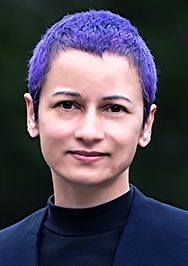 Misha Sra合作论文数The Human-AI Experience Lab, Computer Science Department, College of Engineering, University of California, Santa Barbara;Department of Electrical and Computer Engineering, College of Engineering, University of California, Santa Barbara1
 Carlie Wiener合作论文数1
 João Borges de Sousa合作论文数Laboratório de Sistemas e Tecnologia Subaquática, Faculdade de Engenharia, Universidade do Porto;Electrical and Computer Engineering Department, Porto University;Underwater Systems and Technology Laboratory1Kasia Hayden合作论文数Rensselaer Polytechnic Institute (RPI),1
 Santiago Alfaro合作论文数Media Lab, MIT1




