hensive than those of socialist states—not least in die harm they did. Since Scott names a "Hall of Fame of high-modernist figures" (88), why not include Albert Speer? As an architect and as the maestro who orchestrated the abuse of slave labor to prolong the Second World War, Speer personified both the esthetic and economic aspects of high modernism. This is not just pedantic carping; comparable recent works by David StoU (1999) and Shepard Krech (1999), which also slaughter sacred cows of progressivism (with mixed success), have been gleefully exploited by opponents of indigenous and human rights. In recent lectures and seminars, James Scott has described himself as an anarchist, a statement of commitment to humane ideals. This helps put his focus on legibility into proper perspective. Udimately, if read and used in the spirit in which it is written, Seeing Like a State will foster a better understanding of the hegemonic ambitions of states and institutions of all political persuasions. Thomas Johnson Boston University Boston, Massachusetts
* Introduction * Profiles of Five Political Women * Gender and the Politics of Parliamentary Representation * Women in the Parliamentary Electoral Process * The Gender Dynamics of Intraparliamentary Politics * Womens Legislative Activities Inside Parliament: Trends and Directions * Into the Trenches: Women Legislators and Their Constituents * Media-ted Portrayals of Women Politicians * Conclusion
Preface. Acknowledgements. Chronology. Acronyms. I. Introduction II. Bridging Literature Gaps: Framing the Problem of the Politics of Development Cooperation III. The Evolution of MYWO since 1952 to 1992 IV. A Changing Research Methodology Amidst Political Volatility, Environmental Uncertainty and a Culture of Fear and Silence V. Research findings: A Barrage of Contradictions VI. The Web of Deceit: Grassroots Development Caught? VII. End Notes VIII. Appendices IX. Bibliography
List of Tables and Maps List of Maps Preface Acknowledgements List of Abbreviations NGOs, Civil Society and Democracy Structural Bottlenecks to Democracy Democratization from Above? State-Civil Society Relations NGOs: Harbingers of Democratization? Whither NGOs and Democratization? Appendix 1: Indigenous Registered NGOs in Uganda (1986-1993) Appendix 2: Foreign Registered NGOs in Uganda (1986-1993) Endnotes References Index
Cet article esquisse une explication realiste de la participation croissante des femmes dans le processus politique en Ouganda. Notons aussi que divers facteurs ont contribue a la participation des femmes a la chose politique, tels que l'exigence par les femmes et les associations feminines d'une plus grande participation, l'influence du feminisme mondial et l'instabilite de l'histoire politique et economique de l'Ouganda qui a ouvert les portes a de nouvelles initiatives politiques. Cependant nous soulignons que le role croissant des femmes dans la politique en Ouganda s'explique surtout par le fait que les femmes constituent un corps electoral potentiellement influent dans une epoque ou la liberalisation des systemes economiques et politiques de l'Afrique limite les capacites des politiciens a se construire une base electorale fondee sur le patronage. L'article suggere que dans un tel contexte les politiciens chercheront de l'appui dans des questions susceptibles d'etre resolus par le recours a des solutions symboliques. En resume, cet article insiste sur le fait que l'intervention croissante des femmes dans la vie politique ougandaise est due dans une large mesure au fait que les politiciens en quete de pouvoir sont sensibles aux problemes souleves par les feministes parce que, premierement, les strategies electorales sont severement limitees par les valeurs politiques et economiques liberales, et deuxiemement les politiciens peuvent s'assurer l'appui des femmes avec des initiatives politiques symboles de moindre cout. L'auteur conclut en examinant brievement les consequences de l'influence croissante des femmes dans la vie politique ougandaise, surtout parce que potentiellement l'appui des femmes peut permettre d'aller au-dela des allegeances historiques dans la politique ougandaise qui etait fondee sur l'ethnicite, la religion, la region et l'affiliation politique.
The potential for democratic governance to solve Africa's problems has long been a central theme of African area studies. In the early 1990s, fascination with democracy intensified as Africa joined a worldwide embrace of liberal politics and economics. Discourse surrounding the subject of liberal democracy has grown so that today analysis of liberal freedoms and democratic institutions constitutes a hegemonic project within African political studies. Despite the democratic ferment of recent years, most Africans are only slightly nearer to realizing Western-style liberal political and economic systems than they were a generation ago. Still, it is significant that concern for the development of liberal versions of democracy has overtaken concerns for development of strong states and economies in Africa. To be sure, important questions remain, especially regarding the
 Lisa Aubrey合作论文数1
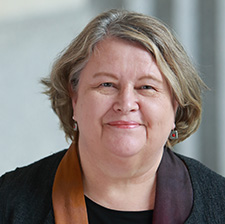 Aili Mari Tripp合作论文数Department of Gender & Women's Studies, College of Letters & Science, University of Wisconsin-Madison1
 Michael Bratton合作论文数Department of Political Science, College of Social Science, Michigan State University1
 John Frank. Clark合作论文数1
 Susan Dicklitch合作论文数The Ware Institute for Civic Engagement, Franklin & Marshall College1Marina Ottaway合作论文数1Eghosa E. Osaghae合作论文数University of Ibadan1Kidane Mengisteab合作论文数Pennsylvania State University1Cyril K. Daddieh合作论文数1Nicolas Van De Walle合作论文数Michigan State University;Institute of African Studies;University of Zambia;Michigan State University, University of Zambia1Earl Conteh-Morgan合作论文数1Kwame A. Ninsin合作论文数1Sylvia Tamale合作论文数1




