To date, the planetary nebula (PN) survey of the Deep Sky Hunters collaboration has led to the detection of more than 250 previously unknown candidate planetary nebulae (PNe). About 60% of them were found during the past two years and are expected to be true, likely or possible PNe because careful vetting has already thrown out more doubtful objects. The majority of the new PN candidates are located within the boundaries of the SHS and IPHAS Ha surveys and were discovered by combining MIR data from the WideField Infrared Survey Explorer (WISE) with optical data from the IPHAS, SHS and DSS surveys, and UV data from the Galaxy Evolution Explorer(GALEX).
AbstractHaving surveyed ≈ 10% of the sky, we have identified more than 130 PN candidates by surveying multicolour Digitized Sky Survey (DSS), Sloan Digitized Sky Survey (SDSS), and combined [O III], Hα and [S II] images. In a first imaging and spectroscopy campaign, 51 objects were identified as true and probable PNe. This work presents an additional 17 probable or possible PNe identified since that study. The majority of these candidates are situated at Galactic latitudes |b| > 5^, with the exception of seven objects located closer to the Galactic plane. Using the techniques described here that do not require any new survey data, we anticipate that many more PNe are waiting to be found, perhaps as many as 90.
We present 27 open cluster candidates, including 24 previously unknown, that were found during an ongoing visual inspection of First and Second Generation Digitized Sky Survey (DSS) and Two Micron All Sky Survey (2MASS) images. Employing 2MASS and UKIDSS photometry, 10 of these candidates and three earlier published objects have physical parameters determined by isochrone fitting of their [J,J-H] and [J,J-K] colour-magnitude diagrams (CMDs) and [J-H, J-K] colour–colour diagrams. In order to decontaminate the cluster CMDs from stars belonging to the Milky Way fore- and background, a statistical approach is applied that determines the statistical significance of the density differences between the cluster CMD and the CMD of the Milky Way background. The studied clusters have ages ranging from a few Myr to ≈ 1 Gyr, are only moderately reddened (E(B − V ) ≤ 1. 1) and are situated at distances between 0.95 and 5.5 kpc.
AbstractRecent Hα surveys such as SHS and IPHAS have improved the completeness of the Galactic planetary nebula (PN) census. We now know of ∼3000 PNe in the Galaxy, but this is far short of most estimates, typically ~25 000 or more for the total population. The size of the Galactic PN population is required to derive an accurate estimate of the chemical enrichment rates of nitrogen, carbon, and helium. In addition, a high PN count (>20 000) is strong evidence that most main-sequence stars of mass 1–8 M⊙ will go through a PN phase, while a low count (<10 000) argues that special conditions (e.g. close binary interactions) are required to form a PN. We describe a technique for finding hundreds more PNe using the existing data collections of the digital sky surveys, thereby improving the census of Galactic PNe.
 matthias kronberger合作论文数6David Jones合作论文数4George H. Jacoby合作论文数4agnes acker合作论文数3
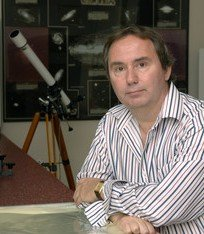 Quentin A Parker合作论文数Research Division for Physics and Astronomy, Faculty of Social Science, The University of Hong Kong3philippe teutsch合作论文数2Dianne Harmer合作论文数2
 Jani Saloranta合作论文数Centre for Wireless Communications (CWC),, University of Oulu University of Oulu2d douchin合作论文数1
 Steve B. Howell合作论文数NASA Ames Research Center1
 Martin Schoenball合作论文数Institut fur Astrophysik1
 Krzysiek Graczewski合作论文数1
 Warren Alfred Reid合作论文数1Piet Reegen合作论文数1M. Juchert合作论文数1Travis A. Rector合作论文数1Paul Eigenthaler合作论文数1
 Orsola De Marco合作论文数The Astrophysics and Space Technologies Research Centre, Department of Physics and Astronomy, Macquarie University1
 Bruno Alessi合作论文数Universidade de Sao Paulo;Dept . de Astronomia1Dawn L. Riddle合作论文数1
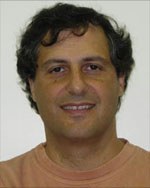 Robin Ciardullo合作论文数Department of Astronomy and Astrophysics, Eberly College of Science, Pennsylvania State University;Hobby Eberly Telescope Dark Energy Experiment1Brett Alessi合作论文数1
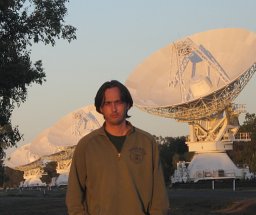 Ivan Bojicic合作论文数University of Western Sydney1




