A distributed model based on the limiting diameter for setting velocity of supernatant-sediment interface during sludge flocculation is presented.With DLVO and fractal theory,we proposed a new method to calculate the limiting diameter,in which the balance of hydrodynamic shear stress and inner force,including van der wanls attraction and double electrode layer repulsions,are used for explaining the stabilization of the limiting diameter.To simulate the settling velocity of interface,we put forward a method to calculate the accelerating section,after which the last three sections were simulated.The model proposed in this paper were verified using the data observed from the Huayuankou of Yellow River.A comparison between the calculated results and experimental data with the flocculant concentration series 50 and 100 mg/L were performed to verify our simulation technique,and they coincided well with each other.
Experiments are executed to study the flocculation and dehydration of sullage rapidly in high water content, it is found that the proportion of flocculants added into the sullage is related to water content of the sullage. The least proportion of flocculants decreased non-linear with the water content of the sullage. A new conception named “Hydrogel Chain” is proposed based on the experimental results and recent studies. By stating the combining process and mechanism of sullage particles, it gives the reason of remaining stable of the sullage in high water contents. The existence of “Hydrogel Chain” has been confirmed by scanning electron microscopy (SEM) analysis. We analyzed the relationship between water content and the least proportion of flocculants both by experiments and numerical method. Experimental results and analysis suggested the “Hydrogel Chain” proposed in this paper is rational and could be used in researches on dehydration of sullage.
This paper carry on the first step study on the method of switch between the single valve and ordinal valve and its work condition variety for yichuan unit No.1,in order to understand exactly the switch between the single valve and the ordinal valve,improve safety and credibility in switch and avoid problem.
An improved method for one dimensional non-equilibrium sediment transport equations with confluence is put forward in this paper, which is based on the traditional method. And then two different numerical models for water and sediment transport are established using traditional and improved method respectively for non-equilibrium sediment transport equations and that is the only difference between the two models. The models are applied in Baihetan Reservoir for calculating deformation of riverbed in order to test the methods, and the results educed by the two different calculating modes are compared and analyzed. Finally the results show that the improved method is much more reasonable in some special cases.
Under flocculent function,the silt flocculation and subsiding effect and the dehydrated speed were studied,silt dehydration influence factor and the degree were discussed. According to the orthogonal methods,by independent intellectual property flocculent FAS as the flocculent,the silt flocculation and subsiding experiment and the silt dehydrated experiment have carried out. Under the different ages,through comparing the situations of different flocculent proportion and the silt density and the silt moisture content,the dehydrated speed and the silt flocculate moisture content were researched. Finally the numerical statistic effects of silt density on silt dehydration were discussed. When the flocculent proportion was in 1.5‰~3.5‰ and the silt density approximately 18%~22%,the silt dehydration had the optimum effect and rate. In the best situation,the silt dehydration speed was quick in previous 48 hours,after 400 hours silt dehydration speed approached to zero.
DLVO theory for colloids is brought in research of sediment aggregation and a new method to determine the maximal diameter of aggregation is figured out,and all the factors that influence the aggregation are analyzed.The final results have a good consistency with that of the former experiments and observations.Therefore this method can be used in analyzing and determining the maximal diameter of fine sediment aggregation in steady water.More work should be done to make new advance in this field.
Levee or dam failure can cause a significant disaster in most cases. A good prediction of the flood process especially in a real complex terrain is necessary for working out emergency plans for levee or dam breaches. Numerical simulations of levee or dam breach flow were carried out often with constant flow parameters and in relatively simple channels rather than in natural rivers with complex boundaries. This article presents our dedicated studies on the 2-D numerical model of levee or dam breach hydraulics with finite difference schemes. The good performance of the model is demonstrated by comparisons with the theoretical solution of an idealized dam-break flow over a frictionless flat rectangular channel. The model is also validated through its stability and conservation properties. The model is applied to simulate the flood propagation under complex boundary conditions, and the unsteady flood process in a river and in the dry floodplain with a complex bed terrain simultaneously. Furthermore, with respect to engineering practice, the numerical solutions can give special guidance to the effects of parameters such as the flood depth at different sites and the inundated area at different time periods after the levee breach and the travel time of the flood waves, which may be very important for practicing engineers in an efficient flood management.
The phenomena of river bank scouring are described.Three main factors of river bank scouring are expounded including erosion capacity of flow,resistance of erosion,resistance of shearing aiming at three different kinds of riverbanks,including noncohesive riverbank,cohesive riverbank and admixture riverbank from mechanical perspective.The limitations of simulation method for erosion on river banks based on empirical formula and extremum assumption are analyzed.The hydrodynamic-soil-mechanic method for different soils is mainly expounded;and the research direction and application of this field are mentioned.
In light of many problems of the Yangtze River,such as water resources distribution,flood disaster analysis and evaluation,and flood forecast etc.,a main framework of the digital Yangtze River basin flood forecast system is proposed.The key technological issues of the forecast system are analyzed;and its technique route,structure,important mathematical models and operation process are discussed in detail.Based on this framework the flood forecast system for the Yangtze River will be more useful in flood controlling.
Work well the machine set a cent department to try the luck work, is the whole assurance that the set starts quality.The key lie in adjust to try,the set up,produce unit of match with try rationality of carry the project.
A new numerical scheme based on finite volume method is brought forward;and theoretical analysis is made from the aspects of compatibitity,stability and convergence of the numerical scheme.Finally,this numerical scheme is used to settle a practical problem;and then its characteristics and effectiveness are found so as to help the theoretical research and engineering practice.
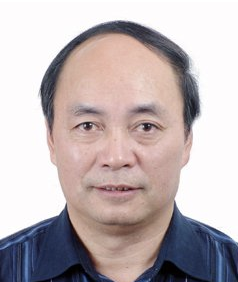 Guolu Yang (杨国录)合作论文数School of Water Resources and Hydropower Engineering, Wuhan University7
 Minghui Yu (余明辉)合作论文数School of Water Resources and Hydropower Engineering, Wuhan University5
 Linshuang Liu合作论文数3Shentang Dou合作论文数2
 Min Wang (王敏)合作论文数Electronic Information School, Faculty of Information Sciences, Wuhan University2yan shao合作论文数1Xiaofang Liu (刘晓芳)合作论文数1Chunxia Ren (任春霞)合作论文数1Jiahe Liu (刘加合)合作论文数1Liangying Yu (余亮英)合作论文数School of Power and Mechanical Engineering, Wuhan University1Jingxun Ji (季敬勋)合作论文数1Ziyin Jin (金子印)合作论文数1Liqi Yu (于立琦)合作论文数1Yaling Chen (陈娅玲)合作论文数1Yinling Deng (邓银玲)合作论文数1




