In this study, silk fibroin in hydrogel form is analyzed as an eco-friendly alternative to conventional polymers for lens applications in light-emitting diodes. The intensity profile was controlled via dome- and crater-type lenses.
Get PDF Email Share Share with Facebook Tweet This Post on reddit Share with LinkedIn Add to CiteULike Add to Mendeley Add to BibSonomy Get Citation Copy Citation Text I. B. Dogru, C. K. Soz, D. A. Press, R. Melikov, E. Begar, D. Conkar, E. N. F. Karalar, E. Yilgor, I. Yilgor, and S. Nizamoglu, "All-protein 3D coffee stain lasers," in Advanced Photonics 2018 (BGPP, IPR, NP, NOMA, Sensors, Networks, SPPCom, SOF), OSA Technical Digest (online) (Optica Publishing Group, 2018), paper NoW2J.4. Export Citation BibTex Endnote (RIS) HTML Plain Text Citation alert Save article
Today, a wide variety of organic and inorganic luminescent materials (e.g., phosphors, quantum dots, etc.) are being used for lighting and new materials (e.g., graphene, perovskite, etc.) are currently under investigation. However, the understanding of radiative energy transfer is limited, even though it is critical to understand and improve the performance levels of solid-state lighting devices. In this study, we derived a matrix approach that includes absorption, reabsorption, inter-absorption and their iterative and combinatorial interactions for one and multiple types of fluorophores, which is simplified to an analytical matrix. This mathematical approach gives results that agree well with the measured spectral and efficiency characteristics of color-conversion light-emitting diodes. Moreover, it also provides a deep physical insight by uncovering the entire radiative interactions and their contribution to the output optical spectrum. The model is universal and applicable for all kinds of fluorophores.
We developed a matrix method that calculates and reveals all the radiative energy transfer processes of absorption, reabsorption, inter-absorption and their iterative and combinatorial interactions in down-conversion layer of a light-emitting diode.
The transition from 2D to 3D coffee stains was demonstrated and the 3D coffee stains enabled the construction of all-protein lasers.
Today the high demand for electronics leads to massive production of waste, thus green materials based electronic devices are becoming more important for environmental protection and sustainability. The biomaterial based hydrogels are widely used in tissue engineering, but their uses in photonics are limited. In this study, silk fibroin protein in hydrogel form is explored as a bio-friendly alternative to conventional polymers for lens applications in light-emitting diodes. The concentration of silk fibroin protein and crosslinking agent had direct effects on optical properties of silk hydrogel. The spatial radiation intensity distribution was controlled via dome- and crater-type silk-hydrogel lenses. The hydrogel lens showed a light extraction efficiency over 0.95 on a warm white LED. The stability of silk hydrogel lens is enhanced approximately three-folds by using a biocompatible/biodegradable poly(ester-urethane) coating and more than three orders of magnitude by using an edible paraffin wax coating. Therefore, biomaterial lenses show promise for green optoelectronic applications.
We demonstrated a new class of white LEDs based on biologically-derived fluorescent proteins. For this we expressed eGFP and mCherry proteins, and integrated them over blue LED chips for cool-, daylight- and warm-white light generation.
The usage time of displays (e.g., TVs, mobile phones, etc) is in general shorter than their functional life time, which worsens the electronic waste (e-waste) problem around the world. The integration of biomaterials into electronics can help to reduce the e-waste problem. In this study, we demonstrate fluorescent protein integrated white LEDs to use as a backlight source for liquid crystal (LC) displays for the first time. We express and purify enhanced green fluorescent protein (eGFP) and monomeric Cherry protein (mCherry), and afterward we integrate these proteins as a wavelength-converter on a blue LED chip. The protein-integrated backlight exhibits a high luminous efficacy of 248 lm/W-opt and the area of the gamut covers 80% of the NTSC color gamut. The resultant colors and objects in the image on the display can be well observed and distinguished. Therefore, fluorescent proteins show promise for display applications.
The demand for high power LEDs for illumination applications is increasing. LED package encapsulation is one of most critical materials that affect the optical path of the generated light by LEDs, and may result in lumen degradation. A typical encapsulation material is a mixture of phosphor and a polymer based binder such as silicone. After LED chips are placed at the base of a cavity, phosphor particles are mixed with silicone and carefully placed into the cavity. One of the important technical challenges is to ensure a better thermal conductivity than 0.2 W/m-K of current materials for most of the traditional polymers in SSL applications.In this study, we investigated an unconventional material of the silk fibroin proteins for LED applications, and showed that this biomaterial provides thermal advantages leading to an order of magnitude higher thermal performance than conventional silicones. Silk fibroin is a natural protein and directly extracted from silk cocoons produced by Bombyx mori silkworm. Therefore, it presents a "green" material for photonic applications with its superior properties of biocompatibility and high optical transparency with a minimal absorption. Combining these properties with high thermal performance makes this biomaterial promising for future LED applications.An experimental and computational study to understand the optical and thermal performance is performed. A computational fluid dynamics study with a commercial CFD software was performed and an experimental set-up was developed to validate the computational findings to determine the thermal conductivity of the proposed material.
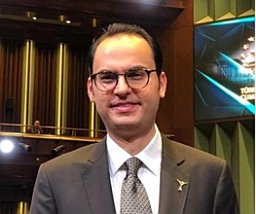 Sedat Nizamoglu合作论文数Department of Physics;Department of Electrical and Electronics Engineering;Nanotechnology Research Center;Institute of Materials Science and Nanotechnology;Bilkent University;Institute of Materials Science and Nanotechnology, Bilkent University9
 Rustamzhon Melikov合作论文数Dept Elect & Elect Engn, Koc Univ8
 Deniz Conkar合作论文数4
 Itir Bakis Dogru合作论文数Koç University4
 Sadra Sadeghi合作论文数Queen’s University4
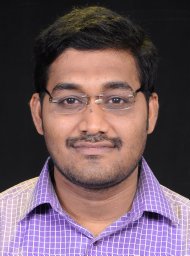 Baskaran Ganesh Kumar合作论文数P S R Arts and Science College4
 Fırat-Karalar Elif Nur合作论文数Department of Biology, Stanford University4
 Iskender Yilgor合作论文数Department of Chemistry, Koc University4
 Cagla Kosak Soz合作论文数2Efe Begar合作论文数2
 Mariana Chirea合作论文数2
 Emel Yilgor合作论文数Department of Chemistry, Koc University2Enes Tamdogan合作论文数1
 Sevket U. Yuruker合作论文数University of Maryland at College Park1
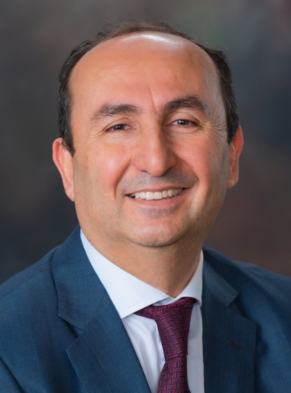 Mehmet Arik合作论文数Department of Mechanical Engineering, Samuel Ginn College of Engineering, Auburn University;EVATEG Center, Özyeğin University1




