The XFOL campaign is continuing to study radiation flow in stochastic media. Purpose: Simultaneously measure the ionization state of the background and inclusions of a binary stochastic media using the COAX/OUTI diagnostic. Motivation: Radflow is stochastic media is of wide, growing interest and COAX is a new powerful diagnostic that can characterize the radflow physics and validate codes, models, and their underlying assumptions.
Software is crucial to all areas of modern plasma science research. Laboratory plasma physicists use software to interpret plasma diagnostics, analyze experimental results, and glean insights using advanced techniques from data science. Space scientists use software to reduce and understand in situ observations. Numericists use software to simulate the behavior of laboratory, heliospheric, and astrophysical plasmas, and then analyze or visualize the results. Theorists use symbolic manipulation software to perform or check derivations. Cross-disciplinary research and cross-comparisons between experiments, observations, simulations, and theories all require software. Despite our heavy reliance on software, funding agencies have traditionally had few avenues available to support development of general purpose research software infrastructure.
Turbulent dynamos that exponentially amplify initially small, seed magnetic fields are crucial in magnetizing the Galaxy and beyond. Until now, the ideal environment for turbulent dynamos to grow has been difficult to recreate. In a new approach, we leverage the long pulse capability of the OMEGA-EP laser to recreate the highly conductive and inviscid (Rem∼5500, Prm≳1) growth environment of the turbulent dynamo within the magnetized plasma jet ablated from a simple cone target of CH plastic. In 3-D FLASH simulations of our scheme, we find that the ideal dynamo environment is a typically ∼1 mm3, ≳1.5 keV hot spot where the laser beams intersect to produce maximum direct heating of the jet plasma. The dynamo environment is maintained from the onset of steady flows through the ∼10 ns length of the laser pulse. For a plasma vorticity of 0.3–3.0 ns–1 and a dynamo active over ∼5 ns, the magnetic energy increases on an exponential trajectory by more than a decade. Fourier analysis reveals that the dynamo progressively saturates up to EB/EK∼20% from small scales k≳30 cm−1 to large in the time it is sustained. We find robust agreement between the evolution of magnetic energy spectra extracted from the FLASH physics simulation and that derived from synthetic sheath-accelerated proton deflectometry images, thereby demonstrating that the dynamo activity can be quantified in a real experiment.
 Riccardo Betti合作论文数Department of Mechanical Engineering, Hajim School of Engineering & Applied Sciences, University of Rochester;Laboratory for Laser Energetics19
 j r davies合作论文数17
 Gennady Fiksel合作论文数Department of Nuclear Engineering and Radiological Sciences, College of Engineering, University of Michigan;Center for Ultrafast Optical Science, College of Engineering, University of Michigan12
 Chang P-Y合作论文数University of Rochester, University of Rochester11
 J. Peebles合作论文数9
 Chikang Li合作论文数Plasma Science and Fusion Center, Massachusetts Institute of Technology6E. C. Hansen合作论文数5Di Stefano C A合作论文数5
 Kirk Flippo合作论文数Xcimer Energy Corporation5Codie Fiedler Kawaguchi合作论文数4Andy Liao合作论文数4Luis Leal合作论文数4
 Pawel Michal Kozlowski合作论文数Department of Chemistry, University of Louisville4
 Alex M Rasmus合作论文数4Shengtai Li合作论文数4
 Brian J. Albright合作论文数Primary Physics Group, X Theoretical Design Division, Los Alamos National Laboratory4Po-Yu Chang合作论文数3
 Peter Ver Bryck Heuer合作论文数Dept Phys & Astron, Univ Calif Los Angeles3
 A. Birkel合作论文数Plasma Sci & Fus Ctr, MIT3V Yu Glebov合作论文数3
 Brian M. Haines合作论文数3
 Suxing Hu (胡素兴)合作论文数Department of Mechanical Engineering, Hajim School of Engineering & Applied Sciences, University of Rochester;Department of Physics and Astronomy, University of Rochester;Laboratory for Laser Energetics, University of Rochester3
 Amitava Bhattacharjee合作论文数Princeton Plasma Physics Laboratory, Princeton University;Department of Astrophysical Sciences, Princeton University;Princeton Center for Heliophysics, Princeton University3
 Daniel Haberberger合作论文数Department of Physics and Astronomy, School of Arts & Sciences, University of Rochester;Laboratory for Laser Energetics, University of Rochester3
 Hui Li (李辉)合作论文数Department of Astronomy, Tsinghua University3James P. Knauer合作论文数3
 Kai Germaschewski合作论文数College of Engineering and Physical Sciences, University of New Hampshire;Space Science Center, Institute for the Study of Earth, Oceans, and Space, University of New Hampshire3
 Adam Sefkow合作论文数Department of Mechanical Engineering, Hajim School of Engineering & Applied Sciences, University of Rochester;Laboratory for Laser Energetics, University of Rochester;Department of Physics, University of Rochester;Department of Computer Science, University of Rochester3
 Yongho Kim合作论文数3Kwyntero Kelso合作论文数2Joseph Levesque合作论文数2p m nilson合作论文数2
 M. J.-E. Manuel合作论文数Atom, Gen2
 S P Regan合作论文数2
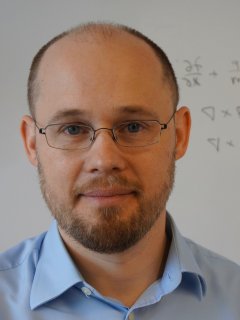 William R. Fox合作论文数Princeton Plasma Physics Laboratory, Princeton University;Department of Astrophysical Sciences, Princeton University2
 Alex Zylstra合作论文数Pacific Fusion2Ross J S合作论文数Lawrence Livermore Natl Lab2Kerr Shaun合作论文数2
 Sio H合作论文数Plasma Science and Fusion Center, Massachusetts Institute of Technology2
 Sallee Klein合作论文数Center for Center for High Energy Density Astrophysical Research, Nuclear Engineering and Radiological Sciences Department, University of Michigan2
 Bradley Pollock合作论文数2
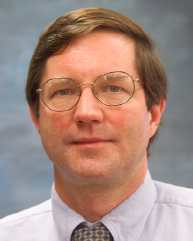 David D. Meyerhofer合作论文数Department of Physics and Astronomy, School of Arts & Sciences, University of Rochester;Experimental Division, Laboratory for Laser Energetics, University of Rochester2Rachel Young合作论文数2
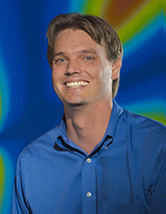 Dustin Froula合作论文数Department of Physics and Astronomy, University of Rochester;Laboratory for Laser Energetics, University of Rochester2
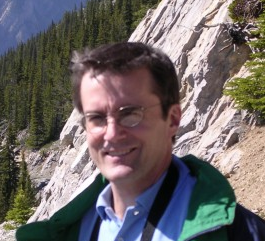 P. M. Hartigan合作论文数Physics and Astronomy Dept., Rice University2Carolyn Kuranz合作论文数University of Michigan2Miguel de Val-Borro合作论文数1Michael A. Gunderson合作论文数1M. J. Bonino合作论文数1




