Ammonia (NH _3 ), likely the most abundant nitrogen-bearing molecule in cometary ices followed by hydrogen cyanide, is believed to be stored in the nucleus predominantly as a parent ice. However, spatial profiles of NH _3 observed in comet C/2014 Q2 (Lovejoy) in the near-infrared region are consistent with a distributed source contribution (Dello Russo et al. 2022). We developed the direct simulation Monte Carlo model of ammonia in cometary coma and applied it to comet C/2014 Q2 (Lovejoy). Results suggest that NH _3 molecules in the coma of C/2014 Q2 (Lovejoy) can plausibly originate from a combination of parent molecules of NH _3 in the coma and a NH _3 nucleus source. We demonstrate that the parents of NH _3 having photodissociation lifetimes of several hundreds of seconds or longer (at 1 au from the Sun) can explain the observed spatial profile of NH _3 in comet C/2014 Q2 (Lovejoy). Even though ammonia salts are possible candidates for parents of NH _3 , some simple ammonium salts such as NH _4 CN or NH _4 Cl may dissociate thermally within very short lifetimes after sublimation from the nucleus, so the contribution from those ammonium salts may be indistinguishable from the nucleus source. The lack of experimental data on photoprocesses for potential NH _3 parent molecules prevent us from identifying the origin of NH _3 in comets. Experimental and theoretical studies of photodissociation/ionization reactions of potential NH _3 parent molecules by the solar UV radiation field are encouraged for the future identification of NH _3 parents in comets.
Mars averages 230 million kilometers from the Sun. Although Galileo is the first person to report seeing the disk of Mars through a telescope, Dutch physicist Christiaan Huygens recorded the initial surface feature, a spot, in 1659. Mars and the Earth are the only solar-system planets to have polar ice caps, which wax and wane with the approach of winter and summer. So, the seasons on Mars vary like those on the Earth. The USSR and USA targeted Mars with space probes early in the space age. In 1976, the USA placed the first landers on the martian terrain: Viking 1 and Viking 2. The Viking landers determined that Mars's surface is a porous regolith of mixed rock and dust. The thin martian atmosphere also allows daytime heat from the more-distant Sun to leave Mars quickly at night. Temperatures on Mars range from –125°C at the poles in winter to 20°C on a nice summer's day near the equator.
In China, Gan De's observations of Jupiter also date to the 4th century BCE. Within 200 years, Chinese astronomers were familiar with the retrograde motion of five planets, including Saturn. The inhabitants of the outer Planetary System are the Jovian Planets after their archetype, Jupiter. More specifically, the Gas Giants are closest to the Sun; Jupiter is inarguably giant. Jupiter is the most voluminous planet; 1,300 Earths could fit inside it. Obviously, Jupiter must be made of very low-density elements, of which the list quickly narrows down to two: hydrogen and helium. Jupiter's magnetic field traps electrically charged particles from the Sun and some sputtered off Jupiter's satellites in tori surrounding Jupiter just like the Van Allen Belts encircle the Earth. Less violently, Jupiter's magnetic field also produces the most powerful and brightest aurorae on any planet, seen in Jupiter's polar regions. Jupiter's magnetosphere is truly huge, 20,000 times greater in volume than that of the Earth's.
The largest grains of interplanetary dust, or micrometeoroids, continually intersect the Earth. They are still so lightweight that, once in the atmosphere, they float gently down to the ground. In addition to these barely discernable pellets, other small rocky and metallic bodies called the meteoroids routinely strike the Earth. Meteoroids have random orbits about the Solar System. Meteoroids cause the smaller craters that appear abundant on planetary surfaces with little or no atmosphere. Moving at supersonic speeds, meteoroids explode upon impact, excavating a crater. Creating a large basin requires an asteroid or large comet. Occasional, large meteoroids create bright meteors called the bolides. A meteor may cause damage without reaching the Earth's surface or creating a crater. One of the great natural mysteries of modern times is the Tunguska Event, so named because scientists do not quite know what happened in central Siberia in 1908.
Besides the planets, dwarf planets, asteroids, and comets that all orbit the Sun, many other bodies inhabit the Solar System, namely moons, which are also known as natural satellites. The eight planets host at least 219 moons, and more are found every few years. Of these, the Giant Planets hog the most moons, with Saturn and Jupiter leading the count with more than 100 between them. Moons come in many sizes and shapes with a variety of characteristics. A few of the largest ones have atmospheres, but most do not. Moons are classified according to their orbits: regular or irregular. Ice is usually thought of as bright, but the surface of Callisto is not. One reason is dirty ice and another is the multitude of crater-forming meteoroids that have struck the satellite. Ganymede has an intrinsic magnetic field, making it the only satellite that presently generates its own magnetism.
The Moon is the Earth's only natural satellite, the fifth largest in the Solar System. The Moon appears to rise and set in the sky every day, just like the stars. The reason is the same: The Earth rotates. The Moon's path appears to encircle the Earth roughly once each month. When the Sun totally illuminates the lunar nearside, the Moon certainly looks bright—it is the night of the Full Moon. The interval of time the Moon takes to go through a cycle of lunar phases is called the synodic month. It is slightly longer than the time the Moon takes to orbit the Earth as measured against the background of stars, the sidereal month. During a total lunar eclipse, the Moon passes completely through the inner core of the Earth's shadow, the umbra. For several hours, everyone on the night side of the Earth will see a dark, coppery disk.
Aside from the definition of a planet in the Solar System, an IAU commission defines an exoplanet as an object that orbits a star and has a mass less than that of 13 Jupiters. Bodies having greater than 80 Jupiter masses are full-fledged stars since they can achieve core temperatures and pressures sufficient to initiate hydrogen fusion and generate their own light. Sustained nuclear fusion is the primary distinction between stars and planets. Astronomers use five main techniques to locate exoplanets: direct imaging, astrometric, radial velocity, transit, and microlensing. When the planet transits its star, the light of the star is slightly diminished. Accurately measuring this tiny dimming over time produces a light curve. Analyzing the light curve, astronomers can determine the planet's orbital period and diameter. The Transiting Exoplanet Survey Satellite, launched in 2018, is NASA's next step in the search for planets outside the Solar System.
Comets appear unannounced in the night sky, contrary to the predictable motions of other celestial bodies. Most move along paths different than any planet. During the Renaissance, some coins and medals displayed comets. These items were used as amulets to ward off the bad luck from the comet. Aristotle argued that comets are phenomena entirely within the Earth's atmosphere. Edmund Halley demonstrated that comets are part of the Solar System, orbiting the Sun much like planets. Astrobiologists think comet nuclei may provide insight into the origins of life on the Earth. They are composed of volatiles, mostly water ice with simple organic molecules; the same mixture is also essential to the prebiotic chemistry necessary for life. Some short-period comets are classified as Centaurs, another interesting group of small bodies, orbiting between Jupiter and Neptune near the ecliptic. Under a comet's low gravity, gas freely escapes, carrying dust with it.
At its brightest, Venus outshines all celestial bodies other than the Sun and Moon. It first appears in the east just before sunrise as the Morning Star. As early as 1702 BCE, the Babylonians were recording their observations of Venus on cuneiform tablets and predicting its future appearances. The planet Venus was also significant to Mesoamerican cultures. The Copernican model placed Venus closer to the Sun than the Earth. One disappearance of Venus occurs because it moves between the Earth and the Sun. With an orbital radius only 0.28 au less than that of the Earth, Venus comes closer to the Earth than any other major Solar System body except for the Moon. Venus sometimes is called 'Earth's twin'. The rotation of Venus causes radar signals to blueshift when they reflect off the limb that is approaching the Earth and to redshift when they reflect off the receding limb.
The Comet Interceptor Mission (ESA/JAXA) aims to visit a long-period comet or interstellar object. Its primary science goals are to characterize the object's shape, structure, and the composition of its surface and gas coma. The mission consists of three spacecraft, the primary and two accompanying ones. The focus of this paper is the unique synergetic activities between two mass spectrometers to investigate the chemical composition of the coma, one on the primary spacecraft and another on an accompanying spacecraft. Both can be operated in a complementary fashion, at different locations and at the same time, to sort out spatial from temporal effects. Relevant investigations of the coma composition and chemistry within the technical specifications of the instruments could address several unsolved questions. The Comet Interceptor Mission is posed to be an important mission for advancing our knowledge of comets, especially clues for understanding coma chemistry and composition.
Most of ancient astronomy was taken up with attempts to understand the motions of the planets as well as the apparent motions of the Sun and the Moon. Each planet's sphere rotated at its own particular speed upon its own individual axis, which generated complicated relative motions played out against the background stars. The modern study of the planets began with the work of German astronomer Johannes Kepler in the 17th century, who theorized that all the planets revolve about the Sun in elliptical orbits with the Sun at one focus; the other is empty. Planets travel fastest when nearest the Sun and slowest at their farthest point from the Sun, half an orbit later. The implication is that most of a planet's orbital time is spent around aphelion. This is called Kepler's Second Law. Giuseppe Piazzi, an Italian astronomer and priest, detected Ceres, another new planet in the gap between Mars and Jupiter.
 Walter F. Huebner合作论文数78
 Alan Stern合作论文数Space Sector, Southwest Research Institute;World View Enterprises21
 Daniel Britt合作论文数Department of Physics, University of Central Florida18R. Wegmann合作论文数16B. R. Sandel合作论文数16
 Nicolas Thomas合作论文数Physikalisches Institut, University of Bern16
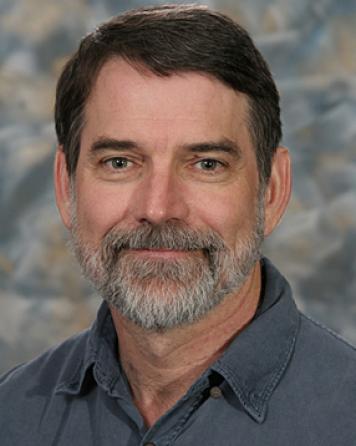 Roger V. Yelle合作论文数Lunar and Planetary Laboratory, Department of Planetary Sciences, College of Science, The University of Arizona15
 Bonnie Buratti合作论文数Science Division, Jet Propulsion Laboratory, California Institute of Technology15Laurence A. Soderblom合作论文数15
 Jennifer L. Bartlett合作论文数14
 Robert M. Nelson合作论文数14Juergen Oberst合作论文数12Hideyo Kawakita合作论文数11
 Amaury A. De Almeida合作论文数10elaine asbell合作论文数9
 Patricia H. Reiff合作论文数Department of Physics and Astronomy, Wiess School of Natural Sciences, Rice University9Jun-Ichi Watanabe合作论文数9G. C. Sanzovo合作论文数9Ichishiro Konno合作论文数8h u schmidt合作论文数7Jennifer Bartlett合作论文数7
 Robert Hamilton Brown合作论文数Lunar & Planetary Laboratory, College of Sciences, The University of Arizona7
 Yoshiharu Shinnaka合作论文数7Hitomi Kobayashi合作论文数7
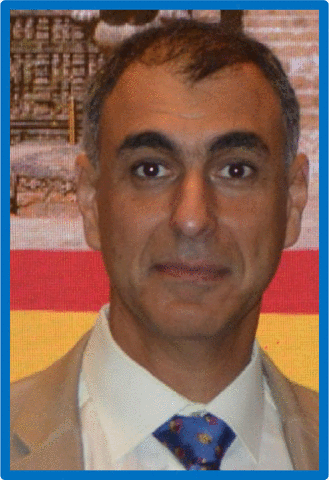 Sidney Chocron合作论文数Southwest Research Institute7
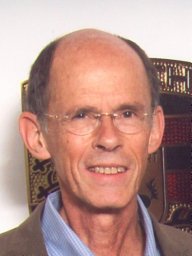 David T Young合作论文数Southwest Research Institute7Michael D. Hicks合作论文数7Johannes Benkhoff合作论文数Deutsches Zentrum für Luft- und Raumfahrt Institut für Planetenforschung7
 Robert H. Brown合作论文数Department of Neurology, UMass Chan Medical School6Richard A. Goldstein合作论文数6
 Tobias C. Owen合作论文数Institute for Astronomy, University of Hawaii6Guy Moreels合作论文数6Jacques Clairemidi合作论文数6
 Heike Rauer合作论文数6Harold Reitsema合作论文数Southwest Research Institute6Reiko Furusho合作论文数5m v canaves合作论文数5John J Keady合作论文数5
 David Harry Grinspoon合作论文数Denver Museum Nat & Sci5LA SODERBLOM合作论文数4nigel thomas合作论文数4R. Goldstein合作论文数4
 Frank Judson Crary合作论文数Laboratory for Atmospheric and Space Physics, University of Colorado Boulder4G. Crowley合作论文数4
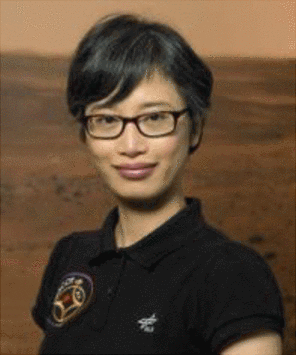 Tra-Mi Ho合作论文数4
 Karen Jean Meech合作论文数Institute for Astronomy, University of Hawaii4Rosemary M. Killen合作论文数4Fred L Whipple合作论文数4




