Inland fisheries assessment and management are challenging given the inherent complexity of working in diverse habitats (e.g., rivers, lakes, wetlands) that are dynamic on organisms that are often cryptic and where fishers are often highly mobile. Yet, technoscience is offering new tools that have the potential to reimagine how inland fisheries are assessed and managed. So-called “technoscience” refers to instances in which science and technology unfurl together, offering novel ways of spurring and achieving meaningful change. This paper considers the role of technoscience and its potential for modernizing the assessment and management of inland fisheries. It first explores technoscience and its potential benefits, followed by presentation of a series of synopses that explore the application (both successes and challenges) of new technologies such as environmental DNA (eDNA), genomics, electronic tags, drones, phone apps, iEcology, and artificial intelligence to assessment and management. The paper also considers the challenges and barriers that exist in adopting new technologies. The paper concludes with a provocative assessment of the potential of technoscience to reform and modernize inland fisheries assessment and management. Although these tools are increasingly being embraced, there is a lack of platforms for aggregating these data streams and providing managers with actionable information in a timely manner. The ideas presented here should serve as a catalyst for beginning to work collectively and collaboratively towards fisheries assessment and management systems that harness the power of technology and serve to modernize inland fisheries management. Such transformation is urgently needed given the dynamic nature of environmental change, the evolving threat matrix facing inland waters, and the complex behavior of fishers. Quite simply, a dynamic world demands dynamic fisheries management; technoscience has made that within reach.
In British Columbia, Atlantic salmon (Salmo salar) are the top finfish aquaculture export of the province, although native Chinook salmon (Oncorhynchus tshawytscha) are also farmed locally. Few commercial facilities rear Chinook salmon, limiting the availability and development of their broodstocks, potentially reducing the ability to improve product quantity and quality. Due to the potential for inbreeding in these stocks, a need to determine whether product quantity and quality can be improved through outbreeding with wild populations exists. In this study, we examined the effects of outbreeding on farmed salmon by comparing product quantity and quality metrics in six experimental populations of outbred (wild × farmed) Chinook salmon and one farmed (control) population. Specifically, we measured fillet yield, slaughter yield, lipid content and flesh colour score in three-year old market-sized salmon immediately post-slaughter. We found significant differences across populations for slaughter yield, fillet yield and flesh colour score but found no differences across populations in lipid content. For flesh colour score, slaughter and fillet yield, the control farmed population performed similarly to the highest performing outbred populations. These results suggest that outbreeding inbred farmed populations with wild populations can maintain high product quality while adding new genes to a population.
Carotenoids are primarily responsible for the characteristic red flesh coloration of salmon. Flesh coloration is an economically and evolutionarily significant trait that varies inter- and intra-specifically, yet the underlying genetic mechanism is unknown. Chinook salmon (Oncorhynchus tshawytscha) represents an ideal system to study carotenoid variation as, unlike other salmonids, they exhibit extreme differences in carotenoid utilization due to genetic polymorphisms. Here, we crossed populations of Chinook salmon with fixed differences in flesh coloration (red versus white) for a genome-wide association study to identify loci associated with pigmentation. Here, the beta-carotene oxygenase 2-like (BCO2-l) gene was significantly associated with flesh colour, with the most significant single nucleotide polymorphism explaining 66% of the variation in colour. BCO2 gene disruption is linked to carotenoid accumulation in other taxa, therefore we hypothesize that an ancestral mutation partially disrupting BCO2-l activity (i.e. hypomorphic mutation) allowed the deposition and accumulation of carotenoids within Salmonidae. Indeed, we found elevated transcript levels of BCO2-l in white Chinook salmon relative to red. The long-standing mystery of why salmon are red, while no other fishes are, is thus probably explained by a hypomorphic mutation in the proto-salmonid at the time of divergence of red-fleshed salmonid genera (approx. 30 Ma).
Despite increased global interest in Chinook salmon aquaculture, little is known of their viral immune defenses. This study describes the establishment and characterization of a continuous cell line derived from Chinook salmon spleen, CHSS, and its use in innate immune studies. Optimal growth was seen at 14-18 degrees C when grown in Leibovitz's L-15 media with 20% fetal bovine serum. DNA analyses confirmed that CHSS was Chinook salmon and genetically different from the only other available Chinook salmon cell line, CHSE-214. Unlike CHSE-214, CHSS could bind extracellular dsRNA, resulting in the rapid and robust expression of antiviral genes. Receptor/ligand blocking assays confirmed that class A scavenger receptors (SR-A) facilitated dsRNA binding and subsequent gene expression. Although both cell lines expressed three SR-A genes: SCARA3, SCARA4, and SCARA5, only CHSS appeared to have functional cell-surface SR-As for dsRNA. Collectively, CHSS is an excellent cell model to study dsRNA-mediated innate immunity in Chinook salmon.
In many species, sperm velocity affects variation in the outcome of male competitive fertilization success. In fishes, ovarian fluid (OF) released with the eggs can increase male sperm velocity and potentially facilitate cryptic female choice for males of specific phenotypes and/or genotypes. Therefore, to investigate the effect of OF on fertilization success, we measured sperm velocity and conducted in vitro competitive fertilizations with paired Chinook salmon (Oncorhynchus tshawytscha) males representing two alternative reproductive tactics, jacks (small sneaker males) and hooknoses (large guarding males), in the presence of river water alone and OF mixed with river water. To determine the effect of genetic differences on fertilization success, we genotyped fish at neutral (microsatellites) and functional [major histocompatibility complex (MHC) II ß1] markers. We found that when sperm were competed in river water, jacks sired significantly more offspring than hooknoses; however, in OF, there was no difference in paternity between the tactics. Sperm velocity was significantly correlated with paternity success in river water, but not in ovarian fluid. Paternity success in OF, but not in river water alone, was correlated with genetic relatedness between male and female, where males that were less related to the female attained greater paternity. We found no relationship between MHC II ß1 divergence between mates and paternity success in water or OF. Our results indicate that OF can influence the outcome of sperm competition in Chinook salmon, where OF provides both male tactics with fertilization opportunities, which may in part explain what maintains both tactics in nature.
Post‐copulatory sexual selection processes, including sperm competition and cryptic female choice (CFC), can operate based on major histocompatibility (MH) genes. We investigated sperm competition between male alternative reproductive tactics [jack (sneaker) and hooknose (guard)] of Chinook salmon (Oncorhynchus tshawytscha). Using a full factorial design, we examined in vitro competitive fertilization success of paired jack and hooknose males at three time points after sperm activation (0, 15 and 60 s) to test for male competition, CFC and time effects on male fertilization success. We also examined egg‐mediated CFC at two MH genes by examining both the relationship between competitive fertilization success and MH divergence as well as inheritance patterns of MH alleles in resulting offspring. We found that jacks sired more offspring than hooknose males at 0 s post‐activation; however, jack fertilization success declined over time post‐activation, suggesting a trade‐off between sperm speed and longevity. Enhanced fertilization success of jacks (presumably via higher sperm quality) may serve to increase sneaker tactic competitiveness relative to dominant hooknose males. We also found evidence of egg‐mediated CFC (i.e. female × male interaction) influencing competitive fertilization success; however, CFC was not acting on the MH genes as we found no relationship between fertilization success and MH II β1 or MH I α1 divergence and we found no deviations from Mendelian inheritance of MH alleles in the offspring. Our study provides insight into evolutionary mechanisms influencing variation in male mating success within alternative reproductive tactics, thus underscoring different strategies that males can adopt to attain success.
We investigate random walk with a bias toward a target node in spatially embedded networks with total cost restriction introduced by Li et al. (2010). Precisely, The network is built from a two-dimension regular lattice to be improved by adding long-range shortcuts with probability P(rij)∼rij−α, where rij is the Manhattan distance between sites i and j, and α is a variable exponent, the total length of the long-range connections is restricted. Bias is represented as a probability p of the packet or particle to travel at every hop toward the node which has the smallest Manhattan distance to the target node. By studying the mean first passage time (MFPT) for different exponent log〈l〉, we find that the best transportation condition is obtained with an exponent α=d+1(d=2) for all p. The special phenomena can be possibly explained by the theory of information entropy, we find that when α=d+1(d=2), the spatial network with total cost restriction becomes an optimal network which has a maximum information entropy. In addition, the scaling of the MFPT with the size of the network is also investigated, and finds that the scaling of the MFPT with L follows a linear distribution for all p>0.
Acid mine drainage (AMD) impacted waters are a worldwide concern for the mining industry and countries dealing with this issue; both active and passive technologies are employed for the treatment of such waters. Mussel shell bioreactors (MSB) represent a passive technology that utilizes waste from the shellfish industry as a novel substrate. The aim of this study is to provide insight into the biogeochemical dynamics of a novel full scale MSB for AMD treatment. A combination of water quality data, targeted geochemical extractions, and metagenomic analyses were used to evaluate MSB performance. The MSB raised the effluent pH from 3.4 to 8.3 while removing up to ∼99% of the dissolved Al, and Fe and >90% Ni, Tl, and Zn. A geochemical gradient was observed progressing from oxidized to reduced conditions with depth. The redox conditions helped define the microbial consortium that consists of a specialized niche of organisms that influence elemental cycling (i.e. complex Fe and S cycling). MSB technology represents an economic and effective means of full scale, passive AMD treatment that is an attractive alternative for developing economies due to its low cost and ease of implementation.
Hybridization can complicate the effective conservation of cryptic and morphologically similar species. Here we provide a rapid genetic method for the identification of pure-strain brown bullhead ( Ameiurus nebulosus ) and black bullhead ( Ameiurus melas ) using nuclear and mitochondrial DNA restriction fragment length polymorphism assays. We confirm earlier reports of introgressive hybridization among A. nebulosus and A. melas in Lake Erie, and reveal the presence of introgressed hybrids in Detroit River. Our method provides a prime example of the utility of internet-based genetic databases for the development of molecular tools in biological and environmental research, and suggests hybridization plays a larger role in the genetic structure of bullheads.
To assess whether parental mate choice and early rearing in a semi-natural spawning channel may benefit the culture of Chinook salmon Oncorhynchus tshawytscha, 90 day growth trials were conducted using hatchery O. tshawytscha (hatchery), mate choice O. tshawytscha (i.e. the offspring of parents allowed to choose their own mate) that spent 6 months in a spawning channel prior to hatchery rearing (channel) and mate choice O. tshawytscha transferred to the hatchery as fertilized eggs (transfer). During the growth trials, all O. tshawytscha stocks were reared separately or in either mixed channel and hatchery or transfer and hatchery groups for comparison of performance to traditional practices. After 60 days in fresh water, all O. tshawytscha were transferred to seawater for an additional 30 days. Reared separately, all stocks grew c. 4.5 fold over 90 days but specific growth rate (G) and food conversion efficiency were higher in fresh water than after seawater transfer on day 60. In contrast, hatchery O. tshawytscha from mixed hatchery and channel and hatchery and transfer growth trials had a larger mass and length gain than their counterparts on day 60, but reduced G in seawater. In general, plasma levels of growth hormone, insulin-like growth factor I and cortisol did not differ among any O. tshawytscha groups in either the separate or mixed growth trials. Despite some differences in gill Na(+),K(+)-ATPase activity, all O. tshawytscha had a high degree of seawater tolerance and experienced virtually no perturbation in plasma chloride following seawater transfer. Overall, all O. tshawytscha exhibited similar growth and seawater performance under traditional hatchery conditions and any benefit derived from either parental mate choice or semi-natural early rearing environment was only observed in the presence of mutual competition with hatchery O. tshawytscha.
The use of triploid salmon for aquaculture is attractive as they do not mature sexually, limiting losses associated with poor flesh quality in mature fish and posing less genetic risk to wild stocks if they escape. Inconsistent survival and growth performance in triploid fish, however, has limited their implementation. In our study, ocean-type Chinook salmon ( Oncorhynchus tshawytscha ) were bred using replicated 3 × 3 factorial mating designs to create 18 families to test whether triploidization resulted in changes in growth and ionoregulation performance in freshwater and seawater. Eggs were pressure shocked after fertilization to create triploid offspring in a subset of each family. In spring, freshwater fish were sampled for size and gill Na + , K + -ATPase activity. Plasma chloride and cortisol were measured following a 24-h saltwater challenge. Growth performance was monitored for a further four months following transfer to sea water. We found significant effects of ploidy and sire (paternal effect) on smolt weight, as well as on gill Na + , K + -ATPase activity, although the latter did not correspond with performance in a 24-h saltwater challenge. Following four months of ocean growth, diploid animals were consistently larger, with greater circulating levels of insulin-like growth factor-1 than triploid sibs, although specific growth rates did not differ. Conversely, gill Na + , K + -ATPase activity at that time was significantly higher in triploid than diploid fish. When the phenotypic variance for the various traits was partitioned, triploids exhibited significantly greater additive genetic variance and maternal effects across all traits relative to diploid fish — indicating that gene dosage effects were primarily additive. The strong family effect indicates that genotype has a substantial role in determining the effects of ploidy manipulation on ionoregulatory and growth performance in Chinook salmon.
Allochronic divergence, like spatial isolation, may contribute to population diversity and adaptation, however the challenges for tracking habitat utilization in shared environments are far greater. Adult Klukshu River (Yukon, Canada) sockeye salmon, Oncorhynchus nerka, return as genetically distinct "early" and "late" runs. Early and late adult spawning populations (1999 and 2000) and their subsequent fry (sampled at 7 sites in 2000 and at 8 sites in 2001 throughout Klukshu Lake and River) were genotyped at eight microsatellite loci. Bayesian assignment was used to determine the spatial distribution of early versus late fry; although intermixed, the distribution of fry significantly differed in Klukshu Lake and in the Klukshu River in 2001, based on crosstab analyses. Late-run fry predominated in Klukshu Lake at all sites, while early-run fry were most common in the north and south of Klukshu Lake and in Klukshu River. Early-run spawners had significantly higher relative productivity (early life survival) than late-run fish (2.9 times more fry produced per early-run adult in 2000, and 9.2 times more in 2001). This study demonstrates spatial habitat partitioning and differences in the contribution of allochronically isolated populations to fry abundance, and highlights annual variability that likely contributes to recruitment variation.
Eight novel polymorphic microsatellite markers were developed for brown bullhead ( Ameiurus nebulosus ). Allelic diversity varied between three and eleven alleles per locus with observed heterozygosity ranging from 0.286 to 0.776 among 49 Detroit River fish, with no evidence of linkage disequilibrium. One locus showed deviation from Hardy-Weinberg equilibrium likely due to null alleles. The new markers amplified in four related catfish species. Five additional primers from channel catfish ( Ictalurus punctatus ) and yellow bullhead ( A. natalis ) were optimised for use with brown bullhead.
Understanding the genetic architecture of phenotypic plasticity is required to assess how populations might respond to heterogeneous or changing environments. Although several studies have examined population-level patterns in environmental heterogeneity and plasticity, few studies have examined individual-level variation in plasticity. Here, we use the North Carolina II breeding design and translocation experiments between two populations of Chinook salmon to detail the genetic architecture and plasticity of offspring survival and growth. We followed the survival of 50 800 offspring through the larval stage and used parentage analysis to examine survival and growth through freshwater rearing. In one population, we found that additive genetic, nonadditive genetic and maternal effects explained 25%, 34% and 55% of the variance in larvae survival, respectively. In the second population, these effects explained 0%, 24% and 61% of the variance in larvae survival. In contrast, fry survival was regulated primarily by additive genetic effects, which indicates a shift from maternal to genetic effects as development proceeds. Fry growth also showed strong additive genetic effects. Translocations between populations revealed that offspring survival and growth varied between environments, the degree of which differed among families. These results indicate genetic differences among individuals in their degree of plasticity and consequently their ability to respond to environmental variation.
Adult marine mussels are sessile, but their highly dispersive planktonic larval stage plays a critical role in shaping population structure. However, shoreline geography and oceanographic cur- rents can modify the dispersal pattern of pelagic larvae. On Vancouver Island (VI), British Columbia, 3 species of blue mussels (native Mytilus trossulus and introduced M. galloprovincialis and M. edulis) form a localized hybrid zone. Here we genetically mapped the distribution of Mytilus species and pop- ulations along VI and the surrounding islands. Using diagnostic species markers and microsatellite loci, we estimated the extent of the Mytilus hybrid zone on VI and measured population differentiation among the observed sites in 2005 and 2006. We predicted that the distribution of non-native genotypes would be mirrored by the microsatellite allelic patterns, which correspond to oceanographic features that reflect barriers to gene flow in the Strait of Georgia. Generally, non-native genotypes were restricted to southern VI and strong microsatellite population structure was detected. The distribution of non-native genotypes reflected patterns of microsatellite allele frequency in the Strait of Georgia. Using a landscape genetics approach, we identified 2 genetic discontinuities, which correspond to oceanographic and hy- drographic features of the Strait of Georgia. Thus, physical dispersal barriers likely limit the spread of the VI Mytilus hybrid zone; however, additional biological barriers to dispersal must also exist. The VI Mytilus hybrid zone provides an excellent example of complex dispersal patterns in a non-equilibrium system.
Networks of no-take reserves are important for protecting coral reef biodiversity from climate change and other human impacts. Ensuring that reserve populations are connected to each other and non-reserve populations by larval dispersal allows for recovery from disturbance and is a key aspect of resilience. In general, connectivity between reserves should increase as the distance between them decreases. However, enhancing connectivity may often tradeoff against a network's ability to representatively sample the system's natural variability. This "representation" objective is typically measured in terms of species richness or diversity of habitats, but has other important elements (e.g., minimizing the risk that multiple reserves will be impacted by catastrophic events). Such representation objectives tend to be better achieved as reserves become more widely spaced. Thus, optimizing the location, size and spacing of reserves requires both an understanding of larval dispersal and explicit consideration of how well the network represents the broader system; indeed the lack of an integrated theory for optimizing tradeoffs between connectivity and representation objectives has inhibited the incorporation of connectivity into reserve selection algorithms. This article addresses these issues by (1) updating general recommendations for the location, size and spacing of reserves based on emerging data on larval dispersal in corals and reef fishes, and on considerations for maintaining genetic diversity; (2) using a spatial analysis of the Great Barrier Reef Marine Park to examine potential tradeoffs between connectivity and representation of biodiversity and (3) describing a framework for incorporating environmental fluctuations into the conceptualization of the tradeoff between connectivity and representation, and that expresses both in a common, demographically meaningful currency, thus making optimization possible.
Genetic divergence, assortative courtship and intermale aggression were assessed between sympatric colour morphs of the sailfin silverside Telmatherina antoniae, endemic to Lake Matano, Indonesia. Genetic analysis using microsatellite markers showed no barriers to gene flow among T. antoniae primary colour morphs (blue and yellow) within sampling sites, sympatric populations or at the lake-wide level. Low but significant genetic differentiation was found between yellow morphs and mixed (blue-yellow) morphs. Behavioural surveys indicated assortative courtship does occur along primary colour lines; however, intermale aggression among paired and intruding male morphs appeared equal with respect to male colour. These observations support the hypothesis that males view other males as threats to their courtship regardless of their colour. This study supports recent work suggesting that assortative mating is present in T. antoniae despite a lack of reproductive isolation among colour morphs.
Population genetic structure in the presence of substantial dispersal provides a unique perspective on the evolution of reproductive isolation. We sampled Telmatherina antoniae, an endemic fish species, at 10 sites in Lake Matano, Indonesia. Significant genetic structure (F(ST) = 0.03) was found, despite a migration rate of 10.2% and a mean dispersal distance of 13.6 km, estimated by genotype assignment. Neither dispersal distance nor direction differed from random expectations, indicative of no dispersal barrier in Lake Matano. However, Bayesian genotype cluster assignment identified a population structure consisting of four to six clusters that did not coincide with sample site distribution, but explained two to three times more genetic variance than sample site. The mechanism for continued isolation of those genetic clusters is unknown, but assortative mating and temporal isolation are obvious candidates. Our results resolve the apparent paradox of population genetic structure coupled with frequent dispersal, and highlight the importance of considering cryptic genetic structure.
 J W Heath合作论文数9
 Robert Devlin合作论文数Department of Zoology, University of British Columbia;Centre for Aquatic Biotechnology Regulatory Research, Fisheries and Oceans Canada5
 George Iwama合作论文数Quest University Canada;University of the Ryukyus4
 Trevor E Pitcher合作论文数Department of Zoology;University of Toronto;Department of Zoology, University of Toronto4
 Margaret F. Docker合作论文数Department of Zoology;University of Guelph;Department of Zoology, University of Guelph4
 Sarah J. Lehnert合作论文数Fisheries & Oceans Canada, Northwest Atlantic Fisheries Ctr3
 Ryan Walter合作论文数Great Lakes Institute for Environmental Research, University of Windsor3
 Love Oliver P合作论文数Department of Biological Sciences, University of Windsor3
 Christina A. D. Semeniuk合作论文数School of Resource and Environmental Management, Simon Fraser University3G. Douglas Haffner合作论文数Great Lakes Institute, University of Windsor3
 Jerry Hilbish合作论文数Department of Biological Sciences, College of Arts and Sciences, University of South Carolina3
 Shawna L Semple合作论文数Wilfrid Laurier University2
 Charles W. Fox合作论文数Department of Entomology, College of Agriculture, Food and Environment, University of Kentucky2
 Brian Dixon合作论文数University of Waterloo2
 Hugh MacIsaac合作论文数Research Center For Eco-Environmental Sciences, Chinese Academy of Sciences;Great Lakes Institute For Environmental Research, School of the Environment, University of Windsor;China-Canada Three Gorges Reservoir Water Science Center, Southwest University;Sino-Canada Research Center on Plateau Lakes, Yunnan University2
 Nicholas J. Bernier合作论文数Department of Integrative Biology;University of Guelph;Department of Integrative Biology, University of Guelph2J. Mark Shrimpton合作论文数2N. T. K. Vo合作论文数1J. D. Hogan合作论文数1SA WOODIN合作论文数1W. Olds合作论文数1Ri Colautti合作论文数1Andrew Howarth合作论文数1Nathan Young合作论文数1
 James Pope合作论文数1
 Pauline M. Capelle合作论文数Dept Biol Sci, Univ Windsor1Zach DiLoreto合作论文数1
 Henk A.M. Ketelaars合作论文数1
 Ian Bradbury合作论文数Fisheries & Oceans Canada, St John, NF, Canada1
 Nicholas Mandrak合作论文数Department of Biological Sciences, University of Toronto Scarborough1
 Theresa Warriner合作论文数1
 Robert James Lennox合作论文数Lab Freshwater Ecol & Inland Fisheries, NORCE Norwegian Res Ctr1
 Ben Koop合作论文数Department of Biology, University of Victoria1
 Denis Roy合作论文数Department of Natural Resource Sciences, Faculty of Agricultural and Environmental Sciences, McGill University1
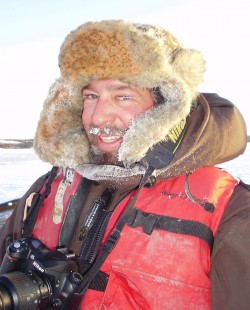 Andrew Muir合作论文数School for Environment and Sustainability, University of Michigan-Ann Arbor1
 Morena Mills合作论文数Centre for Environmental Policy, Faculty of Natural Sciences, Imperial College London1Miller Ek Fillatre合作论文数1
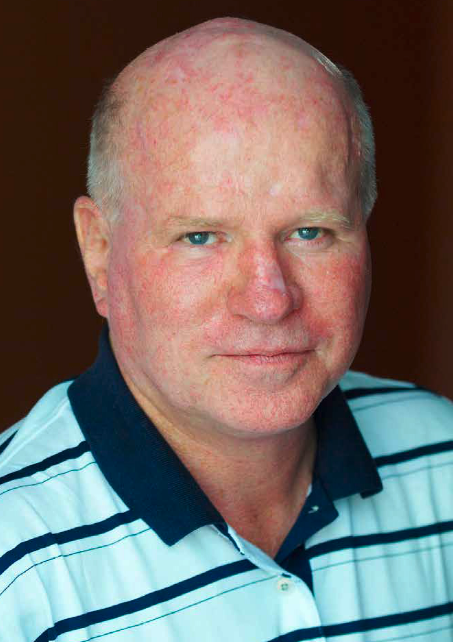 Bob Pressey合作论文数Australian Research Council Centre of Excellence for Coral Reef Studies, James Cook University1
 Sean Connolly合作论文数College of Science & Engineering, James Cook University;Smithsonian Tropical Research Institute1
 Kenneth M Jeffries合作论文数School of Veterinary Medicine, University of California, Davis1
 Sarah Poynter合作论文数Department of Biology, Wilfrid Laurier University1
 Paul A. Weber合作论文数1Busch C R合作论文数1Kelly J合作论文数1Reid S B合作论文数1
 Steven Cooke合作论文数Department of Biology, Carleton University;Institute of Environmental and Interdisciplinary Science, Carleton University1
 Geoffrey P. Jones (Geoff Jones)合作论文数College of Science & Engineering, James Cook University1G. R. Haas合作论文数1
 Paul Rawson合作论文数1




