SSZ-39 zeolite with AEI framework structure is a good catalyst candidate for the methanol-to-olefins (MTO) reaction. However, the diffusion limitation and coke formation often results in fast deactivation of the SSZ-39 zeolite catalyst. One solution for this challenge is to introduce mesoporosity in the SSZ-39 zeolite. Herein, we report the synthesis of mesoporous SSZ-39 zeolite using an organosilane surfactant, N,N-dimethyl-N-(3-(trimethoxysilyl)propyl)octan-1-aminium chloride, as a mesopore template and N,N-dimethyl-cis-2,6-dimethylpiperidinium as a micropore template. The obtained zeolites were characterized by X-ray diffraction, N2 sorption, scanning electron microscopy, temperature programmed desorption of ammonia, and magic angle spinning nuclear magnetic resonance of 27Al. The results show that the mesoporous SSZ-39 zeolite has high crystallinity, meso/microporosity, high surface area, cuboid morphology, and abundant acidic sites. More importantly, this mesoporous SSZ-39 zeolite exhibits enhanced catalyst lifetime in the MTO reaction due to the presence of mesoporosity for fast mass transfer, compared with a conventional SSZ-39 zeolite without mesoporosity.
Aluminosilicate SSZ-39 zeolite has been prepared by transformation from ZSM-5 and beta zeolite in the presence of N,N-diethyl-cis-2,6-dimethylpiperidinium hydroxide.
For the first time, SSZ-39 zeolite has been directly prepared using conventional colloidal silica and sodium aluminate instead of using FAU zeolite as the raw material in the alkaline media. The adjustment of the Si/Al ratios in the starting materials to the suitable values is a key factor to prepare the aluminosilicate SSZ-39 zeolite. Various characterizations (for instance, X-ray diffraction, scanning electron microscopy, nitrogen sorption, solid 27Al NMR, and NH3-temperature-programmed desorption) display that the aluminosilicate SSZ-39 zeolite owns high crystallinity, uniform cuboid morphology, large surface area, four-coordinated aluminum species, and strong acidic sites. Inductively coupled plasma analysis shows that the SiO2/Al2O3 ratios of the SSZ-39 products are ranged from 12.8 to 16.8. Considering the special framework of the SSZ-39 zeolite, the yield of this synthesis is not higher than 21.3%. Moreover, the catalytic performance of Cu-SSZ-39 catalyst synthesized from this route is excellent in the selective catalytic reduction of NO x with NH3 (NH3-SCR).
Metal-exchanged zeolites with small pore sizes have attracted much attention in recent years due to their application in the selective catalytic reduction (SCR) of NOx in diesel engines.
High silica chabazite zeolite (CHA) is very important for selective catalytic reduction of NOx with ammonia (NH3-SCR), but its synthesis is time-consuming under conventional hydrothermal conditions (160 degrees C for 90-120 h). Herein, we report a novel strategy for highly efficient synthesis of CHA zeolite by means of fast crystallization at high temperatures in the absence of water solvent (240 degrees C for 1.5 h). X-ray diffraction, N-2-adsorption isotherms, inductively coupled plasma, scanning electron microscopy, Si-29 and Al-27 MAS NMR, as well as thermogravimetry-differential thermal analysis suggest that the samples have high quality. This concept significantly enhances the space-time yields (STY) for CHA zeolite prepared from high-temperature synthesis in the absence of water solvent (almost two orders of magnitude higher than those of conventional hydrothermal synthesis). Moreover, compared with hydrothermal synthesis, the samples obtained from fast crystallization at higher temperatures (Si/Al = 12, 2.0% Cu loading) shows enhanced catalytic performance at 350-550 degrees C in NH3-SCR.
An efficient, rapid, and non-centrifugation synthesis of nanosized zeolites is developed by accelerating the nucleation rate in the starting gel systems.
High quality CHA zeolite catalysts were efficiently synthesized by fast transformation of FAU zeolite in the absence of water.
High quality zeolite catalysts are efficiently synthesized by fast crystallization at higher temperatures under solvent-free conditions.
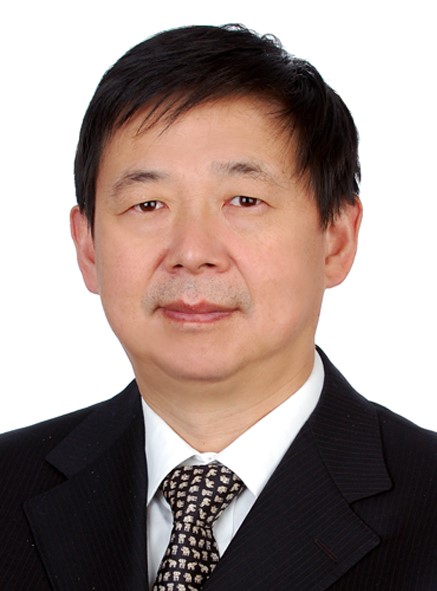 Feng-Shou Xiao (肖丰收)合作论文数School of Chemical and Biological Engineering, Zhejiang University;Department of Chemistry, Zhejiang University10
 Stefan Maurer合作论文数10
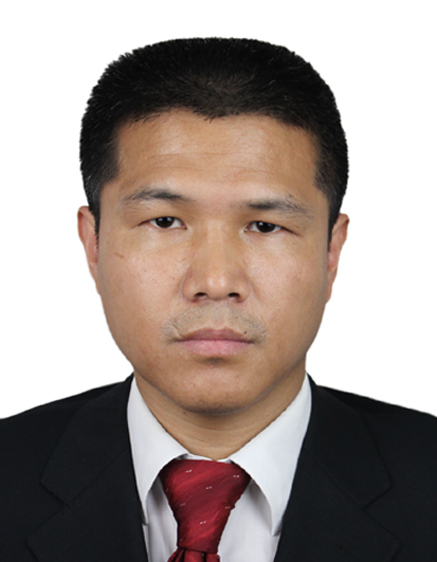 Xiangju Meng (孟祥举)合作论文数Department of Chemistry, Zhejiang University10
 Andrei-Nicolae Parvulescu合作论文数8
 Ulrich Müller合作论文数Department of Paediatrics, University of Cambridge8
 Qinming Wu (吴勤明)合作论文数College of Chemical and Biological Engineering, Zhejiang University7Qiuyan Zhu合作论文数4Chi Lei合作论文数Key Lab Appl Chem Zhejiang Prov, Zhejiang Univ4
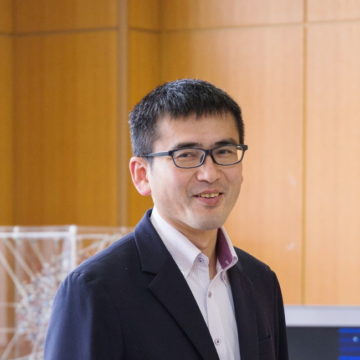 Toshiyuki Yokoi (横井俊之)合作论文数Nanospace Catalysis Unit, Institute of Innovative Research, Tokyo Institute of Technology4
 Weiping Zhang (张维萍)合作论文数School of Chemical Engineering, Dalian University of Technology4
 Ute Kolb合作论文数Centre for High Resolution Electron Microscopy, Johannes Gutenberg University Mainz;Institute of Applied Geosciences, Technical University Darmstadt4
 Dirk De Vos合作论文数Department of Microbial and Molecular Systems, Katholieke Universiteit Leuven;Faculty of Bioscience Engineering, Katholieke Universiteit Leuven4
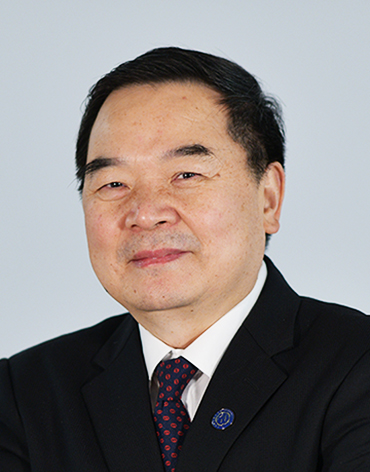 Xinhe Bao (包信和)合作论文数State Key Laboratory of Catalysis, Dalian Institute of Chemical Physics, Chinese Academy of Sciences4
 Bernd Marler合作论文数Fakultät für Geowissenschaften, Institut für Geologie, Mineralogie und Geophysik, Ruhr-Universität Bochum4Ahmad Moini合作论文数3Shichao Han合作论文数3Chen Fang合作论文数3
 Robert McGuire合作论文数Proc Res & Chem Engn, BASF SE3
 Zhang Changsheng合作论文数3Bian Chaoqun合作论文数3Mathias Feyen合作论文数3
) Ling Zhang (张凌)合作论文数College of Civil Engineering and Architecture, Zhejiang University3
Ling Zhang (张凌)合作论文数College of Civil Engineering and Architecture, Zhejiang University3 Hermann Gies合作论文数Ruhr-Universität Bochum3Zhang Weiping合作论文数2Juan Zhang合作论文数2DingZhong Yuan (袁定重)合作论文数2
 Anmin Zheng (郑安民)合作论文数Innovation Academy for Precision Measurement Science and Technology, Chinese Academy of Sciences;Wuhan Institute of Physics and Mathematics, Chinese Academy of Sciences;University of Chinese Academy of Sciences2Pan Shuxiang合作论文数2
 Hao Xu (徐浩)合作论文数School of Chemistry and Molecular Engineering, East China Normal University2
 Wei Chen (陈唯)合作论文数Department of Physics, Fudan University2
 Ulrich Mueller合作论文数BASF2Ruihua Lv合作论文数1Lv Ruihua合作论文数1Xin Xiong合作论文数1
 Chuan Shi (石川)合作论文数School of Chemistry, Dalian University of Technology1
 Jinhua Fei (费金华)合作论文数Department of Chemistry, Zhejiang University1
 Xiulian Pan (潘秀莲)合作论文数State Key Laboratory of Catalysis, Dalian Institute of Chemical Physics, Chinese Academy of Sciences1Longfeng Zhu (朱龙凤)合作论文数1




