From July 23-25th 2024, representatives from seven Caribbean countries and international partner organizations gathered in Kingston, Jamaica for Caribbean Connect: Building the Pan-American Highway for Digital Health. Hosted by the Inter-American Development Bank (IDB) and the Pan-American Health Organization (PAHO/WHO), the objective of the conference was to provide a platform for information sharing, learning, and strategic priority setting among Caribbean countries with active IDB operations related to digital health. Caribbean Connect also introduced participants to the vision for the Pan-American Highway for Digital Health (PH4H), an initiative led by the IDB and PAHO/WHO, and engaged countries to contribute to the initiative in advance of its formal launch in October 2024. Caribbean Connect advanced the participating countries visions for digital health by 2030 by creating a platform for sharing knowledge and building capacity among information technology and healthcare professionals, policymakers, and government leaders. These deliberations were centered around how to implement and leverage digital health solutions effectively. The conference aimed to foster a sense of sub-regional solidarity and cooperation, as countries shared their experiences, challenges, and solutions, paving the way for collaborative projects and initiatives that can have a broader impact in the Caribbean.
The Social Protection and Health (SPH) Division of the Inter-American Development Bank (IDB) held its annual Regional Policy Dialogue (RPD) Digital Health for All: Latin America and the Caribbeans golden opportunity to improve the efficiency, quality and equity of sector on September 12-14th 2022 in Panama City, Panama. The RPD brought together over 120 participants, including leaders from over 20 countries, vice-ministers of health and directors of technology and communications, and regional and global experts in digital health. The meeting sought to provide a setting to discuss what the IDB and different countries have learned in the past four years of implementation of digital health, structural challenges to scale digital health, and the measures needed to ensure that decisions made today are both sustainable and transformational. The meetings objectives broadly included discussing three topics: 1) how to ensure that digital health adds value in terms of improved efficiency, quality, and equity;2) policy considerations for linking digital health to health outcomes; and3) the future state of our region in terms of digital transformation of the health sector.This report provides an overview of the meeting, its main findings, and the steps that lie ahead on this journey.
The article's main objective is to propose a new definition for Information Systems for Health, which is characterized by the identification and involvement of all the parts of a complex and interconnected process for data collection and decision-making in public health in the information society. The development of the concept was through a seven-step process including document analysis, on-site and virtual sessions for experts, and an online survey of broader health professionals. This new definition seeks to provide a holistic view, process, and approach for managing interoperable applications and databases that ethically considers open and free access to structured and unstructured data from different sectors, strategic information, and information and communication technology (ICT) tools for decision-making for the benefit of public health. It also supports the monitoring of the Sustainable Development Goals and the implementation of universal access to health and universal health coverage as well as Health in All Policies as an approach to promote health-related policies across sectors. Information Systems for Health evolves from preconceptions of health information systems to an integrated and multistakeholder effort that ensures better care and better policy-making and decision-making.
The British Virgin Islands (BVI) Ministry of Health and Social Development (MOHSD) recently identified the need for an updated strategy to advance the country's vision for Information Systems for Health (IS4H) ("Informed decision-making for better health outcomes"). Since the early 1990s, the MOHSD has recognized the importance of having strong conceptual foundations and mechanisms for its information systems, and the need to strengthen the production and use of good-quality health data to enable fulfillment of the territory's health goals. Therefore, in May 2017, BVI requested technical assistance from the Pan American Health Organization (PAHO) to develop a plan/"road map" for strengthening the MOHSD's stewardship capacity for IS4H. This resulted in a bilateral, country-led collaboration between PAHO and the Ministry to carry out two assessments of BVI's National Information Systems for Health (NISH): 1) a rapid assessment to map NISH policy, to develop a short- and medium-term workplan for strengthening and updating it, and 2) a maturity assessment, using PAHO's IS4H Maturity Model tool, to evaluate the implementation of NISH policy thus far and determine next steps. This article describes 1) the steps taken in this bilateral collaboration to update BVI's NISH policy and fine-tune its IS4H vision, including the development of a national plan/road map, and 2) lessons learned.
 Myrna Marti合作论文数Consultora internacional3
 Nelson Jennifer合作论文数Salud Mesoamérica 2015/Inter-American Development Bank, Edificio Tower Financial Center (Towerbank),3
 Alexandre Bagolle合作论文数2
 D'Agostino Marcelo合作论文数Departamento de Gestión del Conocimiento, Bioética e Investigación, Organización Panamericana de la Salud2
 Luis Tejerina合作论文数2Cristina Pombo合作论文数1Pablo J. Orefice合作论文数1Gerardo de Cosio合作论文数1
 Federico G de Cosio合作论文数1Felipe Mejia Medina合作论文数1Victoria Malek合作论文数1Mario Casco合作论文数1James Fitzgerald合作论文数1Pedro Bernal合作论文数Inter-American Development Bank1Riego Amalia del合作论文数1Brooks Ian合作论文数1
 Sebastian Garcia-Saiso合作论文数1
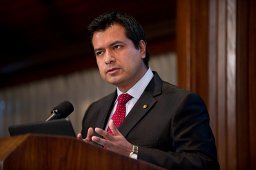 Walter H Curioso合作论文数Facultad de Medicina;Universidad Peruana Cayetano;Facultad de Medicina, Universidad Peruana Cayetano1Patricia Trujano Ruiz合作论文数1Marcos A. Espinal合作论文数1
 Daniel Luna合作论文数Departamento de Información Hospitalaria;Hospital Italiano de Buenos Aires;Departamento de Información Hospitalaria, Hospital Italiano de Buenos Aires1
 Paula Otero合作论文数Departamento de Información Hospitalaria;Hospital Italiano de Buenos Aires;Departamento de Información Hospitalaria, Hospital Italiano de Buenos Aires1




