Today, and possibly for a long time to come, the full driving task is too complex an activity to be fully formalized as a sensing-acting robotics system that can be explicitly solved through model-based and learning-based approaches in order to achieve full unconstrained vehicle autonomy. Localization, mapping, scene perception, vehicle control, trajectory optimization, and higher-level planning decisions associated with autonomous vehicle development remain full of open challenges. This is especially true for unconstrained, real-world operation where the margin of allowable error is extremely small and the number of edge-cases is extremely large. Until these problems are solved, human beings will remain an integral part of the driving task, monitoring the AI system as it performs anywhere from just over 0% to just under 100% of the driving. The governing objectives of the MIT Advanced Vehicle Technology (MIT-AVT) study are to 1) undertake large-scale real-world driving data collection that includes high-definition video to fuel the development of deep learning-based internal and external perception systems; 2) gain a holistic understanding of how human beings interact with vehicle automation technology by integrating video data with vehicle state data, driver characteristics, mental models, and self-reported experiences with technology; and 3) identify how technology and other factors related to automation adoption and use can be improved in ways that save lives. In pursuing these objectives, we have instrumented 23 Tesla Model S and Model X vehicles, 2 Volvo S90 vehicles, 2 Range Rover Evoque, and 2 Cadillac CT6 vehicles for both long-term (over a year per driver) and medium-term (one month per driver) naturalistic driving data collection. Furthermore, we are continually developing new methods for the analysis of the massive-scale dataset collected from the instrumented vehicle fleet. The recorded data streams include IMU, GPS, and CAN messages, and high-definition video streams of the driver's face, the driver cabin, the forward roadway, and the instrument cluster (on select vehicles). The study is on-going and growing. To date, we have 122 participants, 15610 days of participation, 511638 mi, and 7.1 billion video frames. This paper presents the design of the study, the data collection hardware, the processing of the data, and the computer vision algorithms currently being used to extract actionable knowledge from the data.
Individuals with type 1 diabetes have to monitor their blood glucose levels, determine the quantity of insulin required to achieve optimal glycaemic control and administer it themselves subcutaneously, multiple times per day. To help with this process bolus calculators have been developed that suggest the appropriate dose. However these calculators do not automatically adapt to the specific circumstances of an individual and require fine-tuning of parameters, a process that often requires the input of an expert. To overcome the limitations of the traditional methods this paper proposes the use of an artificial intelligence technique, case-based reasoning, to personalise the bolus calculation. A novel aspect of our approach is the use of temporal sequences to take into account preceding events when recommending the bolus insulin doses rather than looking at events in isolation. The in silico results described in this paper show that given the initial conditions of the patient, the temporal retrieval algorithm identifies the most suitable case for reuse. Additionally through insulin-on-board adaptation and postprandial revision, the approach is able to learn and improve bolus predictions, reducing the blood glucose risk index by up to 27% after three revisions of a bolus solution.
We introduce a recurrent neural network architecture for automated road surface wetness detection from audio of tire-surface interaction. The robustness of our approach is evaluated on 785,826 bins of audio that span an extensive range of vehicle speeds, noises from the environment, road surface types, and pavement conditions including international roughness index (IRI) values from 25 in/mi to 1400 in/mi. The training and evaluation of the model are performed on different roads to minimize the impact of environmental and other external factors on the accuracy of the classification. We achieve an unweighted average recall (UAR) of 93.2% across all vehicle speeds including 0 mph. The classifier still works at 0 mph because the discriminating signal is present in the sound of other vehicles driving by.
We propose a method for automated synchronization of vehicle sensors useful for the study of multi-modal driver behavior and for the design of advanced driver assistance systems. Multi-sensor decision fusion relies on synchronized data streams in (1) the offline supervised learning context and (2) the online prediction context. In practice, such data streams are often out of sync due to the absence of a real-time clock, use of multiple recording devices, or improper thread scheduling and data buffer management. Cross-correlation of accelerometer, telemetry, audio, and dense optical flow from three video sensors is used to achieve an average synchronization error of 13 milliseconds. The insight underlying the effectiveness of the proposed approach is that the described sensors capture overlapping aspects of vehicle vibrations and vehicle steering allowing the cross-correlation function to serve as a way to compute the delay shift in each sensor. Furthermore, we show the decrease in synchronization error as a function of the duration of the data stream.
This research examined, as an exploratory secondary analysis, the frequency of lane departure warnings in two commercially available vehicles and users' behavioral and physiological responses to the alarms. The two lane departure systems used different alerting mechanisms. One provided an auditory alert, while the other activated haptic stimulation through the steering wheel. Results show that both systems trigger an increase of steering wheel movement following an alert, with some evidence for, on average, a faster response to the system with the haptic alert. There was also a significant difference in the frequency of alerts between the systems. Results suggest the need for further work focused on developing a more comprehensive understanding of the effectiveness of various implementations of these potentially lifesaving warning systems under field conditions.
The aim of the SWIFT project is to determine which visualisations of blood glucose-related data on mobile devices are most usable by people with insulin-dependent diabetes, to improve self-management. Such people are often advised to maintain a logbook to record glucose measurements, insulin doses and related information. Software exists for downloading and scrutinising such data, but some people find numerical data difficult to interpret. However, many people find visual data easier to understand. The question of which data visualisations would be most usable for selfmanagement is still open. This study will determine what people with diabetes and clinicians want to learn from their data, and interactive visualisations will be designed accordingly. Interaction allows the users to modify what they see and how they see it. The visualisations will be designed for small screens and tested through the development of a glucose tracking diary app. Some parameters that affect the condition are displayed in figure 1. The '?' indicates that there are open questions about which of these parameters will be of most value to users and how best to visualise them.
Effective management of diabetes is crucial for patient wellbeing and the prevention of low blood sugar levels (Hypoglycemia) and high blood sugar levels (Hyperglycemia) both of which can be potentially dangerous. Traditionally log books are maintained by patients to record information such as insulin usage and their meals. The ever increasing popularity of smart phones has resulted in various applications being developed to allow patients to log data and help manage their condition. However these applications are often developed simply for the logging of data and only occasionally provide basic calculations to suggest insulin doses following a meal. The goal of this research is to use case-based reasoning techniques to suggest an insulin dosage for the patient as opposed to using a one calculation fits all approach. This is to be achieved by building a knowledge base of the patient's history that is then used to obtain a solution which best fits the current circumstances. The proposed case-based reasoning system is described alongside the development of the system to date and discussion into further research and development. The final implementation will be tested and validated using a diabetic patient simulator to create a knowledge base and observe system behavior and accuracy.
 Bryan Reimer合作论文数Massachusetts Institute of Technology5
 William Angell合作论文数MIT3
 Lex Fridman合作论文数Department of Aeronautics and Astronautics, Massachusetts Institute of Technology3
 Rachel Harrison合作论文数Oxford Brookes University3
 Bruce Mehler合作论文数Massachusetts Institute of Technology’s Center for Transportation & Logistics - AgeLab;DBA Bruce Mehler3
 Clare E. Martin合作论文数Department of Computing, Oxford Brookes University3Irman Abdic合作论文数Massachusetts Institute of Technology and Technische Universität München, Germany2
 Jonathan Dobres合作论文数2
 Ian Bayley合作论文数Oxford Brookes University2
 Anthony Pettinato合作论文数1
 Michael Glazer合作论文数1
 Spencer Dodd合作论文数1
 Thomas Mcwilliams合作论文数1
 Aleksandr Patsekin合作论文数MIT1
 Jack Terwilliger合作论文数Center for Transportation and Logistics, Massachusetts Institute of Technology1
 Benedikt Jenik合作论文数MIT, 77 Massachusetts Ave, Cambridge, MA 02139 USA1Marion Waite合作论文数1
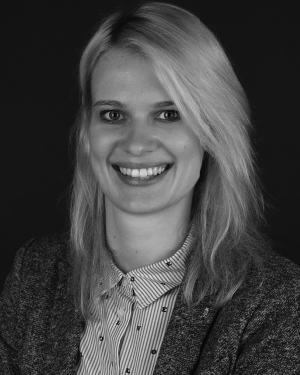 Julia Kindelsberger合作论文数1
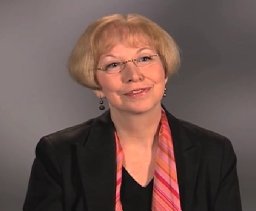 Linda Sala Angell合作论文数Touchstone Evaluations Detroit MI USA1Franklin Rachel H合作论文数1
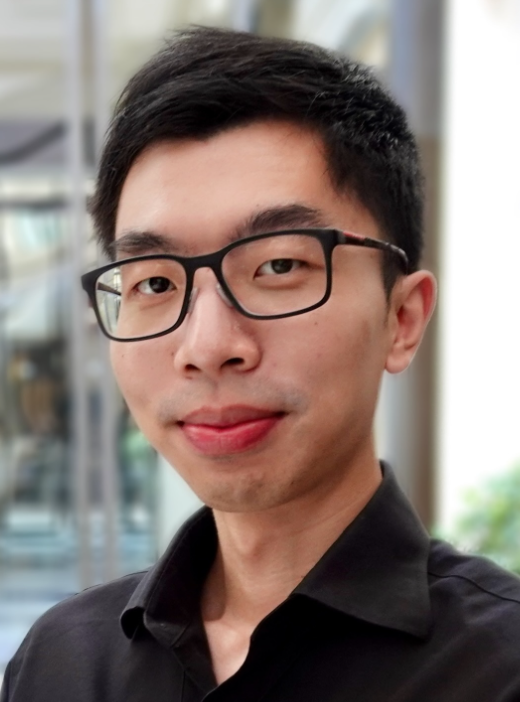 Li Ding (丁立)合作论文数Manning College of Information & Computer Sciences, University of Massachusetts Amherst1
 Alea Mehler合作论文数1
 Hae Young Noh合作论文数Department of Civil and Environmental Engineering, School of Engineering, Stanford University;Doerr School of Sustainability, Stanford University1
 Sean Seaman合作论文数Wayne State University1
 Erik Marchi合作论文数Apple Inc.1
 A. Aldea合作论文数Oxford Brookes University1
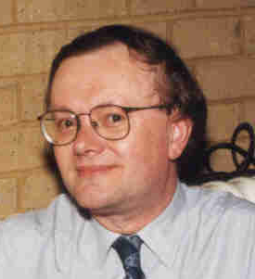 David A. Duce合作论文数Department of Computing, School of Technology, Oxford Brookes University1
 Bobbie Seppelt合作论文数Department of Design, Jaguar Land Rover Limited1




