Background Young adults with chronic pain and symptoms experience disruptions to their social, emotional, physical, and vocational functioning. Interdisciplinary pain rehabilitation programs for pediatric and adult populations are not designed specifically to address the developmental needs of young adults. Methods This article describes the development of a novel intensive interdisciplinary outpatient rehabilitation program tailored to the unique needs of young adults with chronic pain and symptoms. Tailored content included vocational assessment and consultation, financial literacy education, and sexual health education. Results Outcome data demonstrate treatment gains, with reductions in pain interference, pain severity, pain catastrophizing, and depressive symptoms, as well as improvements in mental and physical quality of life, perceived performance, perceived satisfaction with performance, and objective measures of physical functioning. Conclusions The article concludes with clinical recommendations for the management of chronic pain and symptoms in young adults, applicable across multiple treatment settings.
Objectives: Chronic subjective dizziness (CSD) is a neurotologic disorder of persistent non-vertiginous dizziness, unsteadiness, and hypersensitivity to one's own motion or exposure to complex visual stimuli. CSD usually follows acute attacks of vertigo or dizziness and is thought to arise from patients' failure to re-establish normal locomotor control strategies after resolution of acute vestibular symptoms. Pre-existing anxiety or anxiety diathesis may be risk factors for CSD. This study tested the hypothesis that patients with CSD are more likely than individuals with other chronic neurotologic illnesses to possess anxious, introverted personality traits.Methods: Data were abstracted retrospectively from medical records of 40 patients who underwent multidisciplinary neurotology evaluations for chronic dizziness. Twenty-four subjects had CSD. Sixteen had chronic medical conditions other than CSD plus co-existing anxiety disorders. Group differences in demographics, Dizziness Handicap Inventory (DHI) scores, Hospital Anxiety and Depression Scale (HADS) scores, DSM-IV diagnoses, personality traits measured with the NEO Personality Inventory - Revised (NEO-PI-R), and temperaments composed of NEO-PI-R facets were examined.Results: There were no differences between groups in demographics, mean DHI or HADS-anxiety scores, or DSM-IV diagnoses. The CSD group had higher mean HADS-depression and NEO-PI-R trait anxiety, but lower NEO-PI-R extraversion, warmth, positive emotions, openness to feelings, and trust (all p < 0.05). CSD subjects were significantly more likely than comparison subjects to have a composite temperament of high trait anxiety plus low warmth or excitement seeking.Conclusion: An anxious, introverted temperament is strongly associated with CSD and may be a risk factor for developing this syndrome. (C) 2013 Elsevier Inc. All rights reserved.
Comprehensive treatment and rehabilitation includes attention to the psychological needs of individuals with SCI and their families. This chapter is designed to familiarize neurologists and other practitioners with psychological issues and care in SCI. While psychologists play a key role, attention to psychosocial health is a responsibility shared by all members of the rehabilitation team, beginning with the patient and family, and including clinicians who are not formally identified as mental health providers. Treatment planning for a person with SCI begins with a thorough assessment of the cognitive, emotional, personality, and social factors that influence functioning and rehabilitation. Rehabilitation psychologists use a mixture of assessment tools, including clinical interviews, behavioral observations, and a wide range of standardized test instruments. Psychological interventions can involve direct intervention with the patient, in individual, family or group-based therapies. Other psychological strategies involve assistance through less direct methods - consultation and training to other rehabilitation team members or facilitating peer role-modeling and support groups. The chapter provides an overview of core clinical issues (emotional responses, substance use, pain, cognitive deficits, sexuality and vocational rehabilitation), delineates the process of psychological assessment and intervention, and provides guidance on incorporation of rehabilitation psychology into SCI rehabilitation.
Krause JS, Saunders LL, Staten D, Rohe DE. Vocational interests after recent spinal cord injury: comparisons related to sex and race. Arch Phys Med Rehabil 2011;92:626-31.Objective: To compare vocational interests as a function of sex and race among persons with recent spinal cord injury (SCI), because previous research used almost exclusively white men. Limited research from nearly 2 decades ago suggested SCI selectively occurs to men whose vocational interests are consistent with the Realistic theme of the Holland typology, indicative of a preference for activities and occupations requiring physical strength and dexterity.Design: The Strong Interest Inventory (SII) was completed an average of 50 days after SCI onset.Setting: Data were collected at a specialty hospital and analyzed at a medical university.Participants: Adults with traumatic SCI (N=500) were assessed during inpatient rehabilitation.Interventions: Not applicable.Main Outcome Measure: The SIT, a 317-item measure of vocational interests.Results: Although the findings for white men were consistent with elevation of the Realistic theme when compared with the reference group, the interests of women and black participants were substantially different. Women scored highest on Social, Enterprising, and Conventional themes compared with the reference group. Black participants reported significantly higher elevations than whites on 5 themes (all except Realistic), with elevations on the Social, Enterprising, and Conventional themes exceeding standardized norms. The Artistic and Investigative themes were least descriptive of the overall sample.Conclusions: Rehabilitation professionals should be aware of likely differences in patterns of vocational interests as a function of race and sex, and use vocational interests as a means of facilitating postinjury adaptation.
OBJECTIVE:To objectively measure the effect of a pass-fail grading system on stress, mood, group cohesion, and test anxiety in medical students.PARTICIPANTS AND METHODS:Beginning with the class of 2006, the Mayo Medical School, Rochester, Minn, changed the grading system for first-year courses from a 5-interval grading system to a pass-fail grading system. Students in the previous class of 2005, who were graded using a 5-interval system during their first year of medical school, were compared with students in the class of 2006. Using a prospective study design, the 2 groups were compared at the end of both the first year and the second year of medical school on the Perceived Stress Scale, Profile of Mood States, Perceived Cohesion Scale, Test Anxiety Inventory, and (after year 2) the United States Medical Licensing Examination Step 1. Data collection occurred in 2002 and 2003 with the class of 2005 and in 2003 and 2004 with the class of 2006.RESULTS:Students graded with the pass-fail system had less perceived stress (median, 15.0 vs 21.0; P-.01) and greater group cohesion (median, 34.5 vs 30.0; P=.02) at the end of their second year of coursework than their 5-interval graded peers. The pass-fail group had better mood (median, 46.5) than the graded group (median, 64.0), but this difference was not statistically significant (P=.07). No significant differences were found between the 2 groups in test-taking anxiety or in United States Medical Licensing Examination Step 1 board scores.CONCLUSION:Pass-fail grading may reduce stress and increase group cohesion in medical students compared with traditional 5-interval grading.
OBJECTIVES:(1) To assess the attitudes of the members of an inpatient rehabilitation unit team toward their unit's substance abuse and tobacco use policies, and (2) to compare the findings with those of a survey 16 years earlier. DESIGN:An anonymous repeated assessment of staff attitudes and behaviors. SETTING:A 47-bed inpatient rehabilitation unit. PARTICIPANTS:Rehabilitation unit nurses, occupational and physical therapists, psychologists, physicians, social workers, and speech pathologists. INTERVENTIONS:Not applicable. MAIN OUTCOME MEASURE:Change in response with time. RESULTS:Seventy percent (89/128) of the staff members completed the survey. Seventy-two percent believed that they were "familiar or very familiar" with the unit's substance abuse policy and 51% were "concerned" or "very concerned" about their patients' alcohol and drug use. Nineteen percent reported complaints about the policy from their patients and 8% reported complaints from family members. Support for a uniform substance abuse policy remained high: 96% supported a uniform policy in both 1985 and 2001. However, only 15% believed that staff drug abuse education was adequate and only 45% believed that the current policy was "adequate" or "very adequate." (Corresponding responses in 1985 were 20% and 50%, respectively.) All but 1 respondent considered tobacco use an addiction, but only 48% believed that their patients were routinely assessed for its use. CONCLUSION:Support for a uniform substance abuse policy remains strong. Although most team members support the policy, they believe that their education about substance abuse is inadequate. Staff members almost unanimously accept tobacco use as an addiction, but they believe that assessment and intervention efforts are poor.
Grading Key ★★★★★ = outstanding; ★★★★ = excellent; ★★★ = good; ★★ = fair; ★ = poor
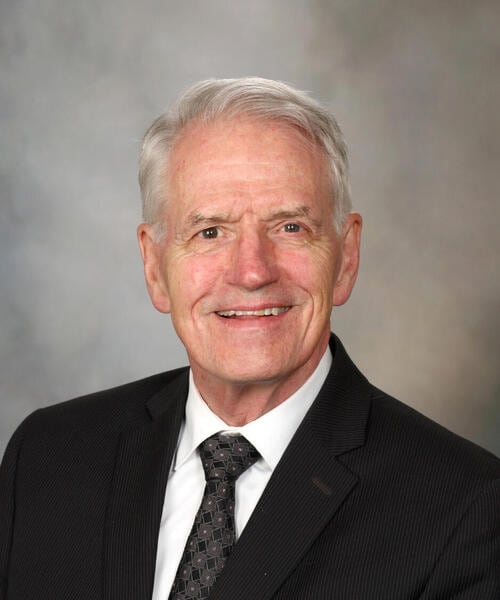 Jeffrey R. Basford合作论文数Department of Physical Medicine and Rehabilitation, Mayo Clinic4
 DePompolo Robert W合作论文数3
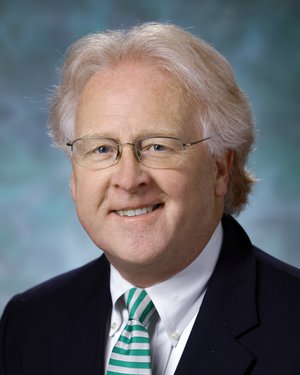 Stephen T. Wegener合作论文数Department of Otolaryngology-Head and Neck Surgery, School of Medicine, Johns Hopkins University2
 Laura Adams合作论文数Centers for Disease Control and Prevention, Epidemic Intelligence Service, Atlanta, Georgia, United States of America;Arizona Department of Health Services, Department of Public Health Services, Phoenix, Arizona, United States of America.;Centers for Disease Control and Prevention, Arizona Department of Health Services2Michele M. Evans合作论文数1Andrea L Eickhoff合作论文数1Andrea L. Reynolds合作论文数1
 Tracy Harrison合作论文数1Michele Tsai Owens合作论文数1Rw Depompolo合作论文数1Wesley P. Gilliam合作论文数1Eleshia J Morrison合作论文数1Neil T Shepard合作论文数1Jeffrey P Staab合作论文数Dept Otorhinolaryngol Head & Neck Surg, Mayo Clin1Harbeck-Weber Cynthia合作论文数1
 Loukianova Larissa L合作论文数Department of Psychiatry and Psychology, Mayo Clinic1
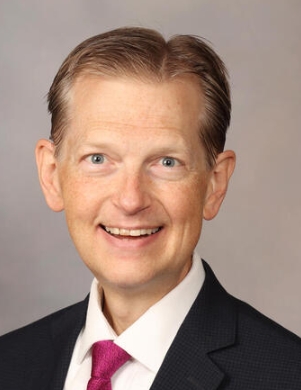 David A. Cook合作论文数Department of General Internal Medicine, College of Medicine, Mayo Clinic1
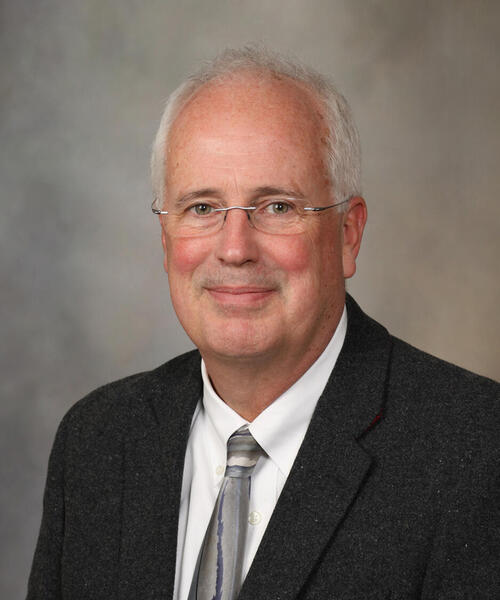 Matthew M. Clark合作论文数Department of Psychiatry & Psychology, Mayo Clinic;Division of Endocrinology, Diabetes, Metabolism, Nutrition, Department of Internal Medicine, Mayo Clinic1Barrier Patricia A合作论文数1Scott D. Z. Eggers合作论文数1
 Lee L Saunders合作论文数1
 Paul A. Decker合作论文数Division of Clinical Trials and Biostatistics, Mayo Clinic1
 David Staten合作论文数1Kristin S. Vickers合作论文数1James S. Krause合作论文数1Connie A. Luedtke合作论文数Pain Rehabilitation Center, Mayo Clinic1




