We present the results of an effort to derive interstellar gas-phase C ii abundances along the lines of sight toward rho Oph A and B. Our analysis is based on high-resolution near-ultraviolet and far-ultraviolet archival spectra acquired with the Space Telescope Imaging Spectrograph on the Hubble Space Telescope. Column densities of C ii are derived both from fits to the weak C ii] lambda 2325 intersystem transition and from fits to the damping wings of the strong C ii lambda 1334 line. We find that the results from the weak-line and strong-line determinations agree with each other remarkably well for both sight lines, demonstrating the reliability of the f-values of the C ii transitions. Furthermore, the gas-phase C abundance that we obtain for rho Oph A is in very good agreement with previous determinations of interstellar C abundances from measurements of the weak C ii] lambda 2325 line. By demonstrating the reliability of the damping wing fitting technique for the C ii lambda 1334 line, our analysis opens the door to future surveys of interstellar C abundances using the same methodology.
High-resolution UV spectroscopy serves a diversity of science cases, from small bodies to planets, stars, and galaxies, but is currently limited to the Hubble Space Telescope and bright targets. Major advances require increasing sensitivity by at least one order of magnitude. Here we present the UV science cases for PEGASUS (Planets, Earths, Galaxies, And Stars UV Spectrograph), a UV Échelle high-resolution spectrograph concept, with R = λ/δλ∼ 100 000 (full range 10 000-140 000) and covering 90–400 nm, with a foreseen extension to at least 800 nm. PEGASUS is ideally suited for the Habitable Worlds Observatory (HWO), enabling transformative science across the UV/optical wavelength ranges. PEGASUS will be unique in high sensitivity (effective area) and high spectral resolution – an uncharted territory – as well as robustness, thanks to the simplicity of its design. Its UV science cases include: I) Formation and evolution of planets and their habitability: properties of exoplanets and atmospheres, protoplanetary disks, Solar System bodies; II) Stellar lives and deaths at their extremes: the first stars and the origin of the elements, compact and massive stars, Supernovae; III) Gas and metals in the baryon cycle of galaxies: the interstellar, circumgalactic, and intergalactic medium and their roles in galaxy growth. These are essential for the Astro Decadal 2020 Survey, Voyage 2050, and HWO. While this paper focuses on high-impact science enabled by UV high-resolution spectroscopy, PEGASUS will extend into the optical regime and lower spectral resolution, making it a multi-purpose, widely used, workhorse spectrograph for HWO.
Specifically selected to leverage the unique ultraviolet capabilities of the Hubble Space Telescope, the Hubble Ultraviolet Legacy Library of Young Stars as Essential Standards (ULLYSES) is a Director’s Discretionary program of approximately 1000 orbits—the largest ever executed—that produced a UV spectroscopic library of O and B stars in nearby low-metallicity galaxies and accreting low-mass stars in the Milky Way. Observations from ULLYSES combined with archival spectra uniformly sample the fundamental astrophysical parameter space for each mass regime, including spectral type, luminosity class, and metallicity for massive stars, and the mass, age, and disk accretion rate for low-mass stars. The ULLYSES spectral library of massive stars will be critical to characterize how massive stars evolve at different metallicities; to advance our understanding of the production of ionizing photons, and thus of galaxy evolution and the re-ionization of the Universe; and to provide the templates necessary for the synthesis of integrated stellar populations. The massive-star spectra are also transforming our understanding of the interstellar and circumgalactic media of low-metallicity galaxies. On the low-mass end, UV spectra of T Tauri stars contain a plethora of diagnostics of accretion, winds, and the warm disk surface. These diagnostics are crucial for evaluating disk evolution and provide important input to assess atmospheric escape of planets and to interpret powerful probes of disk chemistry, as observed with the Atacama Large Millimeter Array and the James Webb Space Telescope. In this paper, we motivate the design of the program, describe the observing strategy and target selection, and present initial results.
Newly computed collisional rate coefficients for the excitation of C-2 in collisions with H-2, presented recently by Najar & Kalugina, are significantly larger than the values adopted previously in models for the excitation of the C-2 molecule, a widely used probe of the interstellar gas density. With these new rate coefficients, we have modeled the C-2 rotational distributions inferred from visible and ultraviolet absorption observations of electronic transitions of C-2 toward a collection of 46 nearby background sources. The inferred gas densities in the foreground interstellar clouds responsible for the observed C-2 absorption are a factor 4-7 smaller than those inferred previously, a direct reflection of the larger collisional rate coefficients computed by Najar & Kalugina. These lower-density estimates are generally in good agreement with the peak densities inferred from 3D extinction maps for the relevant sight lines. In cases where H-3(+) absorption has also been observed and used to estimate the cosmic-ray ionization rate (CRIR), our estimates of the latter will also decrease accordingly because the H-3(+) abundance is a function of the ratio of the CRIR to the gas density.
Newly-computed collisional rate coefficients for the excitation of C_2 in collisions with H_2, presented recently by Najar and Kalugina (2020), are significantly larger than the values adopted previously in models for the excitation of the C_2 molecule, a widely used probe of the interstellar gas density. With these new rate coefficients, we have modeled the C_2 rotational distributions inferred from visible and ultraviolet absorption observations of electronic transitions of C_2 towards a collection of 46 nearby background sources. The inferred gas densities in the foreground interstellar clouds responsible for the observed C_2 absorption are a factor 4 to 7 smaller than those inferred previously, a direct reflection of the larger collisional rate coefficients computed by Najar and Kalugina (2020). These lower density estimates are generally in good agreement with the peak densities inferred from 3D extinction maps for the relevant sightlines. In cases where H_3^+ absorption has also been observed and used to estimate the cosmic-ray ionization rate (CRIR), our estimates of the latter will also decrease accordingly because the H_3^+ abundance is a function of the ratio of the CRIR to the gas density.
Abstract The Hubble Space Telescope (HST) Ultraviolet Legacy Library of Young Stars as Essential Standards (ULLYSES) program is a HST Director's Discretionary program that is in the process of obtaining a large library of ultraviolet spectroscopic observations of young stars of both high and low masses. We present information on close companions to the T Tauri stars CVSO 109 and CVSO 165 in Orion that were observed with the HST as part of this program. CVSO 109 has a fainter companion at an angular separation ρ = 0.″64 near PA = 218° and Δ(F28X50LP) ≈ 0.6 mag, while the CVSO 165 companion is at ρ = 0.″30 near PA = 326° with Δ(F28X50LP) ≈ 1.7 mag. Both components of CVSO 165 appear to be active stars with strong emission features, while the CVSO 109 companion shows only modest indications of stellar activity. Extracted spectra for each of these components will be included in ULLYSES Data Release 2.
We present the first Data Release (DR1) from the Hubble Space Telescope (HST) Ultraviolet Legacy Library of Young Stars as Essential Standards (ULLYSES) program, a Director’s Discretionary program devoting approximately 1000 HST orbits to the production of an ultraviolet spectroscopic library of young high- and low-mass stars in the local universe. The science products in this release are combined from individual, extracted and calibrated spectra obtained with the COS and STIS instruments aboard HST. Products are made using both archival HST data and new HST observations obtained through the ULLYSES program. DR1 acts as the first step toward completing a goal of generating a fully public data set for the purpose of enabling, supporting, and stimulating a broad range of transformative astrophysical research.
 Donald G. York合作论文数The Department of Astronomy and Astrophysics, The University of Chicago120
 L. M. Hobbs合作论文数67Paule Sonnentrucker合作论文数64
 Ted Snow合作论文数Center for Astrophysics and Space Astronomy, College of Arts and Sciences, University of Colorado Boulder58Scott D Friedman合作论文数54Julie a Thorburn合作论文数39Brian L. Rachford合作论文数37
 Benjamin J. McCall合作论文数Department of Chemistry, College of Liberal Arts & Sciences, University of Illinois, Urbana-Champaign;Department of Astronomy, College of Liberal Arts & Sciences, University of Illinois, Urbana-Champaign;Planetary Limits Academic Network;Gund Institute for Environment;Department of Chemistry, College of Arts & Sciences, University of Dayton;Hanley Sustainability Institute, College of Arts & Sciences, University of Dayton35Sean Lockwood合作论文数24
 Takeshi Oka (岡武史)合作论文数Departments of Astronomy and Astrophysics, Physical Sciences Division, University of Chicago;Enrico Fermi Institute, Physical Sciences Division, University of Chicago24allyssa riley合作论文数22Talawanda R. Monroe合作论文数Space Telescope Science Institute22
 Joleen Carlberg合作论文数22
 Varsha P. Kulkarni合作论文数Department of Physics and Astronomy, McCausland College of Arts and Sciences, University of South Carolina21Charles R. Proffitt合作论文数21
 Kenneth Sembach合作论文数Space Telescope Science Institute20
 Sangmo Tony Sohn合作论文数STScI20R. Jędrzejewski合作论文数19
 Edward Jenkins合作论文数Department of Astrophysical Sciences, Princeton University18
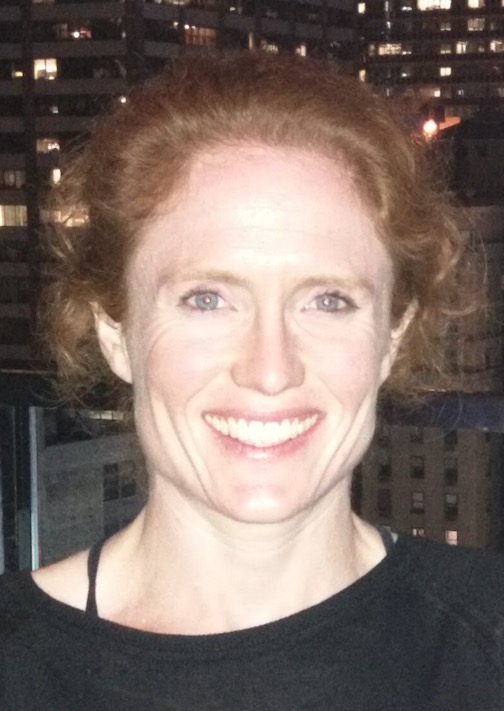 Julia Roman-Duval合作论文数Space Telescope Science Institute18
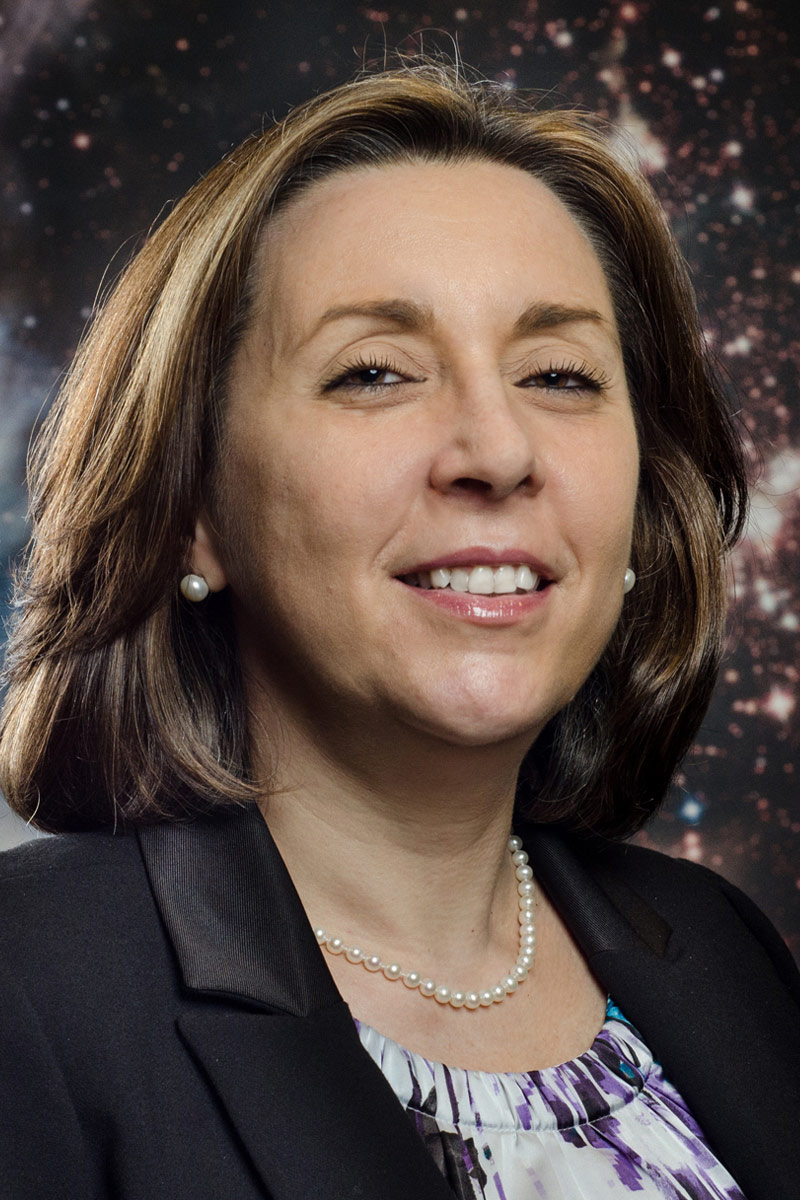 Alessandra Aloisi合作论文数Space Telescope Science Institute;NASA Headquarters16
 Julie A Dahlstrom合作论文数Department of Physics and Astronomy;Carthage College;Department of Physics and Astronomy, Carthage College16
 B. L. James合作论文数15Ravi Sankrit合作论文数15Donald Charles Morton合作论文数Herzberg Institute of Astrophysics, National Research Council in Canada15Leonardo Ubeda合作论文数Space Telescope Science Institute15Gisella De Rosa合作论文数14Elaine M. Frazer合作论文数14
 Cristina Oliveira合作论文数14Rachel Plesha合作论文数14
 Richard Allen Shaw合作论文数14
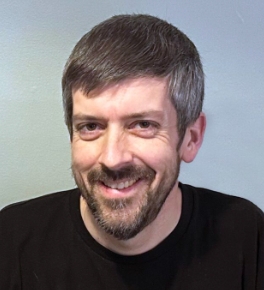 William Jack Fischer合作论文数Space Telescope Science Institute14Alexander William Fullerton合作论文数14Travis C. Fischer合作论文数14Christopher B. T. Britt合作论文数14Joanna M. Taylor合作论文数13David J. Sahnow合作论文数13James Thomas Lauroesch合作论文数13Adric R. Riedel合作论文数13I. Busko合作论文数12
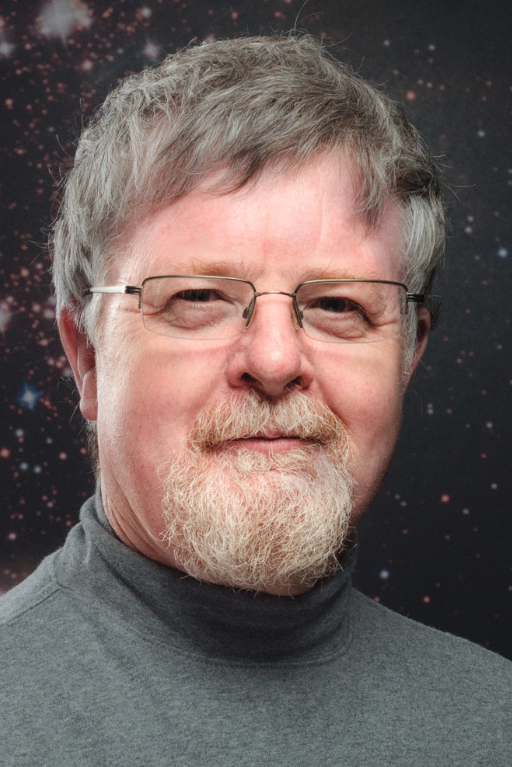 Neill Reid合作论文数Science Mission Office, Space Telescope Science Institute12
 Thomas M. Brown合作论文数James Webb Space Telescope Space Telescope Science Institute11
 Giovanni Vladilo合作论文数11Roger Ferlet合作论文数Institut d'Astrophysique de Paris9
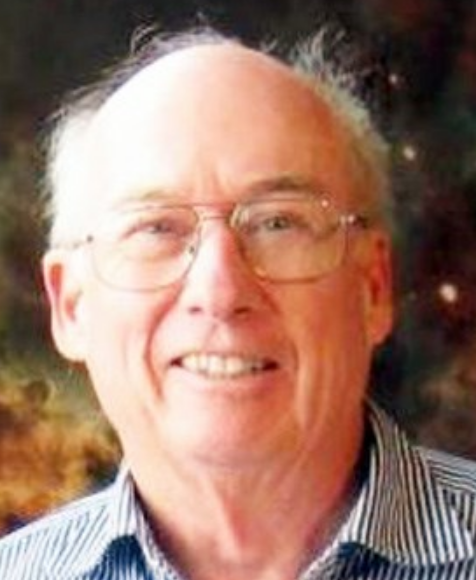 Blair D. Savage合作论文数University of Wisconsin-Madison9
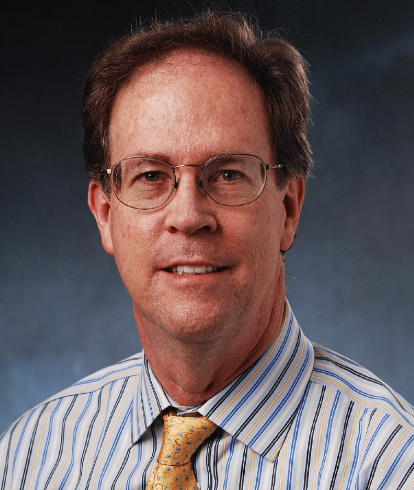 J. Michael Shull合作论文数Department of Astrophysical and Planetary Sciences, College of Arts and Sciences, University of Colorado Boulder;Center for Astrophysics and Space Astronomy, College of Arts and Sciences, University of Colorado Boulder9
 John H. Debes合作论文数Space Telescope Science Institute9James T. Lauroesch合作论文数9Meredith M. Drosback合作论文数9




