This study examines the effects of integrating Video Project-Based Learning (VPBL) and Dialogic Pedagogy (DP) on tertiary EFL students’ speaking performance. It explores their self-reflection and self-efficacy during the learning process. A quasi-experimental convergent mixed-methods design was employed with two intact groups of second-year university students: an experimental group receiving VPBL integrated with DP and a control group receiving conventional speaking instruction. Quantitative data were collected through pretest and posttest speaking assessments based on Complexity, Accuracy, and Fluency (CAF), together with self-reflection and self-efficacy questionnaires. Qualitative data were obtained through semi-structured interviews with students from the experimental group. Speaking performances were assessed by two raters, and inter-rater reliability was established using the Intraclass Correlation Coefficient (ICC). ANCOVA was employed to examine posttest performance while accounting for students’ initial performance. The findings revealed significant differences in the patterns of overall speaking performance and Fluency between the instructional groups, whereas no significant group effects were found for Complexity and Accuracy. The questionnaire findings indicated relatively high self-reflection and moderate self-efficacy among students in the experimental group. Qualitative findings further revealed that video production, dialogic interaction, feedback, and reflection formed an interconnected learning process. Overall, the findings suggest that integrating VPBL with DP may be particularly responsive to fluency-related and broader aspects of oral performance. However, the development of Complexity and Accuracy may still require more sustained exposure, practice, and form-focused support. These findings suggest that speaking development is not solely a linguistic process, but a multidimensional phenomenon shaped by the interplay of cognitive, affective, and social factors.
This study examined students’ perceptions of three online modalities for learning pragmatics during a semester marked by expanded remote instruction. Fourteen English majors in one pragmatics course selected a preferred modality and completed the course across sixteen meetings: lecture based online instruction (n = 5), independent study (n = 5), or a flipped classroom (n = 4). Using a descriptive qualitative design, semi structured interviews were conducted after the course and analyzed through thematic analysis. Students in the flipped classroom reported stronger preparation for live sessions, higher confidence to participate, and deeper contextual understanding through discussion, case analysis, and role play. Independent study afforded flexibility, opportunities for reflection, and repeated exposure to instructor videos and texts, but motivation, isolation, and uncertainty without real time dialogue were common. Lecture based online instruction delivered clear structure and concrete examples but limited active engagement. Across modalities, perceived effectiveness hinged on instructional design, including careful management of cognitive load, concise and segmentable pre class materials, and purposeful use of synchronous time for analysis of authentic pragmatic data such as cooperative principles, speech acts, and politeness strategies. The findings suggest that a well-designed flipped model can support online pragmatic learning when students are prepared and materials are accessible, yet no single approach is universally optimal. Limitations include a small, self-selected sample and reliance on self-reported perceptions. Future research should examine long term learning outcomes, the interaction between learner characteristics and design features, and integrated flipped designs that combine strengths of the three modalities.
Adaptive instruction is a promising solution to the limitations of traditional classroom instruction, which assumes that all students learn in the same way and at the same pace. Adaptive instruction tailors the learning experience to each student’s needs and abilities. Several adaptive instruction tools and platforms exist, including intelligent tutoring systems, learning management systems, mobile apps, AI chatbots, and adaptive machine-learning programs. The Adaptive Instruction of Student Control Theoretical Framework suggests that allowing students to control their use of learning resources leads to better learning outcomes. Implementing adaptive instruction in higher education can be difficult due to faculty buy-in, technical infrastructure, and student motivation. Effective instructional design is crucial for adaptive instruction to support student control and maximize benefits. Overall, instructors must pay attention to student motivation and work to create learning environments that foster motivation, autonomy, and engagement to implement adaptive instruction successfully.
Flipped classes can improve English language teaching and learning, especially reading outcomes, by enhancing student engagement and motivation through interactive and captivating educational materials. The goal of this study is to examine the effects of different schema activations in different English flipped class formats in pre-reading activities on the reading comprehension of students with different reading proficiency levels. A quasi-experimental research design was employed involving 30 first-year students from the first university and 28 first-year students from the second university in Surabaya, Indonesia, who were studying English as a general course at an intermediate level. The study used informed consent and two different formats, A and B, where pre-reading tasks were completed in class or asynchronously online, respectively. The study found that using video-based pre-reading activities in flipped class can improve comprehension and schema acquisition. Flipped classes can provide personalized learning experiences, but its effectiveness varies depending on the strategies and delivery methods used. While most students benefit from flipped classes, those who struggle with self-discipline and time management may find it challenging to adapt to the online component and may experience lower performance as a result.
This study evaluates the effectiveness of the Child-Friendly School (CFS) program at Al Mumtaz Integrated Islamic Elementary School in Pontianak using the CIPP (Context, Input, Process, Product) Evaluation Model. Through field research and purposive sampling, it delves the experiences and perceptions of principals, vice-principals, students, teachers, and parents on the program's impact. The school has successfully implemented the CFS program, noted for its qualified teachers with professional educational backgrounds and a focus on religious knowledge. The context evaluation revealed that the program aligns with child-friendly school policies, receiving a very positive evaluation and documented by official decrees. Input evaluation indicates Al Mumtaz meets all criteria including qualified staff, infrastructure, educator training, and engagement from students and parents. Process evaluation highlights the school’s effectiveness in facilitating positive educational dynamics, with non-violent disciplining, affection towards students, democratic educational practices, and teachers as role models. Finally, product evaluation shows significant achievements in fostering students' holistic development across various dimensions such as honesty, tolerance, communicative skills, democracy, social concern, responsibility, environmental care, and academics. The suggestion for this school involves establishing an organizational framework within the child-friendly school initiative to facilitate the efficient allocation of responsibilities and to confirm that the program’s monitoring and evaluation procedures are conducted in a more organized and methodical manner.
This study aimed to investigate the effects of Storytelling Narrated Videos (SNV) on students’ knowledge retention and transferability. A total of 56 students from a university in Indonesia were randomly assigned to a quasi-experimental research design exposed to SNV and to Lecture Narrated Videos (LNV). Two videos were created to deliver content on Bloom’s Taxonomy, one using a lecture-style format and the other adopting a storytelling approach. Data were collected through tests, questionnaires, and essays. The findings revealed that participants exposed to SNV had higher retention memory scores, indicating a positive impact on knowledge retention compared to those who watched LNV. Moreover, the storytelling videos facilitated cognitive skill progression, enhanced understanding through engaging visuals, and fostered a strong connection with a familiar narrator, resulting in a more dynamic and memorable learning experience. The study also examined knowledge transfer and found that participants who watched the storytelling videos performed better in applying Bloom’s Taxonomy concepts to planning teaching objectives in the essay test. This suggests that the incorporation of storytelling narration and promoting transfer knowledge activities can enhance students’ understanding, retention, and practical application of the learned material. Overall, the findings highlight the potential of incorporating storytelling in narrated videos to improve students’ knowledge retention, transferability, and engagement in educational settings.
Collaborative learning is a process whereby learners with varying abilities work together in small groups to achieve a common goal. This approach emphasizes the importance of students working together to construct knowledge and develop concepts to solve problems or tasks assigned by the teacher. This study employed a classroom action research methodology to improve Mandarin reading ability of second-grade students in an elementary school in Banyuwangi Regency. The participants were twenty-three students aged eight years old. The increase in student performance was attributed to the higher intensity of exercises in the second cycle. Collaborative learning facilitated the achievement of learning outcomes by allowing students to work together and construct knowledge.
Bahasa merupakan salah satu ciri yang paling khas dan manusiawi untuk membedakan manusia dengan makhluk lainnya. Peradaban manusia tidak akan mungkin terjadi tanpa bahasa. Penelitian ini menganalisis padanan kata kerja dan maknanya pada cerita rakyat Indonesia ke dalam bahasa mandarin dan untuk mengetahui faktor-faktor yang mempengaruhi suatu perbedaan padanan kata dan makna dari kata kerja dan menentukan padanan kata dan makna yang tepat. Metode penelitian ini adalah deskriptif kualitatif. Penelitian ini menemukan bahwa dari 5 cerita rakyat Indonesia ( Cerita Asal Usul Danau Toba, Malin Kundang, Timun Mas, Asal Usul Burung Cenderawasih dan Candi Prambanan ), terdapat 2 kategori kata kerja : kategori kata kerja yang dapat diterjemahkan yang terdiri dari 48 kata kerja dan kategori kata kerja yang sulit diterjemahkan yang terdiri dari 14 kata kerja. Penentuan padanan kata yang tepat dengan menggunakan teknik penerjemahan kesepadanan lazim dan generalisasi. Dari hasil analisis tersebut dapat disimpulkan bahwa semakin rumit kosakata yang digunakan, semakin sulit juga padanan kata dan makna yang sama dalam bahasa target. Sementara itu, faktor yang paling dominan dalam mempengaruhi suatu padanan kata dan makna adalah relatifitas budaya.
Penelitian ini memiliki tujuan untuk menginvestigasi tingkat pengetahuan multimedia pada pengajar bahasa Mandarin di Jawa Timur. Dengan menggunakan desain penelitian survei, penelitian ini melibatkan pengajar- pengajar bahasa Mandarin yang berasal dari beberapa kota di provinsi Jawa Timur. Hasil penelitian menunjukkan variasi tingkat pengetahuan multimedia di antara responden. Mayoritas pengajar, sebanyak 68%, berada dalam kelompok sedang, sedangkan sisanya, sebanyak 32%, berada dalam kelompok tinggi. Sementara itu, tidak ditemukan pengajar yang berada dalam kelompok tingkat pengetahuan multimedia rendah. Penelitian ini telah mengidentifikasi isu-isu terkait pengetahuan prinsip multimedia yang perlu mendapatkan perhatian khusus dan perbaikan: prinsip koherensi, prinsip redundansi, modalitas, personalisasi, dan segmentasi. Berdasarkan temuan penelitian, disarankan perlunya pelaksanaan program pelatihan untuk meningkatkan kompetensi pengajar Bahasa Mandarin dalam menggunakan multimedia. Program pelatihan tersebut diharapkan mereka untuk memahami dan menerapkan prinsip-prinsip multimedia dengan lebih baik sehingga pembelajaran bahasa Mandarin menjadi lebih efektif dan menarik bagi para siswa.
TikTok has been used as a learning tool and effectively improved students’ knowledge and skills, particularly in language learning. However, the educational content on TikTok may not be compatible with the Cognitive Theory of Multimedia Learning (CTML) principles that could reduce cognitive loads in multimedia learning. This research investigated the use of CTML principles, as well as the use of its features on the videos from one of the popular English Teaching channels on TikTok, @englishvit in order to contribute to educational knowledge about teaching practices with social media technologies. The researchers analyzed 40 out of 175 videos from @englishvit using content analysis through decontextualization, recontextualization, categorization and compilation. This study found that @englishvit’s TikTok videos are compatible with at least three principles of CTML, and some TikTok features could increase the compatibility or violate the CTML principles. These results recommended that teachers in digital education should improve the quality of the learning experience for students by applying principles of CTML and utilizing technology.
Storytelling techniques serve as dynamic tools for enhancing language skills, encompassing both receptive (listening, reading) and productive (speaking, writing) proficiencies. In contrast to their non-narrative counterparts, these techniques offer a more potent array of teaching methodologies. This study aims to elucidate the current landscape of research concerning the efficacy of storytelling techniques. Initially, the investigation delves into the cognitive processing of narratives. Stories engage language processing centers, invigorate the visual cortex, evoke emotive responses, and facilitate comprehension of intricate information. Subsequently, the study explores linguistic processing theory and embodied cognition theory. Through an exhaustive literature review, this research applies a rigorous evidence synthesis method to assess selected studies, culminating in the amalgamation of findings when comparability permits. The study unveils that storytelling techniques foster reading and listening comprehension, bolster speaking and writing skills, and kindle creativity and imagination. Moreover, enhancements span vocabulary, grammar, and syntax. Nonetheless, while generally efficacious, the uniformity of effectiveness across diverse learners remains a nuanced aspect.
The present study investigates English as a Foreign Language (EFL) teacher’s multimedia knowledge and practices in remote teaching during the COVID-19 pandemic. Firstly, it focuses on determining whether some teachers' demographics (gender, nationality, academic qualification, type of institution, perceptions) correspond to teachers' multimedia knowledge. Secondly, it reveals the teacher’s practices in implementing multimedia in EFL classrooms. This present study surveyed 120 participants (Male=33 and Female=87) from Indonesia (N=108) and outside Indonesia (N=12). They answered a questionnaire to identify their demographic information and took a literacy test to examine their multimedia knowledge. The findings indicate that of the demographics, only gender correlates significantly to teacher’s multimedia knowledge. It was also found that teachers have worked hard to bridge the gaps of remote teaching by implementing multimedia regardless of the barriers they have met. It implies that multimedia should be applied not only in remote teaching but also in face-to-face and blended learning due to the power of multimedia in language learning.
Looking into blended learning practices in a Pragmatic course attended by the English Letters students, this study aims to investigate the performance of that course based on the point of view of cognitive presence and practical online courses. This study has found that teaching online is a complex phenomenon involving multi-facet aspects. Above all, the students mostly find online learning enjoyable if the facilitators can create a triggering situation; facilitate the learning process; be active in giving comments/feedback to the students, and use multi-learning media to deliver instructions.
Teacher development is an ongoing process through which teachers keep growing with their capabilities. They must be adaptive to the demands of changing times and open to self-professional development. Today, teacher development is challenged to develop not only mastery of science and teaching abilities but also technology. In the perspective of Technology Pedagogical Content Knowledge (TPACK), the meeting of these three competence dimensions can be further divided into seven sub-competencies: technological knowledge, pedagogical knowledge, knowledge of course content, technological pedagogical knowledge, technological content knowledge, pedagogical content knowledge, and technological pedagogical content knowledge. This paper ends with pedagogic implications for teacher professional development that demands high quality and perceived as valuable.
This study investigated technological pedagogical and content knowledge (TPACK) practices during the current COVID-19 pandemic and examined factors influencing students’ perceptions of effective online learning. This study gathered the primary data from 90 university students from four study programs via the online questionnaire. Using an analysis of variance (ANOVA) statistical tool for data analysis, this study found that students’ perceptions of their teachers’ teaching performance in the fully online programs are not significantly different across four study programs. This finding implies that regardless of their study programs, the students had expected that teachers should pay attention to some vital aspects in online learning: using the same learning management system (LMS) for all study programs, and preparing designing practical online modules, taking care of the organization of teaching inputs that promote students’ critical thinking, delivering various teaching inputs and methods, intensifying teachers’ presence in monitoring students’ learning progress, motivating students to learn, and promoting teacher-student mutual respect through effective communication. This study also revealed that teachers play a pivotal role in achieving effective online learning during the pandemic.
Pengabdian kepada masyarakat ini dilaksanakan di SMP Katolik Sang Timur, Malang. Guru-guru dari SMPK Sang Timur saat ini menghadapi kendala dalam mengelola kelas pengajaran jarak jauh. Kegiatan pengabdian masyarakat ini diawali dengan observasi kegiatan remote teaching dan dilanjutkan dengan workshop. Tulisan ini bertujuan untuk memberikan gambaran tentang pengalaman guru SMPK Sang Timur dalam mengelola kelas jarak jauh dan hasil pelatihan yang telah mereka ikuti untuk meningkatkan kemampuan mendesain media digital. Hasil pre-test dan post-test melalui analisis paired sample t-test menunjukkan bahwa terdapat perbedaan yang signifikan antara rerata pre-test dan post-test. Rata-rata post-test (76,44) jauh lebih tinggi daripada pre-test (36,33). Disimpulkan bahwa kegiatan pengabdian kepada masyarakat melalui workshop ini berdampak positif dalam memantapkan pengetahuan guru SMPK Sang Timur dalam hal penyiapan media digital untuk pembelajaran jarak jauh.Kata kunci: Multimedia, digital, media, pengajaran jarak jauh, pandemi, COVID-19
Sunday School programs play an important role in promoting the spiritual growth of children. Educating children is a must. Children are God's inheritance to parents. Conducting ministry to children has been started since the Old Testament times as God commanded Moses (Exodus 12:25-27). Today, the COVID-19 pandemic has forced Sunday School teachers to adapt to technology. In the perspective of the cognitive load theory of multimedia-based learning, the media is a central factor determining the successful attainment of learning objectives. Effective media makes learning easy that enables the Sunday School students to process and integrate new information with their prior knowledge. In so doing, the reconstruction of new knowledge during the learning process via multimedia is possibly generated. However, the extent to which Sunday school teachers can make use of technology in the context of Sunday School teaching has not extensively been explored in the pandemic studies. This paper aims to provide a sketch of the implementation of teaching and learning activities carried out by Sunday school teachers at church X during the pandemic. About eight Sunday school teachers are involved as the subjects of this study: one male Sunday school teacher (12%) and seven female Sunday school teachers (88%). This paper finds that Sunday School teachers can adapt to technology. To design an effective teaching media, the teachers minimize extrinsic load to promote effective learning while maintaining appropriate difficulty level of the new topics being presented (intrinsic load).
Researchers across the disciplines, including those whose passions are in English teaching studies, are always challenged to continuously contribute their research findings to the development of science. However, ethical considerations must be adhered to when they involve humans as participants in their study. Ethical dilemmas, even though they are considered important, are still rarely discussed. Thus, depicting the sketch of a comprehensive configuration of ethical dimensions is extremely needed for ESL researchers to serve as a guidance to carry out their research. This paper concludes with some ethical implications for researchers to carry out research ethically
A MOOC has disrupted traditional learning methods. With electronic gadgets and internet support, this online learning platform enables many participants to access abundant learning materials and other instructional resources for free. This paper aims to present a sketch of the relationship between the online participants' motivation with MOOC quality. Involving about ninety-five participants from the university administration staff, the authors have divided them into three groups: high achievers (HA), middle achievers (MA), and low achievers (LA). This study has found that motivation significantly influences active participation in the MOOC program. The MOOC design quality also affects the participants' perception upon completing the MOOC. This study suggests that MOOC designers should develop relevant instructional materials and adjust the difficulty level in the MOOC's contents to enhance meaningful learning.
An Indonesian MOOC (Massive Online Open Course) aimed to give pre- and in-service English teachers a new online learning experience and equip them to master technological applications for teaching English in class. It has not always been easy for facilitators to assist students to complete MOOC programs. This paper sketches how Indonesian facilitators faced challenges in motivating MOOC students. The experience of facilitators with low and high dropout rates is shown to sharpen and deepen the differences in managing the MOOC program. This study found a relationship between facilitator performance and student retention rates.
 Yusawinur Barella合作论文数Tanjungpura University11
 Andini Linarsih合作论文数FKIP UNTAN4
 Bahman Eghball合作论文数4
 Ahmad Madkur合作论文数Inst Agama Islam Negeri Metro3
 Martha Mamo合作论文数Department of Agronomy and Horticulture, University of Nebraska-Lincoln3B Eghball合作论文数3
 Patrisius Djiwandono合作论文数Universitas Ma Chung2
 Yani Sri Mulyani合作论文数Universitas Bina Sarana Informatika2
 Mezia Kemala Sari合作论文数Faculty of Teacher Training and Education, Muhammadiyah University of West Sumatera2
 Delli Sabudu合作论文数Universitas Negeri Manado2
 Arfan Fahmi合作论文数Kampus ITS, Institut Teknologi Sepuluh Nopember2
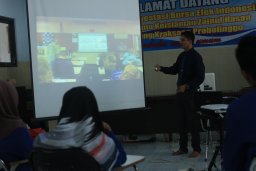 Beny Hamdani合作论文数Islamic University of Zainul Hasan Genggong Kraksaan Probolinggo2
 Husnul Khatimah合作论文数University of Mataram2Vincentius Valiandy Jiuangga合作论文数Mandarin Education Study Program, Ma Chung University2
 Teguh Sulistyo合作论文数Universitas Kanjuruhan2
 Muhammad Hasbi合作论文数Syiah Kuala University2Ahmad Ridho Rojabi合作论文数2Raida Asfihana合作论文数2
 Ana Wingeyer合作论文数Estación Experimental Agropecuaria Paraná, Instituto Nacional de Tecnología Agropecuaria (INTA),2Kent M. Eskridge合作论文数Department of Statistics, University of Nebraska2
 Jeffrey D. Bradshaw合作论文数Energy Biosciences Institute, University of Illinois2Walter H Schacht合作论文数2Daniel T. Walters合作论文数Department of Agronomy and Horticulture, University of Nebraska-Lincoln2
 Muhammad Nur Akbar Rasyid合作论文数1T. J. Arkebauer合作论文数1Shirly Rizki Kusumaningrum合作论文数1
 Gusti Ayu Made Rai Suarniti合作论文数1Kadnawi Kadnawi合作论文数1
 Bebasari Amiroh合作论文数1Syilvia Mustanuri Jannah合作论文数1yudi setyaningsih合作论文数1
 Nindya Juwita Utimadini合作论文数1
 rahmah purwahida合作论文数State University of Jakarta1
 Seri Asnawati Munthe合作论文数Universitas Sari Mutiara1
 Janno Sinaga合作论文数Dept Nursing, Sari Mutiara Indonesia Univ1
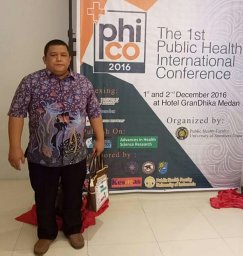 Donal Nababan合作论文数Universitas Sari Mutiara Indonesia1
 Aditya Nirwana合作论文数Universitas Ma Chung1
 Hiqma Nur Agustina合作论文数Politeknik Negeri Malang1
 Rizky Lutviana合作论文数Pendidikan Bahasa Inggris, Universitas Kanjuruhan Malang1
 Kesaktian Manurung合作论文数Universitas Sari Mutiara Medan1
 Evawani Martalena Silitonga合作论文数Universitas Sari Mutiara Indonesia1
 Liem Satya Limanta合作论文数petra christian university1
 Novri Pahrizal合作论文数1
 Sitti Mania合作论文数State University of Makassar1
 Abdullah Farih合作论文数Universitas Islam Lamongan1
 Ainu Zumrudiana合作论文数1
 Nining Ismiyani合作论文数Tanjungpura University1
 Ounu Zakiy Sukaton合作论文数1Puji Sri Rahayu合作论文数1




