Discretely self-similar solutions govern critical gravitational collapse and have been known only numerically since Choptuik's pioneering work. We construct, in closed analytic form, an infinite family of such solutions of the Einstein-massless-Klein-Gordon system using the large-D expansion. We characterize their structure and compare them with numerical critical solutions at finite D, identifying both universal features and distinctly large-D behavior.
We numerically construct a one-parameter family of critical spacetimes in arbitrary continuous dimensions D>3. This generalizes Choptuik's D=4 solution to spherically symmetric massless scalar-field collapse at the threshold of D-dimensional Schwarzschild-Tangherlini black hole formation. We refer to these solutions, which share the discrete self-similarity of their four-dimensional counterpart, as critical spacetime crystals. Our main results are the echoing period and Choptuik exponent of the crystals as continuous functions of D, with detailed data for the interval 3.05<D<5.5. Notably, the echoing period has a maximum near D=3.76. As a by-product, we recover the echoing periods and Choptuik exponents in D=4 (5): Delta=3.445453 (3.22176) and gamma=0.373961 (0.41322). We support these numerical results with analytical expansions in 1/D and D-3. They suggest that both the echoing period and Choptuik exponent vanish as D approaches 3 from above. This paves the way for a small-(D-3) expansion, paralleling the large-D expansion of general relativity. We also extend our results to two-dimensional dilaton gravity.
Discretely self-similar solutions govern critical collapse and have been known only numerically since Choptuik's pioneering work. Using the large-D expansion, where D is the spacetime dimension, we construct an infinite family of analytic solutions of the Einstein-massless-Klein-Gordon equations. In this limit, the field equations simplify drastically, and the solutions are encoded in a single function of time. We characterize their structure and compare them with numerical critical solutions at finite D, identifying both universal features and effects specific to large D.
We construct rotating black holes in Carroll gravity using two distinct approaches. In one of them, we exploit the freedom in the Carroll compatible connection to encode rotation. In particular, we construct rotating solutions in magnetic Carroll gravity by dressing the Carroll-Schwarzschild black hole with a rotational charge. This solution is intrinsically Carrollian and has no Lorentzian analog. In the other approach, we construct an extension of magnetic Carroll gravity from general relativity in an odd-power expansion in the speed of light. This theory contains magnetic Carroll gravity as a subsector but has in general more physical degrees of freedom. We show that this theory admits a Carroll analog of the Kerr black hole as a solution, which we refer to as the "Kerroll black hole". Its rotation appears as an intrinsically odd-power effect in the Carroll data. We compute the corresponding conserved charges for both theories.
This crisp summary of salient aspects of Carroll spinors is dedicated to the memory of Dharam Ahluwalia, the intrepid champion of ELKO spinors.
We impose unitarity constraints on two-dimensional field theories whose symmetries form the quantum conformal Bondi-Metzner-Sachs algebra, which combines conformal symmetries with asymptotic symmetries of asymptotically flat spacetimes. Positivity constraints put bounds on the central charge, 0<c<2.053. Positivity of the associated vertex algebra allows only four central charges, c = 1, 3/2, 13/7, 2. Thus, only four candidates for unitary field theories remain. We calculate their spectra of primaries and show that they are compatible with BPS-like and holographic inequalities.
We identify a new critical parameter in Choptuik's gravitational collapse: the angle at which null energy condition (NEC) saturation lines intersect at the center of the critical spacetime. These NEC lines coincide with regions of vanishing curvature, dividing spacetime into stripes of positive and negative curvature. By numerically solving Choptuik's original system, we find the NEC angle to be alpha approximate to 0.64 (approximate to 37 degrees) and analytically derive alpha = 2arccot(D-1) for any spacetime dimension D > 3.
We consider Carrollian conformal field theories in two dimensions and construct the boundary Carrollian conformal algebra (BCCA), opening up innumerable possibilities for further studies, given the growing relevance of Carrollian symmetries. We prove that the BCCA emerges by contracting a single copy of the Virasoro algebra. As an application, we construct, for the first time, open null strings and show that, for Dirichlet boundary conditions, we recover the BCCA as the algebra of constraints. We finally reconstruct our string results by taking the null limit of tensile open strings.
We construct postcarrollian gravity models in two, three, and four spacetime dimensions by applying algebraic expansion methods. As a byproduct, we present the most general postcarrollian 2d dilaton gravity model, construct its solutions and discuss some boundary aspects, including Schwarzian-type boundary actions. In 3d, we propose Brown-Henneaux-like boundary conditions, generalizing a corresponding Carrollian analysis, and derive the postcarrollian asymptotic symmetry algebra with its central extensions.
We revisit modular invariance in two-dimensional Carrollian conformal field theories from a geometric perspective. Focusing on the characters of the induced and highest-weight representations of the theory, we show that there are regions of parameter space where the vacuum character dominates in the dual channel. We use this property to zoom into different subsectors of the Carrollian theory. One of them is reminiscent of the Schwarzian sector of a relativistic CFT2 and has a flat space holographic interpretation as O-plane orbifold. It exists only for the highest-weight representation. We prove that for all sectors with vacuum dominance in the dual channel, the specific heat is negative, concurrent with the holographic interpretation of the negative specific heat of asymptotically flat spacetimes with horizons.
We argue there is an interesting triple-scaling limit of quantum gravity, namely when Planck’s constant scales to infinity while Newton’s constant and the speed of light tend to zero, keeping fixed the gravitational coupling GNc−4 and the combination ℏc. We refer to this limiting theory as “tantum gravity” and describe in this Letter some of its main properties and prospects for physics. Most notably, the laws of black hole thermodynamics survive this limit, which means that puzzles related to black holes and their evaporation could be addressed more easily in tantum gravity than in fully fledged quantum gravity. Published by the American Physical Society 2025
We construct Carroll-invariant theories with fields propagating outside the Carroll lightcone, i.e., at a speed strictly greater than zero (`Carroll swiftons'). We first consider models in flat Carroll spacetime in general dimensions, where we present scalar and vector Carroll swifton field theories. We then turn to the coupling to gravity and achieve in particular in two dimensions a Carroll invariant scalar swifton by coupling it suitably to Carroll dilaton gravity. Its backreaction on the geometry generates dynamical torsion.
We construct Carroll-invariant theories with fields propagating outside the Carroll light cone, i.e., at a speed strictly greater than zero (“Carroll swiftons”). We first consider models in flat Carroll spacetime in general dimensions, where we present scalar and vector Carroll swifton field theories. We then turn to the coupling to gravity and achieve in particular in two dimensions a Carroll-invariant scalar swifton by coupling it suitably to Carroll dilaton gravity. Its backreaction on the geometry generates dynamical torsion. Published by the American Physical Society 2024
Carroll black holes with an associated Carroll temperature were introduced recently. So far, it is unclear if they exhibit a Hawking-like effect. To solve this, we study scalar fields on Carroll black hole backgrounds. Inspired by anomaly methods, we derive a Hawking-like energy-momentum tensor compatible with the Carroll temperature and the Stefan-Boltzmann law. Key steps in our derivation are the finiteness of energy at the Carroll extremal surface and compatibility with the Carroll Ward identities, thereby eliminating, respectively, the Carroll-analogs of the Boulware and Unruh vacua.
Using effective field theory methods, we derive the Carrollian analog of the geodesic action. We find that it contains both `electric' and `magnetic' contributions that are in general coupled to each other. The equations of motion descending from this action are the Carrollian pendant of geodesics, allowing surprisingly rich dynamics. As an example, we derive Carrollian geodesics on a Carroll-Schwarzschild background and discover an effective potential similar to the one appearing in geodesics on Schwarzschild backgrounds. However, the Newton term in the potential turns out to depend on the Carroll particle's energy. As a consequence, there is only one circular orbit localized at the Carroll extremal surface, and this orbit is unstable. For large impact parameters, the deflection angle is half the value of the general relativistic light-bending result. For impact parameters slightly bigger than the Schwarzschild radius, orbits wind around the Carroll extremal surface. For small impact parameters, geodesics get reflected by the Carroll black hole, which acts as a perfect mirror.
We reorganize the derivative expansion of general (power-counting non-renormalizable) 2d dilaton gravity such that the mass function is integrable. As an example, we consider a three-parameter family of models and provide conditions on the parameters such that the ground state is either Minkowski, Rindler, or (A)dS.
Leaky boundary conditions in asymptotically AdS spacetimes are relevant to discuss black hole evaporation and the evolution of the Page curve via the island formula. We explore the consequences of leaky boundary conditions on the one-loop partition function of gravity. We focus on JT gravity minimally coupled to a scalar field whose normalizable and non-normalizable modes are both turned on, allowing for leakiness through the AdS boundary. Classically, this yields a flux-balance law relating the scalar news to the time derivative of the mass. Semi-classically, we argue that the usual diffeomorphism-invariant measure is ill-defined, suggesting that the area-non-preserving diffeomorphisms are broken at one loop. We calculate the associated anomaly and its implication on the gravitational Gauss law. Finally, we generalize our arguments to higher dimensions and dS.
We argue that the celestial conformal field theory exhibits patterns of a logarithmic conformal field theory. We uncover a Jordan block structure involving the celestial stress tensor and its logarithmic partner, a composite operator built from the stress tensor and the Liouville field. Using a limiting process whose parameter corresponds to the infrared cut-off of gravity, we perform some basic consistency checks, particularly the calculation of two-point correlators, which reveals the expected logarithmic behavior. We comment on the vanishing value of the central charge in the celestial conformal field theory and explain how the logarithmic partner is relevant for its well-behavedness.
We consider Carrollian conformal field theories in two dimensions and construct the boundary Carrollian conformal algebra (BCCA), opening up innumerable possibilities for further studies, given the growing relevance of Carrollian symmetries. We prove that the BCCA emerges by contracting a single copy of the Virasoro algebra. As an application, we construct, for the first time, open null strings and show that, for Dirichlet boundary conditions, we recover the BCCA as the algebra of constraints. We finally reconstruct our string results by taking the null limit of tensile open strings.
We construct and discuss generic 𝒩 = 1 and 𝒩 = 2 Carroll dilaton supergravity in two dimensions. We apply our general results to the supersymmetric Carroll-Jackiw-Teitelboim model, including a discussion of specific boundary conditions. For 𝒩 = 2 Carroll dilaton supergravity, we find two versions, dubbed “democratic” and “despotic”.
 Dmitri Vassilevich合作论文数Centro de Matemática Computação e Cognição, Universidade Federal do ABC28Florian Ecker合作论文数15Robert McNees合作论文数15
 Riegler Max合作论文数Institute for Theoretical Physics, Vienna University of Technology15
 Afshar Hamid合作论文数Psychosomatic Research Center, Isfahan University of Medical Sciences15
 Arjun Bagchi合作论文数Harish-Chandra Research Institute15
 Mohammad Mehdi Sheikh Jabbari合作论文数School of Physics, IPM13Jakob Salzer合作论文数10
 Niklas Johansson合作论文数Institute for Theoretical Physics;University of Technology;Institute for Theoretical Physics, University of Technology10
 Luzi Bergamin合作论文数9Stéphane Detournay合作论文数9
 Wout Merbis合作论文数Dutch Inst Emergent Phenomena DIEP, Univ Amsterdam8Stefan Prohazka合作论文数Sch Math & Maxwell Inst Math Sci, Univ Edinburgh8Sabine Ertl合作论文数8
 Alfredo Perez合作论文数Departamento de F ´ õsica7
 Céline Zwikel合作论文数Inst Theoret Phys, TU Wien6
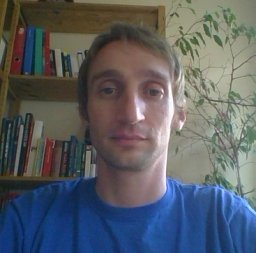 Christian Ecker合作论文数Goethe Universität6Ricardo Troncoso合作论文数Centro de Estudios Cient6
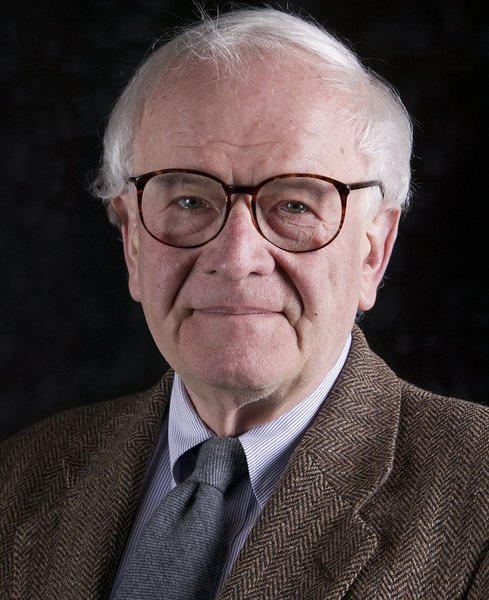 Roman Jackiw合作论文数Department of Physics, Massachusetts Institute of Technology6
 Rene Meyer合作论文数Institute for Theoretical Physics;University of Leipzig;Max Planck Institute for Mathematics;Max Planck Institute for Mathematics, University of Leipzig6michael gary合作论文数5
 Wolfgang Kummer合作论文数Institute of Anatomy and Cell Biology, University of Giessen5
 Carlos Valcarcel合作论文数Instituto de F ´ õsica Teorica, Sao Paulo State University5Herbert Balasin合作论文数Institute for Theoretical Physics, Faculty of Physics, Technische Universität Wien5Philipp Stanzer合作论文数4
 Romain Ruzziconi合作论文数Institute for Theoretical Physics, TU Wien4hernan a gonzalez合作论文数Universidad Adolfo Ibáñez4
 David Tempo合作论文数Centro de Estudios Cient4Florian Preis合作论文数4
 Jan Rosseel合作论文数Division of Theoretical Physics, Ruđer Bošković Institute3Emilio Elizalde合作论文数3Reinhard Oehme合作论文数3Shahn Majid合作论文数3
 Raphaela Wutte合作论文数Institute for Theoretical Physics, TU Wien3Friedrich Schöller合作论文数3
 Joan Simon合作论文数School of Mathematics, The University of Edinburgh3
 Stanley Deser合作论文数Martin A. Fisher School of Physics, Brandeis University3
 van der Schee Wilke合作论文数Institute for Theoretical Physics and Institute for Subatomic Physics, Utrecht University3
 Bernard De Wit合作论文数Utrecht University;Nikhef3Daniel Hofmann合作论文数3
 Muzaffer Adak合作论文数Pam3Thomas Zojer合作论文数Institute for Theoretical Physics, Vienna University of Technology3
 Alfredo Iorio合作论文数Institute of Particle and Nuclear Physics, Faculty of Mathematics and Physics, Charles University;Democritos Technologies, S.R.O.3
 Antoine Van Proeyen合作论文数Section of Theoretical Physics, KU Leuven3
 Patricio Salgado合作论文数Departamento de F ´ õsica3
 Mohammad Hossein Yavartanoo合作论文数Yanqi Lake beijing Institute of Mathematical Sciences and Applications3
 Shankhadeep Chakrabortty合作论文数Institute of Physics3
 Jade Rosseel合作论文数Instituut voor Theoretische;Katholieke Universiteit Leuven;Instituut voor Theoretische, Katholieke Universiteit Leuven3




