Coulomb-gauge quasi-parton distributions can be computed directly in momentum space on a finite lattice, enabled by the commutativity of their renormalization and Fourier transform. This approach removes the formal inverse problem in coordinate-space methods. Our momentum-space pion quasi-distributions agree with coordinate-space results Fourier transformed with asymptotic extrapolation, indicating that the formal inverse problem in the latter is not a concern at this volume. We further extend the framework to higher dimensions and obtain the first 3D image of the pion directly from lattice QCD.
Normalizing flows can be used to construct unbiased, reduced-variance estimators for lattice field theory observables that are defined by a derivative with respect to action parameters. This work implements the approach for observables involving gluonic operator insertions in the SU(3) Yang-Mills theory and two-flavor Quantum Chromodynamics (QCD) in four space-time dimensions. Variance reduction by factors of $10$-$60$ is achieved in glueball correlation functions and in gluonic matrix elements related to hadron structure, with demonstrated computational advantages. The observed variance reduction is found to be approximately independent of the lattice volume, so that volume transfer can be utilized to minimize training costs.
Lattice QCD has historically produced energy results interpretable as either estimates relying on implicit assumptions about asymptotic behavior or one-sided upper bounds. New Lanczos methods providing two-sided bounds with less-restrictive assumptions are introduced and quantified in a high-statistics calculation with unphysical quark masses. Two-sided bounds without spectral assumptions provide sub-percent constraints on the nucleon mass. Other bounds, which assume all states in a given energy window are resolved, provide meaningful two-sided constraints on nucleon-nucleon scattering phase shifts.
Recent work [Phys. Rev. Lett. 134, 241901 (2025)0031-900710.1103/pcvc-734h; Phys. Rev. D 112, 054506 (2025)10.1103/zjzt-rv86; Phys. Rev. D 112, 014514 (2025)2470-001010.1103/fp74-q35q] has shown that the (block) Lanczos algorithm can be used to extract approximate energy spectra and matrix elements from (matrices of) correlation functions in quantum field theory, and identified exact coincidences between Lanczos analysis methods and others [Eur. Phys. J. A 61, 26 (2025)1434-601X10.1140/epja/s10050-025-01495-8; Phys. Rev. D 112, 074506 (2025)10.1103/x3kb-8zw8]. In this work, we note another coincidence: the Lanczos algorithm is equivalent to the well-known Rayleigh-Ritz method applied to Krylov subspaces. Rayleigh-Ritz provides optimal eigenvalue approximations within Hermitian subspaces, including those arising in the decompositions of non-Hermitian operators describing noisy data. We explore the relation between Lanczos and Prony's method, their block generalizations, generalized pencil of functions (GPOF), and methods based on the generalized eigenvalue problem (GEVP), and find they all fall into a larger "Prony-Ritz equivalence class," identified as all methods which solve a finite-dimensional spectrum exactly given sufficient correlation function (matrix) data. This equivalence allows simpler and more numerically stable implementations of (block) Lanczos analyses.
This Letter reports the first calculation of the gravitational form factors (GFFs) of the scalar glueball, performed via lattice field theory in Yang-Mills theory at a single lattice spacing. The glueball GFFs are compared with those of other hadrons as determined in previous lattice calculations, providing strong indications that glueballs have a different gluonic structure than typical hadronic states. A mass radius of 0.263(31) fm is predicted, supporting previous suggestions that the scalar glueball is significantly smaller than other hadrons.
Precise neutrino energy reconstruction is essential for next-generation long-baseline oscillation experiments, yet current methods remain limited by large uncertainties in neutrino-nucleus interaction modeling. Even so, it is well established that different interaction channels produce systematically varying amounts of missing energy and therefore yield different reconstruction performance-information that standard calorimetric approaches do not exploit. We introduce a strategy that incorporates this structure by classifying events according to their underlying interaction type prior to energy reconstruction. Using supervised machine-learning techniques trained on labeled generator events, we leverage intrinsic kinematic differences among quasielastic scattering, meson-exchange current, resonance production, and deep-inelastic scattering processes. A cross-generator testing framework demonstrates that this classification approach is robust to microphysics mismodeling and, when applied to a simulated DUNE nu mu disappearance analysis, yields improved accuracy and sensitivity at the 10%-20% level. These results highlight a practical path toward reducing reconstruction-driven systematics in future oscillation measurements.
The generating functional in quantum field theory provides the natural framework for constructing correlation functions as derivatives with respect to source operators. We present a methodology that leverages machine-learned normalizing flows to reduce the variance of arbitrary $N$-point correlation functions of bosonic operators in lattice gauge field theory calculations by encoding a representation of the generating functional. We show that it is possible to systematically approach noiseless estimators of correlation functions in this framework. We demonstrate this methodology with applications to calculations of glueball correlation functions and Wilson loops in Quantum Chromodynamics and Yang-Mills theory. The results show up to three orders of magnitude variance reduction.
Excited-state effects lead to hard-to-quantify systematic uncertainties in lattice quantum chromodynamics (LQCD) spectroscopy calculations when computationally accessible imaginary times are smaller than inverse excitation gaps, as often arises for multi-hadron systems with signal-to-noise problems. Lanczos residual bounds address this by providing two-sided constraints on energies that do not require assumptions beyond Hermiticity, but often give very conservative systematic uncertainty estimates. Here, a more-constraining set of gap bounds is introduced for hadron spectroscopy. These bounds provide tighter constraints whose validity requires an explicit assumption about an energy gap. Exactly solvable lattice field theory correlators are used to test the utility of residual and gap bounds at finite and infinite statistics. Two-sided bounds and other analysis methods are then applied to a high-statistics LQCD calculation of nucleon-nucleon scattering at m_π∼ 800 MeV. Generalized eigenvalue problem (GEVP) and Lanczos energy estimators are compatible when applied to the same correlator data, but analyses including different interpolating operators show statistically significant inconsistencies. However, two-sided bounds from all operators are consistent. Under the assumption that the number of energy levels below NΔ and ΔΔ thresholds is the same as for non-interacting nucleons, gap bounds are sufficient to constrain nucleon-nucleon scattering amplitudes at phenomenologically relevant precision. Lanczos methods further reveal that energy-eigenstate estimates from previously studied asymmetric correlators have not converged over accessible imaginary times. Nevertheless, data-driven examples demonstrate why assumptions are required to draw conclusions about the natures of two-nucleon ground states at these masses.
Recent work has shown that the (block) Lanczos algorithm can be used to extract approximate energy spectra and matrix elements from (matrices of) correlation functions in quantum field theory, and identified exact coincidences between Lanczos analysis methods and others. In this work, we note another coincidence: the Lanczos algorithm is equivalent to the well-known Rayleigh-Ritz method applied to Krylov subspaces. Rayleigh-Ritz provides optimal eigenvalue approximations within subspaces; we find that spurious-state filtering allows these optimality guarantees to be retained in the presence of statistical noise. We explore the relation between Lanczos and Prony's method, their block generalizations, generalized pencil of functions (GPOF), and methods based on the generalized eigenvalue problem (GEVP), and find they all fall into a larger "Prony-Ritz equivalence class", identified as all methods which solve a finite-dimensional spectrum exactly given sufficient correlation function (matrix) data. This equivalence allows simpler and more numerically stable implementations of (block) Lanczos analyses.
This work presents preliminary results of the first determination of the energy-momentum tensor form factors of the scalar glueball, referred to as gravitational form factors (GFFs). The calculation has been carried out in lattice Yang-Mills theory at a single lattice spacing. Using variationally optimized operators, the matrix elements are extracted from ratios of three-point functions to two-point functions. The glueball GFFs and their kinematic dependence are compared to those of other hadrons from previous calculations.
We propose to use interpolating operators for lattice quantum chromodyanmics (QCD) calculations of highly-boosted pions and nucleons with kinematically-enhanced ground-state overlap factors at large momentum. Because this kinematic enhancement applies to the signal but not the variance of the correlation function, these interpolating operators can achieve better signal-to-noise ratios at large momentum. We perform proof-of-principle calculations with boosted pions and nucleons using close-to-physical and larger quark masses to explore the utility of our proposal. Results for effective energies and matrix elements, as well as Lanczos ground-state energy estimators, are consistent with theoretical expectations for signal-to-noise improvement at large momenta.
Normalizing flows have arisen as a tool to accelerate Monte Carlo sampling for lattice field theories. This work reviews recent progress in applying normalizing flows to 4-dimensional nonabelian gauge theories, focusing on two advancements: an architectural improvement referred to as learned active loops, and the application of correlated ensemble methods to QCD with $N_f=2$ dynamical fermions.
Neutrino-nucleus scattering cross sections are critical theoretical inputs for long-baseline neutrino oscillation experiments. However, robust modeling of these cross sections remains challenging. For a simple but physically motivated toy model of the DUNE experiment, we demonstrate that an accurate neural-network model of the cross section-leveraging only Standard-Model symmetries-can be learned from near-detector data. We perform a neutrino oscillation analysis with simulated far-detector events, finding that oscillation analysis results enabled by our data-driven cross-section model approach the theoretical limit achievable with perfect prior knowledge of the cross section. We further quantify the effects of flux shape and detector resolution uncertainties as well as systematics from cross-section mismodeling. This proof-of-principle study highlights the potential of future neutrino near-detector datasets and data-driven cross-section models.
Recent work introduced a new framework for analyzing correlation functions with improved convergence and signal-to-noise properties, as well as rigorous quantification of excited-state effects, based on the Lanczos algorithm and spurious eigenvalue filtering with the Cullum-Willoughby test. Here, we extend this framework to the analysis of correlation-function matrices built from multiple interpolating operators in lattice quantum chromodynamics (QCD) by constructing an oblique generalization of the block Lanczos algorithm, as well as a new physically motivated reformulation of the Cullum-Willoughby test that generalizes to block Lanczos straightforwardly. The resulting block Lanczos method directly extends generalized eigenvalue problem (GEVP) methods, which can be viewed as applying a single iteration of block Lanczos. Block Lanczos provides qualitative and quantitative advantages over GEVP methods analogous to the benefits of Lanczos over the standard effective mass, including faster convergence to ground- and excited-state energies, explicitly computable two-sided error bounds, straightforward extraction of matrix elements of external currents, and asymptotically constant signal-to-noise. No fits or statistical inference are required. Proof-of-principle calculations are performed for noiseless mock-data examples as well as two-by-two proton correlation-function matrices in lattice QCD.
Recent work [M. L. Wagman, Lanczos, the transfer matrix, and the signal-to-noise problem, Phys. Rev. Lett. 134, 241901 (2025).] found that an analysis formalism based on the Lanczos algorithm allows energy levels to be extracted from Euclidean correlation functions with faster ground-state convergence than effective masses, convergent estimators for multiple states from a single correlator, and two-sided error bounds. After filtering out spurious eigenvalues and using outlier-robust estimators within a nested bootstrap framework, Lanczos estimators behave more like multistate fit results than effective masses-but without involving statistical fitting. We extend this formalism to the determination of matrix elements from three-point correlation functions and provide a physical picture of "spurious-state filtering" involving restriction to a Hermitian subspace. We demonstrate similar advantages for matrix elements as for spectroscopy through example applications to noiseless mock-data and (bare) forward matrix elements of the strange scalar current between both ground and excited states with the quantum numbers of the nucleon.
Machine-learned normalizing flows can be used in the context of lattice quantum field theory to generate statistically correlated ensembles of lattice gauge fields at different action parameters. This work demonstrates how these correlations can be exploited for variance reduction in the computation of observables. Three different proof-of-concept applications are demonstrated using a novel residual flow architecture: continuum limits of gauge theories, the mass dependence of QCD observables, and hadronic matrix elements based on the Feynman-Hellmann approach. In all three cases, it is shown that statistical uncertainties are significantly reduced when machine-learned flows are incorporated as compared with the same calculations performed with uncorrelated ensembles or direct reweighting.
Recent work found that an analysis formalism based on the Lanczos algorithm allows energy levels to be extracted from Euclidean correlation functions with faster convergence than existing methods, two-sided error bounds, and no apparent signal-to-noise problems. We extend this formalism to the determination of matrix elements from three-point correlation functions. We demonstrate similar advantages over previously available methods in both signal-to-noise and control of excited-state contamination through example applications to noiseless mock-data as well as calculations of (bare) forward matrix elements of the strange scalar current between both ground and excited states with the quantum numbers of the nucleon.
The two gravitational form factors of the pion, $A^{\pi}(t)$ and $D^{\pi}(t)$, are computed as functions of the momentum transfer squared $t$ in the kinematic region $0\leq -t< 2~\text{GeV}^2$ on a lattice QCD ensemble with quark masses corresponding to a close-to-physical pion mass $m_{\pi}\approx 170~\text{MeV}$ and $N_f=2+1$ quark flavors. The flavor decomposition of these form factors into gluon, up/down light-quark, and strange-quark contributions is presented in the $\overline{\text{MS}}$ scheme at energy scale $\mu=2~\text{GeV}$, with renormalization factors computed nonperturbatively via the RI-MOM scheme. Using monopole and $z$-expansion fits to the gravitational form factors, we obtain estimates for the pion momentum fraction and $D$-term that are consistent with the momentum fraction sum rule and the next-to-leading order chiral perturbation theory prediction for $D^{\pi}(0)$.
Normalizing flows are machine-learned maps between different lattice theories which can be used as components in exact sampling and inference schemes. Ongoing work yields increasingly expressive flows on gauge fields, but it remains an open question how flows can improve lattice QCD at state-of-the-art scales. We discuss and demonstrate two applications of flows in replica exchange (parallel tempering) sampling, aimed at improving topological mixing, which are viable with iterative improvements upon presently available flows.
Scale separation is an important physical principle that has previously enabled algorithmic advances such as multigrid solvers. Previous work on normalizing flows has been able to utilize scale separation in the context of scalar field theories, but the principle has been largely unexploited in the context of gauge theories. This work gives an overview of a new method for generating gauge fields using hierarchical normalizing flow models. This method builds gauge fields from the outside in, allowing different parts of the model to focus on different scales of the problem. Numerical results are presented for $U(1)$ and $SU(3)$ gauge theories in 2, 3, and 4 spacetime dimensions.
 Phiala E. Shanahan合作论文数Department of Physics, Massachusetts Institute of Technology26
 Boyda D L合作论文数17
 Gurtej Kanwar合作论文数MIT, Ctr Theoret Phys, Cambridge, MA 02139 USA16
 Michael S Albergo合作论文数Center for Cosmology and Particle Physics, New York University13
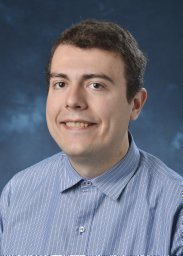 Ethan T. Neil合作论文数Department of Physics;Sloane Laboratory;Yale University;Sloane Laboratory, Yale University13
 Julian M. Urban合作论文数Inst Theoret Phys, Heidelberg Univ11
 Michael Wagman合作论文数11
 Fernando Romero-López合作论文数11
 Kyle Cranmer合作论文数Data Science Institute, University of Wisconsin-Madison;Department of Physics, University of Wisconsin-Madison11William I. Jay合作论文数10
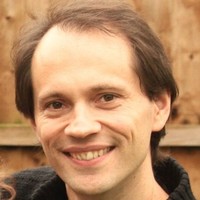 Sébastien Racanière合作论文数Google DeepMind10
 Danilo J. Rezende合作论文数Ellison Institute of Technology Oxford10Ryan Abbott合作论文数8
 Venkitesh Ayyar合作论文数Lawrence Berkeley Natl Lab8
 Tom DeGrand合作论文数Department of Physics, College of Arts And Sciences, University of Colorado at Boulder7
 Benjamin Svetitsky合作论文数Department of Particle Physics, School of Physics and Astronomy, Tel Aviv University7Yigal Shamir合作论文数Raymond and Beverly Sackler School of Physics and Astronomy, Tel Aviv University7
 Aleksandar Botev合作论文数OpenAI4Dimitra A. Pefkou合作论文数3
 Maarten Golterman合作论文数Department of Physics & Astronomy, College of Science and Engineering, San Francisco State University3
 William Detmold合作论文数Center for Theoretical Physics, Department of Physics, Massachusetts Institute of Technology;Center for Theoretical Physics, Laboratory for Nuclear Science, Massachusetts Institute of Technology3
 Alexander G. D. G. Matthews合作论文数Google DeepMind3
 Ali Razavi合作论文数DeepMind3Marc Illa合作论文数2Yin Lin合作论文数Dept Phys, Univ Chicago2Salvatore Cali合作论文数2
 Yong Zhao合作论文数Center for Theoretical Physics (CTP),MIT2Chung-Chun Hsieh合作论文数1Brian Xiao合作论文数1
 Tanmoy Bhattacharya (坦莫伊·巴塔查里亚)合作论文数Theoretical Division, Los Alamos National Laboratory1Anthony V. Grebe合作论文数1
 Sam Foreman合作论文数Argonne National Laboratory1
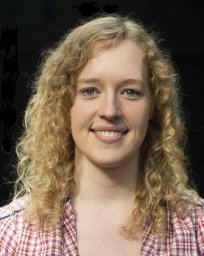 Lena Funcke合作论文数Center for Theoretical Physics and NSF AI Institute for Artificial Intelligence and Fundamental Interactions, Massachusetts Institute of Technology1Sasa Prelovsek合作论文数1
 Zohreh Davoudi合作论文数Department of Physics, College of Computer, Mathematical, & Natural Sciences, University of Maryland1
 Ciaran Hughes合作论文数Fermi National Accelerator Laboratory1Oliver Witzel合作论文数1Luchang Jin合作论文数RIKEN BNL Res Ctr, Brookhaven Natl Lab1
 Amy Nicholson合作论文数Department of Physics and Astronomy, College of Arts and Sciences, University of North Carolina at Chapel Hill1
 Andrei Alexandru合作论文数Dept. of Phys., George Washington Univ.1
 Andreas Kronfeld合作论文数Theoretical Physics Department, Technische Universitat Munchen;Fermi National Accelerator Laboratory, Technische Universitat Munchen;Institute for Advanced Study, Technische Universitat Munchen1
 Thomas Blum合作论文数Department of Physics, College of Liberal Arts and Sciences, University of Connecticut1Ycas Gabriel合作论文数1Howe Kiel合作论文数SLAC National Accelerator Laboratory, Stanford University1
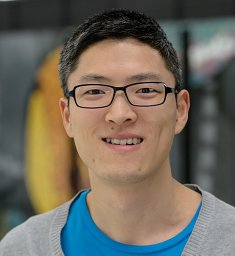 XiaoYong Jin合作论文数Ningxia University, Ningxia University1
 Rajan Gupta合作论文数Los Alamos National Laboratory1
 Anna Hasenfratz合作论文数Department of Physics, College of Arts and Sciences, University of Colorado Boulder1
 Vincenzo Cirigliano合作论文数Theoretical Division, Los Alamos National Laboratory;Department of Physics, College of Arts & Sciences, University of Washington1




