We consider the problem of secure distributed ma-trix multiplication in which a user wishes to compute the product of two matrices with the assistance of honest but curious servers. We show how to construct polynomial schemes for the outer product partitioning which take advantage of the user's ability to precompute, and provide bounds for our technique. We show that precomputation allows for a reduction in the order of the time complexity for the cases where the number of colluding servers is a fixed percentage of the number of servers. Furthermore, with precomputation, any percentage (less than 100%) of collusions can be tolerated, compared to the upper limit of 50% for the case without precomputation.
. The smallest open case for classifying Steiner triple systems is order 21. A Steiner triple system of order 21, an STS(21), can have subsystems of orders 7 and 9, and it is known that there are 12,661,527,336 isomorphism classes of STS(21)s with sub-STS(9)s. Here, the classification of STS(21)s with subsystems is completed by settling the case of STS(21)s with sub-STS(7)s. There are 116,635,963,205,551 isomorphism classes of such systems. An estimation of the number of isomorphism classes of STS(21)s is given.
Steiner triple systems (STSs) have been classified up to order 19. Earlier estimations of the number of isomorphism classes of STSs of order 21, the smallest open case, are discouraging as for classification, so it is natural to focus on the easier problem of merely counting the isomorphism classes. Computational approaches for counting STSs are here considered and lead to an algorithm that is used to obtain the number of isomorphism classes for order 21: 14,796,207,517,873,771.
This dataset contains a complete list of pairwise nonisomorphic 2-(9,3,5) designs. Explanations, background, and the file format, are described in the Zenodo datasetHeinlein, Daniel, Ivanov, Andrei, McKay, Brendan, & Östergård, Patric R. J. (2023). A library of combinatorial 2-designs [Dataset]. Zenodo. https://doi.org/10.5281/zenodo.8262681
Several methods for generating random Steiner triple systems (STSs) have been proposed in the literature, such as Stinson's hill-climbing algorithm and Cameron's algorithm, but these are not yet completely understood. Those algorithms, as well as some variants, are here assessed for STSs of both small and large orders. For large orders, the number of occurrences of certain configurations in the constructed STSs are compared with the corresponding expected values of random hypergraphs. Modifications of the algorithms are proposed.
Steiner triple systems form one of the most studied classes of combinatorial designs. Configurations, including subsystems, play a central role in the investigation of Steiner triple systems. With sporadic instances of small systems, ad hoc algorithms for counting or listing configurations are typically fast enough for practical needs, but with many systems or large systems, the relevance of computational complexity and algorithms of low complexity is highlighted. General theoretical results as well as specific practical algorithms for important configurations are presented.
A constant-dimension code (CDC) is a set of subspaces of constant dimension in a common vector space with upper bounded pairwise intersection. We improve and generalize two constructions for CDCs, the improved linkage construction and the parallel linkage construction , to the generalized linkage construction and the multiblock generalized linkage construction which in turn yield many improved lower bounds for the cardinalities of CDCs; a quantity not known in general.
We consider the problem of communication efficient secure distributed matrix multiplication. The previous literature has focused on reducing the number of servers as a proxy for minimizing communication costs. The intuition being that the more servers are used, the higher is the communication cost. We show that this is not the case in general. Our central technique relies on adapting results from the literature on repairing Reed-Solomon codes in which, instead of downloading the whole output of a computing task, a user downloads field traces of it. We present Field Trace Polynomial (FTP) codes, a family of codes, that leverage this technique and characterize regimes for which they outperform existing codes in the literature.
We consider the problem of secure distributed matrix multiplication in which a user wishes to compute the product of two matrices with the assistance of honest but curious servers. In this paper, we answer the following question: Is it beneficial to offload the computations if security is a concern? We answer this question in the affirmative by showing that by adjusting the parameters in a polynomial code we can obtain a trade-off between the user's and the servers' computational time. Indeed, we show that if the computational time complexity of an operation in $\mathbb{F}_q$ is at most $\mathcal{Z}_q$ and the computational time complexity of multiplying two $n\times n$ matrices is $\mathcal{O}(n^\omega \mathcal{Z}_q)$ then, by optimizing the trade-off, the user together with the servers can compute the multiplication in $\mathcal{O}(n^{4-\frac{6}{\omega+1}} \mathcal{Z}_q)$ time. We also show that if the user is only concerned in optimizing the download rate, a common assumption in the literature, then the problem can be converted into a simple private information retrieval problem by means of a scheme we call Private Oracle Querying. However, this comes at large upload and computational costs for both the user and the servers.
We show that $A_2(7,4) \leq 388$ and, more generally, $A_q(7,4) \leq (q^2-q+1)[7]_q + q^4 - 2q^3 + 3q^2 - 4q + 4$ by semidefinite programming for $q \leq 101$. Furthermore, we extend results by Bachoc et al. on SDP bounds for $A_2(n,d)$, where $d$ is odd and $n$ is small, to $A_q(n,d)$ for small $q$ and small $n$.
We generalize upper bounds for constant dimension codes containing a lifted maximum rank distance code first studied by Etzion and Silberstein. The proof allows to construct several improved codes.
We show that there is a binary subspace code of constant dimension 3 in ambient dimension 7, having minimum subspace distance 4 and cardinality 333, i.e., \begin{document}$ 333 \le A_2(7, 4;3) $\end{document} , which improves the previous best known lower bound of 329. Moreover, if a code with these parameters has at least 333 elements, its automorphism group is in one of 31 conjugacy classes. This is achieved by a more general technique for an exhaustive search in a finite group that does not depend on the enumeration of all subgroups.
We determine the maximum size A2(8,6;4) of a binary subspace code of packet length v=8, minimum subspace distance d=6, and constant dimension k=4 to be 257. There are two isomorphism types of optimal codes. Both of them are extended LMRD codes. In finite geometry terms, the maximum number of solids in PG(7,2) mutually intersecting in at most a point is 257. The result was obtained by combining the classification of substructures with integer linear programming techniques. This result implies that the maximum size A2(8,6) of a binary mixed-dimension subspace code of packet length 8 and minimum subspace distance6 is 257 as well.
A vector space partition $\mathcal{P}$ in $\mathbb{F}_q^v$ is a set of subspaces such that every $1$-dimensional subspace of $\mathbb{F}_q^v$ is contained in exactly one element of $\mathcal{P}$. Replacing "every point" by "every $t$-dimensional subspace", we generalize this notion to vector space $t$-partitions and study their properties. There is a close connection to subspace codes and some problems are even interesting and unsolved for the set case $q=1$.
We consider the problem of secure distributed matrix multiplication (SDMM) in which a user wishes to compute the product of two matrices with the assistance of honest but curious servers. We construct polynomial codes for SDMM by studying a recently introduced combinatorial tool called the degree table. For a fixed partitioning, minimizing the total communication cost of a polynomial code for SDMM is equivalent to minimizing $N$ , the number of distinct elements in the corresponding degree table. We propose new constructions of degree tables with a low number of distinct elements. These new constructions lead to a general family of polynomial codes for SDMM, which we call $\mathsf {GASP}_{r}$ (Gap Additive Secure Polynomial codes) parameterized by an integer $r$ . $\mathsf {GASP}_{r}$ outperforms all previously known polynomial codes for SDMM under an outer product partitioning. We also present lower bounds on $N$ and prove the optimality or asymptotic optimality of our constructions for certain regimes. Moreover, we formulate the construction of optimal degree tables as an integer linear program and use it to prove the optimality of $\mathsf {GASP}_{r}$ for all the system parameters that we were able to test.
A projective linear code over 𝔽_q is called Δ-divisible if all weights of its codewords are divisible by Δ. Especially, q^r-divisible projective linear codes, where r is some integer, arise in many applications of collections of subspaces in 𝔽_q^v. One example are upper bounds on the cardinality of partial spreads. Here we survey the known results on the possible lengths of projective q^r-divisible linear codes.
Codes in finite projective spaces equipped with the subspace distance have been proposed for error control in random linear network coding. Here we collect the present knowledge on lower and upper bounds for binary subspace codes for projective dimensions of at most 7, i.e., affine dimensions of at most 8. We obtain several improvements of the bounds and perform two classifications of optimal subspace codes, which are unknown so far in the literature.
For which positive integers $n,k,r$ does there exist a linear $[n,k]$ code $C$ over $\mathbb{F}_q$ with all codeword weights divisible by $q^r$ and such that the columns of a generating matrix of $C$ are projectively distinct? The motivation for studying this problem comes from the theory of partial spreads, or subspace codes with the highest possible minimum distance, since the set of holes of a partial spread of $r$-flats in $\operatorname{PG}(v-1,\mathbb{F}_q)$ corresponds to a $q^r$-divisible code with $k\leq v$. In this paper we provide an introduction to this problem and report on new results for $q=2$.
We study asymptotic lower and upper bounds for the sizes of constant dimension codes with respect to the subspace or injection distance, which is used in random linear network coding. In this context we review known upper bounds and show relations between them. A slightly improved version of the so-called linkage construction is presented which is e.g. used to construct constant dimension codes with subspace distance d=4 , dimension k=3 of the codewords for all field sizes q, and sufficiently large dimensions v of the ambient space. It exceeds the MRD bound, for codes containing a lifted MRD code, by Etzion and Silberstein.
It is shown that the maximum size $A_2(8,6;4)$ of a binary subspace code of packet length $v=8$, minimum subspace distance $d=4$, and constant dimension $k=4$ is at most $272$. In Finite Geometry terms, the maximum number of solids in $\operatorname{PG}(7,2)$, mutually intersecting in at most a point, is at most $272$. Previously, the best known upper bound $A_2(8,6;4)\le 289$ was implied by the Johnson bound and the maximum size $A_2(7,6;3)=17$ of partial plane spreads in $\operatorname{PG}(6,2)$. The result was obtained by combining the classification of subspace codes with parameters $(7,17,6;3)_2$ and $(7,34,5;\{3,4\})_2$ with integer linear programming techniques. The classification of $(7,33,5;\{3,4\})_2$ subspace codes is obtained as a byproduct.
 Sascha Kurz合作论文数Department of Mathematics;University of Bayreuth;Department of Mathematics, University of Bayreuth12
 Michael Kiermaier合作论文数8
 Alfred Wassermann合作论文数Mathematisches Institut, FakultÄt fÜr Mathematik, Physik und Informatik, University of Bayreuth7
 Thomas Honold合作论文数Publisher Elsevier Science Publishers B. V. Amsterdam, The Netherlands, The Netherlands
cited by index terms collaborative colleagues6
Thomas Honold合作论文数Publisher Elsevier Science Publishers B. V. Amsterdam, The Netherlands, The Netherlands
cited by index terms collaborative colleagues6 Patric R. J. Östergård合作论文数Department of Communications and NetworkingSchool of Electrical Engineering, Aalto University5
 Salim El Rouayheb合作论文数Department of Electrical and Computer Engineering;Texas A&M University;Department of Electrical and Computer Engineering, Texas A&M University4
 Rafael Oliveira合作论文数Data61 Business Unit, Commonwealth Scientific and Industrial Research Organisation4
 David Karpuk合作论文数3
 Roberto Assis Machado合作论文数1
 Ryann Cartor合作论文数1
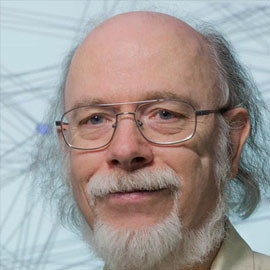 Brendan McKay合作论文数School of Computing, College of Engineering, Computing and Cybernetics, Australian National University1
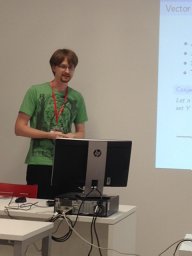 Ferdinand Ihringer合作论文数1
 Alex Sprintson合作论文数Department of Electrical and Computer Engineering, College of Engineering, Texas A&M University;Nokia Bell Labs1




