This text advances the hypothesis that the meaning of the Web as an object of study has diluted as a clear research domain. One example of this phenomenon is the identity crisis of the Web Conference and the International Semantic Web Conference. At its root is the Web's evolution from a focused technological object into a universal digital environment, a transition whose very success has fragmented its academic community and obscured its core identity. We chart this trajectory from a well-defined object of study to a fragmented backdrop, identifying key pressures such as the "academic tragedy of the commons" and the disruptive force of AI. We conclude that a fundamental community discussion is needed to define what it means to study the Web now that it has become the universal infrastructure for global digital activity.
Temporal knowledge graphs are central to many uses of the Semantic Web, but existing completion methods assume the entities, relation names, and timestamps to be reasoned about are already known at training time, restricting each model to a single graph and vocabulary. We propose FITTER, the first fully-inductive structural model for temporal knowledge graph link prediction that supports cross-domain transfer: the inference graph may contain entirely unseen entities, relation names, and timestamps drawn from a different domain. FITTER represents each predicate by its interaction patterns with others and time through encodings of relative rather than absolute ordering; message-passing fuses local and global temporal context to produce vocabulary-agnostic embeddings. We prove the temporal encoding is time-shift invariant and evaluate FITTER on cross-domain, cross-graph transfer over six temporal knowledge graph benchmarks of diverse domains, granularities, and time spans. FITTER consistently outperforms inductive baselines without retraining, indicating that vocabulary-agnostic structural learning is a viable foundation for inference over the heterogeneous knowledge graphs of the Semantic Web.
The SFB 1574 Circular Factory is building a shared knowledge graph infrastructure for integrating data about returned products. A central challenge is that circular-factory data include numeric measurements that (i) originate from sensors or are derived from sensor-based measurements, (ii) are frequently multi-dimensional, and (iii) are inherently uncertain, while downstream triage, validation, reliability-modeling, and reassembly-planning modules require queryable uncertainty representations. Current RDF and SPARQL technologies lack native support for harmonized querying and analysis of such uncertain numeric measurement data. To address this gap, we present ProbSPARQL, an upward-compatible SPARQL extension developed as an early-stage query-layer pilot for this infrastructure. ProbSPARQL models uncertain numeric values as random variables whose distributions are encoded by probabilistic RDF literal datatypes, and supports distribution-aware expressions, probabilistic filters, and divergence-based joins. We implement ProbSPARQL on Apache Jena ARQ and expose it through a Fuseki-compatible execution layer. We assess real-data applicability using project-derived measurement fragments covering GMM-encoded uncertainty and histogram-based empirical roughness distributions, and evaluate scalability separately on controlled ontology-conformant benchmarks with up to 5,000 angle-grinder instances and 1.5M triples. The results show feasible in-engine execution, filter-pushdown speedups over application-layer post-processing, and latency-accuracy trade-offs among divergence-join decision strategies.
Knowledge graph foundation models such as Ultra and Trix achieve strong inductive transfer by learning relation-graph representations that generalise to unseen entities and relations. Extending this transferability to temporal knowledge graphs (TKGs) remains challenging: existing temporal models tie their parameters to dataset-specific entities, relations, or timestamps and are not designed to transfer to TKGs with disjoint vocabularies. We propose GRATE (Gated Rotary Attention for Temporal Encoding), an entity-side message function that adds no learnable parameters and encodes time through relative time differences by rotating each edge message according to its time gap to the query and applying a query-conditioned gate to select temporally relevant signals. GRATE integrates into NBFNet-style KG foundation models while preserving structural transferability. Existing TKG benchmarks evaluate within shared train/test vocabularies and cannot directly test cross-dataset temporal transfer; we therefore construct GDELTIndT and WIKIIndT, inductive transfer benchmark suites with disjoint entities, relations, and timestamps spanning both interpolation and extrapolation. Across these benchmarks and held-out forecasting datasets, a single jointly pretrained GRATE checkpoint improves over the static base model in most settings.
Knowledge graph (KG) foundation models (KGFMs) are zero-shot generalizers: trained once, they can predict links on unseen graphs without retraining. However, understanding when and how they can robustly generalize across KGs is still an open question. In this paper, we shed some light on their generalization mechanisms highlighting how their performance on unseen KGs is not uniform when it comes to partially seen links, which we call half-links. In fact, we show that to predict a test triple $(h,r,t)$ it might suffice in practice to have observed the half-link $(h,r)$ or $(r,t)$ in the inference graph. This yields a taxonomy of four scenarios when combinations of these half-links are observed or not. In a rigorous stratified analysis over these scenarios, we reveal that SoTA KGFMs use seen half links for predictions, while unseen half-links pose different challenges. As such, our finer-grained taxonomy can be a diagnostic protocol for robust KGFM generalization and highlights where novel KGFMs can improve.
Machine learning interatomic potentials (MLIPs) approximate quantum-mechanical energies and forces---conventionally computed by density functional theory (DFT) or wave-function methods---at a fraction of the cost. The field encompasses a growing ecosystem of algorithms, training datasets, hyperparameters, and target materials, yet the metadata needed to systematically compare, reproduce, and build upon MLIP studies remains scattered across papers, scripts, and ad-hoc file formats. We present the MLIPs ontology, an OWL 2 DL ontology that captures the concepts needed to describe MLIP methods, their hyperparameters, training datasets with DFT provenance, and published benchmarks. The ontology is organized into three modules---Method, Training Data, and Benchmark---and connects existing ontologies in materials science (MDO, CMSO/ASMO) and machine learning (ML-Schema), complementing dataset-side schemas such as Croissant. It declares 27 formal axioms enforcing data completeness and consistency, including property chains that link trained models to their methods and training data. We demonstrate the ontology through a running example based on Moment Tensor Potentials and evaluate it through competency-question execution on a 20-paper seeded knowledge graph, OWL reasoning, and comparison with existing ontologies.
Property graphs may be constrained by schemas that inform both query engines and human users about the shape of valid data, enforcing a contract between data provider and consumer. Composable property-graph queries transform input graphs into output graphs. Then, the question arises of which schema can be expected after one (or several) transformation steps. We investigate how schema constraints can be inferred given an input schema and a transforming query. Specifically, we propose a reasoning procedure that, given an input schema in ProGS and a query in G-CORE infers an output schema. Since graph updates will happen frequently, our inference procedure does not rely on graph instances, such that the computed output schema applies to all graphs originating from any input graph complying with the input schema. Related work has addressed this problem for SPARQL CONSTRUCT queries, encoding it in Description Logics (DLs) so that the output schema is entailed by axioms inferred from input schema and queries. Property graphs and their queries, however, complicate the matter, as property graphs feature label and property annotations as well as first-class edges. Thus, reification has to be used in one way or another, though available DLs lack the means to encode such features directly. We approach this novel challenge via a family of mappings for i) property graphs reified in RDF, aligned with ii) a mapping from ProGS to SHACL and iii) a mapping from G-CORE to SPARQL CONSTRUCT queries. In this manner, schema inference for property graphs becomes manageable, as we break apart the problem through the extra mapping layer and utilize efficient DL reasoners. We develop the metatheory regarding the soundness of inferred schema constraints and the semantic equivalence of mapped schemas and queries.
The paper analyzes and characterizes the algebraic and logical structure of the multiset semantics for SPARQL patterns involving AND, UNION, FILTER, EXCEPT, and SELECT. To do this, we align SPARQL with two well-established query languages: Datalog and Relational Algebra. Specifically, we study (i) a version of non-recursive Datalog with safe negation extended to support multisets, and (ii) a multiset relational algebra comprising projection, selection, natural join, arithmetic union, and except. We prove that these three formalisms are expressively equivalent under multiset semantics.
While linear manufacturing relies on homogeneous materials and predefined process sequences, circular manufacturing reintroduces used products with heterogeneous and uncertain conditions. This shift demands manufacturing systems capable of handling variable product states, dynamically reconfigurable processes, and the integration of human and machine knowledge. Conventional manufacturing IT architectures, designed for stable structures and deterministic execution, are unable to meet these requirements, as they cannot adequately represent and manage the uniqueness of individual components at runtime. Following a design science methodology for developing a Cyber Physical Production System for circular manufacturing, we derive 14 requirements from five complementary perspectives. Based on these requirements, we design KAPPS, a knowledge-based architecture that uses an ontology-grounded knowledge graph as a unifying data backbone, combined with a semantic interface layer to enable consistent data and information integration, reasoning, and communication across heterogeneous systems and services, turning the knowledge graph from an integration layer into the factories authoritative write-time state. KAPPS incorporates modules for constraint enforcement and event-driven planning, enabling incremental adaptation of execution plans under uncertainty and human-machine knowledge exchange. The applicability of KAPPS is demonstrated through two implemented use cases: (i) Anomaly detection and learning through knowledge graph mediated services and (ii) runtime constraint enforcement in a modular conveyor system. Subsequently, the architecture is evaluated against the 14 requirements (ed. abstract shortened)
Semantic Web technologies are increasingly used in the architecture, engineering, and construction (AEC) industry, yet the Resource Description Framework (RDF) and its query language, SPARQL, still lack native support for 3D geometry. Existing approaches either reduce geometry to 2D, rely on external spatial databases, or require processing workflows outside the semantic layer. This paper introduces geof3D, an extension to SPARQL that enables 3D geometric computation directly inside RDF triple stores. The framework is grounded in a formal function space derived from Architectural Geometry and provides typed operators for measurement, spatial predicates, constructive solid modeling, and affine transformations. These functions are implemented as SPARQL built-ins in RDF4J, supported by an execution backend that uses Java-based processing together with SFCGAL, a robust computational geometry engine accessed through the Java Native Interface (JNI). The system supports operations including geometric validation, Boolean solids, 3D spatial queries, and shape transformations without leaving the RDF environment. We evaluate geof3D using real building models from the Large-Scale Construction Robotics Laboratory and show that the framework supports spatial alignment, clash detection, and algorithmic modeling entirely through RDF-native queries. The evaluation examines both expressiveness and implementation performance, combining in-browser benchmarking with direct JNI measurements and comparative testing against a PostGIS configuration to assess performance, scalability, and geometric fidelity. All code, queries, datasets, and benchmarks are openly released. This work shows that SPARQL can serve not only as a semantic query language but also as a computational interface for 3D co-design, enabling integrated, interoperable, and geometry-aware workflows for building information management.
Complex query answering (CQA) on knowledge graphs (KGs) is gaining momentum as a challenging reasoning task. In this paper, we show that the current benchmarks for CQA might not be as complex as we think, as the way they are built distorts our perception of progress in this field. For example, we find that in these benchmarks, most queries (up to 98% for some query types) can be reduced to simpler problems, e.g., link prediction, where only one link needs to be predicted. The performance of state-of-the-art CQA models decreases significantly when such models are evaluated on queries that cannot be reduced to easier types. Thus, we propose a set of more challenging benchmarks composed of queries that require models to reason over multiple hops and better reflect the construction of real-world KGs. In a systematic empirical investigation, the new benchmarks show that current methods leave much to be desired from current CQA methods.
Uncertainty quantification in Knowledge Graph Embedding (KGE) methods is crucial for ensuring the reliability of downstream applications. A recent work applies conformal prediction to KGE methods, providing uncertainty estimates by generating a set of answers that is guaranteed to include the true answer with a predefined confidence level. However, existing methods provide probabilistic guarantees averaged over a reference set of queries and answers (marginal coverage guarantee). In high-stakes applications such as medical diagnosis, a stronger guarantee is often required: the predicted sets must provide consistent coverage per query (conditional coverage guarantee). We propose CondKGCP, a novel method that approximates predicate-conditional coverage guarantees while maintaining compact prediction sets. CondKGCP merges predicates with similar vector representations and augments calibration with rank information. We prove the theoretical guarantees and demonstrate empirical effectiveness of CondKGCP by comprehensive evaluations.
Temporal Knowledge Graphs (TKGs) store temporal facts with quadruple formats (s, p, o, t). Existing Temporal Knowledge Graph Embedding (TKGE) models perform link prediction tasks in transductive or semi-inductive settings, which means the entities, relations, and temporal information in the test graph are fully or partially observed during training. Such reliance on seen elements during inference limits the models' ability to transfer to new domains and generalize to real-world scenarios. A central limitation is the difficulty in learning representations for entities, relations, and timestamps that are transferable and not tied to dataset-specific vocabularies. To overcome these limitations, we introduce the first fully-inductive approach to temporal knowledge graph link prediction. Our model employs sinusoidal positional encodings to capture fine-grained temporal patterns and generates adaptive entity and relation representations using message passing conditioned on both local and global temporal contexts. Our model design is agnostic to temporal granularity and time span, effectively addressing temporal discrepancies across TKGs and facilitating time-aware structural information transfer. As a pretrained, scalable, and transferable model, POSTRA demonstrates strong zero-shot performance on unseen temporal knowledge graphs, effectively generalizing to novel entities, relations, and timestamps. Extensive theoretical analysis and empirical results show that a single pretrained model can improve zero-shot performance on various inductive temporal reasoning scenarios, marking a significant step toward a foundation model for temporal KGs.
The Architecture, Engineering, and Construction (AEC) industry faces data integration challenges due to fragmented silos and diverse data representations, hindering cross-domain queries and early detection of design constraints. Semantic Web Technologies (SWTs) address data integration challenges. This paper evaluates the impact of SWTs on co-design workflows by comparing them with alternative approaches to assess their effectiveness in supporting interdisciplinary collaboration and design constraint detection. Using Design Science Research, a co-design methodology is developed that integrates SWTs with AEC tools for reasoning and federated querying. A component of this methodology is a bidirectional mapping strategy for translating object-oriented data models, demonstrated with the Building Habitat Object Model (BHoM), an AEC interoperability framework. Findings reveal that integrating SWTs enables reasoning and complex queries across federated datasets, improving co-design efficiency. These findings support AEC professionals in advancing co-design and data-driven decision-making, while also informing future research on integrating SWTs into AEC design workflows.
Modeling evolving interactions among entities is critical in many real-world tasks. For example, predicting driver maneuvers in traffic requires tracking how neighboring vehicles accelerate, brake, and change lanes relative to one another over consecutive frames. Similarly, detecting financial fraud hinges on following the flow of funds through successive transactions as they propagate across the network. Unlike classic time-series forecasting, these settings demand reasoning over who interacts with whom and when, calling for a temporal-graph representation that makes both the relations and their evolution explicit. Existing temporal-graph methods use snapshot graphs to represent temporal evolution. In this paper, we introduce a full-history graph that instantiates one node for every entity at every timestep and separates two edge sets: (i) intra-timestep edges that capture relations within a single frame, and (ii) inter-timestep edges that connect an entity to itself at consecutive steps. To learn on this graph we design an Edge-Type Decoupled Network (ETDNet) with parallel modules: a graph-attention module aggregates information along intra-timestep edges, a multi-head temporal-attention module attends over an entity’s inter-timestep history, and a fusion module combines the two messages after every layer. When evaluated on driver-intention prediction (Waymo) and Bitcoin fraud detection (Elliptic++), ETDNet consistently surpasses strong baselines, lifting Waymo joint accuracy to 75.6 % (vs. 74.1 %) and raising Elliptic++ illicit-class F1 to 88.1 % (vs. 60.4 %). These gains demonstrate the benefit of representing structural and temporal relations as distinct edges in a single graph.
The vast majority of Web pages fail to comply with established Web accessibility guidelines, excluding a range of users with diverse abilities from interacting with their content. Making Web pages accessible to all users requires dedicated expertise and additional manual efforts from Web page providers. To lower their efforts and, thus, promote inclusiveness, we aim to automatically detect and correct Web accessibility violations in HTML code. While previous work has made progress in detecting certain types of accessibility violations, the problem of automatically detecting and correcting accessibility violations remains an open challenge that we address. We introduce a novel taxonomy classifying Web accessibility violations into three key categories- Syntactic, Semantic, and Layout. This taxonomy provides a structured foundation for developing our detection and correction method and selecting and redefining evaluation metrics. We propose our novel method, AccessGuru, which combines existing accessibility testing tools and Large Language Models (LLMs) to detect accessibility violations of Web accessibility guidelines and taxonomy-driven prompting strategies of LLMs to correct all three accessibility violation categories. To evaluate these capabilities, we have developed a novel benchmark encompassing Web accessibility violations from real-world Web pages. Our benchmark quantifies syntactic and layout compliance and judges semantic accuracy through a comparative analysis against human expert corrections. Evaluation against our benchmark demonstrates that our method achieves up to 84% average violation score decrease on our benchmark dataset, significantly outperforming existing methods, which achieve at most 50% average violation score decrease.
Retrieval-Augmented Generation (RAG) enhances large language models by incorporating external knowledge, yet suffers from critical limitations in high-stakes domains-namely, sensitivity to noisy or contradictory evidence and opaque, stochastic decision-making. We propose ArgRAG, an explainable, and contestable alternative that replaces black-box reasoning with structured inference using a Quantitative Bipolar Argumentation Framework (QBAF). ArgRAG constructs a QBAF from retrieved documents and performs deterministic reasoning under gradual semantics. This allows faithfully explanaining and contesting decisions. Evaluated on two fact verification benchmarks, PubHealth and RAGuard, ArgRAG achieves strong accuracy while significantly improving transparency.
Predicting answers to queries over knowledge graphs is called a complex reasoning task because answering a query requires subdividing it into subqueries. Existing query embedding methods use this decomposition to compute the embedding of a query as the combination of the embedding of the subqueries. This requirement limits the answerable queries to queries having a single free variable and being decomposable, which are called tree-form queries and correspond to the $SROI^-$ description logic. In this paper, we define a more general set of queries, called DAG queries, formulate a description logic corresponding to them, called DAG-DL, propose a query embedding method for them, called DAGE, and a new benchmark to evaluate query embeddings on them. Given the computational graph of a DAG query, DAGE combines the possibly multiple paths between two nodes into a single path with a trainable operator that represents the intersection of relations and learns DAG-DL tautologies. We show that it is possible to implement DAGE on top of existing query embedding methods, and we empirically measure the outstanding improvement of our method over the results of vanilla methods evaluated in tree-form queries that result in relaxing the DAG queries of our proposed benchmark.
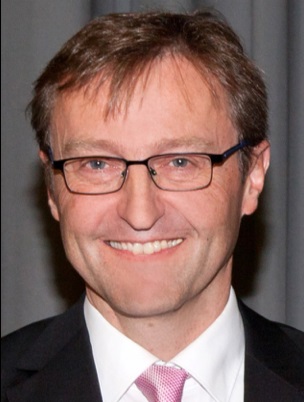 Steffen Staab合作论文数Institute of Artificial Intelligence, University of Stuttgart;Faculty of Physical Sciences and Engineering, University of Southampton;Institute for Parallel and Distributed Systems, Universität Stuttgart26
 Claudio Gutiérrez合作论文数Departamento de Ciencias de la Computación, Facultad de Ciencias Físicas y Matemáticas, Universidad de Chile8
 Diellza Elshani合作论文数6
 Thomas Wortmann合作论文数University of Stuttgart6
 Aidan Hogan合作论文数Department of Computer Science, University de Chile;Millennium Institute for Foundational Research on Data5
 Bo Xiong合作论文数International Max Plank Research School for Intelligent Systems;Institute of Parallel and Distributed Systems, University of Stuttgart5
 Yuqicheng Zhu合作论文数International Max Planck Research School for Intelligent Systems;Bosch Center for Artificial Intelligence;University of Stuttgart4
 Jiaxin Pan合作论文数University of Stuttgart4
 Mojtaba Nayyeri合作论文数Institut fur Parallele und Verteilte Systeme, Universitat Stuttgart4
 Philipp Seifer合作论文数University of Koblenz-Landau4
 Evgeny Kharlamov合作论文数University of Oslo;Bosch Center for Artificial Intelligence4
 Katja Hose合作论文数TU Wien;Department of Computer Science, Technical Faculty of IT and Design, Aalborg University4
 Ralf Lammel合作论文数Faculty of Computer Science, University of Koblenz Landau4
 Cosimo Gregucci合作论文数Institute for Parallel and Distributed Systems, University of Stuttgart3
 Agustín Borrego合作论文数University of SevilleSeville3
 Renzo Angles合作论文数Dept . of Computer Science|Universidad de Chile3
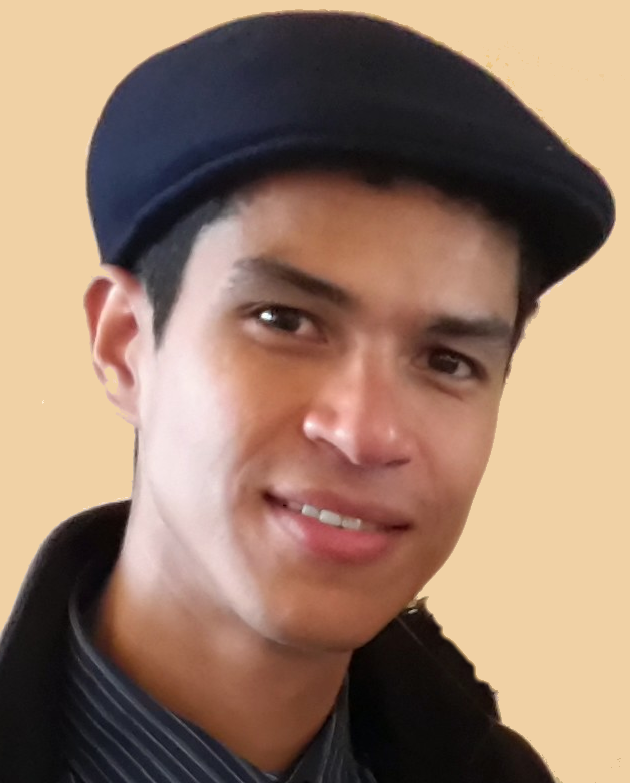 Luis Galárraga Del Prado合作论文数INRIA;IRISA Research Center3
 Zifeng Ding合作论文数University of Cambridge;European Laboratory for Learning and Intelligent Systems;Eigent AI2
 Alessio Lombardi合作论文数2Al Fisher合作论文数2
 Antonio Vergari合作论文数Dept Comp Sci Bari, Univ Bari Aldo Moro2
 Carlos R. Rivero合作论文数University of Sevilla2
 Yuan He (何源)合作论文数Department of Computer Science, University of Oxford;Amazon2Zubaria Asma合作论文数1Xinyi Pan合作论文数1
 Yunjie (Roya) He合作论文数Institute for Artificial Intelligence, University of Stuttgart;Analytical Computing Department, University of Stuttgart;Bosch Center for Artificial Intelligence1Carlos Rojas合作论文数1
 Lasath Siriwardena合作论文数1AR Lopes合作论文数1Arlind Dervishaj合作论文数1
 Lorenzo Loconte合作论文数Autonomous & Provably Reliable Intelligent Learners Research Lab, Institute for Machine Learning, School of Informatics, The University of Edinburgh1Anas Katim合作论文数1Yunjie He合作论文数1
 Jürgen Fleischer合作论文数wbk Institute of Production Science, Karlsruhe Institute of Technology1Enzo Zerega合作论文数Pontificia Univ Catolica Chile, Dept Comp Sci, Ctr Semant Web Res, Santiago, Chile1
 Jose G. Fernandez-Trincado合作论文数Inst Astron, Univ Catolica Norte1
 Dongzhuoran Zhou合作论文数University of Oslo;Bosch Center for Artificial Intelligence1
 A. Queiroz合作论文数Leibniz Inst Astrophys Potsdam AIP1
 Xi Zhang合作论文数1
 M. Valentini合作论文数1M. Schultheis合作论文数1
 Beatriz Barbuy合作论文数Instituto de Astronomia, Geofísica e Ciências Atmosféricas, Universidade de São Paulo;Institute of Advanced Studies, Universidade de São Paulo1
 Olaf Hartig合作论文数Division for Database and Information Techniques, Department of Computer and Information Science, Linköping University1
 Achim Menges合作论文数Institut für Computerbasiertes Entwerfen, Universität Stuttgart1
 Mojtaba Nayyeri合作论文数Institute for Artificial Intelligence, University of Stuttgart1
 Yuji Ikeda合作论文数Department of Micro Engineering, Kyoto University1
 Olga Zamora合作论文数Instituto Astrofisico de Canarias, Instituto de Astrofísica de Canarias1
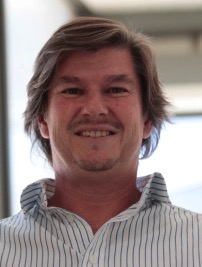 Dante Minniti合作论文数Universidad Andrés Bello1
 Gianluca Demartini合作论文数School of Electrical Engineering and Computer Science, Faculty of Engineering, Architecture and Information Technology, University of Queensland;Centre for Enterprise AI, Faculty of Engineering, Architecture and Information Technology, University of Queensland;Technical University of Munich1